TIKTOK SHOP U.S. · BFCM AFTERSALES
TikTok Shop BFCM 2026 Holiday Returns: Plan the Liability Before November 11
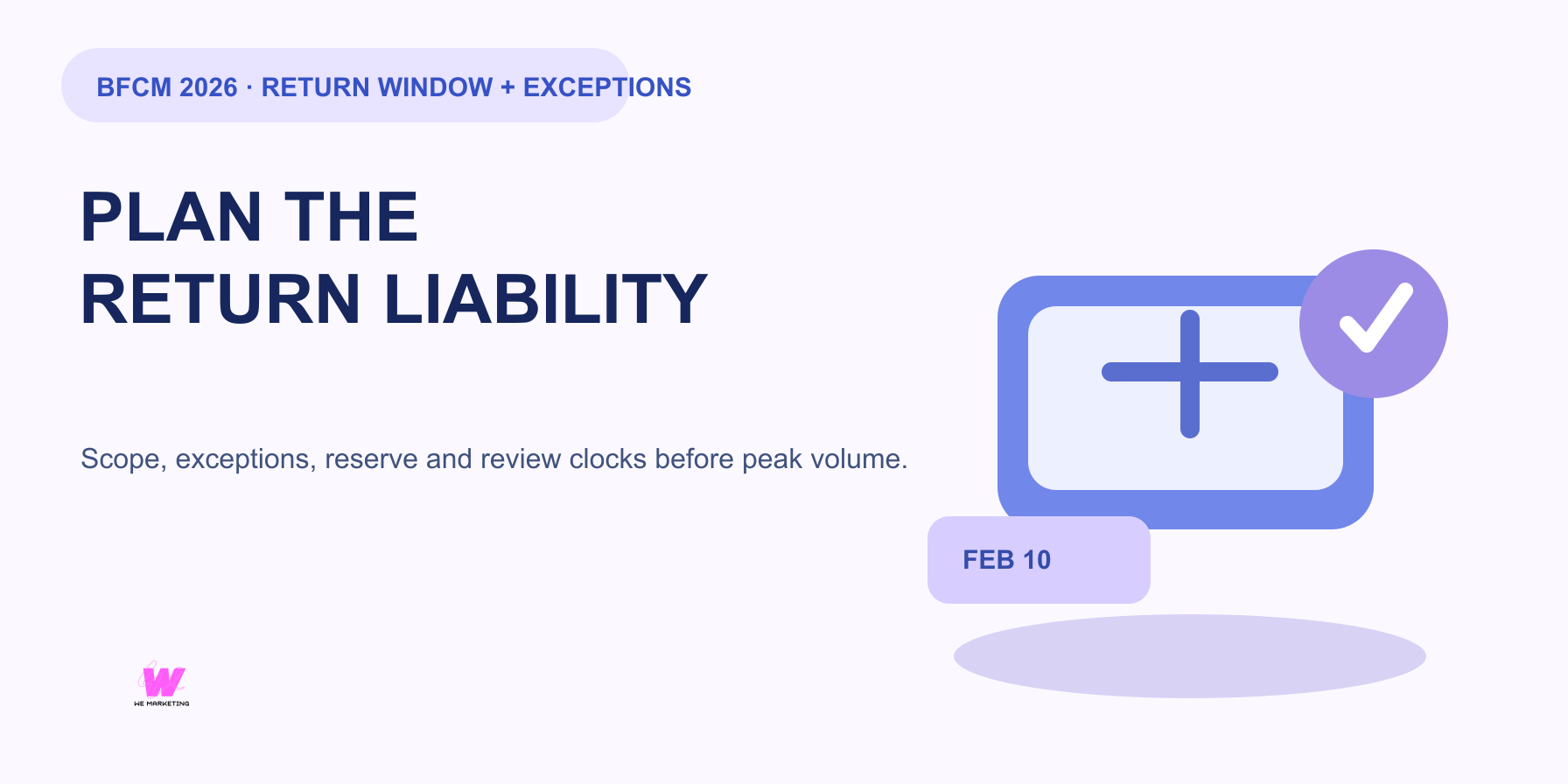
Direct answer: treat the 2026 BFCM holiday return extension as a liability-design problem before it becomes a customer-service queue. Mark which orders can qualify, isolate category and auction exceptions, then reserve inventory, cash, evidence and review capacity against the longer customer decision window.
Start with the policy boundary, not an average return rate
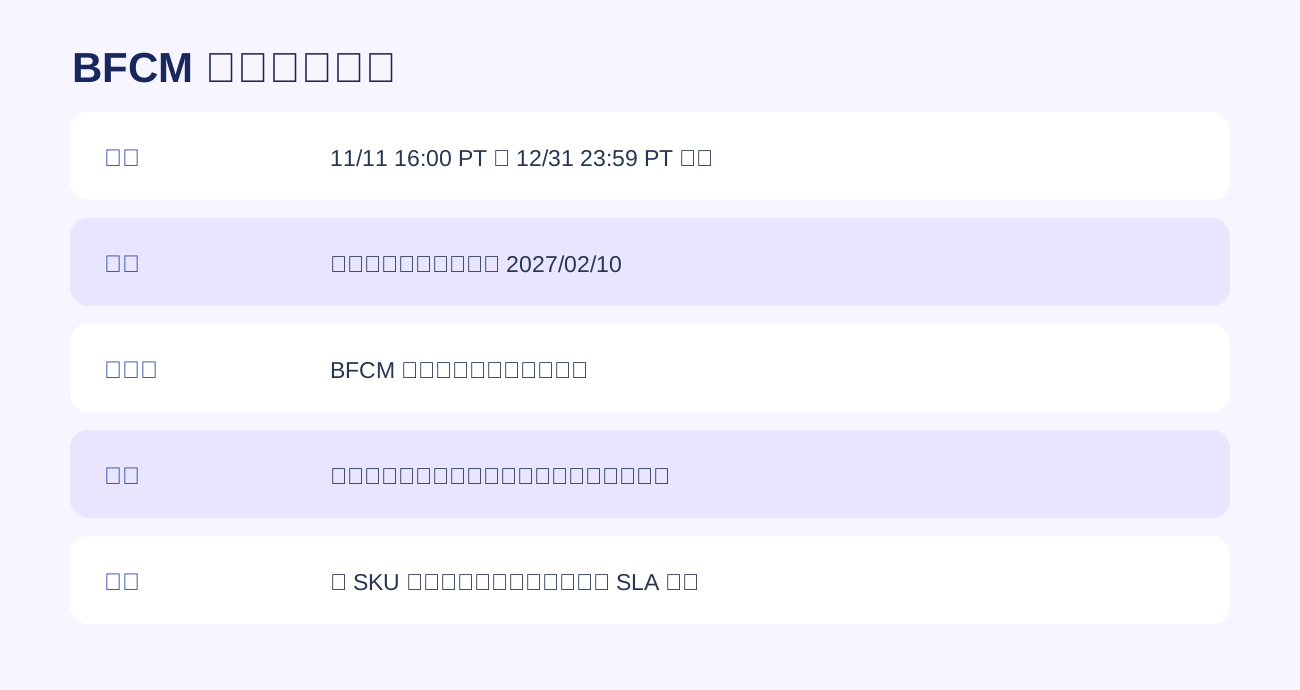
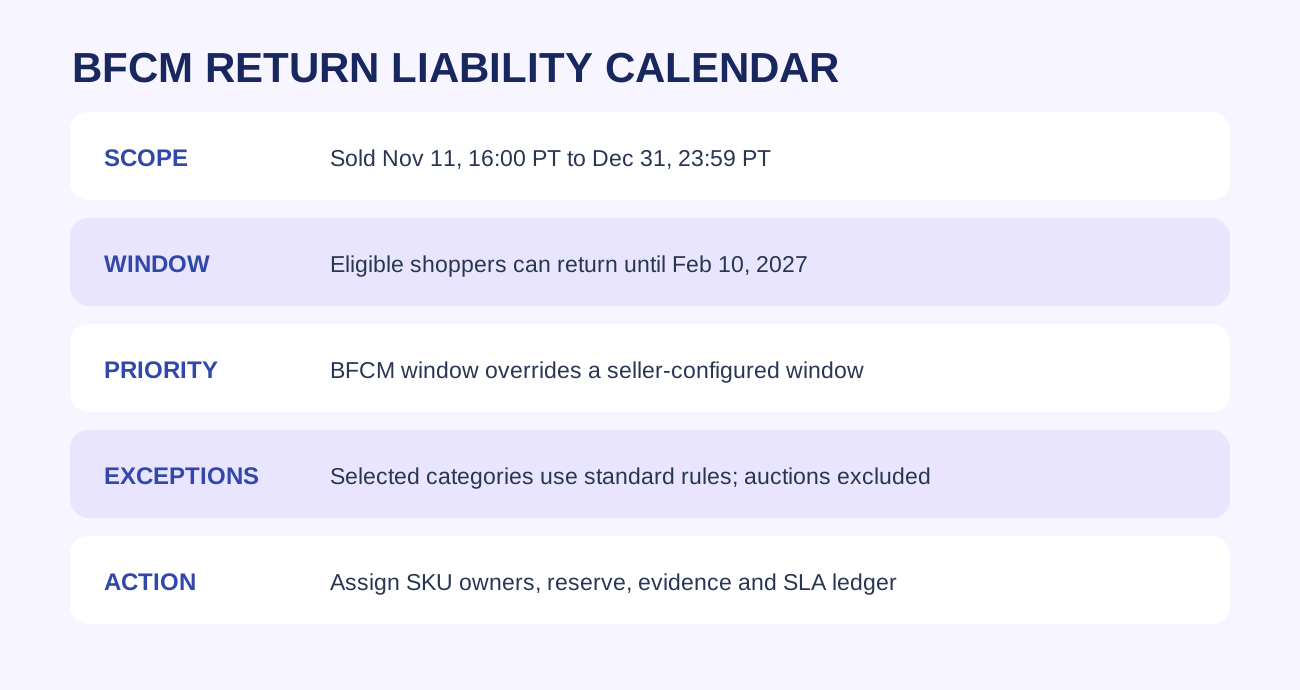
The current 2026 BFCM Seller Campaign Guide says the holiday extension automatically applies to eligible items sold from November 11 at 16:00 PT through December 31 at 23:59 PT. It says shoppers can return until February 10, 2027. The same guide says that the campaign extension takes precedence over a seller-configured return window, while selected categories such as electronics and jewelry may still follow their standard rules and auction orders are not eligible.
That combination makes a single average-return forecast unsafe. A shop can hold multiple populations with different rules: regular eligible BFCM sales, category exceptions, auction orders, sales outside the stated period, and orders whose category or order type still needs verification. The first operating decision is classification, not a blanket promise to customers or a single percentage added to a P&L.
Build a SKU-level liability calendar
For each promotional SKU or bundle, record the sale-period rule, normal return rule, BFCM eligibility state, possible category exception, expected return arrival range, resale or disposal path, refund owner and evidence location. A bundle needs component-level notes when an opened or incomplete component changes the disposition decision. Do not infer eligibility from a campaign badge alone; read the live order and category information.
The calendar turns a distant date into operational work. Finance sees when refund exposure may settle. Inventory sees which units should remain sellable, quarantined, repairable or non-resellable. Customer care sees the correct promise. The warehouse sees when receiving photos, condition checks and serial or component records are needed. Each team is working from the same fact pattern rather than from a generic “holiday returns are higher” assumption.
Separate revenue, cash and inventory liability
Revenue recognized at sale, cash held after a refund, and inventory that can be resold are different questions. The appropriate accounting treatment depends on the business and its advisers; this article is not accounting or legal advice. Operationally, the team can still reserve a decision field for each: likely refund amount, return-shipping or handling exposure, unit condition risk, expected recovery route and the evidence needed if the request is disputed.
Use ranges when evidence is immature. A high-risk SKU can have an explicit conservative scenario rather than a false precise forecast. Review the assumptions weekly during the sales window and more often once requests begin. The useful output is not a prediction that every return will behave the same; it is a controlled capacity and cash conversation before commitments become irreversible.
Run the exception gate before auto-approval
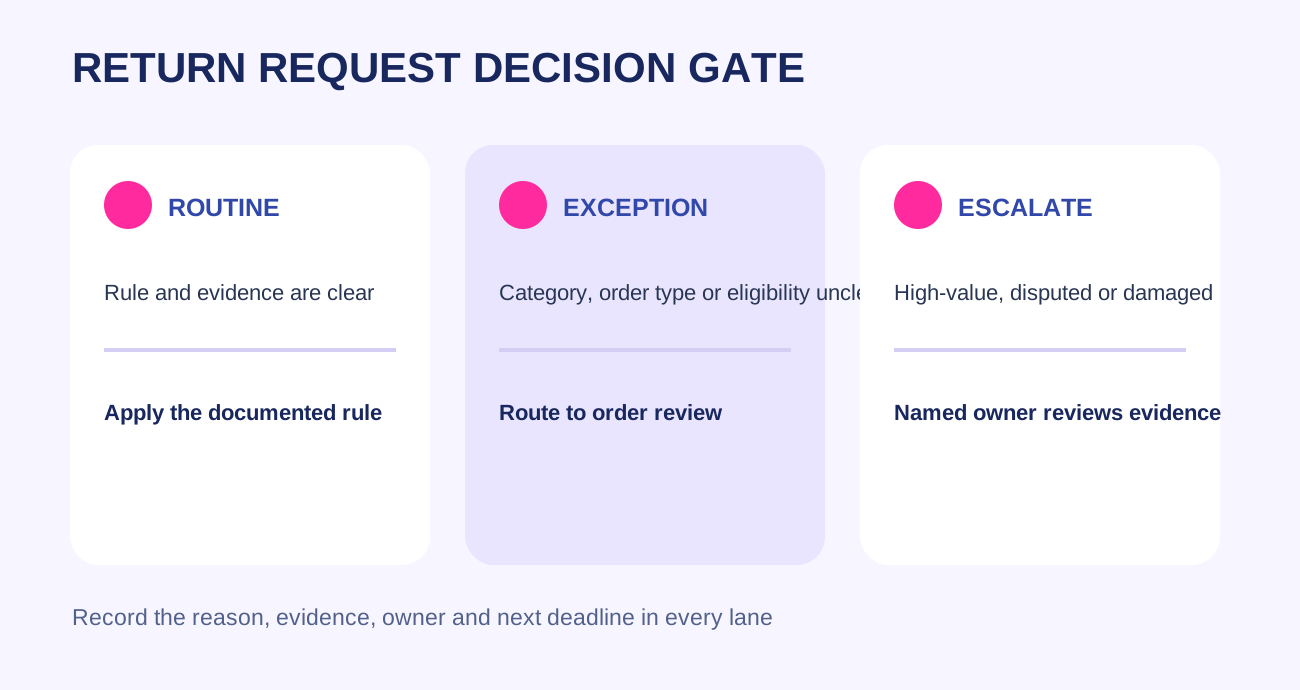
Seller-controlled aftersales automation can reduce repetitive work, but it must not erase the exception logic. Before enabling a rule, test it against order date, category, auction status, item value, fraud or damage signals, customer reason, return route and the cost of a wrong decision. When a rule cannot explain why it applies, keep the request in human review.
A practical control has three lanes: low-risk requests that fit a documented rule; exception requests that need category or order review; and high-value, evidence-sensitive or disputed requests requiring a named escalator. Record the reason and result. This makes an automation reversible and auditable instead of a silent promise that the team cannot later support.
Protect evidence before you reject
The BFCM guide warns that rejecting buyer requests without solid evidence can raise Invalid Seller Rejection Rate risk. Before a rejection, retain the order detail, product and package condition photos, timestamps, carrier and receiving data, buyer communication and the policy or category rule used. Evidence is not an afterthought for a dispute; it is the input that lets a reviewer distinguish an eligible request from an exception.
Do not mark an outcome complete merely because a photo was requested or a draft reply was prepared. Read back the order state and the actual decision. If a request is unclear, preserve it as open, name the owner and state the next evidence needed. That prevents a busy queue from converting uncertainty into a misleading denial.
Assign owners across the full return lifecycle
A return does not belong only to customer care. Customer care owns the promise and communication, the warehouse owns receiving and condition evidence, finance owns reserve and refund reconciliation, merchandising owns SKU and bundle disposition rules, and an escalation owner handles disputed or high-value decisions. Put those owners in the same ledger as the order, rule and deadline. A handoff is complete only when the next owner can read the evidence and active clock without reconstructing the case from chat messages.
Define a stop condition for each owner. Customer care stops when the request conflicts with the order record; the warehouse stops when required condition evidence is missing; automation stops when an exception flag appears; and finance stops when the final refund state does not match the ledger. These stops protect accuracy without turning every routine return into a committee decision.
Use a daily aftersales control loop
- Opening read. Pull new requests and classify BFCM eligibility, exception status and the active review clock.
- Reserve read. Update expected refund, handling and inventory exposure by SKU and disposition lane.
- Evidence read. Confirm required photos, tracking, condition and communication are attached before a rejection or escalation.
- Closing read. Re-read final order outcomes and carry unresolved requests with a named owner and next deadline.
The campaign guide says normal aftersales review SLAs remain in force during BFCM. Higher volume should change staffing and review cadence, not turn a missed review deadline into an acceptable operating choice.
A hypothetical bundle example
This is an operational example, not a client result. A beauty-electronics bundle is sold during the listed period. The operator does not assume the longer window applies simply because it has a BFCM price. They confirm its live category treatment, create a component inspection checklist, decide whether opened components can be resold, reserve a conservative refund and handling range, and route high-value damaged claims to evidence review.
If the category follows standard rules, the team uses that rule and documents it. If an eligible order uses the BFCM window, customer care can explain the date consistently while finance and warehouse have already prepared for the longer tail. The point is not to discourage returns; it is to make the promise operationally true.
Smallest useful next action
Before November 11, export the planned BFCM SKU list and add six columns: eligibility state, category exception, auction status, return-window source, disposition owner and reserve scenario. Leave unknowns explicitly blank and assign each one. That single ledger is enough to expose which promise, capacity or evidence question needs work first.
Source notes
Policy facts in this article come from the current TikTok Shop U.S. 2026 BFCM Seller Campaign Guide, complete source revalidated October 16, 2026. It describes the holiday return window, precedence over seller-configured windows, selected category exceptions, auction ineligibility and aftersales review guidance. Rules and account surfaces can change; verify the live guide and order record before execution.
Related WEM guides
Frequently asked questions
Does the BFCM return extension apply automatically?
The current guide says eligible BFCM orders receive it automatically; sellers should still verify the live order and category context.
Which sales fall in the stated window?
The guide states items sold from Nov 11, 2026 at 16:00 PT through Dec 31, 2026 at 23:59 PT.
When can shoppers return eligible items?
The current guide states until Feb 10, 2027.
Does my own return window override BFCM?
No. The guide says the BFCM extension takes precedence over a seller-configured window.
Are all categories included?
No. Selected categories such as electronics and jewelry may retain standard return rules.
Are auction orders eligible?
No. The guide lists auction orders as ineligible for the extension.