TIKTOK SHOP U.S. · AFTERSALES OPERATIONS
TikTok Shop Aftersales Automation: Decide What the System May Approve for You
Direct answer: automate only the requests whose facts, eligibility, evidence and downside are already bounded. The system may execute a documented decision; it should not invent the decision when the category, reason, item state, value, fraud signal or policy path is unclear.
Automation is delegated authority, not faster clicking
An aftersales rule is a permission boundary. It says which request the system may approve, which inputs must be present, which amount or remedy is allowed, and which conditions return the case to a person. A broad “refund under a dollar threshold” rule is incomplete because two requests with the same price can have different eligibility, evidence and inventory consequences.
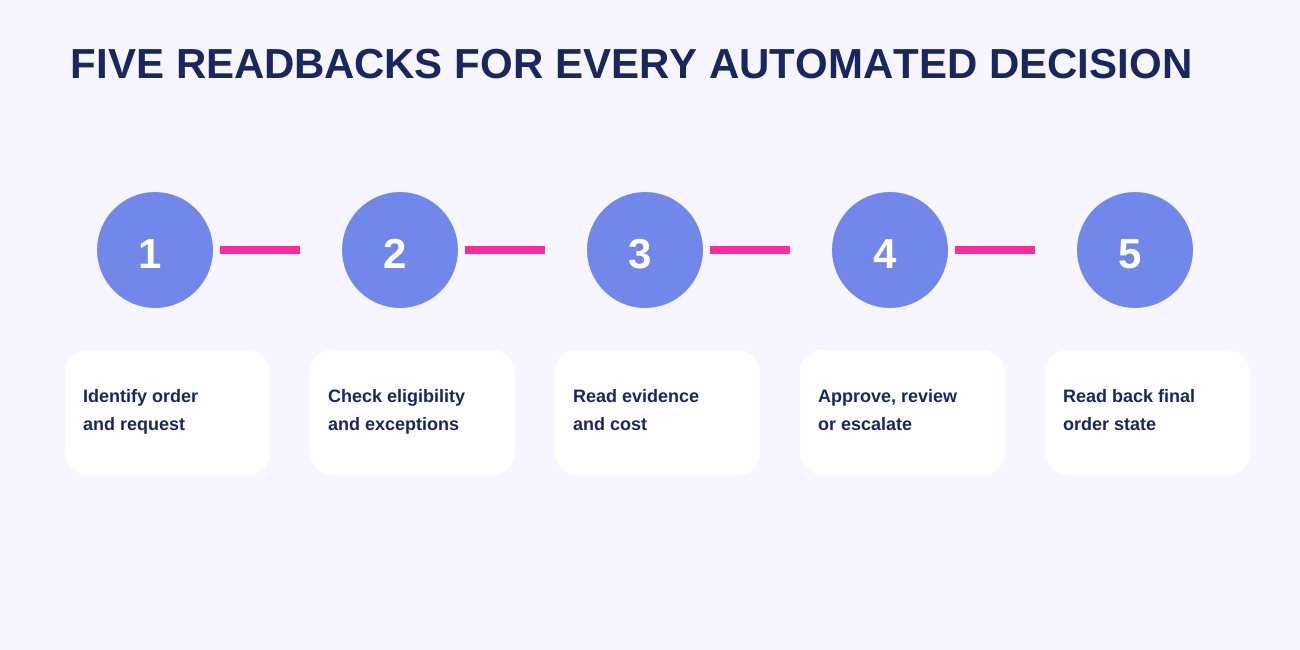
Define the terminal state as carefully as the trigger. An approval draft, a button click or an automation log is not the same as a completed refund, return or replacement. The operating record needs the final order state, amount, remedy, evidence path, rule version, owner and timestamp.
Classify the request before selecting the remedy
Start with order state, delivery state, request reason, product category, item value, customer evidence, seller evidence and the active policy window. Then decide whether the available remedy is refund without return, return and refund, partial refund, replacement, rejection or escalation. The remedy must follow the current order facts rather than a generic customer-service script.
The official returns material describes customizable tools including automated return and refund requests and partial-refund controls. That capability does not make every configuration safe. Use narrow conditions first and prove the rule against real historical cases before increasing its scope.
Build three decision lanes
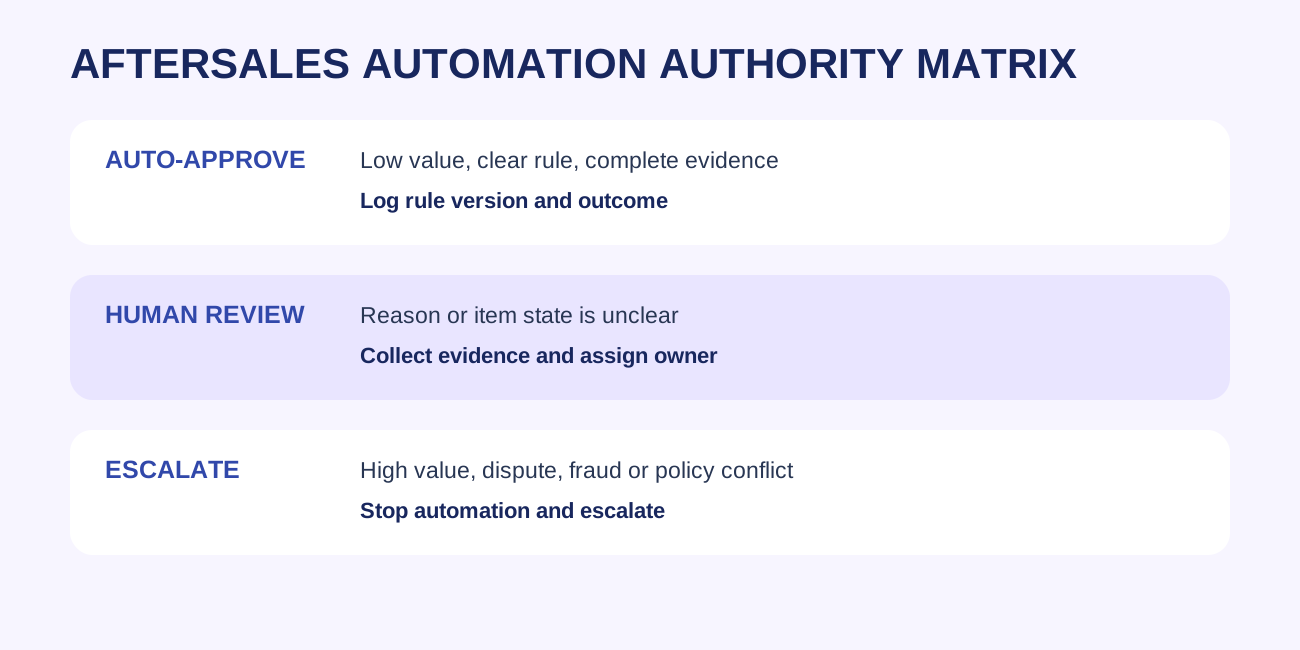
The first lane is documented auto-approval: the request is eligible, inputs are complete, value is within the approved range, evidence has no exception signal and the remedy is unambiguous. The second is human review: a needed fact is missing or the condition requires judgment. The third is named escalation: high-value, disputed, fraud-sensitive, damaged, regulated or policy-conflicting cases.
Every lane needs an owner and timeout. Automation owns execution only while the rule remains true. Human review owns fact completion and judgment. Escalation owns the risk decision. A case that crosses lanes must preserve the earlier evidence and rule result instead of starting over in chat.
Control partial refunds with both customer and inventory truth
A partial refund can reduce needless reverse logistics when the customer keeps an item, but it can also hide product-quality, listing or fulfillment problems. Set reason eligibility, value caps, SKU exclusions, evidence requirements and frequency controls. Compare the offered amount with return shipping, handling, recovery value and customer impact without turning the calculation into a misleading universal threshold.
When an item is returned and graded, the refund decision must use the documented condition and applicable rule. Do not let automation infer damage from a label alone. The warehouse evidence, photos, components, serial information and timing should be readable by the reviewer.
Give replacement its own rule
A replacement is not merely another refund method. It creates a new inventory commitment, a new delivery path and another opportunity for the customer problem to repeat. Check replacement eligibility, available-to-promise inventory, address and fulfillment path, expected delivery, original-unit disposition and whether the root cause makes another unit unsafe or unhelpful.
If inventory or delivery confidence is weak, route the case to a person. Automating a replacement without confirming stock can turn one aftersales problem into two. Record both the original order and replacement outcome so customer care, finance and inventory see one connected case.
Define stop conditions before launch
Stop automation when eligibility cannot be read, evidence conflicts, the request is disputed, the value exceeds authority, the category has a special rule, a fraud or abuse signal appears, the remedy would create a stock failure, or the final state does not match the expected result. A stop is a safe handoff, not a system failure.
Give each stop a next action: request a specific record, assign a reviewer, preserve the deadline, or escalate to a named owner. Do not use a generic “manual review” bucket with no clock. That only moves invisible work from software into a queue.
Run a controlled rollout
- Audit recent cases and identify one narrow, repeatable decision.
- Write inputs, exclusions, remedy, amount cap, owner and terminal readback.
- Test the rule in shadow mode against decisions a trained reviewer already made.
- Enable a small cohort and compare errors, reversals, appeals and customer outcomes.
- Expand only after exceptions remain visible and owners can pause the rule.
Volume is not proof of quality. Track how often automation is reversed, appealed or moved to escalation, and whether the same reason clusters by SKU, listing, fulfillment path or warehouse. The rule should expose operating problems rather than quietly paying for them.
BFCM changes capacity, not decision truth
Peak volume can justify more automation and more frequent review, but it does not remove normal evidence or review boundaries. The current BFCM guide directs sellers to manage aftersales volume while keeping active review obligations in view. Staff the exception lanes before the queue grows, and monitor rules daily during campaign periods.
A hypothetical example
This is an operating example, not a client result. A low-value accessory request with an eligible reason, complete evidence and no exception signal enters a capped partial-refund lane. A similar-priced request for a regulated product stops because category treatment needs review. A high-value damaged bundle escalates with photos and component evidence. Price alone never decides all three.
Smallest useful next action
Create a one-page authority table with request type, required facts, auto-approved remedy, maximum authority, exclusions, stop condition, owner and terminal readback. Begin with one low-risk rule and ten historical cases. If the rule cannot explain every decision, narrow it before enabling it.
Source notes
This WEM operating framework draws on the current Requirements for Managing Returns, Refunds, and Replacements and the 2026 BFCM Seller Campaign Guide, fully revalidated October 17, 2026. Platform rules, eligibility, tools and interfaces can change. Verify the live policy and current order record before execution.
Related WEM guides
Frequently asked questions
Should every low-value request be auto-approved?
No. Value is only one input; eligibility, reason, evidence, exception flags and the cost of a wrong decision still matter. A low-price item can still belong to a sensitive category, contain conflicting evidence or create repeat-abuse risk. Begin with a narrow reason and category combination, then review real outcomes before expanding authority.
Can partial refunds be automated?
The official material describes customizable partial-refund rules. Use narrow conditions, caps and readback before expanding them. The rule should state when the customer keeps the item, which evidence is required, which SKUs are excluded and how the final amount returns to finance and customer care records.
What should stop automation?
Unclear eligibility, high value, fraud or damage signals, missing evidence, policy conflict and disputed requests should stop or escalate. Each stop needs a named owner, response clock and required next record. A generic manual-review queue is not a control unless someone can see its deadline and resolve the missing fact.
Can a seller appeal an auto-approved request?
The official guide describes a Seller Center appeal path. Verify the current order state and live interface before acting. Preserve the evidence, policy path, automation rule version and terminal readback so the appeal is based on the actual decision record rather than a reconstructed support conversation.
Does BFCM remove normal aftersales controls?
No. Campaign volume changes staffing and cadence, not the need for evidence, review clocks and final-state readback. During peak periods, review exception volume daily, protect time-sensitive cases and pause any rule whose reversals or escalations rise beyond its approved boundary.
What is the smallest useful setup?
Create three lanes: documented auto-approval, human review and named escalation, each with inputs, owner and terminal readback. Start with one repeatable, low-risk request type and compare the proposed rule against ten completed historical cases. If it cannot explain every decision, narrow it before enabling execution.