TIKTOK SHOP U.S. · ORIGINALITY PROTECTION
TikTok Shop Originality Protection: Build the Image Evidence Before Copycats Appear
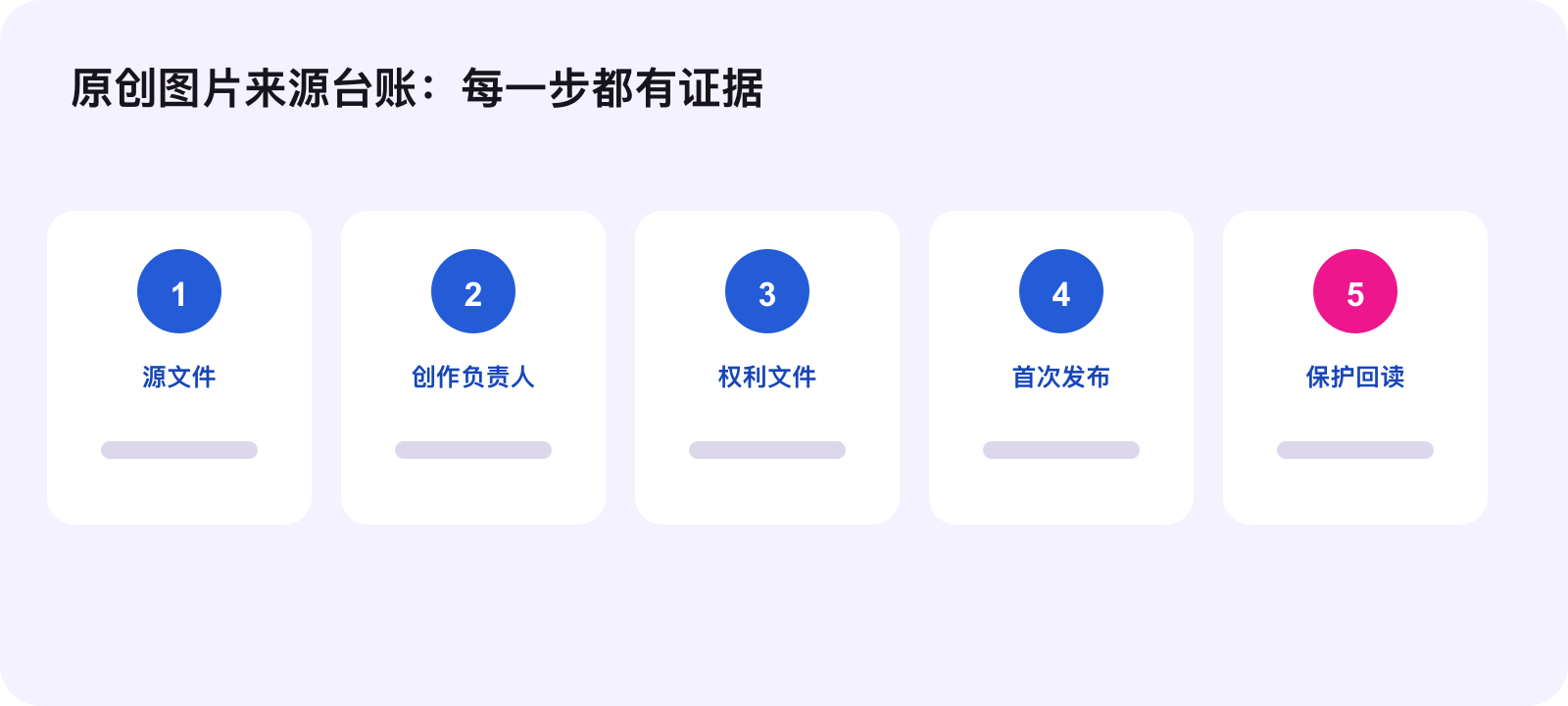
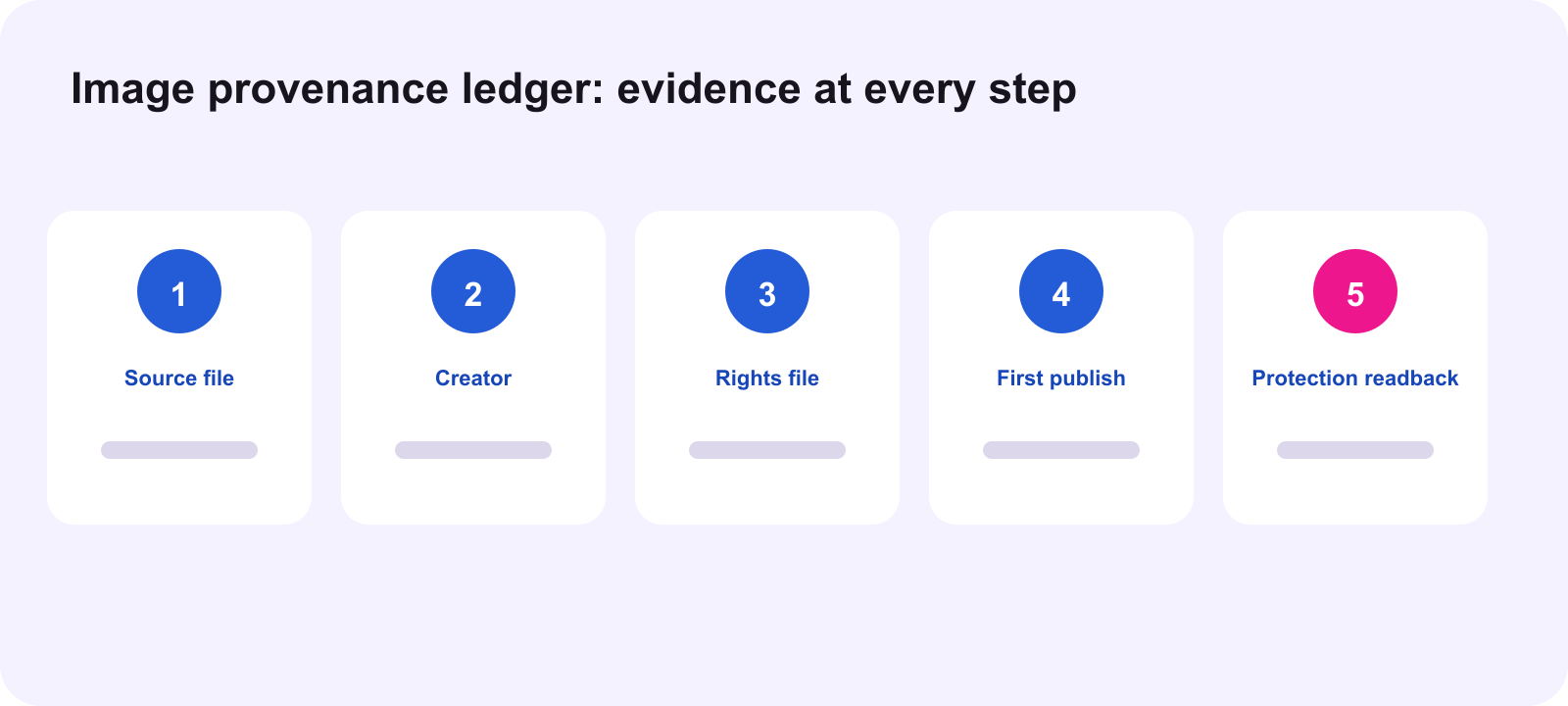
Direct answer: TikTok Shop's Originality Protection program can protect qualifying original main product images for eligible sellers, but the platform record should not be your first or only proof. Build an image provenance ledger before publication. Keep the source file, creation record, ownership or authorization documents, approved final version, first-publication evidence and protection readback connected to the same asset ID.
The current official program page explains automatic verification, registration and listing-admission interception. It also says the Proactive Push and Quick Removal Risk Alert feature will be available shortly. That means a responsible operator must separate capabilities documented as current from a capability announced for later availability. The operating system below does not promise eligibility, automatic protection or enforcement outcome.
Read the current program boundary first
The Originality Protection program is available on an eligibility basis. Selected sellers may be enrolled automatically, and other sellers may be nominated by their TikTok Shop account manager. Participating sellers need an Intellectual Property Protection Center account. Once enrolled, the platform evaluates main product images during normal listing and automatically registers qualifying images as protected assets in IPPC under the corresponding product ID.
Not every uploaded image qualifies. The current criteria require a main product image, first publication of that image on TikTok Shop and sufficient clarity. Images already present on an earlier listing are not eligible. The official FAQ says secondary images, detail shots and videos are outside this program's coverage. Each protected image remains valid for one year from registration.
The program page says failed image verification does not block the seller's own listing. The product can still be listed and sold, but the image is not added to the protected bank, and that verification decision is not appealable. This distinction matters: listing status, OP registration and underlying ownership evidence are three different states.
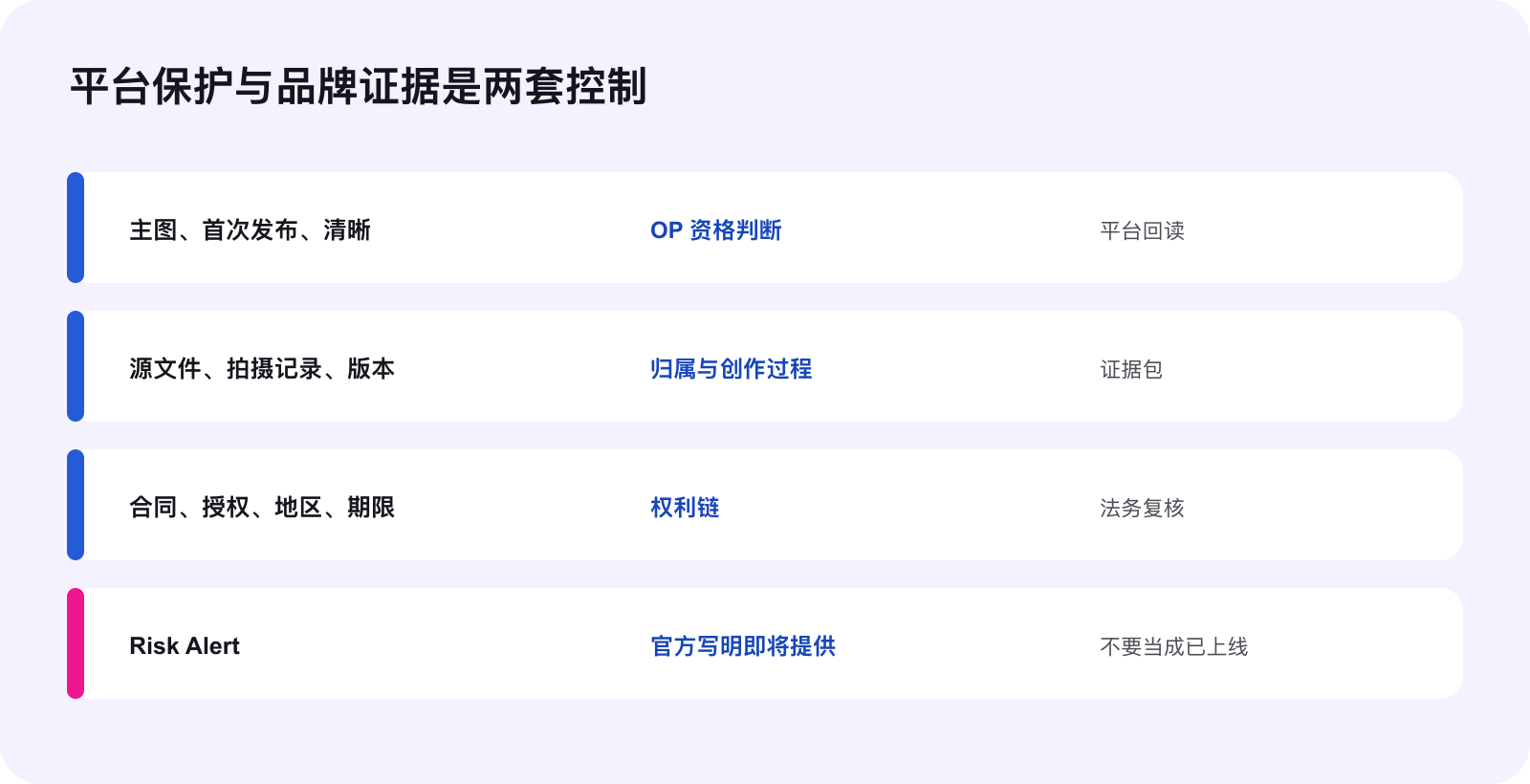
Operating rule: protection status is a platform result; provenance is the brand's evidence of how the image was created and what rights it holds.
Build the ledger before the first upload
Create one asset record for every final main image. Give it a stable internal ID. Record the SKU, product ID when available, photographer or designer, shoot date, source-file location, filename, file hash, edit history, approval owner, rights document, intended territory, permitted channels and planned first-publication surface.
Store the original capture or design file, not only the compressed marketplace export. Preserve useful metadata where lawful and practical. Keep contact sheets, shot lists, briefs, invoices, approval records and version history. A polished JPEG on a shared drive may show the final image, but it does not by itself explain who created it, when, under what agreement or whether the brand received commercial rights.
For internal teams, connect the creator to the employment or assignment record that governs the work. For freelancers, studios and agencies, confirm the contract addresses ownership or license scope, edits, territory, term, sublicensing and marketplace use. For supplier-provided images, do not assume permission travels with the product. Obtain written authorization or a license that matches the seller entity and intended use.
Control first publication as an operating event
The current program uses first publication on TikTok Shop as an eligibility criterion. Therefore, the listing team should not treat image upload order as a casual production detail. Before launch, identify the approved seller account, product, main-image order, date and operator. Freeze the final file and checksum it. Record where any earlier marketplace or test publication occurred.
If the same image has already appeared on an earlier TikTok Shop listing, do not rewrite history or create a misleading record. Mark the image as not eligible under the first-publication criterion and decide whether to create a genuinely new original asset. Do not make superficial edits merely to imitate originality. The ledger should reflect the real creation and publication sequence.
At release, retain a screenshot or exported record showing the listing, image and timestamp, plus the internal approval. After the listing is processed, check the IPPC protected-assets record or the weekly Seller Center summary described in the source. Save the readback date and result. Uploaded, listed, verified and protected are separate stages.
Use an evidence packet, not a folder of loose files
| Packet section | What it should prove | Typical evidence |
|---|---|---|
| Asset identity | The exact image in question | Internal ID, source file, approved export, hash, SKU and product ID |
| Creation provenance | Who created it and when | Raw file, shoot log, brief, edit history, contact sheet and invoice |
| Chain of rights | Why the seller may use and protect it | Employment record, assignment, license, contractor agreement or authorization |
| Publication history | Where and when it first appeared | Release record, listing URL, timestamp and archived screenshot |
| Platform status | What TikTok Shop actually registered or enforced | IPPC asset readback, weekly summary, notice, complaint or appeal result |
Keep the packet readable and bounded. Do not include unrelated personal information, credentials or confidential material that is not needed. If the matter becomes a legal dispute, have qualified counsel decide what to preserve, disclose or submit.
Separate four controls that teams often collapse
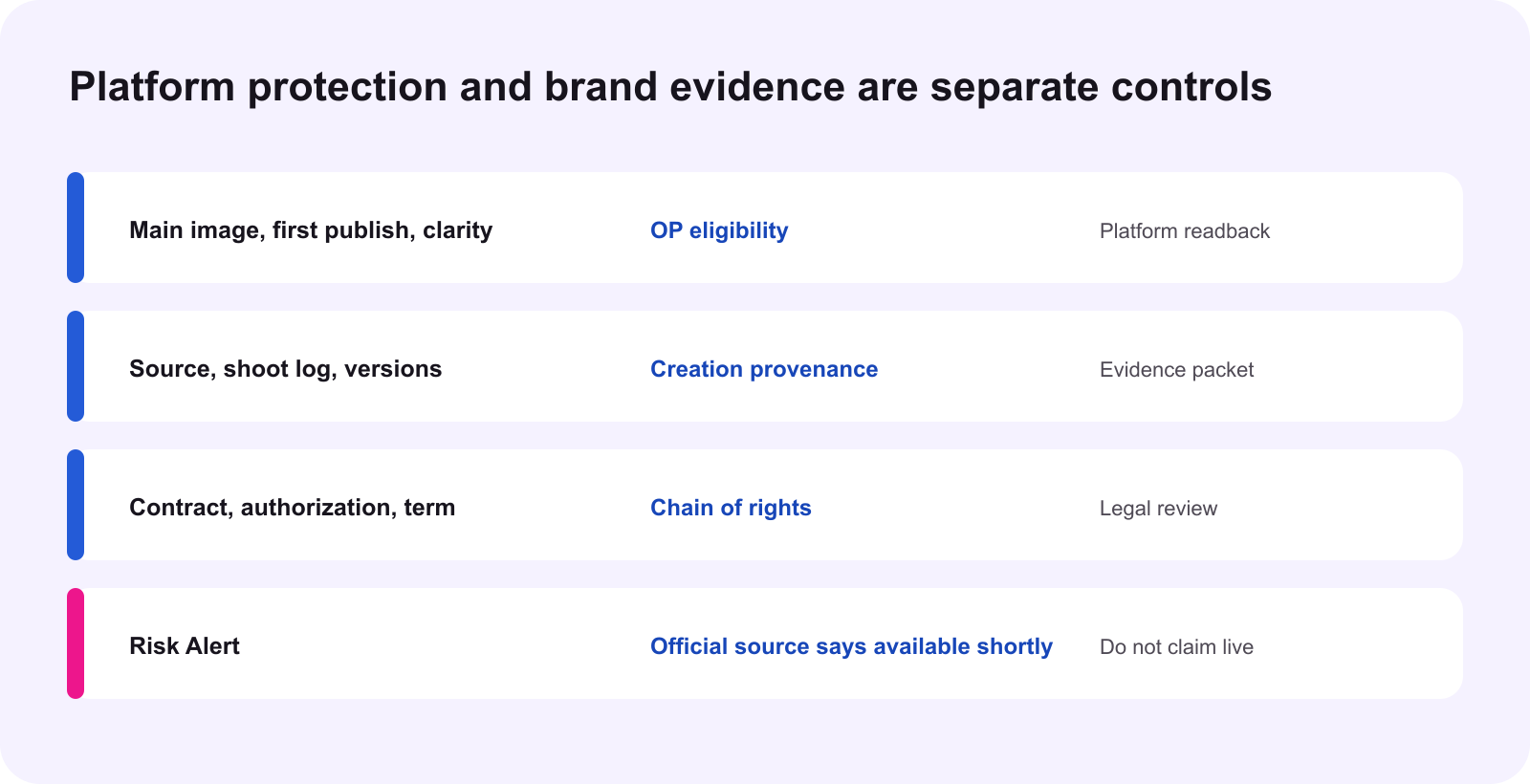
Original creation: the brand can trace how the image was made. Rights: the seller owns the image or has permission appropriate to the use. OP eligibility: the seller and image meet the current program criteria. Enforcement: the platform detects a protected-image use and applies the available process. Success in one control does not automatically prove the others.
A brand may own an image that is not eligible for OP because it was not first-published on TikTok Shop or is not a qualifying main image. A seller may have written authorization to use another party's protected image, but still need that document if a listing is recalled. A protected asset record helps, but the brand should retain its creation and rights evidence for business continuity and dispute handling.
Do not present Risk Alert as a current universal workflow
The official page describes Proactive Push and Quick Removal through IPPC Risk Alert, but explicitly says the feature will be available shortly. Treat that statement as a future-availability boundary. Do not train teams to expect an alert, advertise one-click removal as universally live, or measure response SLAs around a screen the current account may not have.
What the team can do now is keep the IPPC account ready, review protected assets, retain listing-admission and enforcement notices actually received, and maintain the evidence packet. If Risk Alert later appears in the current account, verify the interface, scope and permissions before adding it to the SOP. A product announcement is not an operational readback.
Prepare both sides of a possible enforcement event
If another seller appears to use the brand's image, capture the listing URL, seller, product, image, date and comparison without altering the original evidence. Match the suspected image to the internal asset ID and IPPC protected record. Use the official complaint path available to the account. Do not contact or accuse a seller publicly based only on visual similarity; route uncertain ownership or infringement questions to qualified intellectual-property counsel.
If your own listing is recalled for using a protected image, open the violation notice and use the appeal reason that matches the facts. The current page distinguishes ownership or authorization from written authorization by a rights holder. Supporting documents should be clear and readable, match the seller account, cover the United States and remain within valid dates. Do not fabricate, backdate or stretch a license beyond its terms.
The source says a seller with a legitimate basis may appeal a recalled listing. That appeal is different from an OP verification decision, which the page says is not appealable. Route the record to the correct process instead of treating every negative result as the same dispute.
Operational example: a studio creates launch images
Consider a hypothetical U.S. seller hiring a studio for a new SKU. Before the shoot, the brand assigns asset IDs and attaches the brief, product references and contract. The agreement states the applicable rights and delivery obligations. After the shoot, the operator stores raw files, contact sheets, final edits and approvals, hashes the approved exports and records the photographer, date and SKU.
The listing owner publishes the selected main image through the approved seller account and records the live listing and time. After processing, the IP owner checks IPPC and the weekly summary, then records whether the image was protected. If it was not protected, the listing can still remain live; the team records the result rather than claiming coverage. If the same image later appears elsewhere, the team can assemble one coherent packet instead of reconstructing history under deadline.
The smallest useful next action
Choose the next SKU scheduled for photography. Create one row with six fields: asset ID, source file, creator, rights document, first-publication plan and protection readback. Assign an owner for each missing field before the main image is uploaded. This single row is more useful than waiting for a copied listing and then searching through chat, drives and invoices.
Source notes and execution boundary
This original WE Marketing operating framework draws on the current TikTok Shop U.S. Originality Protection Program, revalidated October 6, 2026. The source covers eligibility-based enrollment, IPPC participation, automatic verification and registration of qualifying main product images, first-publication and clarity criteria, one-year protection, listing admission interception, enforcement and appeal evidence. It states that Proactive Push and Quick Removal through Risk Alert will be available shortly; this article does not present that feature as currently live. Program access, interfaces and decisions may change. Verify the current account and use qualified intellectual-property counsel for ownership, licensing, infringement or legal-preservation decisions.
Common questions
Does every TikTok Shop product image receive Originality Protection?
No. The current source limits automatic protection to eligible participants and qualifying main product images that are first-published on TikTok Shop and meet clarity requirements.
Do I need a registered trademark or copyright certificate?
The program page says a registered trademark or copyright certificate is not required for OP coverage, but brands should still preserve ownership and authorization evidence.
Are secondary images, detail shots and videos protected by OP?
The current FAQ says only qualifying main product images are covered. Secondary images, detail shots and videos are not covered by this program.
What happens if my image fails verification?
The listing can still be published and sold. The image is simply not added to the protected bank, and the verification decision is not appealable.
Is the IPPC Risk Alert available now?
The current official page says the Proactive Push and Quick Removal Risk Alert feature will be available shortly. Do not plan operations as if it is already live for every account.
What evidence should an appeal packet include?
Use the reason that matches the facts and provide clear ownership proof, rights-transfer documents, or written authorization showing the parties, permitted use, United States coverage and valid term.