TikTok Shop Creator Commission Does Not Buy Video Usage Rights
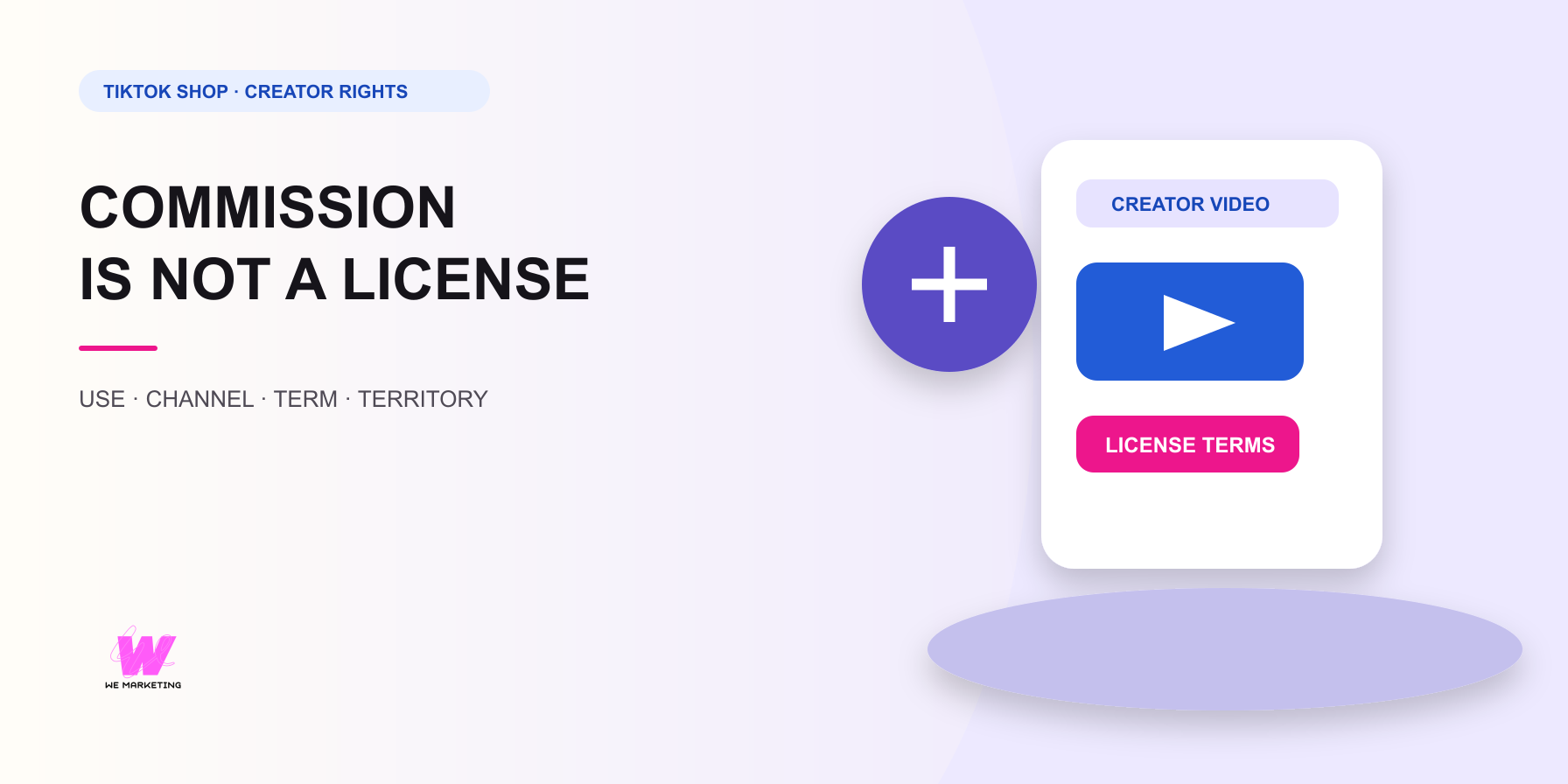
Direct answer: a TikTok Shop creator commission pays the creator for services. It does not, by itself, buy the creator’s copyright or give a brand an ad license. TikTok Shop U.S. Seller Terms §9.2 says exactly that. Treat the commission setting and a content-use license as two related but separate commercial decisions.
Why the distinction changes the operating plan
A commission can reward a creator when a shopper purchases through an eligible collaboration. It answers how the creator is paid for service. It does not answer whether the brand may repost the video, turn it into a Spark Ad or other paid asset, cut it down, add subtitles, use it on Amazon, put it in an email, or keep it live after a campaign ends. Those are usage questions. If the contract does not say, the team should not assume a payment record fills the gap.
This is not a reason to make every creator agreement complicated. It is a reason to make the decision visible before the content is commissioned. A rights request that arrives after a video performs is usually more expensive, slower and harder to document than one attached to the original brief.
Run a two-column rights matrix
Column one is the service and payment: deliverable, posting deadline, commission or flat fee, disclosure, product claims, approval route and payout evidence. Column two is the license: exact asset, approved edits, channels, paid versus organic use, term, territory, exclusivity, raw files, whitelisting and any renewal price. Keep the creator’s written assent and the final asset URL in the same row. A creator can agree to post organically while declining paid usage. That is a normal commercial outcome, not an operational failure.
Ask six questions before reuse
- Which named video, photo, audio or raw file is licensed?
- May the brand repost organically, run paid media, or both?
- Which platforms and accounts may use it?
- What term, territory and renewal option apply?
- What edits, translations, crops, captions or cuts are permitted?
- Who owns approval, proof of consent and expiry removal?
For example, an operational example could allow a brand to repost one final vertical video to its TikTok account for 90 days, while a separately priced paid-media license permits ads on named channels. That example is not a platform rule or legal advice; the actual scope belongs in the agreement and should receive counsel review where needed.
A practical release sequence
First, mark the brief as organic-only, paid-use requested, or undecided. Second, state the desired rights in plain language before the creator accepts. Third, route the negotiated language through the brand’s authorized reviewer. Fourth, save the signed or written approval beside the content link and payment reference. Fifth, check the rights ledger before reposting, boosting or sending an asset to another channel. Sixth, remove, renew or replace assets when the term ends.
The smallest useful next action
Open the next creator brief and add a one-row rights block: “Organic repost / paid media / channels / term / territory / edits / raw files / approver.” If any cell is blank, label the use unknown rather than treating the commission as permission. This is a commercial operations checklist, not legal advice.
Source notes
Current official source revalidated October 2, 2026: TikTok Shop U.S. Seller Terms of Service, §9.2. It describes Creator Commissions as payment for services and not a purchase or license of creator intellectual property. §5 also says TikTok is not a party to creator contracts. Confirm current terms and obtain legal review for your own agreement.
FAQs
Does a creator commission include ad rights?
No assumption should be made. Commission and paid usage should be documented separately.
Can a brand repost a creator video organically?
Only if the creator agreement or written permission covers that use.
What should a usage-rights clause name?
Name the asset, channels, term, territory, paid or organic use, edits and renewal terms.
Can a brand edit captions or crop the video?
Only where the agreed license permits the specific edits.
What happens when a license expires?
Remove the asset, renew the license, or replace it according to the rights ledger.
Is this legal advice?
No. Use this operating framework with your authorized legal reviewer.