U.S. MARKET ENTRY · DEMAND PROOF
A Home-Market Bestseller Is a U.S. Hypothesis, Not Proof
A product that wins in China or Korea may deserve a U.S. launch, but its domestic rank is not proof that an American buyer understands it, wants it, or can buy it with confidence. Before a brand scales TikTok Shop content, WEM recommends turning the domestic success story into a short list of U.S. purchase questions and testing the smallest credible answer for each one.
The practical goal is not to prove that the whole U.S. market loves the product. It is to decide whether one specific SKU, audience, message and fulfillment path deserve the next test. A domestic bestseller can supply a starting hypothesis: perhaps the texture, routine, format or problem is compelling. It cannot replace local evidence.
Start with the U.S. buyer's job, not the home-market ranking
Write one sentence explaining the job the American buyer is trying to complete. "Hydration" is too broad. "A fragrance-free moisturizer that layers under makeup without pilling" is testable. A Korean hero SKU might be famous because shoppers already understand a multi-step routine. A Chinese device might be familiar because domestic buyers recognize the category. Neither condition automatically exists in the U.S.
List the assumptions that sit behind the home-market result: who uses the product, when they use it, what comparison they make, what proof they need, and what stops them from ordering. Then mark each assumption as observed U.S. evidence, untested, or merely a headquarters belief. This prevents a sales deck from becoming a content brief.
BeautyMatter's November 2026 Ulta interview gives a useful boundary. Ulta described adding global brands while using marketplace response and stores as different ways to learn what resonates. The interview does not prove demand for every international brand. It does show why a social bestseller and a retail hero should not be treated as the same product decision.
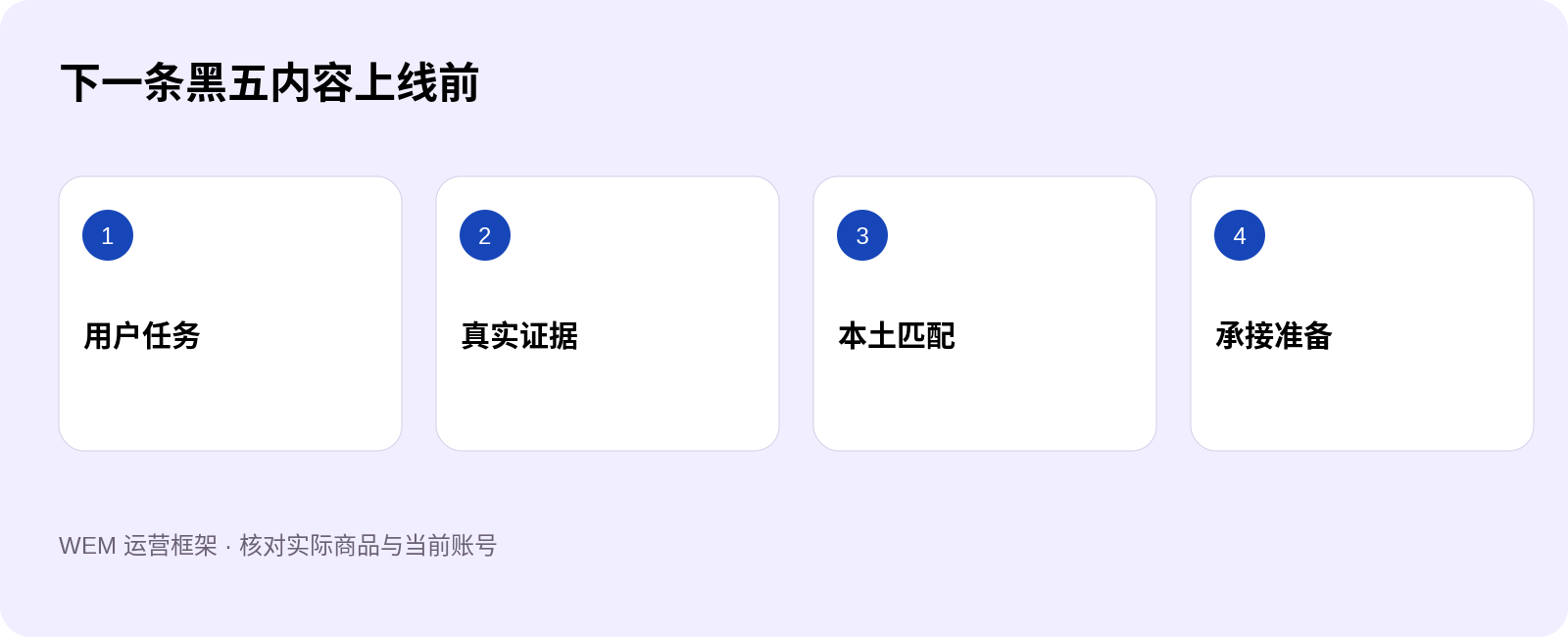
Build a four-part local-demand proof card
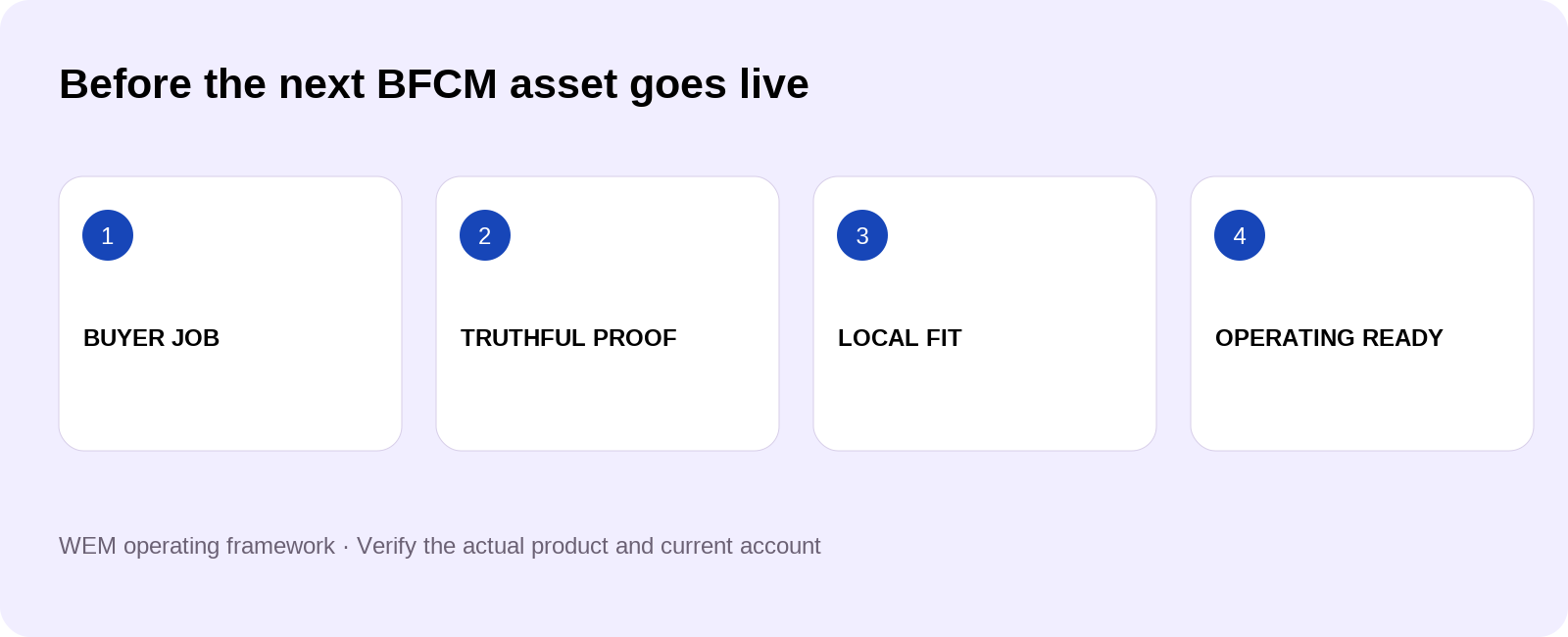
Use one card for one SKU and one first audience. Keep the evidence separate so a promising video does not get mistaken for a complete launch case.
- Recognition: Can the buyer understand the product in a few seconds? Capture the exact customer question, category language, use moment and comparison product.
- Credibility: What can be shown truthfully? Confirm the U.S. SKU, ingredients or specifications, labels, claims support, price and availability before a creator records.
- Fit: Does the imagery show the people and routines the product is meant to serve? Representation is not decoration. If the intended U.S. customer cannot see how the product fits their life, a domestic creative template may create confusion rather than demand.
- Operational readiness: Can the product actually be shipped, supported and replenished when interest arrives? Inventory, customer service, returns and approval speed are part of the test, not a later operations problem.
Test one uncertainty at a time
Do not launch ten messages, five price points and twenty creators and then call the total views a demand test. Choose the largest unknown. For a skincare product it might be whether users understand the sequence. For a beauty device it might be whether the demonstration explains the use case without unsupported outcomes. For a food or household item it might be whether a familiar domestic habit translates to a U.S. occasion.
Give the creator a real product, the approved factual boundaries and one buyer question to answer. Leave room for their normal voice. A scripted domestic claim translated into English is often less useful than a creator showing the product in a recognizable local moment and explaining what they personally can verify.
The Sohu report on Chinese sellers' U.S. TikTok Shop experience is an interview-based account, not a market census. Its value here is directional: interviewed operators described product habits, creator selection, approval speed, inventory and fulfillment as practical failure points. Treat those as a launch checklist to verify in your own account, not universal platform statistics.
Read signals in the right order
Early comments, saves, questions and creator feedback can reveal whether the explanation is clear. Orders, repeat purchases, returns and contribution margin answer different questions. A high-view video may tell you that the hook worked; it does not establish that the SKU is profitable or retail-ready. A small but precise set of questions may show that the category education is still incomplete.
Set a review window before publishing. Record the asset, exact SKU, audience hypothesis, message, available inventory, observed buyer questions, conversion evidence and next decision. If the result is weak, decide whether to adjust product framing, creator fit, offer, availability or the initial audience. Do not simply send more units to more people.
Keep TikTok Shop, marketplace and store evidence distinct
Ulta's interview also makes an important operating point: shoppers discover brands through more than one route. A product that draws social attention can still need a different explanation, assortment position or physical trial environment. Conversely, a strong store product is not automatically a TikTok demonstration product.
For a cross-border team, this means keeping separate columns for TikTok Shop content evidence, marketplace behavior, owned-site signals and retail feedback. They can inform one another, but they should not be merged into a single unsupported claim such as "the U.S. loves this product." Decide in advance which route each test is meant to inform.
The smallest useful next action
Choose one domestic bestseller and write the four-part proof card today. Ask one U.S.-based creator or local operator to challenge the product explanation before asking them to sell it. Confirm the actual U.S. SKU, available inventory and the customer question the first asset must answer. If those three facts are not ready, the next work is preparation, not scale.
FAQs
Does a top ranking in China or Korea prove U.S. demand?
No. It can create a credible launch hypothesis, but U.S. recognition, use habits, proof requirements, availability and price context still need their own evidence.
Can a viral TikTok video be used as demand proof?
It is one signal about attention or an explanation. Review the exact product, customer questions, orders, returns and operating capacity before treating it as a broader demand conclusion.
Should the U.S. version copy domestic creator scripts?
Use verified product facts, but rebuild the buyer question and local context. Translation alone does not establish that the message is understandable or relevant to the intended U.S. customer.
What should be checked before sending samples?
Confirm the U.S. SKU, truthful claims, availability, creator-product fit, sample authority and enough testing time. A sample request is not proof of a post or a sales result.
Is a retailer listing proof that TikTok Shop will work?
No. Store, marketplace and social shoppers can respond to different product explanations and buying conditions. Use each channel's evidence for the decision it actually supports.
When should a brand scale?
Scale only after the team can explain what was tested, what buyer question was answered, what evidence was observed and what operational limits remain. More content is not a substitute for that decision record.
Source notes and scope
Reviewed November 27, 2026: Sohu/Interface report on Chinese sellers' U.S. TikTok Shop experience and BeautyMatter's Ulta global beauty interview. The first is interview reporting and the second is a retail-industry interview; neither is treated as a universal performance benchmark. WEM's proof card is an operating recommendation, not a promise of platform access, sales or retail placement.