WE Marketing · TikTok Shop U.S. · Campaigns & Growth
TikTok Shop Hero SKU Strategy: Choose Products With Search Demand, Not Guesswork
By the WE Marketing Team · Published July 27, 2026
Search demand should narrow the shortlist, not choose the winner
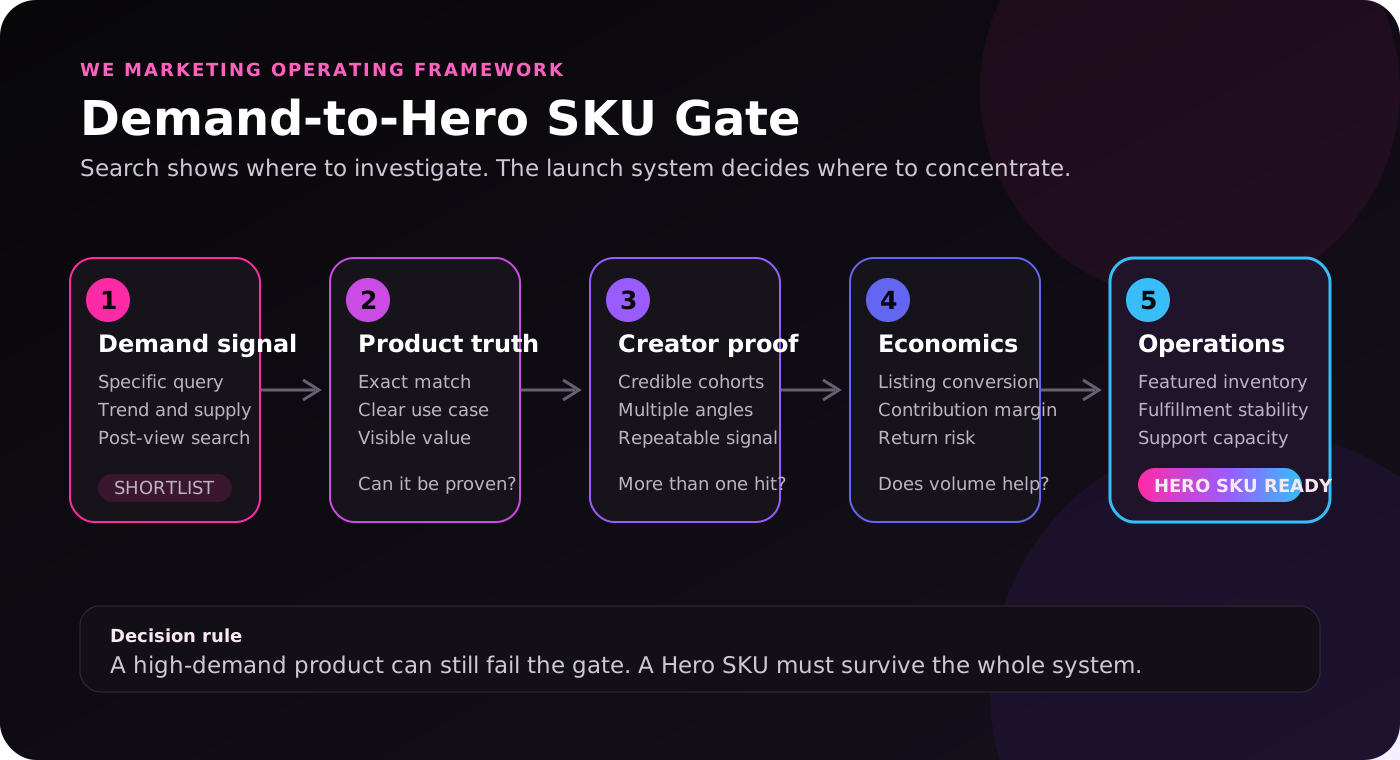
Search demand can help a TikTok Shop brand build a better product shortlist, but it does not choose the Hero SKU. A product earns that role only when demand, creator proof, listing conversion, contribution margin, inventory, and fulfillment can work together repeatedly.
That distinction matters. Search data can show what shoppers are looking for, which terms are accelerating, and where demand may be stronger than the available product supply. It cannot tell a brand whether creators can demonstrate the product credibly, whether the listing answers the purchase question, or whether the economics survive samples, commission, discounts, shipping, ads, and returns.
WE Marketing's operating rule: use search to find where to investigate. Use a controlled launch to decide what deserves concentration.
Search demand is a shortlist signal, not a winner label
TikTok Shop's current Search Insights gives sellers visibility into Search GMV, orders, impressions, click-through rate, and conversion. Sellers can review Product Card, LIVE, and Video search performance, explore hot, trending, and low-competition keywords, and see search opportunities where demand may be strong relative to supply.
Product Opportunities adds a product-level view. It can surface products, keywords, hashtags, and subcategories that are trending or under-supplied on TikTok Shop. It also requires exact product matching. A similar-looking item is not automatically the same opportunity, and any prefilled listing information still needs an accuracy and compliance review.
These tools reduce guessing at the top of the funnel. They do not remove the rest of the launch work.
| Search signal | What it may reveal | What it does not prove |
|---|---|---|
| High or rising search volume | Shoppers are actively expressing a need | Your product, price, or content will convert |
| Low-competition keyword | Available supply or content may not satisfy the query | The category is profitable or operationally easy |
| Search impressions | TikTok is showing the product or content for relevant queries | The packaging earns the click |
| Search CTR | The title, image, offer, or content earns attention | The product page closes the order |
| Search conversion and orders | The search path can produce transactions | Performance will repeat across creators and weeks |
| Post-view searches | A video is creating a follow-up question or intent | The viewer found the right product or answer |
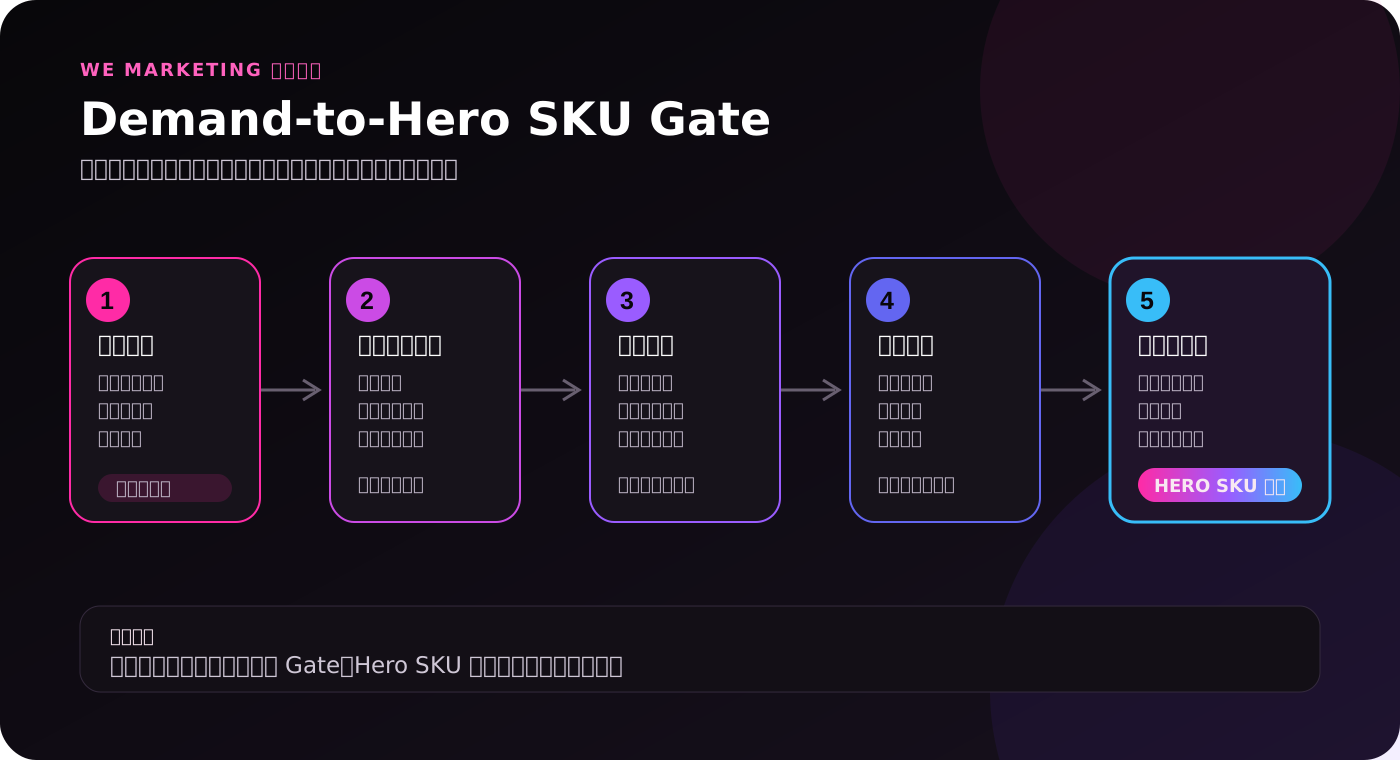
The WEM Demand-to-Hero SKU Gate
A brand with ten, fifty, or five hundred SKUs should not give every product equal launch weight. The first job is to create a candidate pool. The second is to eliminate products that cannot survive the operating system.
Gate 1: Demand is specific enough to act on
Start with the actual query, not a broad category label. "Skin care" is not a useful operating signal. A more specific need, ingredient, use occasion, format, or problem can shape product selection, listing language, creator briefs, and content questions.
Review hot, trending, and low-competition terms, but keep relevance strict. A keyword belongs in the title or description only when it accurately describes the product. Keyword stuffing may win an irrelevant impression while weakening shopper trust, conversion, and compliance.
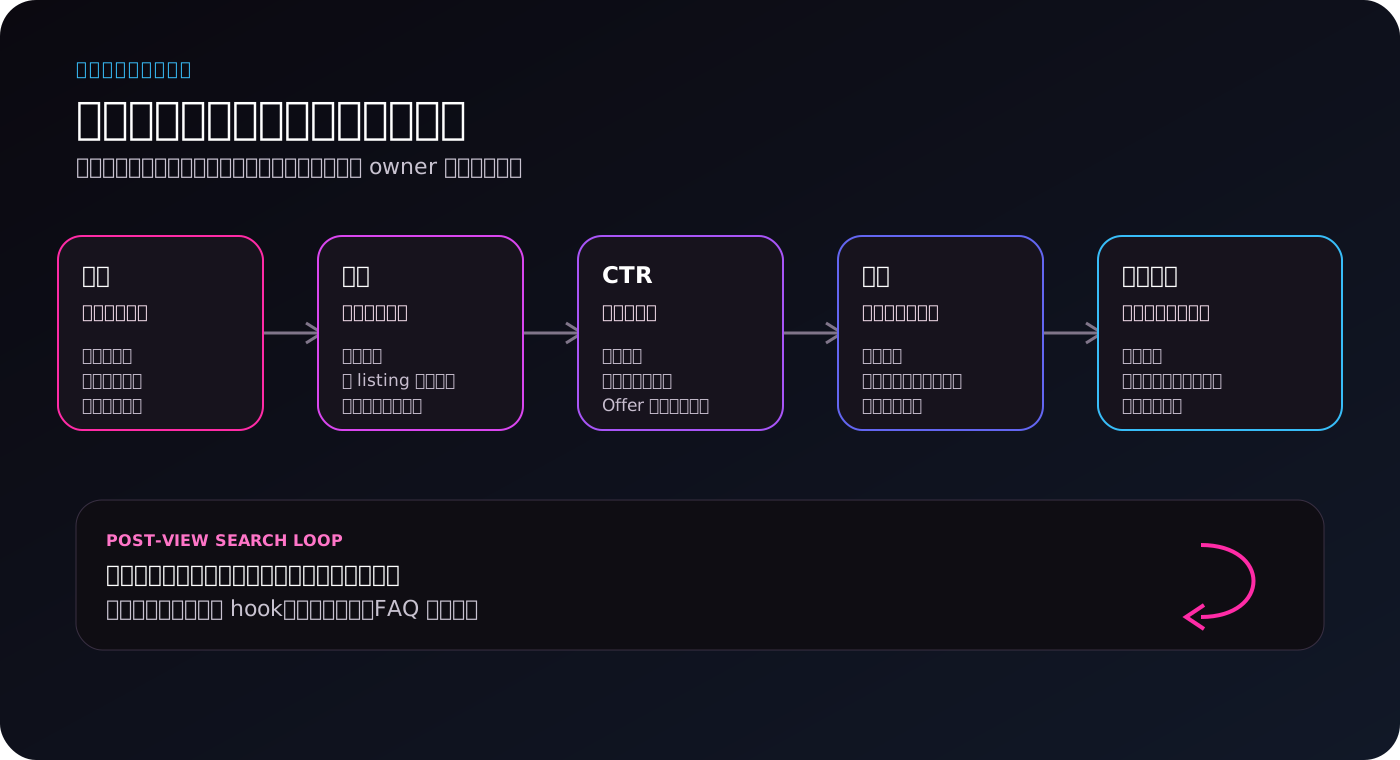
Post-view searches deserve special attention. When people watch a video and then search for a material, size, use case, ingredient, comparison, or result, they are showing what the content made them want to understand next. That can become the next creator hook, product-page module, FAQ, or objection-handling video.
Gate 2: The product has a visible proof job
TikTok Shop products need something a creator can make clearer on camera. That may be a texture, fit, setup, comparison, routine, transformation, convenience, taste, use occasion, or objection.
Ask:
- Can a viewer understand the product's value without a long explanation?
- Can different creators prove the same value in believable ways?
- Does the product solve a specific search need rather than borrowing a popular term?
- Can the content show what the listing claims without exaggeration?
If the product is difficult to demonstrate and the shopper must accept several unsupported claims, search demand alone will not make it a good Hero SKU.
Gate 3: Creators can carry the product truthfully
Creators are not a distribution list. In a cold start, they are part of product validation.
A strong candidate fits the routines, audience, and content language of more than one credible creator cohort. It should give creators enough room to make original content while keeping the product truth stable. One creator may focus on the problem. Another may show the routine. A third may answer the comparison question that appears in post-view search.
Do not call a product repeatable because one large creator produced one sales spike. A Hero SKU should have more than one credible content path and more than one plausible creator fit.
Gate 4: The conversion path can close the demand
Search discovery creates an expectation. The product page must finish the answer.
Check the title, images, variants, price, offer, reviews, shipping promise, return risk, and product detail copy against the exact question that brought the shopper in. When search impressions are healthy but CTR is weak, the packaging may be unclear. When CTR is healthy but conversion is weak, the friction is more likely in the listing, price, trust, inventory, or fulfillment path.
This is why Search GMV should not be read alone. The useful question is where demand stops moving.
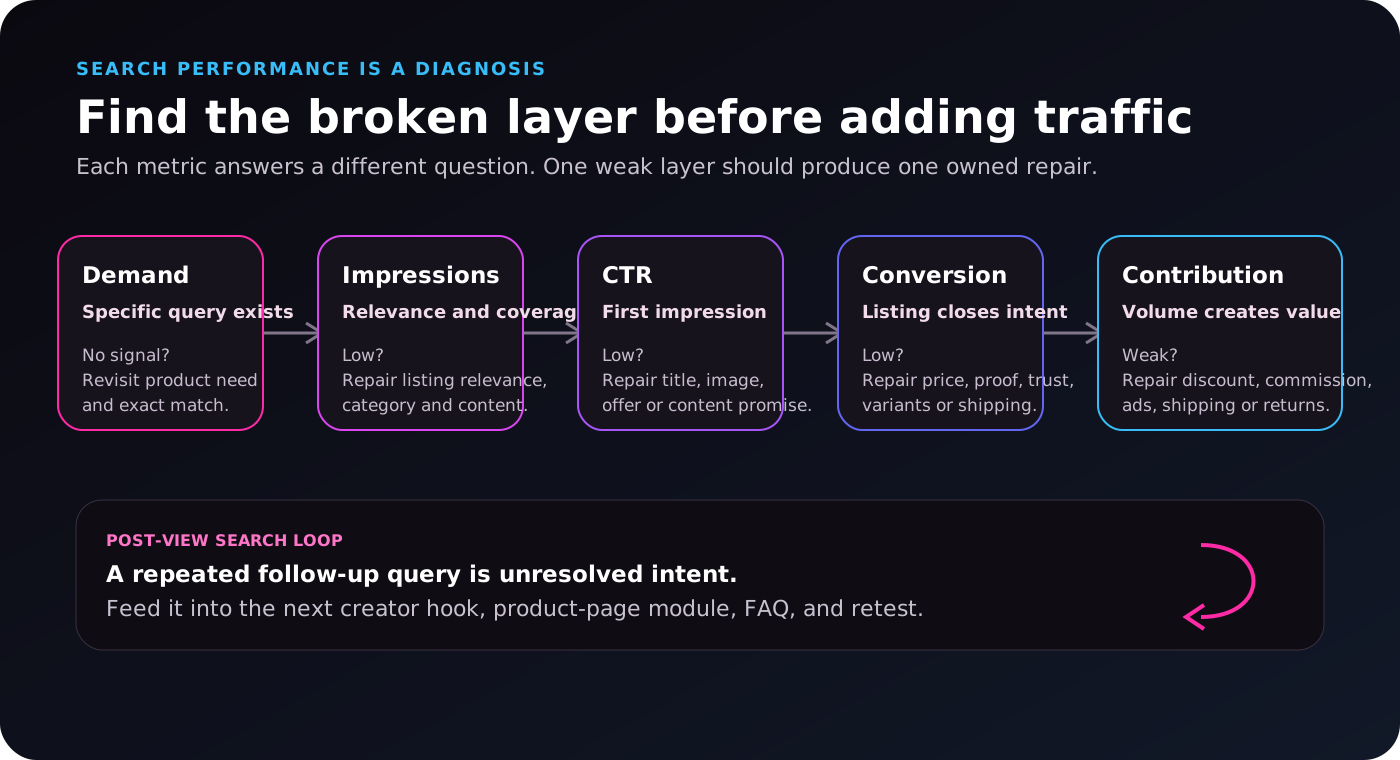
Read the search funnel as a diagnosis
The same result can require very different actions. More content is not always the answer, and more traffic can make an unresolved conversion problem more expensive.
| Pattern | Likely constraint to inspect | Next operating action |
|---|---|---|
| Search demand exists, impressions are low | Listing relevance, indexing, category, product match, or content coverage | Correct the product information and create content that answers the exact query |
| Impressions are healthy, CTR is weak | Main image, title clarity, offer, thumbnail, or content promise | Repackage the first impression before buying more traffic |
| CTR is healthy, conversion is weak | Price, reviews, variants, shipping, trust, product-page proof | Repair the product page and offer, then retest |
| Orders appear, contribution margin is weak | Discount, commission, ads, shipping, samples, or returns | Recalculate unit economics by entry SKU |
| One creator converts, others do not | Creator-audience relationship may be doing the work | Test the same proof job across new creator cohorts |
| Post-view searches repeat a question | Content is creating unresolved intent | Turn the question into the next video, listing module, and FAQ |
Search data is most valuable when it produces a named constraint, an owner, a next action, and a review date. A dashboard without a decision loop is only observation.
Separate the Hero SKU from the lead-in SKU
The product that attracts a shopper does not always need to be the highest-margin product. A lower-priced or easier-to-understand item can serve as a lead-in SKU when the brand has a credible downstream path to bundles, replenishment, accessories, higher-value products, or repeat purchase.
That strategy only works when the brand tracks customer value by entry SKU. Otherwise, "customer acquisition" becomes a vague explanation for an unprofitable product.
Use four product roles:
| Product role | Job in the system | Decision standard |
|---|---|---|
| Hero SKU | Concentrates creators, content, inventory, and paid learning | Repeatable demand, proof, conversion, margin, and operations |
| Lead-in SKU | Lowers the first-purchase barrier and opens a downstream path | Acceptable acquisition economics and measurable next purchase |
| Support SKU | Improves bundles, AOV, routines, or use cases | Clear attachment or retention role |
| Test SKU | Answers a defined product or demand question | Fixed test window and explicit success or stop rule |
Do not give a Test SKU permanent resources because it once had high search volume. Every role needs a business reason.
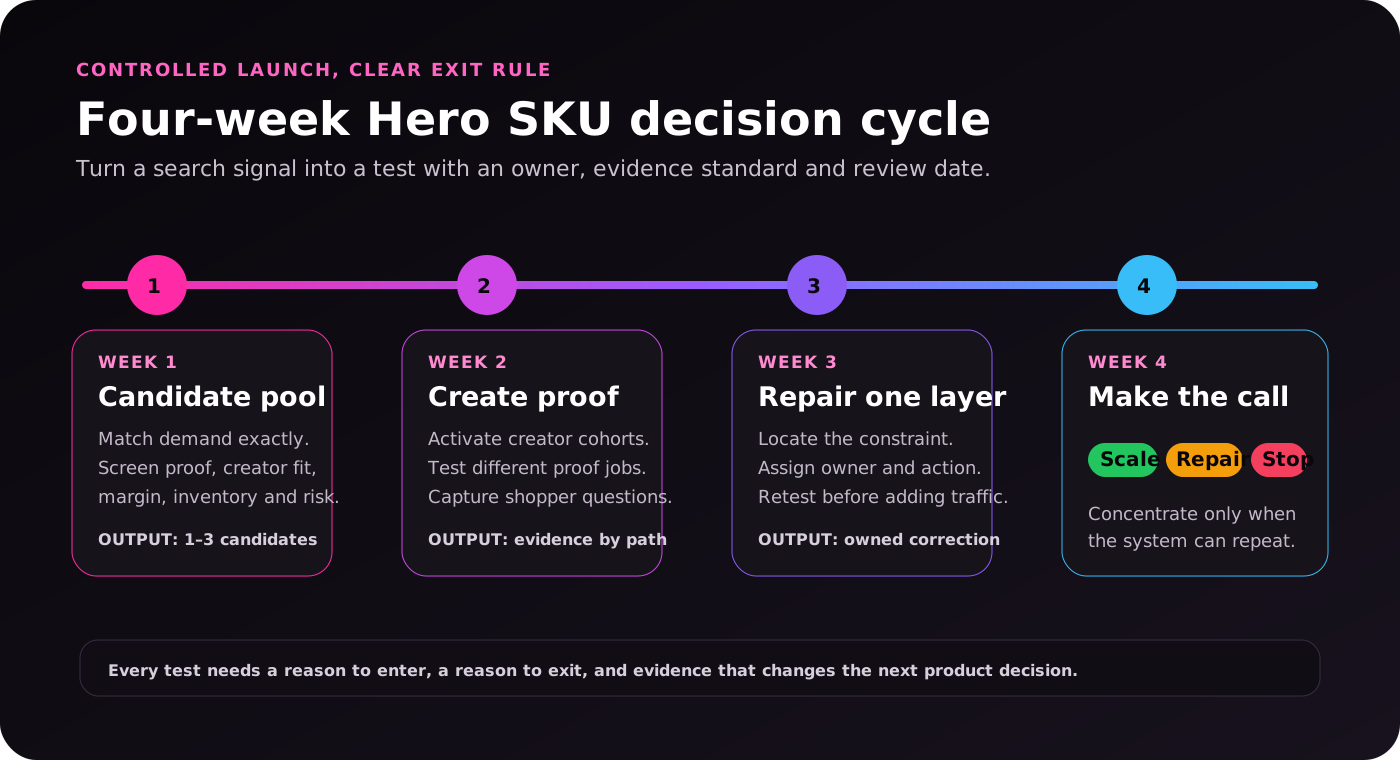
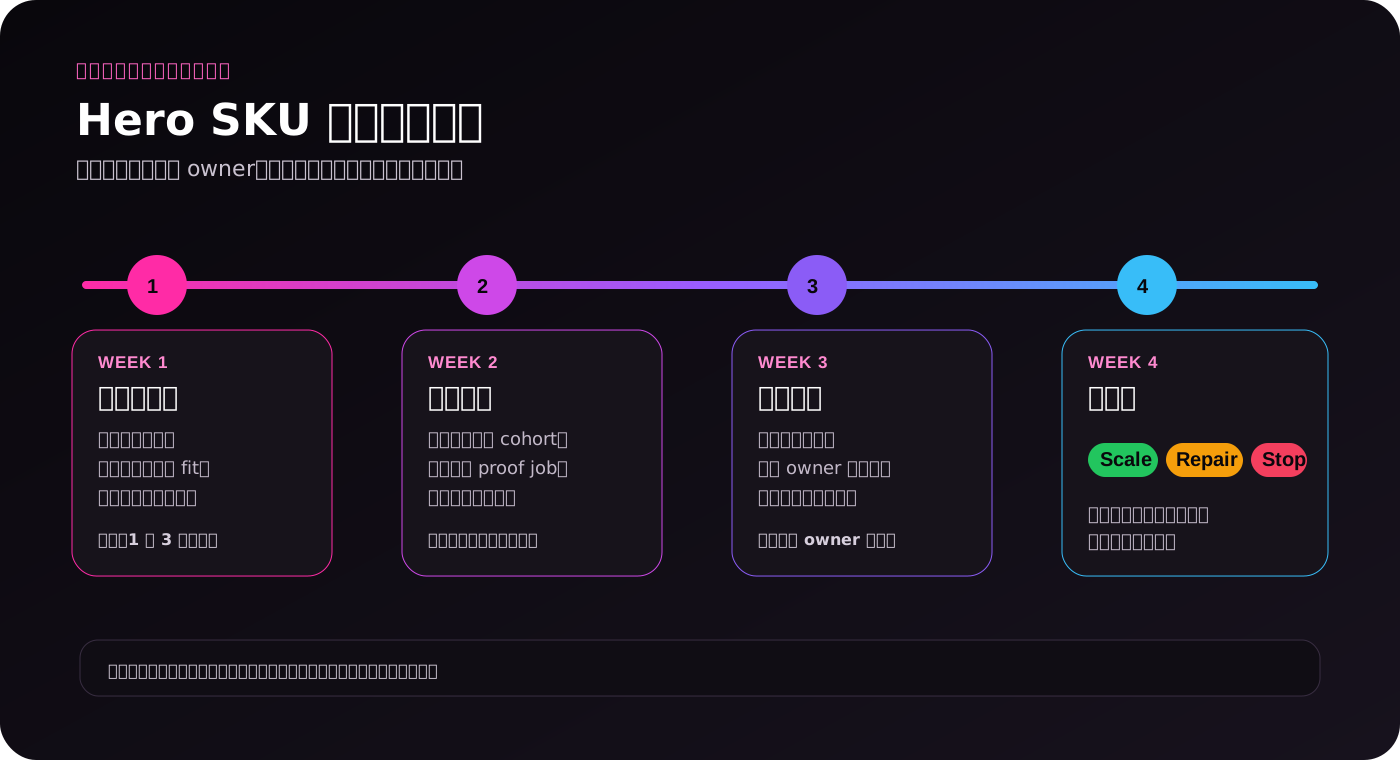
Run a four-week Hero SKU decision cycle
Week 1: Build the candidate pool
Use Search Insights and Product Opportunities to identify specific demand signals. Match products exactly, review compliance, and screen the shortlist for proof job, creator fit, unit economics, variant complexity, inventory depth, fulfillment, and return risk.
Choose one to three candidates for concentrated testing. Record why each product is in the test and what evidence would remove it.
Week 2: Create different kinds of proof
Activate several creator cohorts and assign different proof jobs. Build search language into accurate product titles, descriptions, captions, spoken context, and FAQs. Track samples, posting, correct product links, search impressions, CTR, conversion, post-view searches, shopper questions, and inventory by featured variant.
Week 3: Repair the broken layer
If discovery is weak, improve relevance and content coverage. If clicks are weak, improve packaging. If conversion is weak, repair the product page, offer, or trust layer. If orders are healthy but margin or inventory is unstable, do not add volume until the operating constraint is fixed.
Week 4: Scale, repair, or stop
Scale when multiple credible content paths can produce qualified demand, the listing converts without excessive friction, contribution margin is workable, featured inventory is available, and fulfillment is stable.
Repair when the product attracts real interest but one named layer is failing. Assign an owner, action, metric, and review date before adding budget.
Stop when demand does not survive accurate matching, creators cannot demonstrate the product credibly, conversion depends on unsustainable discounting, return patterns are unacceptable, or supply cannot support a repeatable launch.
What a Hero SKU scorecard should include
A weekly scorecard should connect demand to the rest of the business:
- Search demand by specific query and product
- Search impressions, CTR, conversion, orders, and Search GMV
- Product Card, LIVE, and Video search contribution
- Post-view searches and repeated shopper questions
- Creator acceptance, samples delivered, posts live, and correct product links
- Content by proof job and creator cohort
- Product-page conversion and offer performance
- Contribution margin after commission, samples, discounts, ads, shipping, and returns
- Featured-variant inventory and days of coverage
- Cancellations, late shipment risk, returns, and support issues
- Current decision: scale, repair, stop, or continue testing
GMV is a result. The scorecard should explain why the result happened and what the team will do next.
How WE Marketing uses search demand in a cold start
WE Marketing connects product selection, creator matchmaking, affiliate setup, samples, content testing, product-page feedback, paid coordination, inventory signals, and weekly performance review. Search demand enters that system as one source of evidence.
Our role is not to turn a trending keyword into a promise. It is to help a brand decide whether a real product can satisfy that demand, whether creators can make the value visible, whether the listing can convert the intent, and whether operations can support concentration.
For a large catalog, this creates a practical sequence: use demand to narrow the field, use creators and content to produce proof, concentrate on the products that repeat, and carry every result into the next product, content, inventory, and budget decision.
Sources and operating boundaries
Primary sources reviewed July 27, 2026: TikTok Shop Seller University, "TikTok Shop Search Insights: The New Way to Unlock Search Opportunities," published July 13, 2026; and "Product Opportunities," updated January 13, 2026.
TikTok Shop features, eligibility, rankings, incentives, interfaces, and performance can change. Search visibility and Product Opportunity participation do not guarantee impressions, orders, GMV, creator posts, or profitability. The WEM framework in this article is an operating method, not an official TikTok rule or financial guarantee.
Frequently asked questions
How do I choose a Hero SKU for TikTok Shop?
Use search demand to create a shortlist, then test each candidate for a clear creator proof job, accurate product match, listing conversion, contribution margin, inventory depth, fulfillment stability, and repeatability across creators and content angles. A Hero SKU is selected by the whole operating system, not search volume alone.
What is TikTok Shop Search Insights?
Search Insights is a TikTok Shop seller tool that shows search performance such as Search GMV, orders, impressions, CTR, and conversion. It also surfaces industry keywords, search opportunities, rankings, and post-view searches that can inform product, listing, and content decisions.
What are TikTok Shop Product Opportunities?
Product Opportunities helps sellers explore products, keywords, hashtags, and subcategories with notable demand or limited supply on TikTok Shop. Sellers can link an exact matching product or create a new listing, but they remain responsible for accurate matching, listing information, and compliance.
Does a low-competition keyword mean a product will sell?
No. It may indicate that current supply or content does not fully satisfy a query. The product still needs relevant demand, credible creator proof, a converting listing, workable economics, available inventory, and stable fulfillment.
Should I add trending search keywords to every product title?
No. Use only terms that accurately describe the product and match the shopper's need. Irrelevant keyword stuffing can attract the wrong impression, reduce trust and conversion, and create listing or compliance risk.
What should I do when search impressions are high but sales are low?
Locate where the funnel breaks. Weak CTR usually points toward the title, main image, offer, thumbnail, or content promise. Healthy CTR with weak conversion points more toward price, reviews, variants, shipping, trust, product-page proof, or inventory.
How many products should a TikTok Shop brand test at once?
For a cold start, WE Marketing usually concentrates active learning on one to three candidates after a broader screen. The exact number depends on catalog complexity, sample capacity, creator coverage, inventory, margin, and how clearly the team can diagnose each product.
Can a lower-margin product be the Hero SKU?
It can serve as a lead-in or Hero SKU when it creates acceptable acquisition economics and a measurable downstream path to bundles, replenishment, higher-value products, or repeat purchase. Track customer value by entry SKU so the strategy is proven rather than assumed.
WE Marketing · TikTok Shop 美国站 · Campaigns & Growth
TikTok Shop Hero SKU 怎么选:用搜索需求验证选品,不靠猜
WE Marketing Team · 2026 年 7 月 27 日
搜索需求负责缩小候选范围,不负责直接选出爆品
搜索需求可以帮 TikTok Shop 品牌缩小候选范围,但不能直接替你选出 Hero SKU。一个商品只有在需求、达人证明、商品页转化、贡献利润、库存和履约都能重复跑通时,才值得成为资源集中的主推品。
这也是选品时最容易被忽略的区别。搜索数据能告诉团队消费者正在找什么、哪些词正在升温、哪些需求可能没有被现有供给满足;但它不会自动告诉你,这个商品能不能被达人自然讲清楚、商品页能不能承接购买意图,或者在寄样、佣金、折扣、物流、投放和退货之后还有没有利润。
WE Marketing 的运营判断:搜索负责告诉你应该去哪里调查,受控冷启动负责告诉你什么值得集中。
搜索需求是候选信号,不是爆品标签
TikTok Shop 目前的 Search Insights 可以让卖家看到 Search GMV、订单、曝光、点击率和转化率,也能分别查看商品卡、LIVE 和短视频带来的搜索表现。平台还会展示热门词、趋势词、低竞争词,以及需求相对供给更强的 search opportunities。
Product Opportunities 则更接近商品层。它会展示有趋势或供给不足的商品、关键词、话题和细分类目。但平台要求商品必须准确匹配,外观相似不代表就是同一个机会。即使系统预填了部分商品信息,卖家仍要自己检查准确性和合规。
这些工具减少的是选品最前端的猜测,不会替品牌完成后面的冷启动。
| 搜索信号 | 可能说明什么 | 不能证明什么 |
|---|---|---|
| 搜索量高或持续上升 | 消费者正在主动表达需求 | 你的商品、价格和内容一定会转化 |
| 低竞争关键词 | 现有供给或内容可能没有满足需求 | 这个类目一定有利润、好运营 |
| 搜索曝光 | 商品或内容获得了相关查询的展示 | 首图、标题和 Offer 足以让人点击 |
| 搜索 CTR | 第一眼信息获得了注意 | 商品页可以把点击变成订单 |
| 搜索转化和订单 | 这条搜索路径能够产生交易 | 不同达人、不同周次都能重复 |
| Post-view Searches | 视频制造了新的问题或购买意图 | 用户已经找到正确答案和商品 |
WEM 的 Demand-to-Hero SKU Gate
一个有 10 个、50 个甚至 500 个 SKU 的品牌,不应该让所有商品在冷启动时获得同样资源。第一步是建立候选池,第二步是淘汰无法通过整个运营系统的商品。
Gate 1:需求要具体到可以执行
不要从宽泛类目词开始。比如“护肤”不是一个足够清楚的运营信号。更具体的问题、成分、使用场景、商品形态或对比需求,才能真正影响选品、标题、达人 brief 和内容问题。
可以看热门词、趋势词和低竞争词,但相关性必须严格。一个词只有在准确描述商品时,才应该进入标题和详情。堆砌热门词可能带来不相关曝光,却会损害用户信任、转化和合规。
Post-view Searches 特别值得看。用户看完视频后又去搜索材质、尺码、场景、成分、对比或效果,说明视频让他产生了下一步问题。这个问题可以变成下一条达人内容、商品页模块、FAQ 或异议处理视频。
Gate 2:商品要有镜头里的证明任务
适合 TikTok Shop 冷启动的商品,需要有一件达人可以在镜头里讲得更清楚的事。它可能是质地、版型、安装、对比、使用流程、便利性、口感、场景或一个常见异议。
团队要问:
- 用户不需要很长解释,能不能看懂商品价值?
- 不同达人能不能用可信的方式证明同一个价值?
- 商品是不是在解决具体搜索需求,而不是借用热门词?
- 内容能不能真实证明 listing 里的表达,而不是依赖夸张承诺?
如果商品很难展示,又需要消费者接受多个没有证明的结论,即使搜索量高,也不适合直接当 Hero SKU。
Gate 3:达人能够真实承接商品
达人不是一张分发名单。冷启动阶段,他们也是产品验证的一部分。
好的候选品应该可以进入不止一个可信达人的生活方式、受众和内容语言。品牌可以让不同达人承担不同 proof job:有人讲问题,有人展示使用过程,有人回答 Post-view Search 里重复出现的对比问题。
一位大达人带来一次销售高峰,不等于商品已经可重复。Hero SKU 应该有不止一条可信内容路径,也有不止一种合理的达人匹配。
Gate 4:转化路径能够接住需求
搜索产生的是期待,商品页要完成答案。
把用户进入搜索时的问题,与标题、图片、变体、价格、Offer、评价、物流承诺、退货风险和详情信息逐项对照。搜索曝光正常但 CTR 低,通常先检查第一眼包装;CTR 正常但转化低,则更应该检查商品页、价格、信任、库存和履约。
所以 Search GMV 不能单独看。真正有用的问题是:需求走到哪一层停下来了?
把搜索漏斗当作诊断工具
同样是“卖不动”,需要的动作可能完全不同。更多内容不一定是答案。没有修好的转化问题,在得到更多流量后只会变得更贵。
| 表现 | 优先检查的限制 | 下一步动作 |
|---|---|---|
| 有搜索需求但曝光少 | listing 相关性、索引、类目、商品匹配和内容覆盖 | 修正商品信息,并制作准确回答查询的内容 |
| 曝光正常但 CTR 低 | 主图、标题、Offer、封面或内容承诺 | 先重做第一眼表达,再增加流量 |
| CTR 正常但转化低 | 价格、评价、变体、物流、信任和商品页证明 | 修复页面与 Offer,再重新测试 |
| 有订单但贡献利润弱 | 折扣、佣金、投放、物流、寄样或退货 | 按 entry SKU 重新计算单位经济 |
| 只有一个达人能卖 | 可能是达人和受众关系在起作用 | 用同一个 proof job 测试新的达人 cohort |
| 看完视频后重复搜索同一个问题 | 内容制造了没有被回答的意图 | 把问题加入下一条视频、商品页和 FAQ |
搜索数据只有在导向一个明确限制、一个 owner、一个 next action 和一个复盘日期时,才真正有运营价值。只有 dashboard,没有决策循环,只是在观察。
分清 Hero SKU 和 Lead-in SKU
负责吸引第一次购买的商品,不一定非要是利润最高的商品。价格更低、价值更容易理解的产品,也可以承担 Lead-in SKU 的作用,前提是品牌确实有 bundle、复购、耗材、配件或更高价值商品的后续路径。
这个策略必须按 entry SKU 追踪客户价值。否则,“先获客”很容易变成长期亏损的模糊解释。
可以把商品分成四种角色:
| 商品角色 | 在系统里的任务 | 判断标准 |
|---|---|---|
| Hero SKU | 集中达人、内容、库存和投放学习 | 需求、证明、转化、利润和运营可以重复 |
| Lead-in SKU | 降低第一次购买门槛,打开后续路径 | 获客经济可承受,而且能测量下一次购买 |
| Support SKU | 提升 bundle、客单价、使用场景或留存 | 有清楚的连带或复购作用 |
| Test SKU | 回答一个明确的产品或需求问题 | 有固定测试周期和成功、停止规则 |
不要因为一个 Test SKU 曾经有高搜索量,就长期给它资源。每个角色都要有清楚的商业理由。
用四周完成一次 Hero SKU 决策
Week 1:建立候选池
用 Search Insights 和 Product Opportunities 找到具体需求。严格匹配商品并检查合规,然后从镜头证明、达人 fit、单位经济、变体复杂度、库存深度、履约和退货风险做第二轮筛选。
最后只选择 1 至 3 个候选品集中测试。记录每个商品为什么进入测试,也记录什么证据会让它退出。
Week 2:制造不同类型的证明
激活不同达人 cohort,让内容承担不同 proof job。把搜索语言准确放进标题、详情、caption、口播语境和 FAQ。追踪寄样、发布、挂链准确性、搜索曝光、CTR、转化、Post-view Searches、用户问题和主推变体库存。
Week 3:修复失效的一层
Discovery 弱,就修相关性和内容覆盖;点击弱,就修第一眼包装;转化弱,就修商品页、Offer 和信任层;订单正常但利润或库存不稳定,就先修运营限制,不要急着加量。
Week 4:Scale、Repair 或 Stop
Scale:多条可信内容路径都能产生有效需求,商品页能够低摩擦转化,贡献利润可承受,主推变体有库存,履约稳定。
Repair:商品有真实兴趣,但某一个明确层失败。增加预算之前,要定义 owner、动作、指标和复盘日期。
Stop:需求无法通过准确匹配,达人很难真实展示,转化依赖不可持续折扣,退货模式不可接受,或供应链无法支持重复启动。
Hero SKU 周报应该包含什么
周报需要把需求和后面的业务结果连接起来:
- 按具体查询和商品拆分的搜索需求
- 搜索曝光、CTR、转化、订单和 Search GMV
- 商品卡、LIVE 和短视频的搜索贡献
- Post-view Searches 和重复出现的消费者问题
- 达人接受、寄样送达、发布上线和正确挂链
- 按 proof job 和达人 cohort 拆分的内容
- 商品页转化和 Offer 表现
- 计入佣金、寄样、折扣、投放、物流和退货后的贡献利润
- 主推变体库存和可售天数
- 取消、延迟履约、退货和客服异常
- 当前决定:Scale、Repair、Stop 或继续测试
GMV 是结果。周报要解释结果为什么发生,以及团队下一步做什么。
WE Marketing 怎么把搜索需求放进冷启动
WE Marketing 会把选品、达人匹配、Affiliate 设置、寄样、内容测试、商品页反馈、投放协同、库存信号和周度复盘连接在一起。搜索需求只是其中一类证据。
我们的作用不是把一个趋势词包装成爆品承诺,而是帮助品牌判断:真实商品能不能满足这份需求、达人能不能让价值被看见、商品页能不能承接意图、运营能不能支持资源集中。
对于 SKU 很多的品牌,这会形成一个清楚顺序:先用需求缩小范围,再用达人和内容制造证明,把资源集中到可以重复的商品,最后把每个结果带回下一轮选品、内容、库存和预算决定。
来源与执行边界
主要来源审阅日期为 2026 年 7 月 27 日:TikTok Shop Seller University 的 “TikTok Shop Search Insights: The New Way to Unlock Search Opportunities”,发布于 2026 年 7 月 13 日;以及 “Product Opportunities”,更新于 2026 年 1 月 13 日。
TikTok Shop 的功能、资格、排名、激励、界面和表现可能变化。获得搜索展示或参与 Product Opportunities,不代表平台保证曝光、订单、GMV、达人发布或利润。本文中的 WEM 框架属于运营方法,不是 TikTok 官方规则或财务承诺。
常见问题
TikTok Shop 的 Hero SKU 应该怎么选?
先用搜索需求建立候选池,再检查准确商品匹配、镜头里的 proof job、达人 fit、商品页转化、贡献利润、库存深度、履约稳定性,以及不同达人和内容角度能否重复。Hero SKU 是由完整运营系统选出来的,不是由搜索量单独决定。
TikTok Shop Search Insights 是什么?
它是 TikTok Shop 给卖家查看搜索表现的工具,包括 Search GMV、订单、曝光、CTR 和转化,也会展示行业关键词、搜索机会、排名和 Post-view Searches,可以用于选品、listing 和内容决策。
TikTok Shop Product Opportunities 是什么?
它帮助卖家查看 TikTok Shop 上有需求或供给不足的商品、关键词、话题和细分类目。卖家可以链接准确匹配的现有商品或创建新 listing,但仍要自己负责商品匹配、信息准确性和合规。
低竞争关键词是不是代表商品一定能卖?
不是。它可能表示现有供给或内容没有完全满足查询,但商品仍要通过真实需求、达人证明、商品页转化、单位经济、库存和履约测试。
所有热门搜索词都应该放进商品标题吗?
不应该。只使用能够准确描述商品、也匹配消费者需求的词。无关的关键词堆砌会带来错误曝光,降低信任和转化,还可能增加 listing 或合规风险。
搜索曝光高但销量低,应该先做什么?
先找到漏斗停在哪里。CTR 弱通常先检查标题、主图、Offer、封面和内容承诺;CTR 正常但转化弱,则检查价格、评价、变体、物流、信任、商品页证明和库存。
TikTok Shop 冷启动应该同时测试多少个商品?
WE Marketing 通常在更广泛的初筛后,把主要学习资源集中到 1 至 3 个候选品。具体数量取决于类目复杂度、寄样能力、达人覆盖、库存、利润,以及团队能否清楚诊断每个商品。
低利润商品可以做 Hero SKU 吗?
如果它有可承受的获客经济,并且能测量地带来 bundle、复购、耗材、配件或更高价值商品,它可以承担 Lead-in SKU,甚至成为 Hero SKU。关键是按 entry SKU 追踪客户价值,而不是假设后续价值一定发生。