BEAUTY · BFCM CONTENT REVIEW
Before You Scale Another BFCM Beauty Video, Check What the Demonstration Promises
A strong beauty demonstration makes a product easier to understand. It does not automatically prove every result a viewer might infer. In the remaining days of Black Friday and Cyber Monday, a U.S. brand can gain more from correcting one unsupported implication than from distributing the same uncertainty to a larger audience. The useful review question is simple: what would a reasonable shopper believe happened, and what evidence supports that belief for the exact product being sold?
WEM approaches this as a creative and operating decision. We want a demonstration that explains the product clearly, gives the creator room to speak naturally and stays consistent with the product evidence. A review should tell the team what to keep, what to change and what is still unknown. A vague instruction to make a video “more compliant” is not an actionable brief.
Separate the product, the action and the promised outcome
Start with three observations. What physical item appears in the video? What action does the person perform? What outcome does the complete sequence suggest? These are related but distinct. A product can be shown accurately while an edit implies a result the brand has not established. The spoken words can be modest while the caption, comparison or reaction creates a much stronger impression.
Record the exact SKU and variant first. Then describe the shot without marketing language. Finally, write the likely customer takeaway in plain language. For example, a close-up may show a texture being spread, while an immediate cut to a different appearance suggests that the product caused the change. The review needs to address the whole impression, not only the sentence the creator said aloud.
Give every important claim an evidence owner
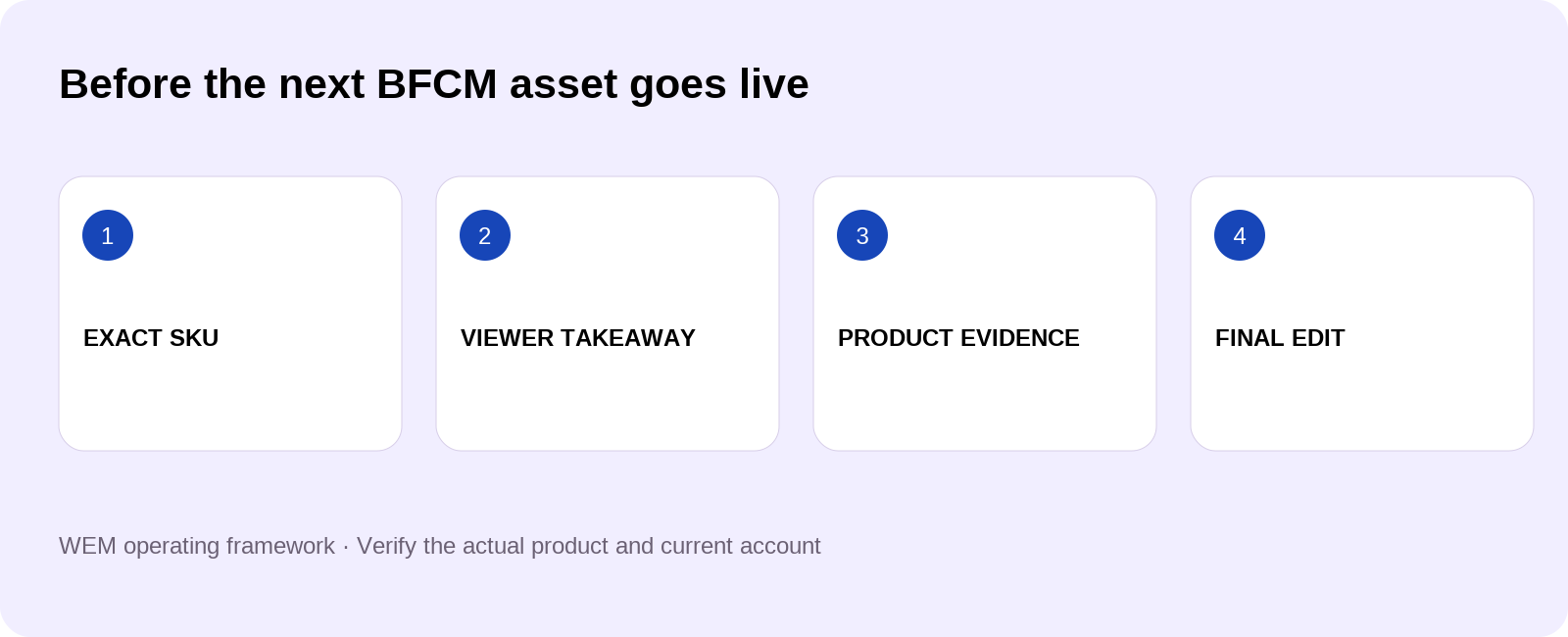
The content manager should not have to invent the meaning of a study, label or product description. Assign someone within the brand to confirm what evidence actually supports. Record the approved wording, relevant product version, the evidence location and any limitation the creative team needs to preserve. If that record is missing, label it as missing instead of treating a successful competitor video as a substitute.
TikTok Shop's current health-related content guidance restricts unsupported medical and high-risk outcome claims. Its quality guidance also emphasizes truthful, clear product presentation. These are platform requirements, not a WEM certification service. Product classification, applicable law and a particular claim may require qualified review beyond an agency's content workflow.
For WEM, the practical handoff is a short evidence card. It should help the creator understand what the product is, which supported feature the video will explain, what must not be implied and whom to ask about a question. A large folder of technical documents without an accountable answer can slow the review while leaving the same uncertainty unresolved.
Review the edit as carefully as the script
Read the script, then watch the actual footage with the sound off. Next, listen without looking at the screen. Finally, watch the complete sequence as a shopper would. This exercise helps separate a literal statement from a visual or audio implication. It is a WEM review method, not a claim that the platform applies these exact three steps.
Look at changes in lighting, camera distance, product amount, elapsed time and the subject's pose or expression. A normal production choice may become misleading if it is presented as product performance. When a distinction matters, preserve the real conditions and explain them clearly. Do not assume a small disclaimer can repair a demonstration that otherwise communicates an unsupported result.
Choose the smallest correction that makes the story truthful
Not every issue requires throwing away the entire concept. A useful review identifies the specific sentence, caption, shot or transition creating the problem. The team may be able to retain a real product demonstration while removing an unsupported outcome promise. Explain the change in terms of the customer impression, not simply a forbidden-word list.
For example, a creator may have filmed a useful application sequence and added a strong result statement afterward. The next task is to confirm whether the statement is supportable and whether the footage independently implies the same result. Removing the words alone may be insufficient. Conversely, an accurate explanation should not be rejected merely because a reviewer prefers a different creative style.
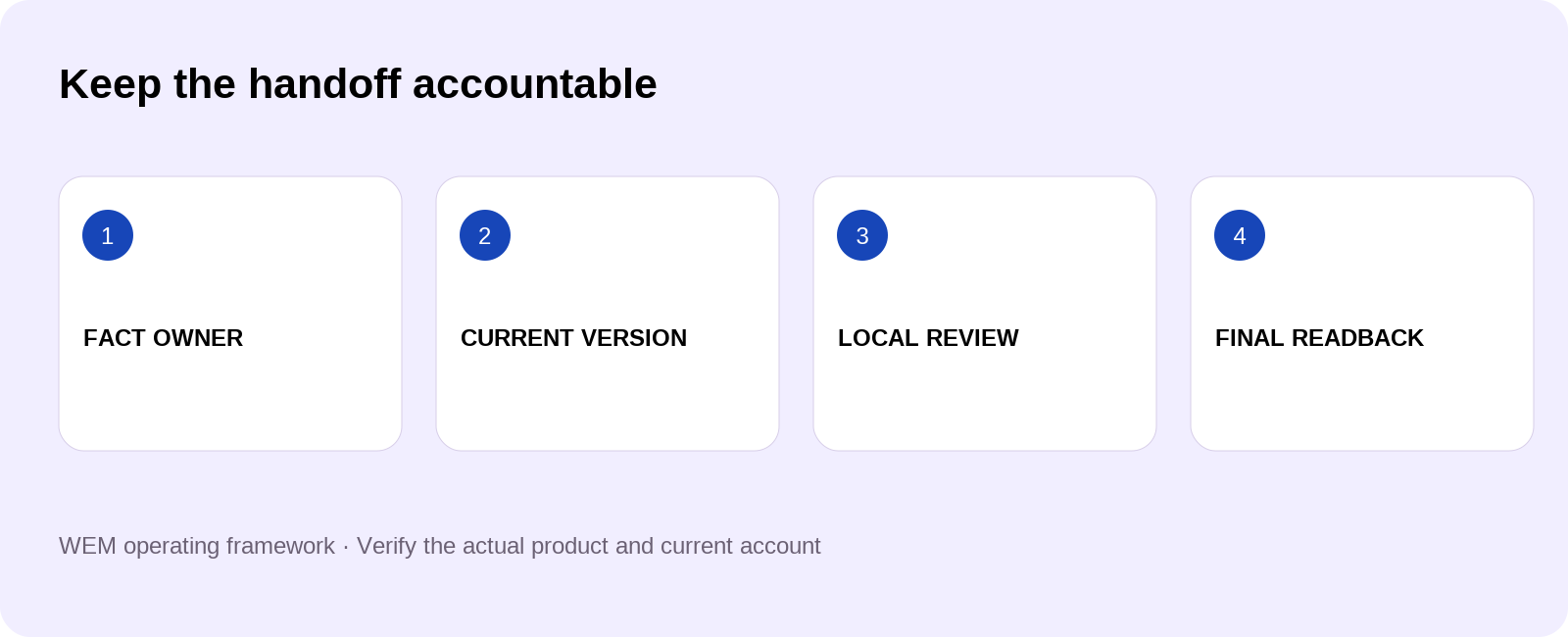
Continue the review after the revision. Check the exported asset, its caption, the linked product and any on-screen offer. The draft approved in a message is not necessarily the file ultimately posted. Keep one clear record of the version reviewed and the person responsible for confirming the final public presentation.
Do not let a holiday deadline become an efficacy claim
An offer deadline and a product outcome are different things. The fact that a discount expires this week does not support a promise that the product will produce a physical result before a holiday event. Keep urgency attached to verified offer terms. Let the product explanation stand on its own evidence. This makes the message easier for the creator to deliver and easier for the customer to evaluate.
This article is written on November 26, 2026. At this point, WEM would prioritize assets already scheduled for distribution or paid reuse. Sort them by the consequence of an unsupported impression, the reach still planned and the speed of a truthful correction. Do not introduce a rushed new performance test simply to keep a posting slot. A later, properly supported asset can be a better decision than a timely but misleading one.
Carry the explanation into LIVE and the product page
A corrected short video does not fix an inconsistent product page or a host's prepared answers. For each changed claim, identify the other places where the same message appears. Update the relevant brief, host notes and customer-service reference. Tell the team whether evidence was missing, the wording was too broad or the visual presentation created a different impression.
In LIVE, unanswered questions need an escalation path. The host can explain verified product information and personal experience without improvising a broader claim. A moderator can capture the question and route it to the brand's product owner. Decide before the session who can provide an answer and how a later correction will reach the team. More confident delivery is not a substitute for more reliable information.
Keep creative preferences separate from evidence feedback
A different opening, a shorter introduction or a clearer close-up may improve the creative. A claim that lacks support is a different issue. Combining them into one long revision request makes it harder for a creator to know which changes are required for accuracy and which are preferences that can be discussed.
WEM recommends two short columns: customer accuracy and creative clarity. The first identifies the impression that must be resolved. The second explains how the video can communicate the supported story more effectively. Give each point a reason and a specific change. Preserve the creator's natural expression where it does not conflict with accurate product information or the agreed deliverable.
Decide what makes the next version acceptable
Before sending feedback, define what will close the issue: an approved wording decision, a real demonstration under normal conditions or a corrected product link. Review the result against the original concern. Do not keep adding unrelated preferences and call that a continuing accuracy review. A clear endpoint helps both the brand and creator deliver the work they actually agreed.
Keep the original concern, supporting product information, requested change, approved version and public-check owner together. If the team cannot resolve the product fact, do not disguise uncertainty as a confident recommendation. Move the asset out of the current distribution plan while the underlying question is addressed. That decision protects the clarity of the campaign, not just a checklist.
The smallest useful action today
Choose the next three beauty assets scheduled for BFCM reuse. Write one sentence describing the likely customer takeaway for each, identify its exact product and name the evidence owner. Flag the unresolved implication that matters most. Send a specific correction request, check the exported version and align the relevant product page or LIVE note. This is a bounded cycle a brand and its agency can finish together.
Frequently asked questions
Does showing a real product make every claim acceptable?
No. A genuine item can still be paired with words or edits that imply an unsupported outcome. Review the whole customer impression and the evidence for the exact product, not only whether the item appears on camera.
Should we remove demonstrations to avoid claims issues?
No. Truthful demonstrations can explain normal use and supported features. Define the task and relevant conditions rather than avoiding useful information altogether. Change the unsupported implication, not automatically the entire concept.
Can a disclaimer replace missing evidence?
Do not treat a disclaimer as a replacement for reliable support. If the main impression remains unsupported, address the words or visual creating it and seek qualified review where the classification or claim requires it.
Who should approve the product facts?
The brand should name an owner with access to the relevant evidence. The agency can organize the review and identify questions, but should not invent a conclusion from incomplete documents or a competitor's content.
What if the creator already posted the asset?
Confirm the public version and concern first. Coordinate a proportionate correction with the creator and responsible brand owner. Review related paid reuse and LIVE notes as part of the same issue, and verify the actual result afterward.
What can we still change during the final BFCM days?
Focus on specific unsupported implications in assets already planned for use. Keep the supported demonstration where possible, agree a realistic correction and check the final version before further distribution. Do not promise a revision timeline the creator has not accepted.
Source notes
Primary references reviewed November 26, 2026: TikTok Shop responsible health-related content and high-quality videos and LIVEs. The workflow is WEM's operating recommendation, not platform approval, a legal opinion or a guarantee against enforcement. Check claim-specific questions against the complete current requirements and appropriate professional advice.