TIKTOK SHOP U.S. · HOLIDAY CONTENT
Three Ways to Turn Holiday Discovery Into a Buying Decision on TikTok Shop
For a U.S. brand in the final days of a holiday campaign, the useful question is not simply how to get another video posted. It is which unanswered buying question the next video or LIVE segment can resolve. A shopper may need to see how a garment fits, understand a scent they cannot smell through a screen, or watch a device perform an ordinary task. Those are different content jobs. Treating them as one discount message leaves important work unfinished.
At WEM, our recommendation is to connect one purchase uncertainty to one truthful demonstration, the exact product being sold, and an offer the team can actually deliver. Start with the customer decision. Then choose the creator, format and next action. This approach is especially useful when there is little time left to recruit, ship samples or make large changes to the assortment.
What three official brand examples help us see
TikTok Shop's Road to Black Friday article describes three approaches. Princess Polly uses creator content and LIVE to help shoppers evaluate fashion. Dossier makes fragrance easier to discuss through descriptive storytelling and questions. SharkNinja demonstrates products in everyday settings and uses feedback to improve the explanation. These are TikTok's reported examples, not WEM client results or a controlled comparison of which approach performs best.
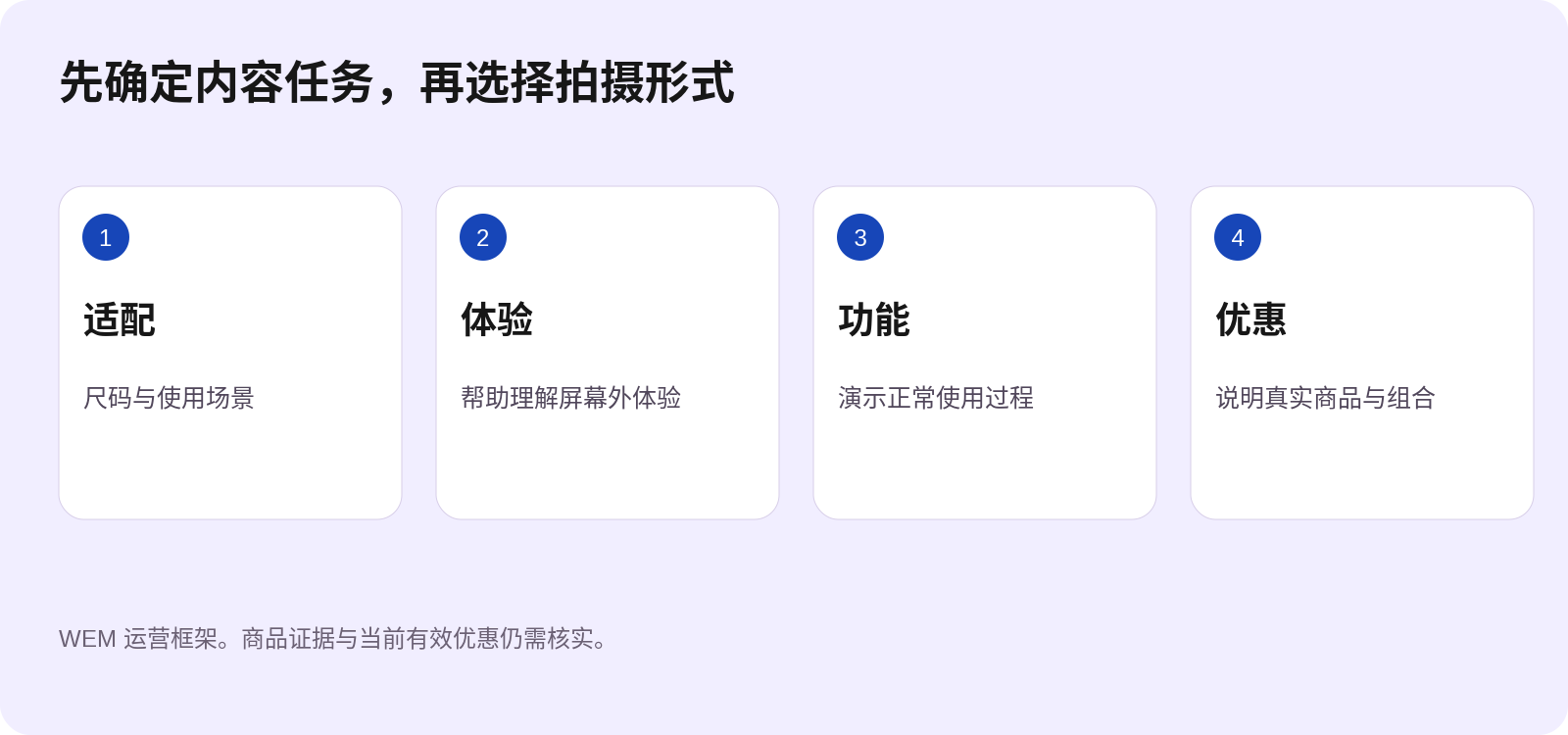
Our takeaway is a decision framework: identify whether the customer needs help imagining fit, interpreting an experience, or checking a function. Build the content around that uncertainty. You do not need to copy a large brand's creator count or production scale to apply this way of thinking. You do need a product that can support the story and an operator who can keep the content aligned with the live listing.
When the question is fit, show the conditions
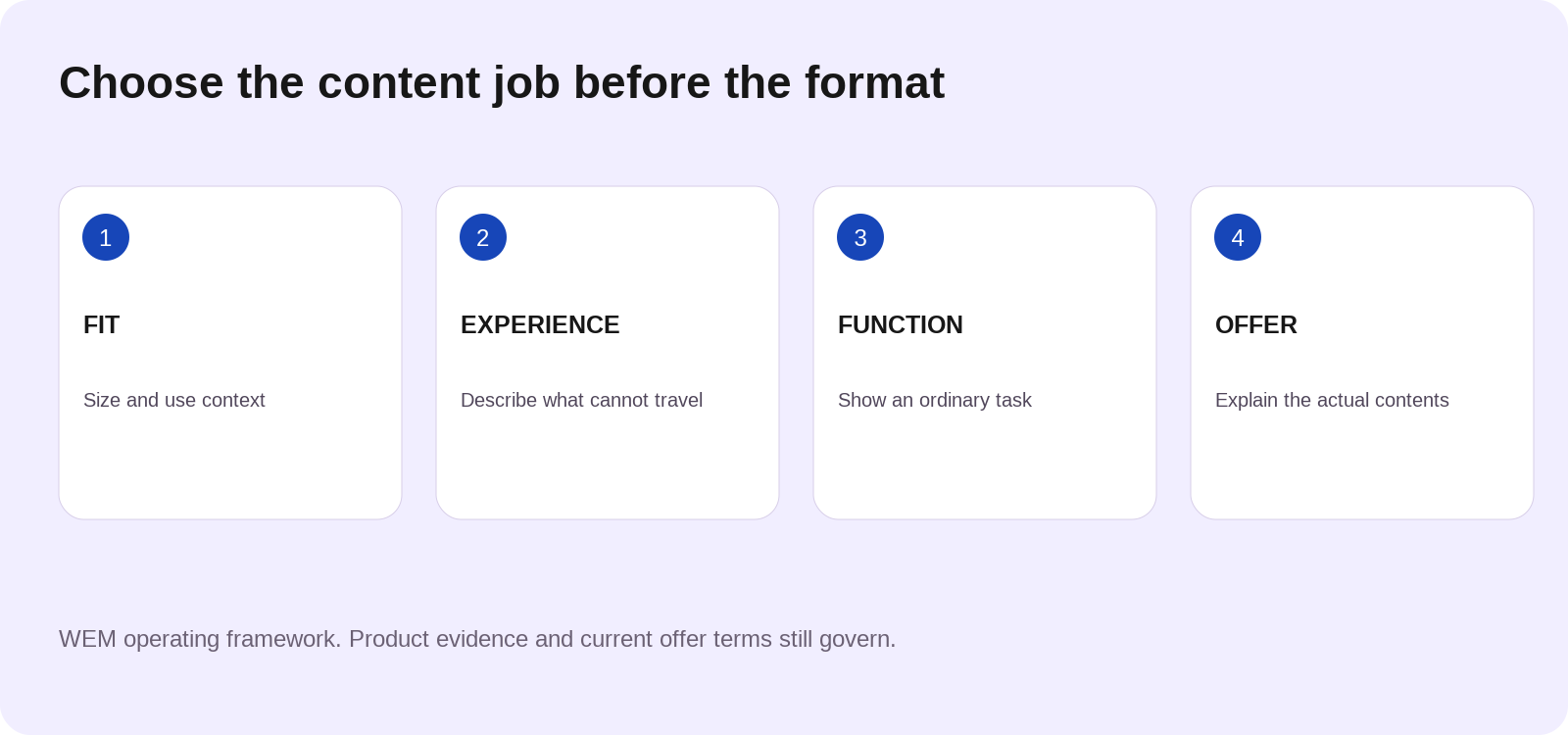
A fashion shopper may understand what an item is and still hesitate because the fit is unclear. Another discount cannot show the length, movement, fabric or styling context. A useful creator brief specifies which uncertainty to demonstrate, while allowing the creator to describe their own experience naturally. Show the item from relevant angles and make clear which size or variation is being worn.
For the remaining campaign window, look first at questions already appearing in comments and customer messages. If shoppers repeatedly ask about length or layering, commission a clear answer rather than another broad unboxing. Ask a creator who already has the product whether they can answer that question on an agreed schedule. Existing access to the product is a practical advantage; it is not permission to assume their availability or additional deliverables.
WEM's public anonymous menswear case describes testing a broader creator mix alongside product-page and content changes. The lesson we use here is the testing method, not a promise that another brand will reproduce the same order volume. A new audience hypothesis should produce a new demonstration or point of view, not merely another person reading the same script.
When the experience cannot travel through a screen, help people choose
Fragrance is a useful example of a product whose defining experience cannot be directly transmitted by video. Content can still help shoppers make a more informed choice. It can describe the scent family, intended occasion and product format, compare supported attributes, and explain what a customer receives. It should distinguish a creator's preference from a universal claim about how everyone will experience the product.
WEM would organize a fragrance LIVE around a small set of real customer questions: everyday use or gifting, preferred scent direction, application format, and what is in the set. Avoid turning an evocative description into an unsupported promise about longevity or effect. A host should be able to say what is known, describe personal experience as personal, and direct unresolved product questions to the brand's verified information.
This also applies to skincare texture, ease of use and other experience-led products. A demonstration can show how a product is applied without proving every efficacy statement. The creative team and the claims owner should agree on that distinction before content is reused. A disclaimer does not replace reliable support for what the audience sees and hears.
When the customer needs proof of function, show an ordinary task
A functional product needs a demonstration that buyers can relate to their own situation. Define the task, the actual item and accessories, and the conditions under which it is used. Showing an extreme result without those details may make an exciting clip while making the purchase less informed. If the customer receives a different model or set, even a truthful demonstration can become confusing.
For a practical holiday segment, choose one question the host can answer with the product already available. Demonstrate the normal steps, show a relevant limitation, and explain what the listing includes. Questions about installation, compatibility or support belong in the handoff to the product-page owner as well as the content brief. The goal is a consistent purchase explanation across the video, LIVE and listing.
Do not assume that a famous product demonstration proves a new brand's market fit. Different prices, customer expectations, service obligations and return costs can change the decision. Use the example to improve the question you ask, then test your own answer with evidence from your own product and audience.
Build a purchase-question sheet before the next content request
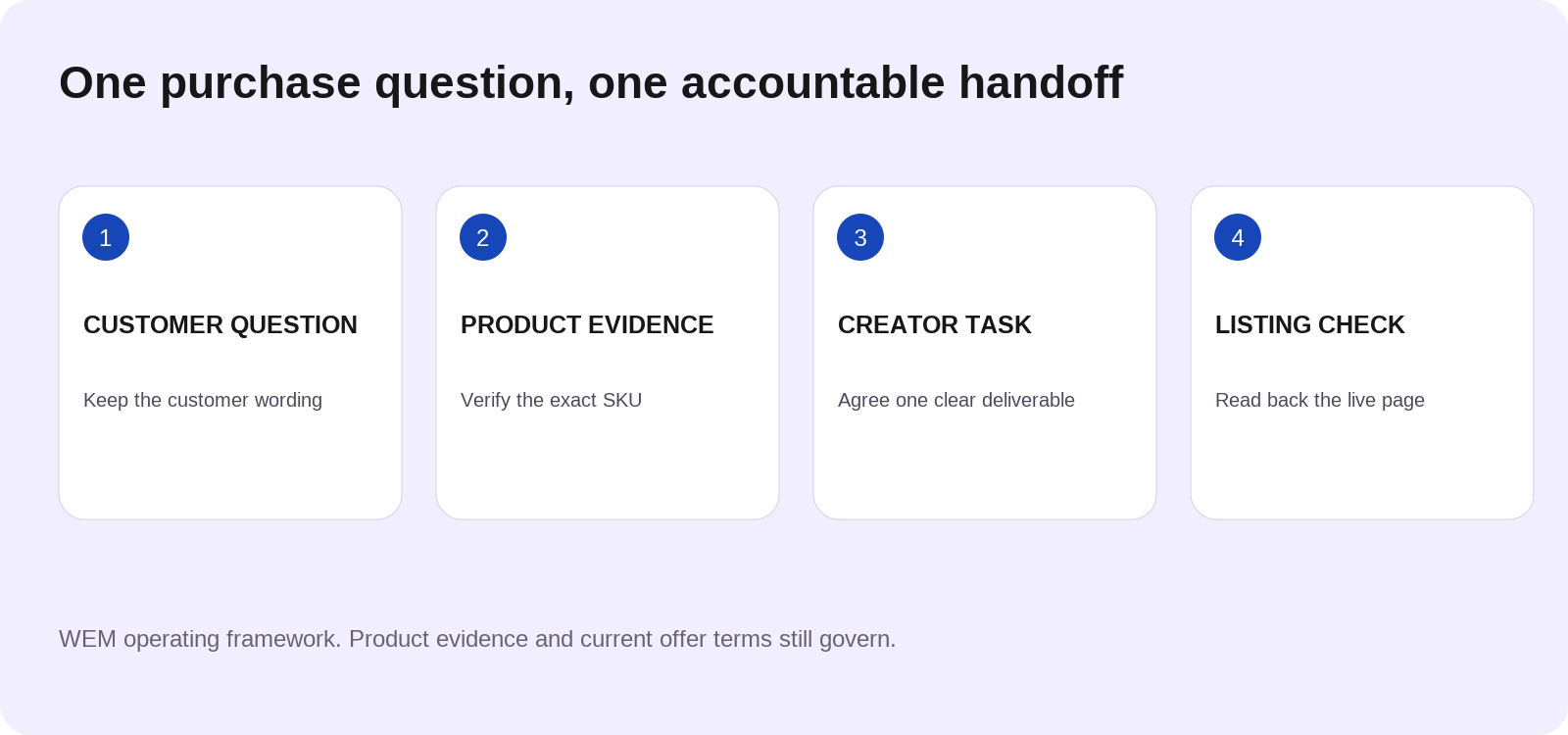
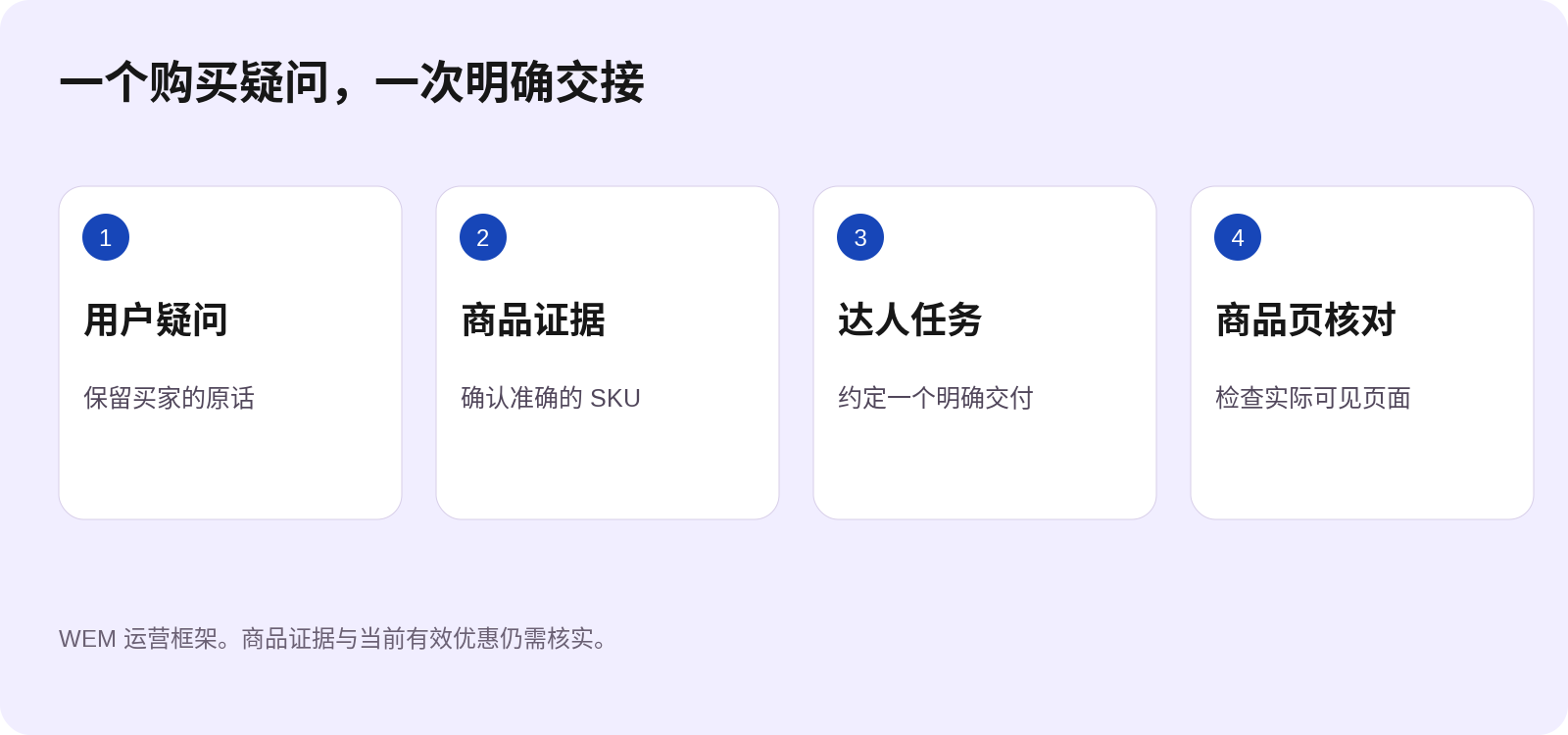
Use one row for each unresolved question. Record the question in the customer's words, the exact SKU, the evidence available, the content format, the owner and the intended next step. For example, a sizing concern may need a creator demonstration and an improved size reference. A bundle question may need a clearly displayed list of included items rather than another dramatic product shot.
Prioritize questions using both frequency and consequence. A question that causes incorrect purchases or service problems deserves attention even if it is less common than a popular styling comment. Keep the sheet short enough for the content manager, shop operator and support lead to use together. When the product information changes, update the affected content and customer-facing answers as part of the same task.
What is still realistic in the remaining BFCM window?
This article is written on November 26, 2026. TikTok's announced U.S. campaign window ends November 30. That does not mean every product, discount or creator has the same eligibility or deadline. Read the current campaign card and listing before promising an offer. The remaining time is a reason to narrow the work, not a reason to compress product testing or pretend a new creator has already received a sample.
WEM would start with existing products, available inventory, creators who already know the item and questions the brand can answer now. Choose a bounded improvement: one missing demonstration, one confusing bundle explanation, or one LIVE answer that needs better product evidence. Confirm whether the creator can deliver it and whether the shop team can support the resulting demand. If the timing does not work, use the insight for the next content cycle.
Measure whether the buying decision became clearer
Views show that content reached people. They do not by themselves show that the content resolved a buying concern or produced profitable demand. Compare the questions before and after the change, relevant product clicks, orders under a defined attribution method, and any resulting service issues. Keep product, price and timing differences visible when comparing results. A small test is a learning signal, not proof of a general growth formula.
Our public anonymous beauty relaunch case describes changing the hero-product strategy, creator mix and central narrative together. It supports a WEM operating principle: when the story is scattered, first investigate the explanation and product choice instead of assuming more creators will solve the problem. Because several things changed in that historical case, we do not attribute the result to a single action or use it as a forecast.
The smallest useful action today
Choose one active SKU and read its ten most recent substantive customer questions. Group them into fit, experience, function or offer clarity. Select one question that can be answered truthfully with the product and resources already available. Name the content owner and the product-page owner, agree on a deadline, and check the actual asset and listing after the change. That is a concrete piece of remaining-window work a team can finish and assess.
Frequently asked questions
Should every holiday video lead with a discount?
No. If the customer does not understand fit, use or product contents, a price message may leave the main purchase uncertainty unresolved. Match the opening to the buying question, then present the current verified offer where relevant.
Do we need a large creator roster to use this framework?
No. Start with an appropriate creator who already has the product and an agreed task. Larger programs introduce more coordination and do not remove the need for product evidence or audience fit.
Can a LIVE host promise the same result a creator experienced?
A personal experience is not proof of a universal outcome. Keep statements aligned with supported product information and current platform requirements. Review both spoken and visual implications before reuse.
Is it too late to start new BFCM creator outreach?
It depends on product access, availability and the agreed deliverable. Do not assume a cold contact can receive, try and publish before the campaign ends. Existing prepared partners may be more realistic; later collaborations can serve the next cycle.
Which result should we compare after changing a demonstration?
Read product clicks and attributable orders alongside customer questions, refunds or service issues, using a clear period and attribution method. Keep pricing and audience changes visible. Views alone are insufficient.
Are the brands in this article WEM clients?
The three named examples come from TikTok Shop's official article. They are not presented as WEM clients. WEM's separately identified anonymous historical cases illustrate our operating approach within their published evidence limits.
Source notes
Primary reference: TikTok Shop: Princess Polly, Dossier and SharkNinja, complete article reviewed November 26, 2026. Campaign timing reference: TikTok Shop holiday gift discovery announcement. Examples are publisher-reported observations, not independently audited performance evidence. WEM recommendations are identified as such. Current prices, availability and account access require current listing and Seller Center checks.