TIKTOK SHOP U.S. · LIVE OPERATIONS
TikTok Shop LIVE 0-1: Why Your First Five Sessions Are a Learning System
WE Marketing Team · Aug 20, 2026 · 16 min read
Direct answer: treat the first five LIVEs as one controlled launch loop
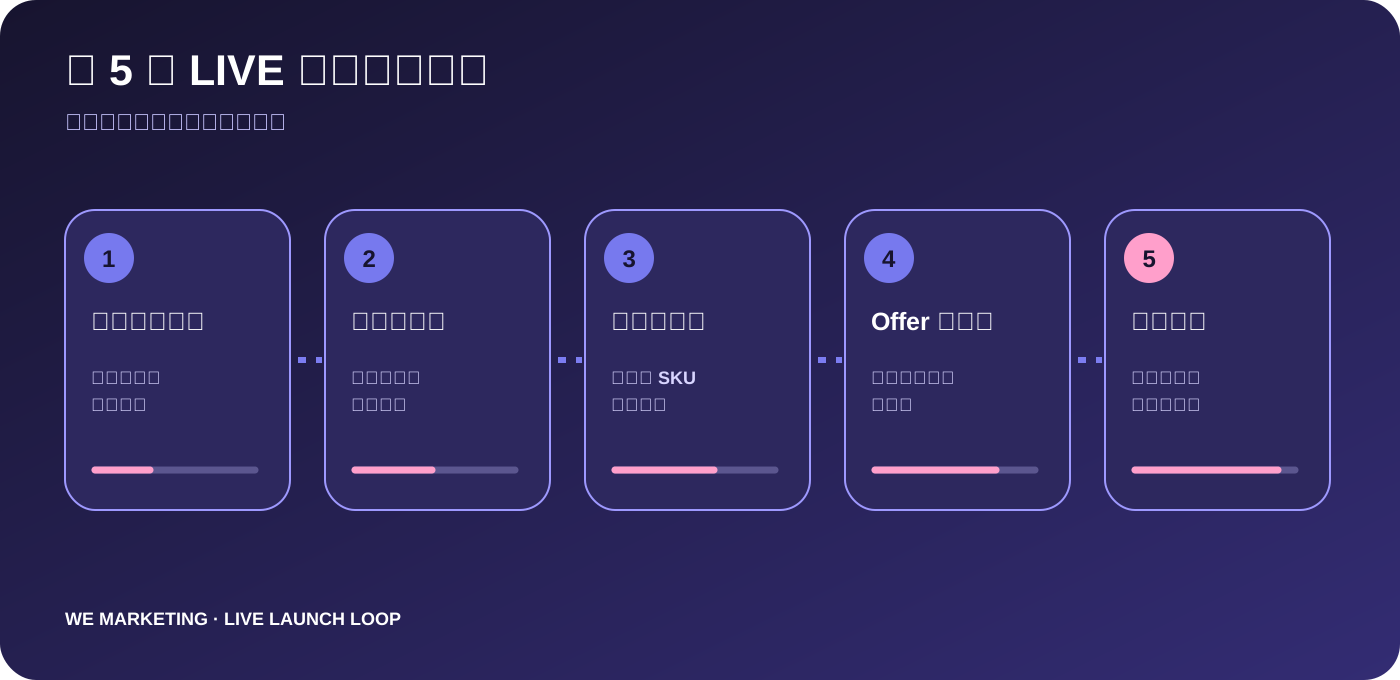
A new TikTok Shop LIVE program should not judge its future from one session, and it should not repeat five nearly identical sessions hoping that volume alone will create clarity. Use the first five sessions as one controlled learning loop. Keep the product truth, basic room setup, and ownership stable. Give each session one primary learning question. Capture what shoppers saw, asked, clicked, added, bought, or rejected. Then use that evidence to change the next session.
The number five is a WEM operating boundary, not a TikTok Shop guarantee, eligibility rule, or promised growth timeline. Five sessions are simply enough to force a team to move beyond first-night noise while remaining small enough to prevent an unproven show from consuming a month of inventory, host time, discounts, and media. A team may need more sessions before making a scale decision. It may also need to stop earlier when product truth, compliance, inventory, or customer experience is not ready.
The goal of the first five sessions is not to prove that LIVE works. It is to learn which version of the show deserves session six.
Define the system before you go LIVE
In this module, a session is one scheduled LIVE with a named product set, host, operator, offer boundary, and post-LIVE readback. A learning question is the one uncertainty the team intends to reduce in that session. A controlled variable is the one meaningful element the team deliberately changes, such as the opening hook, product order, demonstration, or offer explanation. A stable core is everything that should not change casually, including approved product claims, product-page truth, fulfillment capacity, basic room quality, and named ownership.
This separation matters because LIVE contains many moving parts. A stronger result can come from a better product, a clearer explanation, a different audience, a deeper discount, a more confident host, or simple timing variation. If the team changes the host, room, assortment, price, script, traffic source, and duration together, the recap becomes a story rather than evidence. WEM does not require laboratory precision. We require enough operating discipline to know what decision the next session is testing.
The WEM readiness gate for session one
| Gate | Ready means | Stop condition |
|---|---|---|
| Product truth | The host can explain who the product is for, what it does, what is included, how variants work, and what it does not promise. | Claims, price, variation, or product-page details conflict. |
| Supply | Inventory, fulfillment owner, cancellation risk, and customer-service coverage are known. | The team cannot support the demand it is trying to create. |
| Room | Vertical framing, clear audio, stable connection, readable product display, lighting, and moderation have been checked. | The buyer cannot see, hear, or safely understand the product. |
| Show | The opening, product demonstration, question handling, offer explanation, and closing action have an approved outline. | The host is expected to improvise product truth or promotion terms. |
| Ownership | A host, operator, product owner, fulfillment owner, and recap owner are named, even if one person holds multiple roles. | No one can make the next-session decision. |
| Evidence | The team has chosen the session question and knows which current LIVE and commerce signals it will read afterward. | The recap will rely only on GMV or general impressions. |
The five-session launch loop
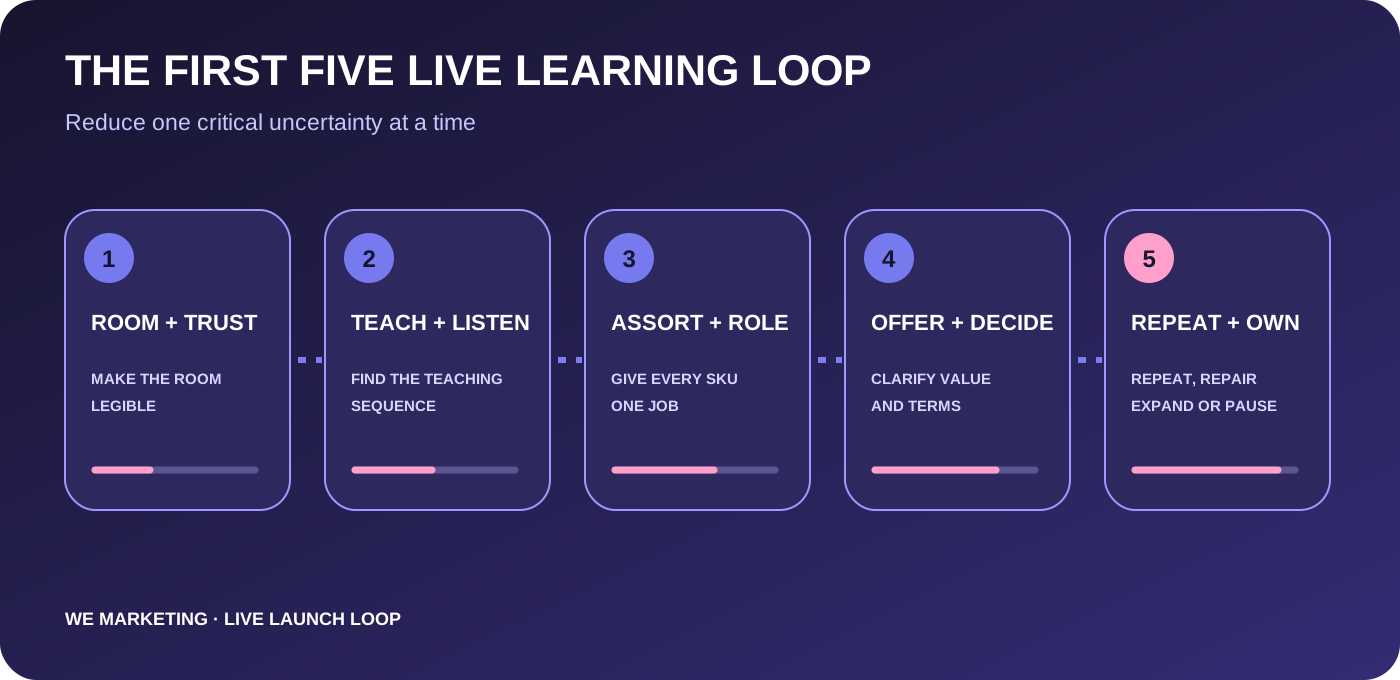
Run the loop in order unless a stop condition requires repair. The sequence moves from basic buyer comprehension toward a repeatable operating model. Do not add paid reach merely because the calendar says the team has reached a certain session. Current platform capabilities, account access, eligibility, and reporting can vary. Use the tools and records actually visible in the current U.S. account.
Session 1: can a shopper understand and trust the room?
Session one validates the stable core. Use a short, focused product set. Confirm that the host can show the product clearly, repeat the main buyer problem in plain language, answer common questions, and point shoppers to the correct product. The operator watches for audio, framing, product-card errors, missing variants, confusing price language, moderation gaps, and fulfillment questions. Do not use the first night to test every product in the catalog.
The decision after session one is operational: repair the room, repair product truth, or proceed. A low sales result does not automatically mean LIVE is a bad channel. If shoppers could not understand the item or complete the path, the team has not yet tested demand. Fix the broken handoff before changing the offer or adding more traffic.
Session 2: which product explanation earns useful attention?
Keep the room and core assortment stable. Change the opening hook and the demonstration sequence for one priority product. Compare a feature-first explanation with a buyer-situation explanation, but do not make unsupported before-and-after or performance claims. Track the questions that appear repeatedly. They are not interruptions. They are a live voice-of-customer stream showing which facts the product page, host script, and future short videos must explain.
The decision is which teaching sequence should become the default. Save exact shopper wording where privacy permits. Route product confusion to the product or listing owner, not only to the host. A stronger hook is useful only when the rest of the buyer path can keep the promise made in the first seconds.
Session 3: which assortment roles make the show easier to buy?
Now test the product set as a show, not a shelf. Assign each selected SKU one job: open attention, teach the category, carry the main conversion task, build trust, or complete a basket. A product can play more than one role, but the team should still know why it is present. Remove products that consume explanation time without supporting the session question.
Change product order or the depth given to each role while holding the room and core claims stable. Read product clicks, shopper questions, add-to-cart behavior, order quality, and stock pressure together. The decision is not simply the top-GMV product. It is which compact set creates a coherent buyer journey the team can supply and repeat.
Session 4: does the offer clarify the decision or hide a weak show?
Test one offer presentation within approved economics and current account capabilities. The variable may be clearer bundle explanation, a better comparison of what is included, a simpler promotion explanation, or a more deliberate interaction moment. The purpose is not to manufacture urgency. It is to make the purchase decision legible. State quantity, timing, eligibility, and limitations exactly as they exist in the current account.
Separate offer response from product understanding. If shoppers engage only when the discount becomes deeper, the team may have a value-communication or product-fit problem. If shoppers understand the product but miss the final action, the offer or CTA may be unclear. The post-LIVE decision should name which one the evidence supports.
Session 5: can the team repeat the show without heroics?
Session five is a controlled repeat. Use the strongest room setup, teaching sequence, compact assortment, and offer explanation discovered so far. Avoid adding several new ideas. The test is whether the team can reproduce the operating quality with a clear run-of-show, named roles, prepared product cards, and a short recap. A show that works only when one person improvises perfectly is not yet a system.
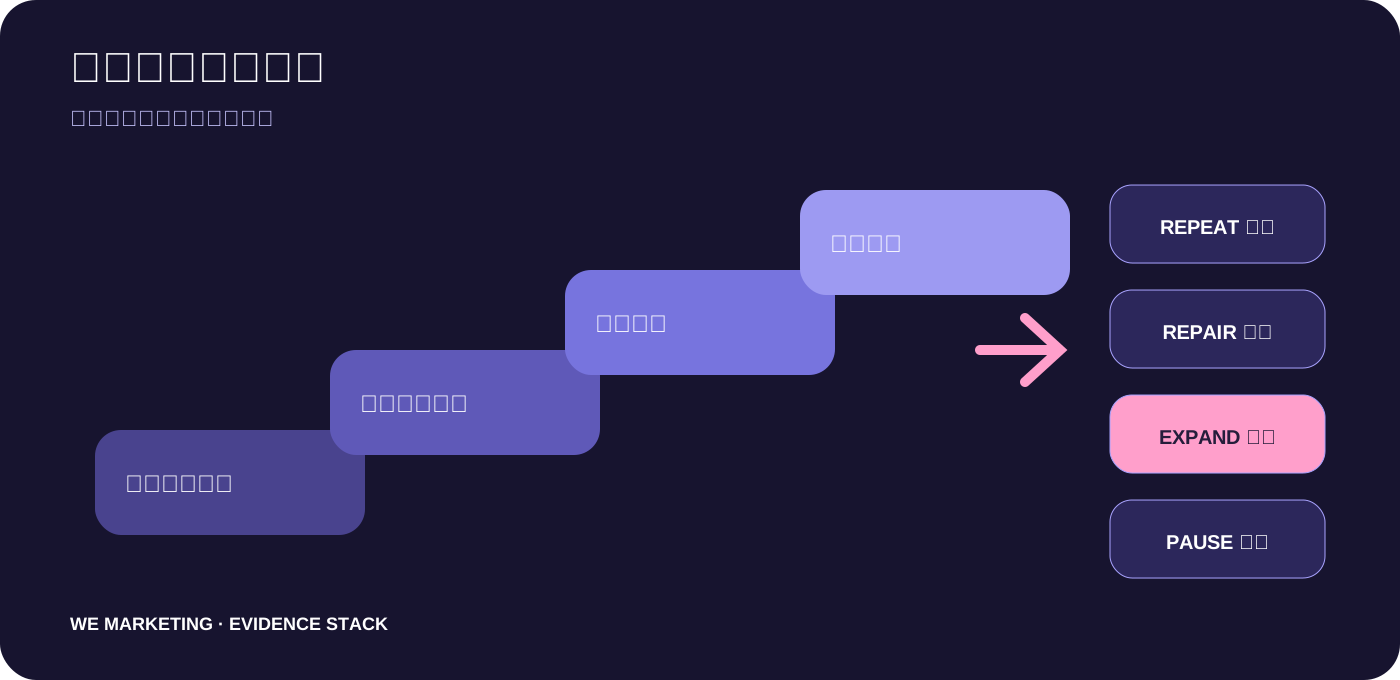
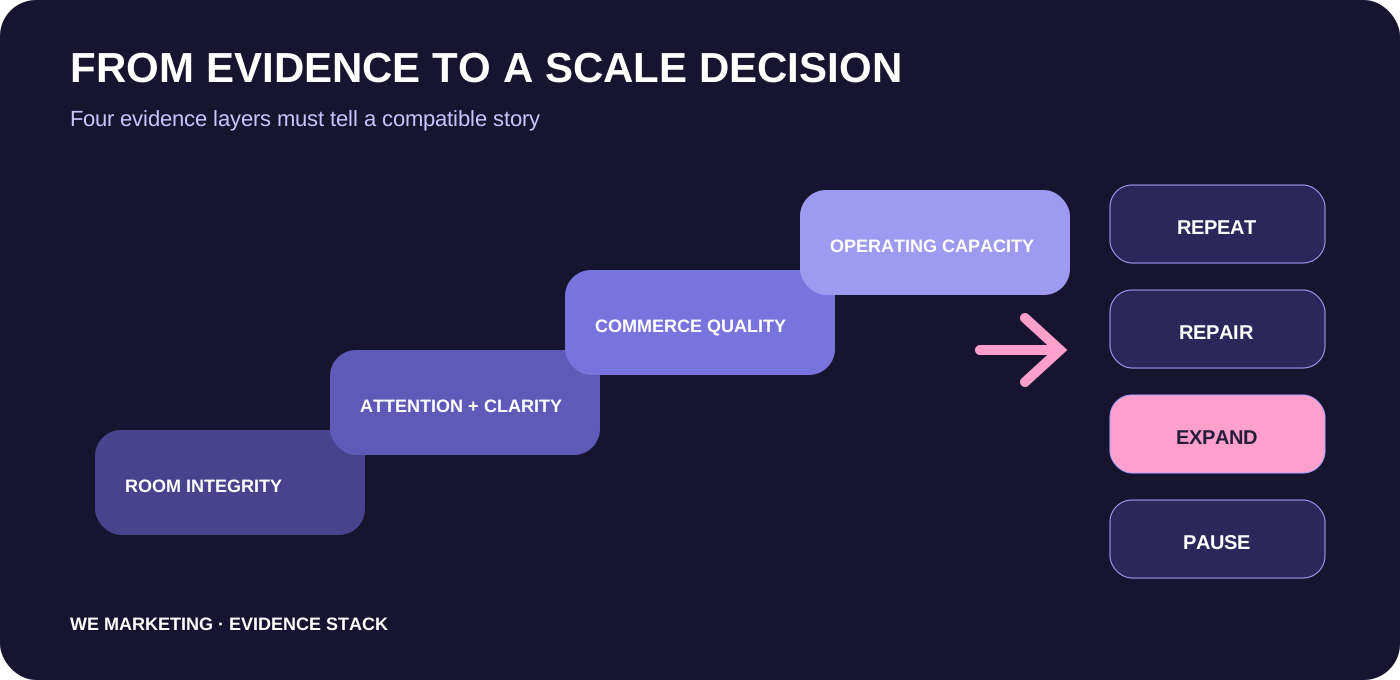
At the end, choose one of four decisions: repeat the current model to collect more evidence, repair a named constraint, expand one dimension with guardrails, or pause because product truth, economics, supply, customer experience, or ownership is not ready. Expansion means one controlled step, such as another session, a larger proven product role, a second trained host, or an eligible traffic lever. It does not mean changing everything at once.
Use an evidence stack, not one headline metric
Read evidence in layers. Start with room integrity: connection, audio, framing, moderation, and product-card accuracy. Then read attention and comprehension: entry, meaningful watch behavior, repeated questions, product clicks, and demonstration response. Next read commerce: add-to-cart, orders, order quality, discounts, cancellations, returns, and settled economics when available. Finally read capacity: stock, fulfillment, host stamina, operator load, content reuse, and whether the team can run the next show safely.
Metric definitions and availability can change. Use the current LIVE analytics and Seller Center surfaces for the actual account, and document what was available on the review date. Do not turn missing evidence into zero. Mark it missing or unknown, assign an owner, and avoid a high-confidence growth decision until the missing input is resolved.
Owner and cadence
The host owns clear product teaching and honest interaction. The LIVE operator owns the run-of-show, product order, moderation, tool execution, and time-stamped notes. The product owner owns product truth, inventory, offer economics, and listing repair. The fulfillment or customer-experience owner owns order risk and recurring shopper friction. One launch-loop owner owns the experiment log and decides what changes next.
Use a ten-minute pre-LIVE check, a short operator log during the session, and a fifteen-minute same-day recap while the evidence is fresh. Hold a deeper review after session five, or earlier when a stop condition appears. Every recap ends with one learning, one owned change, one stop condition, and the date of the next readback. If the team leaves with a long wish list but no named decision, the meeting did not complete its job.
Hypothetical example: a beauty brand learns before adding traffic
This is a hypothetical operating example, not a WEM client result. A cross-border beauty team starts with a cleanser, serum, and moisturizer. In session one, the room is technically stable but shoppers repeatedly ask which product comes first. The team repairs the demonstration and product-page routine. Session two tests a morning-routine hook against a feature list and finds more useful product questions around the routine. Session three gives the cleanser the teaching role, the serum the hero role, and the moisturizer the basket-completion role. Session four clarifies the set contents without adding an unplanned discount. Session five repeats the strongest sequence with a prepared operator log.
The team does not claim that five sessions caused growth. It concludes that the routine-based teaching sequence is understandable, the three-SKU set is manageable, and fulfillment can support another controlled week. The next action is one additional repeat with the same model, not an immediate large traffic increase.
Smallest useful next action
Create a five-row launch-loop sheet before the next LIVE. For each row, write the session date, one learning question, the stable core, the one variable allowed to change, the evidence owner, the stop condition, and the next decision. Complete only session one in detail today. If the team cannot name its learning question or stop condition, do not add another tool, promotion, or product. Fix the operating question first.
Source notes and operating boundary
This WEM module was built from current TikTok Shop U.S. Academy material covering LIVE selling resources, LIVE Shopping preparation, LIVE Events, practice and management capabilities, and post-LIVE analysis; the current Chinese cross-border Seller University article 商家内容场实操手册-商家自播篇, published May 26, 2026 for the U.S. market; and the supplied LIVE Seller 0-1 Playbook version 7/17. The official material informs platform capabilities and operating inputs. The five-session launch loop, controlled-variable discipline, evidence stack, and repeat-repair-expand-pause decision are WEM's original operator framework.
Platform tools, account access, incentives, eligibility, promotion stacking, analytics definitions, and interface paths can change. Verify the current U.S. account before execution. For adjacent WEM modules, see video supply versus conversion, content and assortment balance, and the weekly operating review.
Frequently asked questions
Does TikTok Shop require exactly five test LIVEs?
No. Five is a WEM operating boundary for a controlled launch loop, not a platform requirement or promise. Use more, fewer, or a pause when the evidence and risk require it.
Should we use paid traffic during the first five sessions?
Only when the current account is eligible, the buyer path can carry demand, and the team has a specific traffic-learning question. Paid reach should not hide broken product truth, room quality, or fulfillment.
Can every session test a different assortment?
Avoid replacing the entire set. Keep a stable core and change one meaningful assortment decision so the recap can connect evidence to the next action.
What if session one produces no orders?
Check whether shoppers could enter, understand, click, choose, and trust the product before judging demand. Repair the first broken handoff, then repeat the test.
Which metric matters most?
No single metric is sufficient. Read room integrity, attention and comprehension, commerce quality, and operating capacity together using the current account definitions.
When is the program ready to expand?
When the team can repeat a coherent show, product truth and supply are sound, the evidence supports one next lever, and a named owner has a stop condition and readback date.