WE Marketing · TikTok Shop U.S. · Creator Operations
Commission, Flat Fee or Exclusive Collaboration?
By the WE Marketing Team · Published July 29, 2026
Match the deal to the job, evidence, and risk
Use commission when you are paying primarily for attributable sales, add a flat fee when you need a defined content deliverable and the creator is taking real production risk, and treat TikTok Shop Exclusive Collaborations as an invite-only program opportunity rather than a third seller-controlled payment model. The right structure follows the job, the evidence, and the risk each side is carrying.
Brands often ask whether they should offer commission, a flat fee, or an exclusive collaboration as if these were three prices on the same menu. They are not.
Commission and flat fee are compensation structures. TikTok Shop’s current Exclusive Collaborations program is a limited-time, invite-only collaboration format for selected sellers, products, and creators. It can include higher commission, samples, platform matching, creator incentives, and campaign support. It is not the same thing as privately buying category exclusivity from a creator.
That distinction matters because the wrong question creates the wrong operating plan. A brand can use commission in Open or Target Collaboration. A flat-fee offer can also include sales commission and Shop Ads commission. An eligible Exclusive Collaboration still uses commission and sample settings. Start by naming the business job, then decide how to share risk and reward.
Start with the collaboration job, not the payment preference
Every creator collaboration should have one primary job. If the team cannot name it, the compensation discussion is premature.
Common jobs include:
- discover whether a product and creator audience fit each other
- create a defined shoppable video with a deadline and usable brief
- scale sales from creators who already convert
- build a diversified content pool for organic and paid learning
- deepen a high-value relationship with a creator who has proven product fit
A commission-only offer is strong when the job is performance participation. A flat fee is useful when the brand is purchasing a real production commitment, not only a chance at sales. An Exclusive Collaboration can be useful when the account is invited and the platform’s preselected products, creator pool, commission minimums, sample rules, and campaign window fit the brand’s operating plan.
Do not use a flat fee to hide a weak product, a vague brief, or an uncompetitive commission. Do not use commission-only to transfer all creative risk to a creator when the brand expects a dedicated concept, revision process, usage authorization, and a fixed deadline.
The three labels sit on different layers
| Label | What it actually controls | Who carries more risk | Best first use |
|---|---|---|---|
| Commission | Variable earnings tied to eligible attributed sales | Creator carries more production and demand risk | Product discovery, broad affiliate scale, proven conversion |
| Flat fee plus optional commission | Guaranteed production payment plus optional performance upside | Brand carries more upfront risk; creator commits to a deliverable | Defined shoppable video, deadline, review, ad-ready content |
| Exclusive Collaboration | Invite-only platform program with selected products, creators, samples, commission rules, and incentives | Shared program risk inside platform constraints | Eligible products that fit the campaign and can support samples and inventory |
This table is a decision boundary, not a promise that every account has every control. TikTok Shop feature availability, eligibility, invite terms, commission minimums, and sample settings can change. Read the live Affiliate Center invitation before committing budget or inventory.
The most important language correction is simple: “Exclusive Collaboration” in the current Academy materials describes TikTok Shop’s program. It does not automatically mean the creator cannot work with competing brands. Any private category, time-period, channel, content-usage, or competitor restriction is a separate commercial and legal agreement that must be explicit, proportionate, and reviewed by the brand’s counsel.
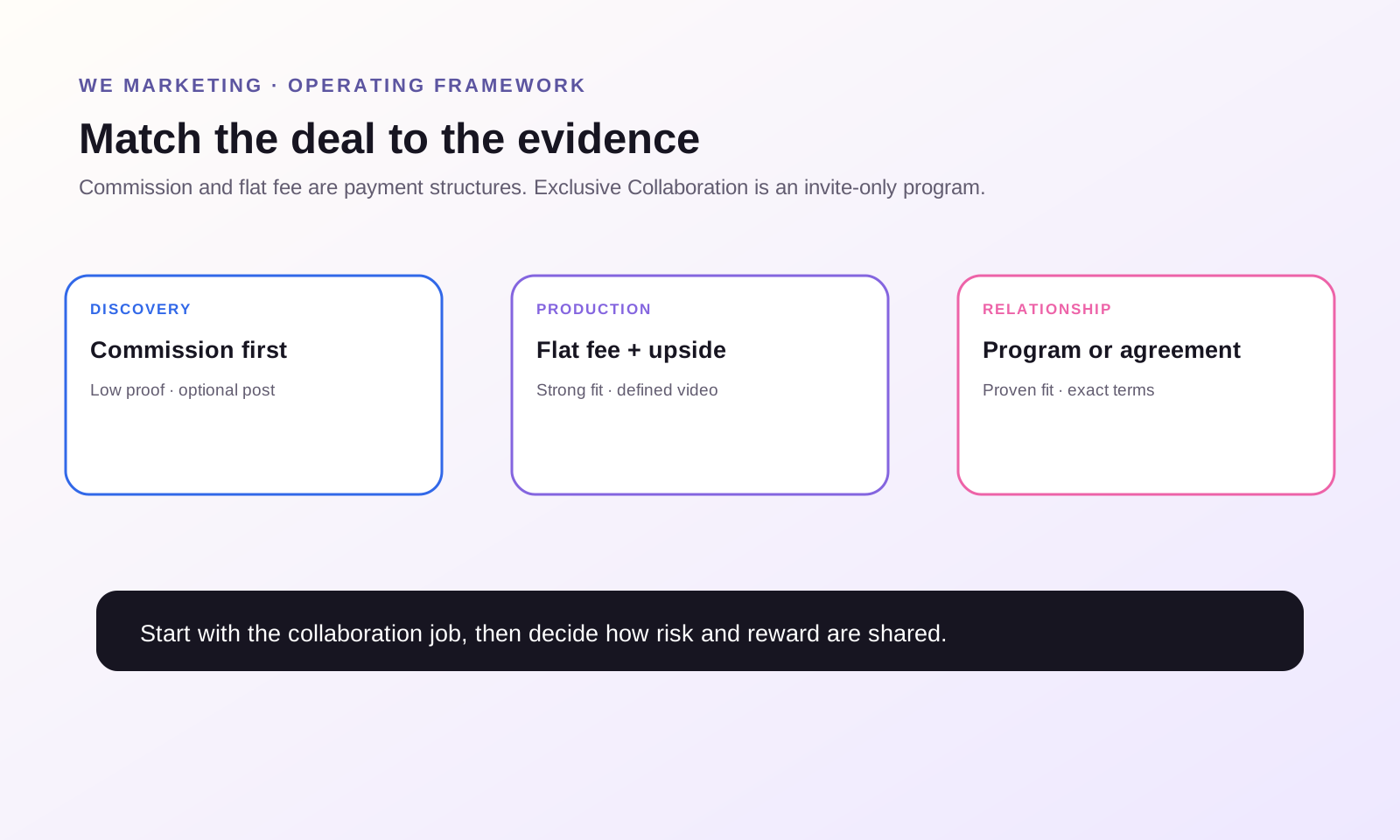
Use a risk-to-evidence decision gate
Before choosing compensation, score the collaboration on four dimensions.
1. Product evidence
Does the product already convert through creator content? Is the listing clear, inventory stable, fulfillment reliable, and contribution margin known? When product evidence is weak, keep the first test small. More guaranteed creator spend does not repair poor product truth.
2. Creator evidence
Has the creator produced relevant shoppable content, demonstrated the product category, delivered reliably, and generated qualified engagement or sales? Follower count alone does not prove commercial fit. Review content quality, audience questions, product adjacency, posting consistency, and prior collaboration behavior.
3. Deliverable specificity
Is the brand asking for an optional affiliate post, or a defined video with a deadline, brief, review path, authorization, and revision expectation? The more specific and labor-intensive the deliverable, the stronger the case for guaranteed compensation.
4. Economic control
Can the brand model product contribution after discount, creator commission, sample cost, fulfillment, expected returns, flat fee, and paid amplification? If nobody can calculate the allowable acquisition and content cost, the brand is not ready to negotiate a safe offer.
Use the gate this way:
- low creator evidence plus low deliverable specificity: commission-first discovery
- strong creator evidence plus a defined deliverable: flat fee plus performance upside
- proven creator-product fit with a durable relationship goal: a structured longer-term agreement, with any private exclusivity priced separately
- a live TikTok Shop Exclusive Collaboration invite that passes economics, inventory, and sample checks: participate inside the exact program terms
When commission-only is the right starting point
Commission-only is not the cheap option. It is a variable-risk model that can be attractive when the product has credible demand and creators retain freedom over whether and how much to promote it.
TikTok Shop’s current Affiliate Collaboration guide distinguishes Open Collaboration from Target Collaboration. Open Collaboration makes selected or all products visible to creators, while Target Collaboration lets a seller invite specific creators for selected products. The current guide states that Target Collaboration commission takes priority over Open Collaboration commission for the same creator-product relationship.
Commission-first works best when:
- the brand wants broad discovery before making fixed creator investments
- the product page, price, inventory, and fulfillment are already credible
- creators can choose the product without a heavy custom production requirement
- the team can track creator adds, posted content, orders, and contribution
- the commission leaves enough room for the creator to care and the brand to fulfill profitably
The operating mistake is setting one commission rate across the catalog without considering product contribution or content difficulty. A low-priced impulse product, a high-return apparel SKU, and a replenishable beauty item do not have the same economic room or creative burden.
Use commission as an evidence engine. Identify which products attract creators, which creators actually post, which content jobs convert, and which customer questions repeat. Then move the best relationships into more intentional structures.
When a flat fee earns its place
A flat fee should buy a real commitment. TikTok Shop’s current seller guide positions flat-fee collaboration inside Target Collaboration for shoppable video, with optional sales commission and Shop Ads commission. It supports in-platform invitation, payment holding, content review, revision, approval, and ad authorization controls for eligible accounts.
Flat fee plus commission is usually the better structure when:
- the brand needs one defined shoppable video by a specific deadline
- the creator must invest meaningful scripting, filming, editing, or product education
- the brand needs a review step for factual accuracy or regulated claims
- the content may become a paid learning asset with authorization
- the creator has proven category fit but sales outcomes still depend on price, listing, media, inventory, and demand
The flat fee pays for production commitment. Commission preserves performance upside. Neither guarantees sales.
Build the offer from the work backward. Define the product, content job, non-negotiable facts, prohibited claims, format, deadline, review owner, revision boundary, posting and authorization conditions, and success measures. Then calculate the maximum flat fee the economics can support without pretending every video will be a winner.
The live account is the final control surface. Current Academy guidance includes specific eligibility, fee, invite, review, and payment ranges, but these controls can change. Confirm them during invite creation and record what was actually accepted.
When an Exclusive Collaboration is useful
TikTok Shop’s current seller guide describes Exclusive Collaborations as limited-time, invite-only opportunities for select sellers. The platform preselects products and creators, the seller confirms eligible products, sets commission within the displayed requirements, configures samples, and tracks the campaign through Target Collaboration.
That can reduce discovery and setup friction. It does not remove operating responsibility.
Participate when:
- the invitation is visible in the live account and the exact products match the brand’s priority
- inventory and fulfillment can support a concentrated creator push
- required commission and sample economics remain contribution-safe
- the team can approve and ship samples quickly
- someone owns creator status, content output, GMV, views, stock, and customer-impact review
Decline or hold when the eligible product is not ready, sample capacity is weak, the commission floor breaks contribution, or the team cannot support the campaign window. Being invited is not proof that the product is operationally ready.
Do not confuse program exclusivity with private creator exclusivity. If a brand wants a creator to avoid competitors, reserve a category, or commit to a longer content cadence, that restriction has separate value. Define the competitors, geography, channels, duration, deliverables, usage rights, termination rules, and compensation. Broad, vague restrictions create cost and conflict without creating better content.
Build one economics ledger before sending an offer
For each creator-product pair, write one simple contribution ledger:
1. expected paid product revenue after discounts 2. product cost and packaging 3. fulfillment and customer-service allowance 4. expected returns or refund reserve 5. creator sales and Shop Ads commission 6. sample and shipping cost 7. flat fee allocated per deliverable 8. planned paid amplification 9. remaining contribution and learning value
Separate content value from sales value. A strong video can produce reusable learning even when first-week sales are modest. A high-GMV post can still be unattractive if discounts, commission, returns, and media consume the contribution.
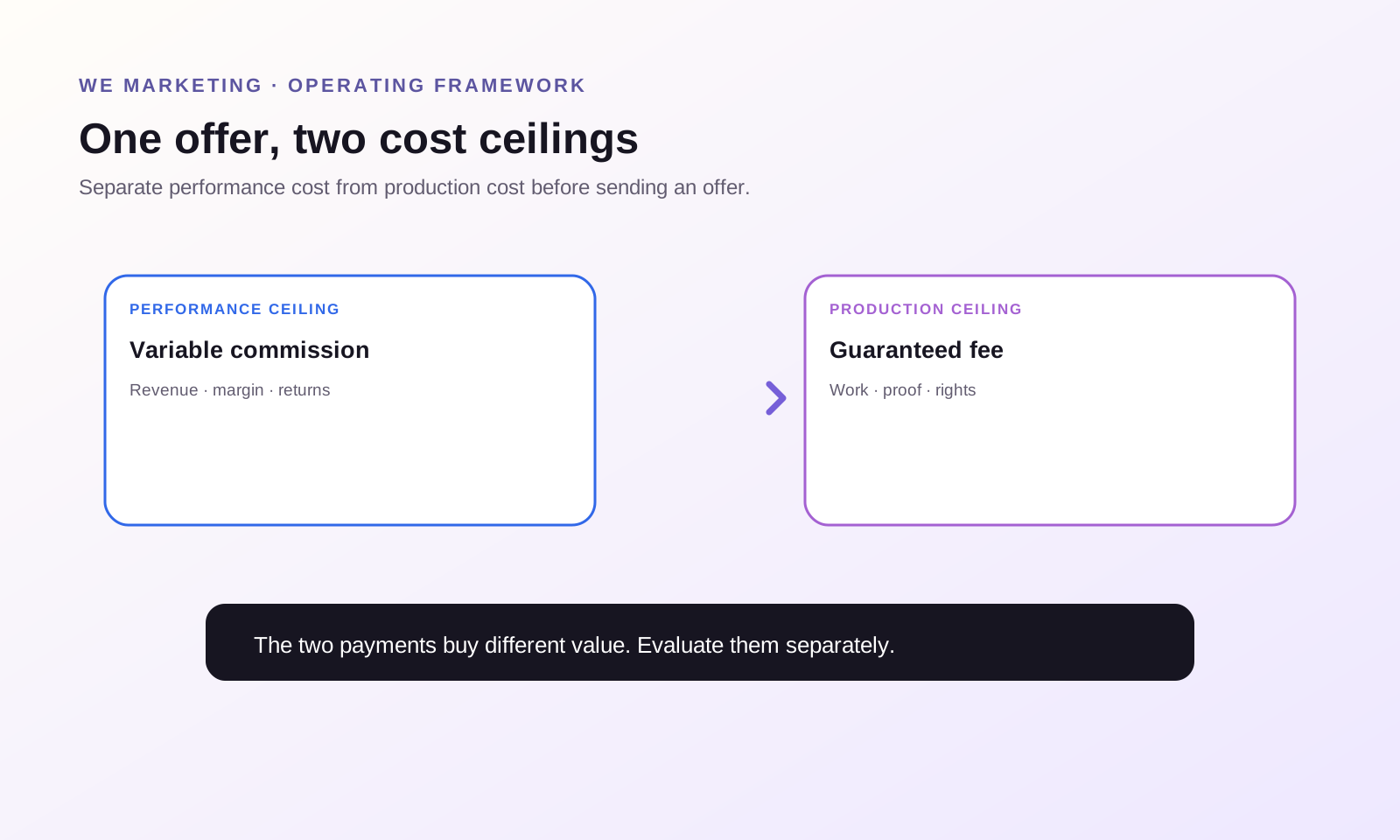
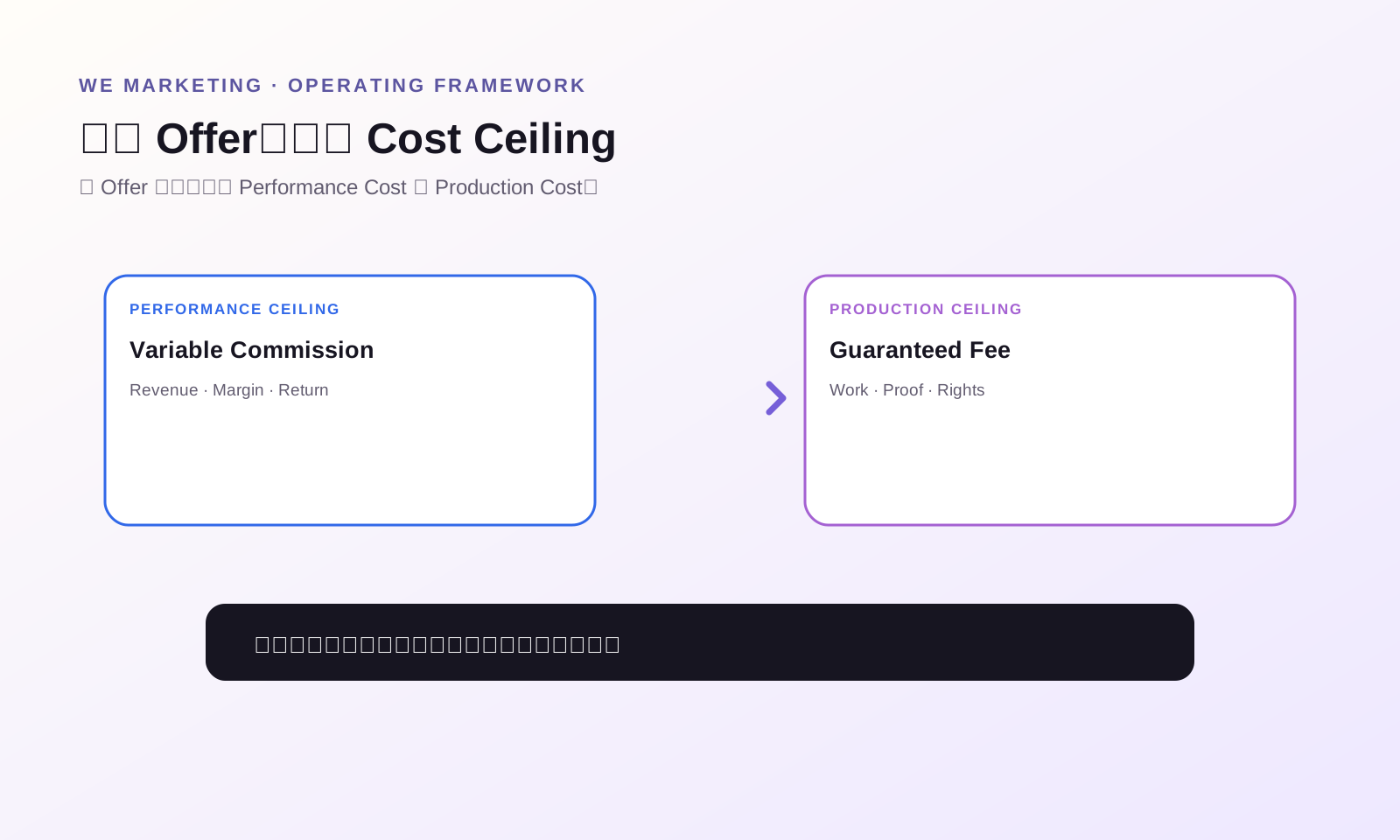
Set two ceilings:
- performance ceiling: the highest variable commission the product can carry
- production ceiling: the highest guaranteed fee justified by the creator evidence, deliverable, authorization, and expected reuse
Do not combine them into one vague “creator budget.” The two payments buy different things and should be evaluated differently.
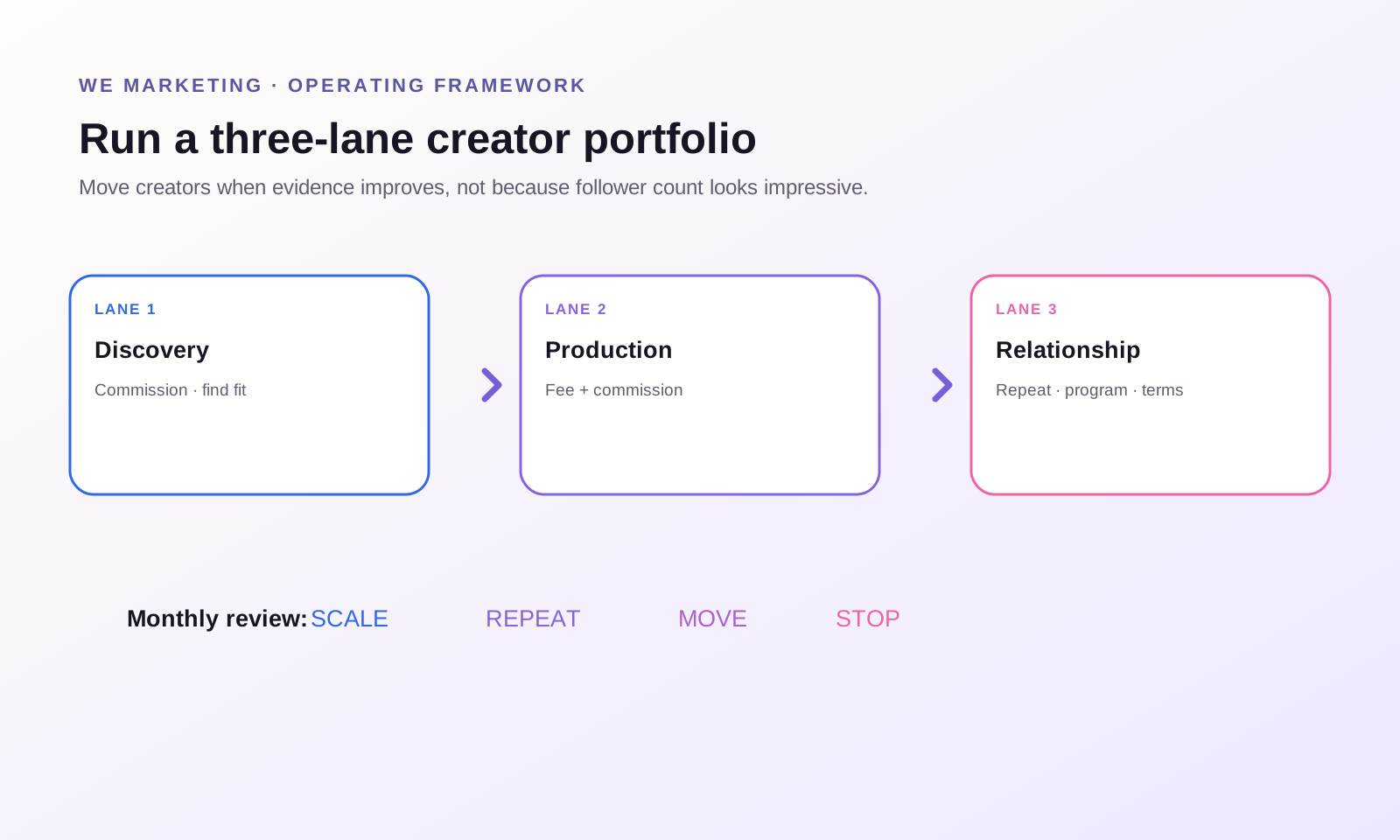
Run a three-lane creator portfolio
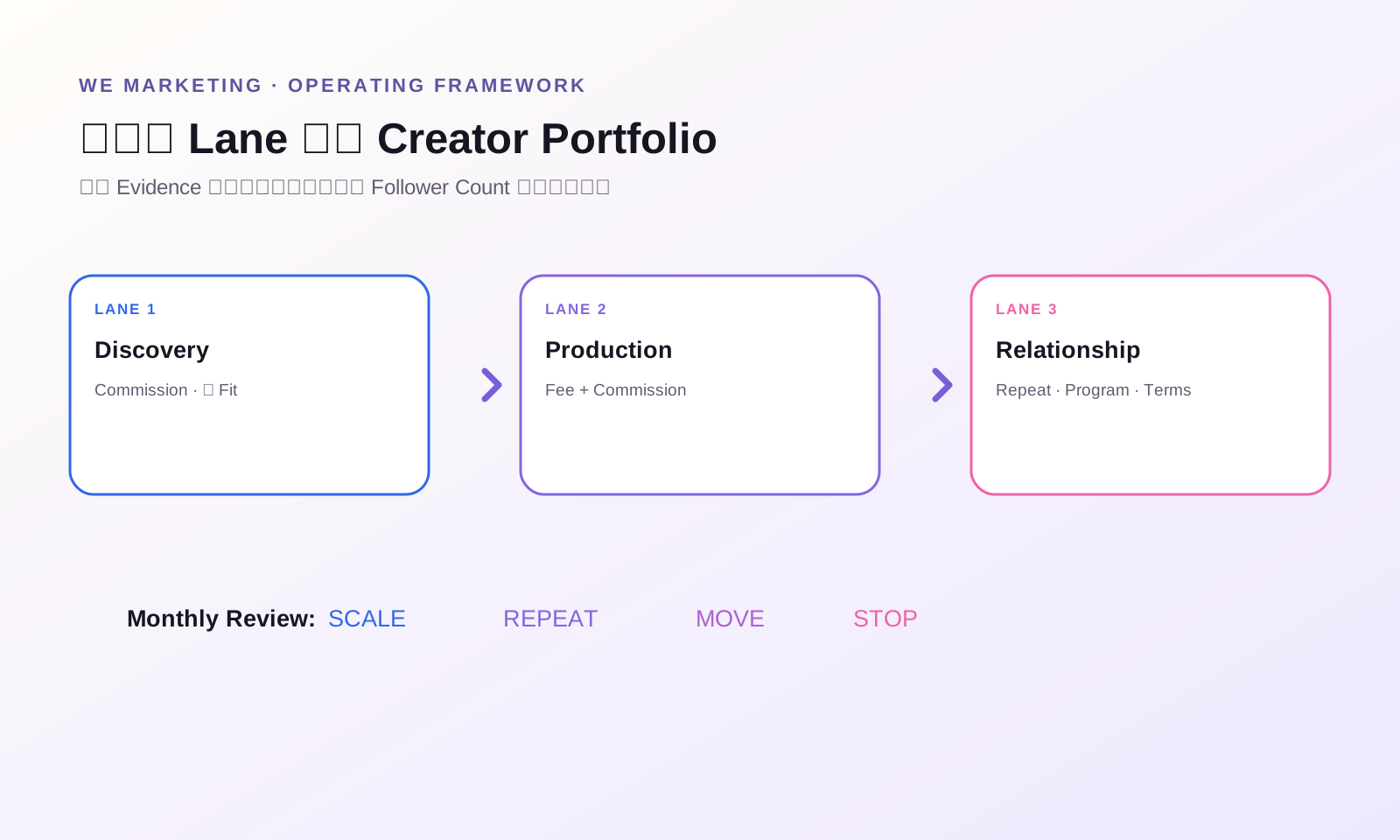
One model should not carry the whole program. Use three operating lanes.
Discovery lane
Use Open or targeted commission-first offers to find product-creator fit. Keep the brief light, the product truth strong, and the measurement consistent. The goal is evidence, not control.
Production lane
Use flat fee plus commission for creators who have relevant proof and for content jobs the brand truly needs. Give a precise brief, fast review, reasonable revision boundary, and clear authorization terms. The goal is a usable deliverable plus performance upside.
Relationship lane
Use repeat collaborations, higher target commission, campaign access, or a separately negotiated longer-term agreement for creators who repeatedly deliver fit, content quality, and business value. If a TikTok Shop Exclusive Collaboration invite appears, evaluate it here as a program opportunity. The goal is durable mutual advantage, not locking every good creator into a broad restriction.
Review movement between lanes monthly. Promote creators because evidence improved, not because the team likes their follower count. Reduce or stop investment when the product, delivery, or economics no longer support the relationship.
Use one operating sequence from invite to review
1. Name the job. Write one sentence describing what the collaboration must learn or produce. 2. Verify product readiness. Confirm listing, claim, inventory, fulfillment, return pattern, and contribution. 3. Score creator evidence. Review category fit, content quality, audience response, prior sales, and delivery behavior. 4. Choose the lane. Commission discovery, flat-fee production, or relationship investment. 5. Write the commercial logic. Record commission, fee, sample, deliverable, deadline, review, authorization, and any separate restriction. 6. Send through the correct live flow. Use Open, Target, flat-fee Target, or the exact Exclusive Collaboration invitation available in the account. 7. Operate the milestones. Track acceptance, sample shipment, content submission, review, approval, posting, authorization, sales, and customer impact. 8. Make one evidence-based next decision. Scale, repeat, revise the offer, move lanes, or stop.
The sequence prevents a common failure: negotiating price before the product, creator, deliverable, and evidence are defined.
Operational example: one product, three creator relationships
This is a hypothetical operating example, not a WEM client result.
A skincare brand has a $48 hero product with stable fulfillment and a clear contribution model. Twenty creators are allowed to discover it through commission. Six add the product, four post, and two produce credible sales and useful customer questions.
The brand keeps commission-first access open for discovery. It offers one of the proven creators a flat fee plus commission for a dedicated objection-handling video with a clear deadline, factual review, and ad authorization. The second creator prefers performance-only economics and receives a higher Target Collaboration commission because the brand has evidence that the creator converts.
Later, the brand receives an Exclusive Collaboration invitation for the same product. The team checks the required commission, sample settings, campaign window, inventory, and eligible creator pool. It participates only if the live terms remain contribution-safe and the operations team can ship and monitor samples. The invitation does not automatically create private category exclusivity with either creator.
Three relationships, three jobs, and one product can coexist. The structure follows evidence rather than forcing every creator into one deal type.
The smallest useful next action: a 30-minute collaboration audit
Choose one product and five creators currently in consideration. Create a row for each creator with product evidence, creator evidence, required deliverable, commission ceiling, flat-fee ceiling, sample cost, authorization need, and next lane.
Mark unknowns explicitly. If the product contribution is unknown, stop and calculate it. If the creator has no relevant proof and the deliverable is optional, start with commission discovery. If the creator has strong proof and the brand needs a defined video, prepare a flat fee plus commission offer. If an Exclusive Collaboration invitation exists, read its live terms and score it like any other campaign.
Then send only the offers whose job, economics, owner, and next review date are clear.
Frequently asked questions
Is commission-only unfair to creators?
It can be fair when participation is genuinely optional, the product and commission are competitive, the creator controls the production choice, and the brand is not demanding a dedicated deliverable. It becomes misaligned when the brand expects custom work, deadlines, revisions, or usage rights without guaranteed compensation.
Should a flat fee replace commission?
Usually not when the brand wants both committed production and sales motivation. TikTok Shop’s current flat-fee flow can combine a fee with sales and Shop Ads commission. The fee pays for the defined work, while commission rewards attributable performance.
Is TikTok Shop Exclusive Collaboration the same as a private exclusivity contract?
No. The current Academy material describes an invite-only TikTok Shop program. A private restriction involving competitors, category, time, channels, or usage is a separate agreement and should be defined and priced separately.
How should a brand choose a flat fee amount?
Start with the deliverable workload, creator evidence, authorization, revision boundary, timing, and expected reuse. Then test the amount against the product’s production ceiling. Do not derive a fee only from follower count or assume the fee guarantees sales.
Can commission, flat fee, and Exclusive Collaboration overlap?
Yes, because they do not all describe the same layer. A flat-fee Target Collaboration can include commission. An eligible Exclusive Collaboration uses commission and sample settings. Read the live account terms to confirm which controls are available and which rate takes priority.
What should a brand measure after the collaboration?
Measure milestone reliability, content quality, authorization, posted content, orders, gross revenue, contribution after commission and fees, returns, customer questions, and reusable learning. The next decision should be scale, repeat, repair, move lanes, or stop.
WE Marketing · TikTok Shop 美国站 · Creator Operations
佣金、固定费用,还是 Exclusive Collaboration?
WE Marketing Team · 2026 年 7 月 31 日
让 Deal 跟着 Job、Evidence 与 Risk
如果品牌主要为可归因成交付费,优先用 Commission;如果品牌需要明确内容交付、Deadline、Review 与授权,就加入 Flat Fee;TikTok Shop 当前的 Exclusive Collaboration 是邀请制的项目机会,不是卖家可以自由选择的第三种付款方式。正确结构取决于任务、证据,以及品牌和达人分别承担什么风险。
很多品牌会问:“这位达人应该给 Commission、Flat Fee,还是做 Exclusive Collaboration?”这个问法看起来很直接,但把三个不同层级的概念放在了一起。
Commission 和 Flat Fee 是 Compensation Structure。TikTok Shop 当前 Academy 里的 Exclusive Collaborations,是面向特定 Seller、Product 与 Creator 的限时邀请制项目,可能包含更高 Commission、Sample、平台匹配、Creator Incentive 和 Campaign Support。它不等于品牌私下购买达人“竞品排他”。
所以,品牌不能先选价格,再倒推任务。应该先明确这次 Collaboration 要解决什么问题,再决定如何分担内容生产风险和销售风险。
先明确 Collaboration Job,再谈怎么付钱
每次达人合作都应该只有一个最主要 Job。常见 Job 包括:
- 验证商品与达人 Audience 是否匹配
- 在明确 Deadline 前交付一条合格挂车视频
- 放大已经被验证的达人销售能力
- 建立可用于 Organic 与 Paid Learning 的内容池
- 与持续产出价值的达人建立更稳定的关系
如果 Job 是“让更多达人自由发现并按成交拿结果”,Commission-first 很合适。如果品牌要求专门脚本、拍摄、剪辑、Review、Revision 和授权,就不应该把所有 Production Risk 都推给达人。如果账户收到 Exclusive Collaboration 邀请,则要评估平台已经选择的商品、达人范围、Commission、Sample、库存和 Campaign Window 是否适合,而不是因为“被邀请”就自动参加。
Flat Fee 不能修复弱商品、模糊 Brief 或没有竞争力的 Commission。Commission-only 也不应该被用来免费购买明确交付和使用权。
三个 Label 不在同一层
| Label | 真正控制什么 | 谁承担更多风险 | 最适合的第一用途 |
|---|---|---|---|
| Commission | 按符合条件的归因销售获得 Variable Earnings | 达人承担更多 Production 与 Demand Risk | 商品发现、广泛 Affiliate Scale、已验证转化 |
| Flat Fee + 可选 Commission | Guaranteed Production Payment,加上可选 Performance Upside | 品牌承担更多前置风险,达人承诺 Deliverable | 明确挂车视频、Deadline、Review、Ad-ready Content |
| Exclusive Collaboration | 邀请制平台项目,包含特定商品、达人、Sample、Commission Rule 与 Incentive | 在平台约束内共同承担 | 账户有资格、商品和库存适合该 Campaign |
这个表是 Decision Boundary,不代表每个账户都拥有完全相同的功能。Feature Availability、Eligibility、Commission Minimum、Sample Setting 和 Invite Terms 都可能变化。真正承诺 Budget 和 Inventory 之前,必须读取 Affiliate Center 里的 Live Invitation。
最重要的语言修正是:当前 Academy 的 “Exclusive Collaboration” 是 TikTok Shop Program。它不会自动禁止达人和竞品合作。如果品牌希望达人对某个 Category、Competitor、Channel 或 Time Period 排他,这是另一份商业与法律约定,需要清楚范围、合理补偿,并让品牌自己的 Legal Counsel 审阅。
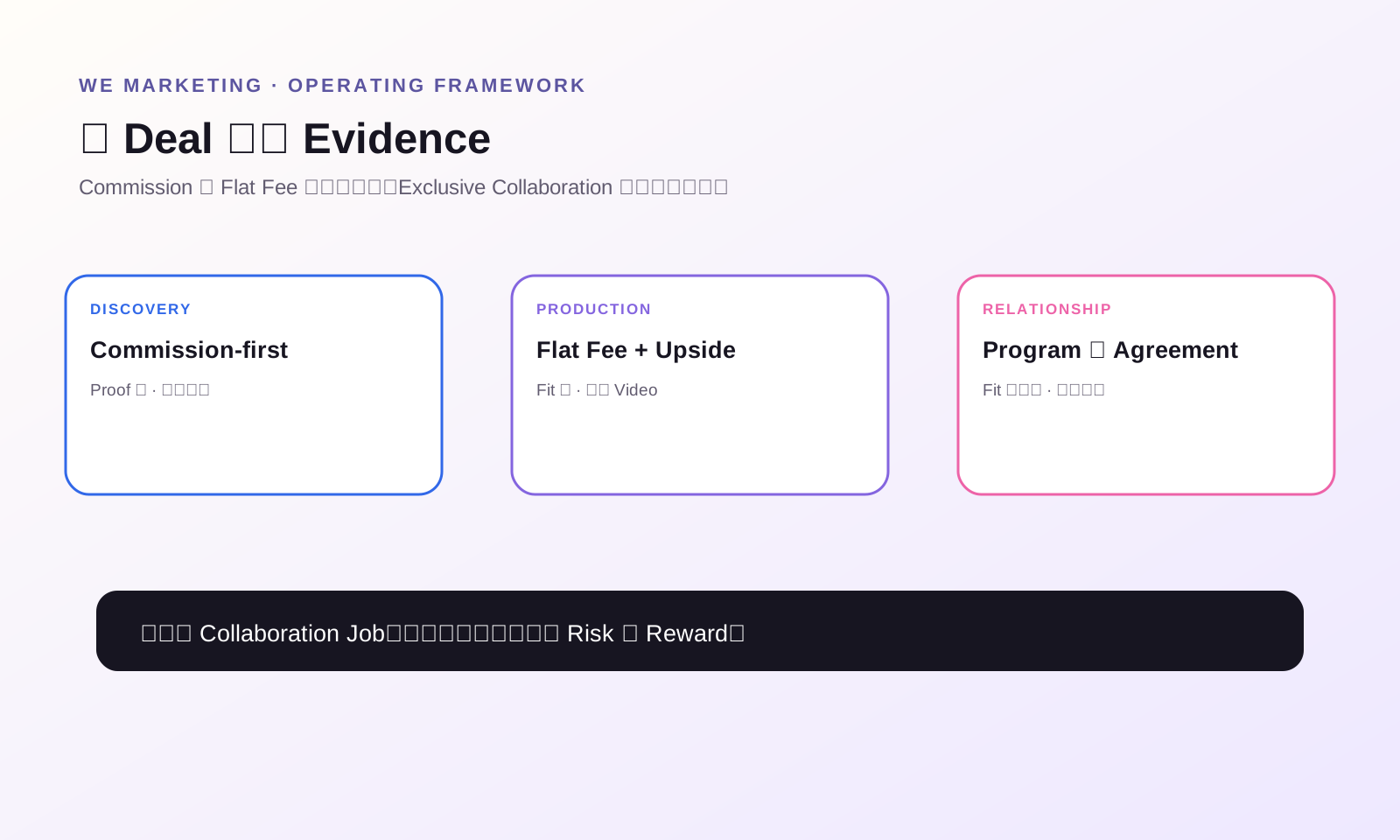
用 Risk-to-Evidence Gate 做决定
选择 Compensation 前,先看四类证据。
1. Product Evidence
商品是否已经通过达人内容产生转化?Listing 是否清楚?Inventory、Fulfillment 与 Contribution 是否稳定?Product Evidence 越弱,第一次测试越应该小。更多 Guaranteed Creator Spend 不会自动修复商品问题。
2. Creator Evidence
达人是否做过相关 Category Content?是否能清楚 Demonstrate Product?是否按时交付?是否产生过合格 Engagement 或 Sales?Follower Count 不能单独证明商业匹配,必须看 Content Quality、Audience Question、相邻商品、Posting Consistency 和过去 Collaboration Behavior。
3. Deliverable Specificity
品牌只是提供一个可自由参与的 Affiliate Opportunity,还是要求明确 Video、Deadline、Brief、Review、Revision 与 Authorization?Deliverable 越具体、制作投入越高,Guaranteed Compensation 越合理。
4. Economic Control
品牌能不能算清折扣后的 Product Revenue、货品、履约、退货准备金、Commission、Sample、Flat Fee 与 Paid Amplification?如果团队还不知道允许的 Acquisition 与 Content Cost,就没有条件谈安全 Offer。
Gate 的使用方式:
- Creator Evidence 低、Deliverable Specificity 低:Commission-first Discovery
- Creator Evidence 强、Deliverable 明确:Flat Fee + Performance Upside
- Creator-Product Fit 已验证,品牌希望长期合作:做结构化 Relationship Agreement,任何私下 Exclusivity 单独定价
- Live Exclusive Collaboration Invite 通过 Economics、Inventory 与 Sample 检查:按项目准确条款参与
什么时候适合 Commission-only
Commission-only 不是“便宜方案”,而是一种 Variable-Risk Model。商品有可信 Demand,达人也有真实选择权时,它非常有效。
TikTok Shop 当前 Affiliate Collaboration Guide 区分 Open Collaboration 与 Target Collaboration。Open 让达人发现已加入的商品;Target 让卖家邀请特定达人推广特定商品。当前官方说明还指出,同一个 Creator-Product Relationship 中,Target Collaboration Commission 优先于 Open Collaboration Commission。
Commission-first 适合:
- 品牌想先广泛发现匹配,再做固定投入
- Product Page、Price、Inventory 与 Fulfillment 已经可信
- 达人不需要承担很重的 Custom Production 要求
- 团队能追踪 Add Product、Posted Content、Order 与 Contribution
- Commission 对达人有吸引力,同时品牌仍能健康履约
常见错误是全店统一一个 Commission Rate。低客单冲动消费品、高退货服装、可复购 Beauty SKU,经济空间和内容难度都不一样。
把 Commission 当成 Evidence Engine:观察哪些 Product 能吸引达人、哪些 Creator 真正发布、哪些 Content Job 转化、哪些 Customer Question 重复出现,再把最好的关系升级成更有意图的结构。
Flat Fee 什么时候值得加入
Flat Fee 应该购买真实 Commitment。TikTok Shop 当前卖家指南把 Flat Fee Collaboration 放在 Target Collaboration 里,用于 Shoppable Video,并可以加入 Sales Commission 与 Shop Ads Commission。符合条件的账户可以在平台内完成 Invite、Payment Holding、Content Review、Revision、Approval 与 Ads Authorization。
Flat Fee + Commission 更适合:
- 品牌需要在具体 Deadline 前得到一条明确挂车视频
- 达人需要投入明显的 Scripting、Filming、Editing 或 Product Education
- 内容涉及事实、Claim 或合规 Review
- Content 可能成为 Paid Learning Asset,并需要 Authorization
- 达人已经证明 Category Fit,但最终 Sales 仍受 Price、Listing、Media、Inventory 与 Demand 影响
Flat Fee 支付 Production Commitment,Commission 保留 Performance Upside。两者都不保证销量。
Offer 要从工作倒推。先写 Product、Content Job、Non-negotiable Fact、Prohibited Claim、Format、Deadline、Review Owner、Revision Boundary、Posting 与 Authorization 条件,再计算 Economics 能承受的 Flat Fee Ceiling。
Live Account 是最终 Control Surface。当前 Academy 有具体 Eligibility、Fee、Invite、Review 和 Payment 范围,但这些规则可能变化。创建 Invite 时重新确认,并保存实际被接受的设置。
Exclusive Collaboration 什么时候有价值
TikTok Shop 当前卖家指南把 Exclusive Collaborations 定义为面向特定 Seller 的限时邀请制机会。平台预选 Product 与 Creator,卖家确认符合条件的 Product,按页面要求设置 Commission、配置 Sample,并在 Target Collaboration 里追踪 Campaign。
它可以减少 Discovery 与 Setup Friction,但不会取消运营责任。
适合参与的条件:
- Live Account 里确实看得到邀请,而且 Product 是品牌当前优先项
- Inventory 与 Fulfillment 能承接集中 Creator Push
- Required Commission 与 Sample Economics 仍然 Contribution-safe
- 团队能快速 Approve、Ship Sample
- 有人负责 Creator Status、Content Output、GMV、View、Stock 与 Customer Impact
如果 Eligible Product 还没准备好、Sample Capacity 不足、Commission Floor 会破坏 Contribution,或者团队无法支持 Campaign Window,就应该 Hold 或 Decline。被邀请不等于运营系统已经 Ready。
不要把 Program Exclusivity 当成 Private Creator Exclusivity。如果品牌希望达人避开竞品、预留 Category 或承诺更长期 Content Cadence,必须单独定义 Competitor、Geography、Channel、Duration、Deliverable、Usage Right、Termination 与 Compensation。宽泛模糊的限制只会增加成本和冲突。
发 Offer 前先做一张 Economics Ledger
每一组 Creator-Product Pair 都写清:
1. 折扣后的 Expected Paid Product Revenue 2. Product Cost 与 Packaging 3. Fulfillment 与 Customer Service Allowance 4. Expected Return 或 Refund Reserve 5. Creator Sales 与 Shop Ads Commission 6. Sample 与 Shipping Cost 7. 每个 Deliverable 分摊的 Flat Fee 8. Planned Paid Amplification 9. Remaining Contribution 与 Learning Value
把 Content Value 与 Sales Value 分开。一条好视频在第一周 Sales 不高,也可能提供可复用 Learning。一条高 GMV 视频,如果 Discount、Commission、Return 与 Media 吃掉全部 Contribution,也不一定值得继续。
设置两个 Ceiling:
- Performance Ceiling:商品可以承担的最高 Variable Commission
- Production Ceiling:Creator Evidence、Deliverable、Authorization 与 Expected Reuse 能支持的最高 Guaranteed Fee
不要把两者合并成一个模糊 Creator Budget。它们购买的是不同价值,应该用不同标准判断。
用三条 Lane 管理 Creator Portfolio
Discovery Lane
用 Open 或 Targeted Commission-first Offer 找 Product-Creator Fit。Brief 保持轻量,Product Truth 要强,Measurement 要一致。目标是 Evidence,不是 Control。
Production Lane
对于已经有相关 Proof 的达人,以及品牌真正需要的 Content Job,使用 Flat Fee + Commission。Brief 要准确、Review 要快、Revision Boundary 要合理、Authorization 要清楚。目标是可用 Deliverable 加 Performance Upside。
Relationship Lane
对于持续提供 Fit、Content Quality 和 Business Value 的达人,可以使用 Repeat Collaboration、更高 Target Commission、Campaign Access,或单独谈长期 Agreement。如果账户出现 TikTok Shop Exclusive Collaboration Invite,把它当作 Program Opportunity 评估。目标是双方长期优势,不是把所有好达人锁进宽泛限制。
每月 Review Creator 在 Lane 之间的移动。升级应该因为 Evidence 变强,不是因为团队喜欢 Follower Count。Product、Delivery 或 Economics 不再支持时,就降低或停止投入。
从 Invite 到 Review,用同一套 Operating Sequence
1. 写清 Job。 用一句话说明这次 Collaboration 必须学习或交付什么。 2. 确认 Product Readiness。 检查 Listing、Claim、Inventory、Fulfillment、Return Pattern 与 Contribution。 3. 评分 Creator Evidence。 看 Category Fit、Content Quality、Audience Response、Prior Sales 与 Delivery Behavior。 4. 选择 Lane。 Commission Discovery、Flat-fee Production 或 Relationship Investment。 5. 写清 Commercial Logic。 记录 Commission、Fee、Sample、Deliverable、Deadline、Review、Authorization 和任何独立 Restriction。 6. 进入正确 Live Flow。 根据账户使用 Open、Target、Flat-fee Target 或准确的 Exclusive Collaboration Invite。 7. 运营 Milestone。 追踪 Acceptance、Sample Shipment、Content Submission、Review、Approval、Posting、Authorization、Sales 与 Customer Impact。 8. 做一个 Evidence-based Next Decision。 Scale、Repeat、调整 Offer、Move Lane 或 Stop。
这套 Sequence 可以避免常见失败:Product、Creator、Deliverable 与 Evidence 还没定义,就先开始谈价格。
Operational Example:一个商品,三种达人关系
这是一个假设运营案例,不是 WEM 客户结果。
一个 Skincare Brand 有一款 $48 Hero Product,Fulfillment 稳定,Contribution Model 清楚。品牌先让 20 位达人通过 Commission 发现商品,六位 Add Product,四位发布,两位带来可信 Sales 和有价值的 Customer Question。
品牌继续保留 Commission-first Discovery。对于其中一位已验证达人,品牌用 Flat Fee + Commission 购买一条处理核心 Objection 的 Dedicated Video,明确 Deadline、Factual Review 与 Ads Authorization。另一位达人更喜欢 Performance-only Economics,品牌根据已验证转化,用 Target Collaboration 给更高 Commission。
之后,品牌收到同一 Product 的 Exclusive Collaboration Invite。团队先检查 Required Commission、Sample Setting、Campaign Window、Inventory 与 Eligible Creator Pool。只有 Live Terms 仍然 Contribution-safe,并且 Operations Team 能发货和监控 Sample,才参加。这个邀请不会自动让任何达人承担 Private Category Exclusivity。
同一个 Product 可以同时存在三种 Relationship。结构跟着 Evidence,而不是强迫所有 Creator 接受同一种 Deal。
最小下一步:30 分钟 Collaboration Audit
选择一个 Product 和五位正在评估的 Creator。每一位写一行:Product Evidence、Creator Evidence、Required Deliverable、Commission Ceiling、Flat-fee Ceiling、Sample Cost、Authorization Need 与 Next Lane。
Unknown 必须明确标出。如果 Product Contribution 不清楚,先停下来计算。如果 Creator 没有相关 Proof,而且 Deliverable 是可选的,从 Commission Discovery 开始。如果 Creator Proof 强,品牌又需要明确 Video,准备 Flat Fee + Commission Offer。如果账户有 Exclusive Collaboration Invite,读取 Live Terms,像评估其他 Campaign 一样评分。
最后,只发送 Job、Economics、Owner 和 Next Review Date 都清楚的 Offer。
常见问题
Commission-only 对达人公平吗?
当 Participation 真正可选、商品和 Commission 有竞争力、达人可以自己决定 Production,而且品牌没有要求 Dedicated Deliverable 时,可以公平。如果品牌要求 Custom Work、Deadline、Revision 或 Usage Right,却不给 Guaranteed Compensation,结构就失衡了。
Flat Fee 应该替代 Commission 吗?
如果品牌同时需要 Production Commitment 和 Sales Motivation,通常不应该替代。TikTok Shop 当前 Flat-fee Flow 可以组合 Fee、Sales Commission 与 Shop Ads Commission。Fee 支付明确工作,Commission 奖励可归因 Performance。
TikTok Shop Exclusive Collaboration 等于私下排他合同吗?
不等于。当前 Academy Material 描述的是邀请制 TikTok Shop Program。涉及 Competitor、Category、Time、Channel 或 Usage 的 Private Restriction,是另一份 Agreement,需要独立定义和定价。
品牌怎么决定 Flat Fee 金额?
先看 Deliverable Workload、Creator Evidence、Authorization、Revision Boundary、Timing 与 Expected Reuse,再和 Product 的 Production Ceiling 对照。不要只按 Follower Count 定价,也不要把 Fee 当成销量保证。
Commission、Flat Fee 与 Exclusive Collaboration 可以重叠吗?
可以,因为它们不完全属于同一层。Flat-fee Target Collaboration 可以加入 Commission;符合条件的 Exclusive Collaboration 也使用 Commission 与 Sample Setting。必须读取 Live Account,确认当前可用 Control 和 Rate Priority。
合作后应该衡量什么?
衡量 Milestone Reliability、Content Quality、Authorization、Posted Content、Order、Gross Revenue、扣除 Commission 与 Fee 后的 Contribution、Return、Customer Question 与 Reusable Learning。下一步只能是 Scale、Repeat、Repair、Move Lane 或 Stop。