WE Marketing · TikTok Shop U.S. · Content Operations
Turn Voice of Customer Into Better TikTok Shop Content
By the WE Marketing Team · Published August 2, 2026
Turn customer feedback into one owned content decision
Voice of Customer should change TikTok Shop content only after the team identifies what expectation failed and who owns the fix. Product defects, wrong items, slow delivery, or weak service need an operating correction first. Content should then clarify a controllable expectation, demonstrate correct use, answer a repeated buying question, or replace a misleading claim with evidence a shopper can verify.
Customer feedback is one of the most valuable content inputs a TikTok Shop brand owns. It is also one of the easiest inputs to misuse. A team sees three negative reviews about size, smell, setup, or delivery and immediately asks creators to make more videos. That may create activity without solving the reason customers were disappointed.
TikTok Shop's current U.S. Voice of Customer guide gives sellers a more disciplined starting point. The tool groups actionable feedback across channels, compares products with category peers, separates product and fulfillment signals, and ranks issue distribution. TikTok Shop also provides Review Performance, Product Ratings, product analytics, and current review and content policies. Together, these surfaces can show what customers experienced. They do not decide the brand's next content job.
WEM's practical answer is a VoC-to-content operating loop: classify the failure, fix the owner-controlled cause, translate the remaining expectation gap into one content job, publish a bounded test, and read customer and commerce evidence again. The smallest useful unit is not a monthly sentiment deck. It is one product, one repeated issue, one owner, one corrected asset, and one follow-up date.
Customer feedback is evidence, not a ready-made brief
TikTok Shop's current VoC page is a product insight tool, not a creative generator. It aggregates feedback from sources including product reviews, aftersales tickets, and platform customer service. Products are labeled Poor, Fair, or Good relative to category averages. The product view separates an overall VoC index into product and fulfillment dimensions, shows a 90-day trend, and ranks critical and user-perception issues.
That structure matters because the same sentence can point to different causes. "It did not work" could mean a defective unit, an unclear setup step, an incompatible device, an exaggerated creator claim, or a shopper who expected a different use case. Only some of those problems should become content.
Use four evidence layers before writing a brief:
| Evidence layer | What it can reveal | What it cannot prove alone |
|---|---|---|
| VoC diagnosis | Repeated product or fulfillment issues, issue distribution, relative category performance | The exact creative change that will improve conversion |
| Review content and Review Performance | Customer language, rating mix, product-level negative-review concentration | Whether a complaint is representative of all buyers |
| Product and content analytics | Traffic source, clicks, conversion, GMV, top content, creator contribution | Why a customer expectation failed |
| Returns, tickets, and customer service | Order-specific facts, product condition, setup questions, service failures | Which new hook will attract qualified demand |
The operator's job is to connect these layers without pretending one metric explains the whole system.
Start with the VoC ownership gate
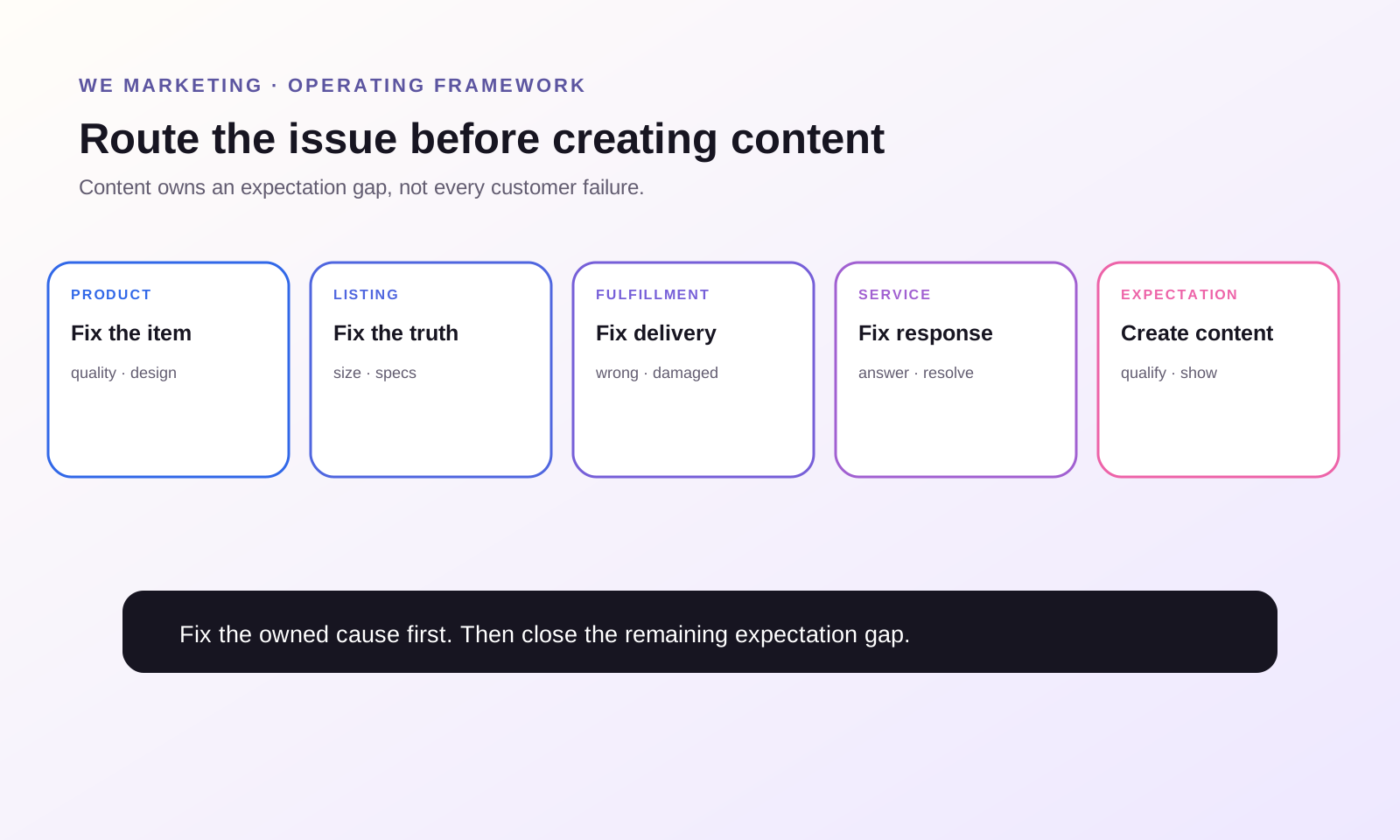
Every repeated issue should pass through an ownership gate before it enters the content backlog.
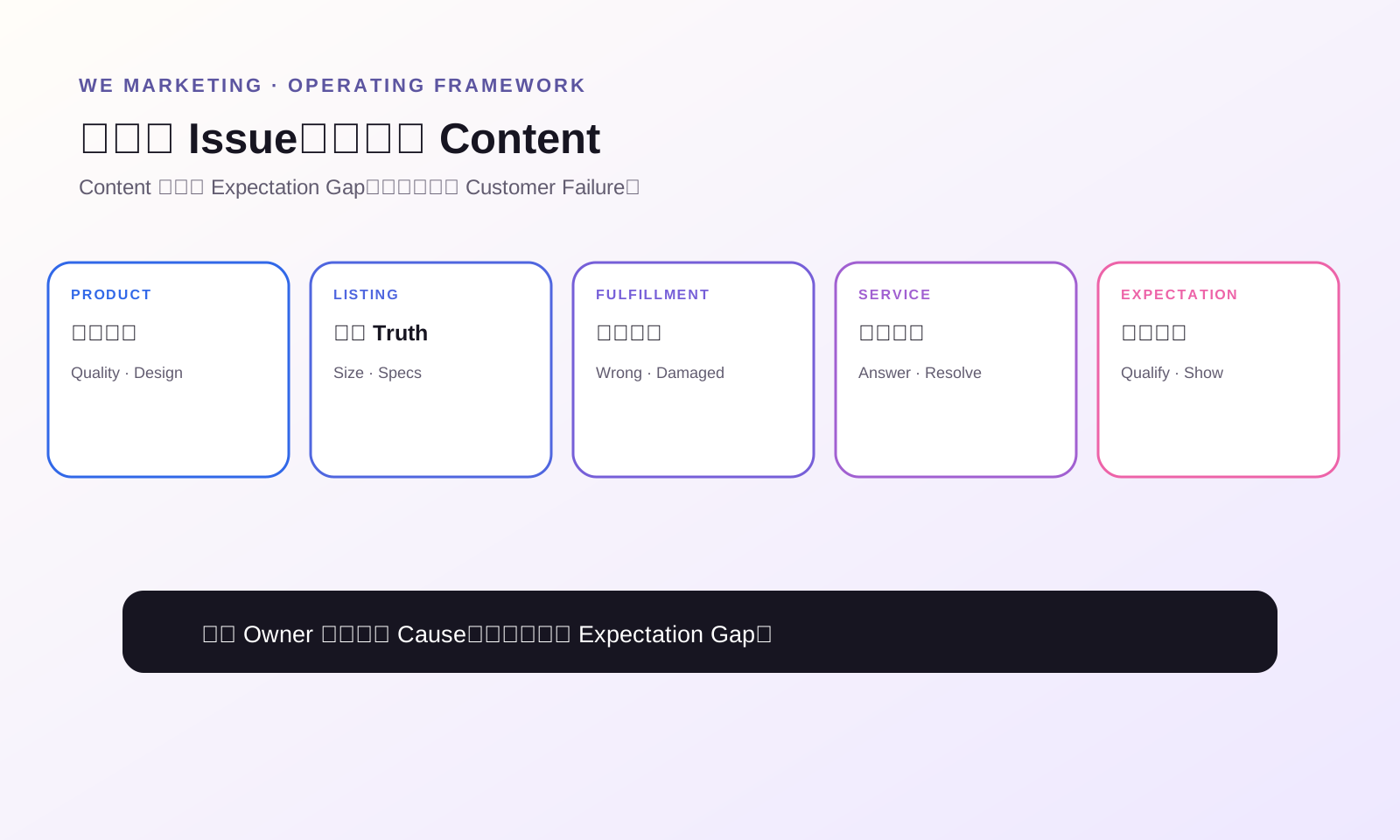
Product-owned
The item is defective, inconsistent, unsafe, poorly designed, or materially different from the promise. Content cannot repair the product. Pause misleading promotion, quarantine affected inventory when appropriate, correct quality control, and decide whether the product should remain active.
Listing-owned
The product may be acceptable, but the product detail page hides size, compatibility, quantity, ingredients, included parts, limitations, or correct use. Fix the listing first so every traffic source lands on the same truth. Content can then demonstrate that truth.
Fulfillment-owned
The customer received the wrong item, missing parts, damaged packaging, or a late delivery. A creator tutorial does not fix warehouse picking or parcel protection. Correct the fulfillment process and customer recovery path before buying more attention.
Service-owned
Customers cannot get an accurate answer or timely resolution. Fix staffing, permissions, operating hours, scripts, and escalation. Content may reduce avoidable questions, but it cannot substitute for support.
Expectation-owned
The product works as designed, yet buyers repeatedly misunderstand fit, feel, setup, compatibility, routine, result timing, or intended use. This is the strongest content opportunity. The content job is to make the correct expectation visible before purchase.
TikTok Shop's official VoC examples follow the same logic. The guide recommends listing updates, real-use images, size and compatibility tables, instructional videos, creator guidance, product changes, quality inspection, customer-service responses, and fulfillment controls depending on the root cause. It does not prescribe "make more videos" as a universal remedy.
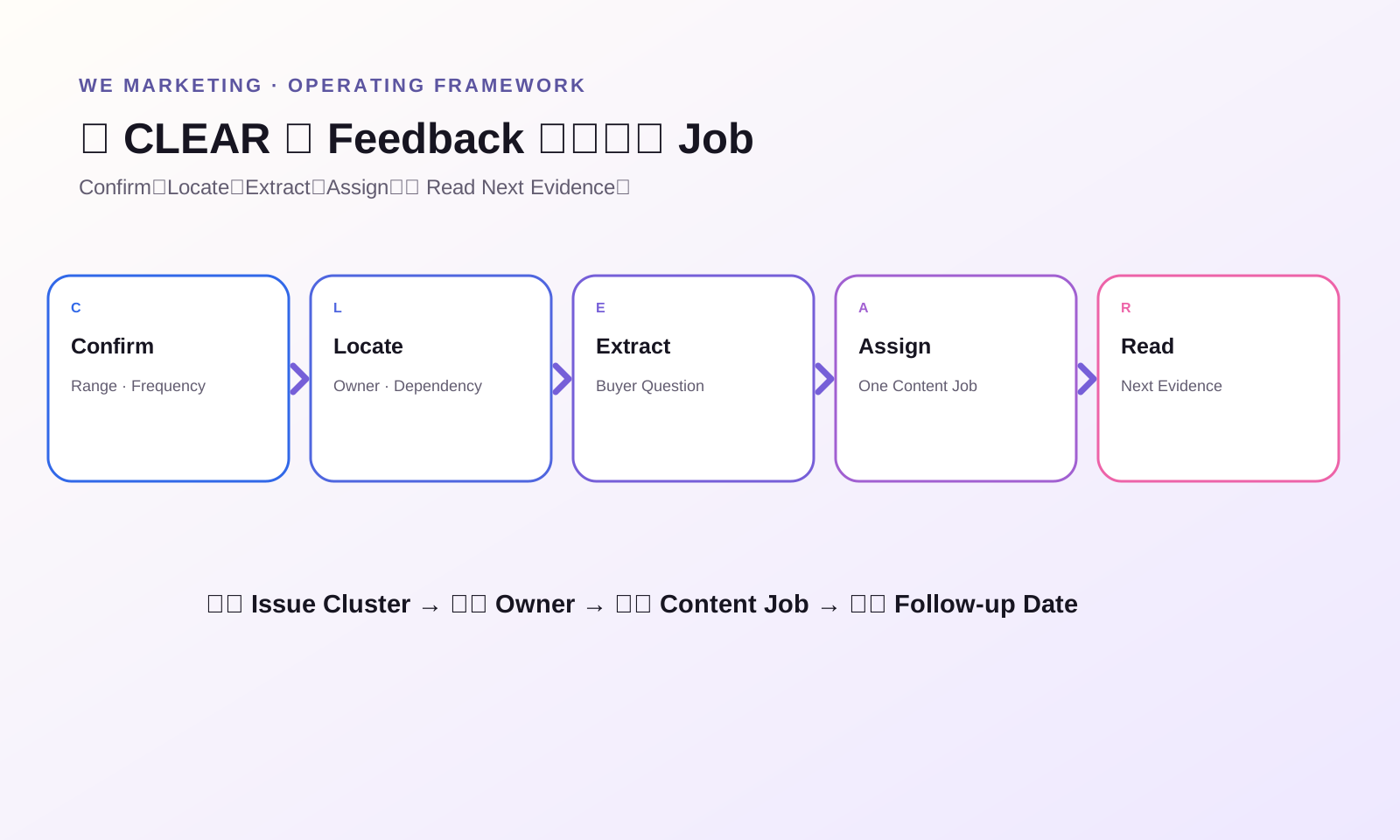
Use the WEM CLEAR framework to translate feedback into content
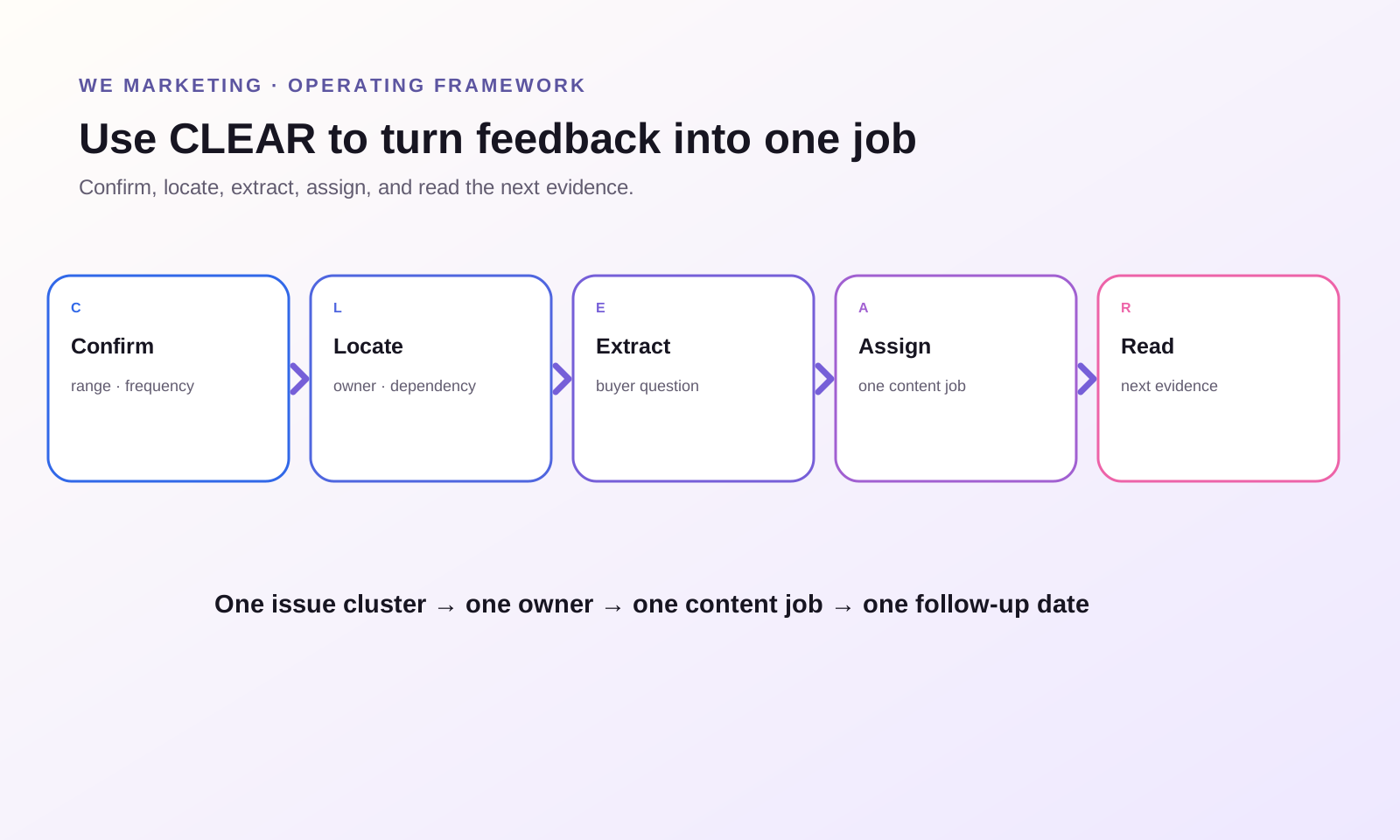
CLEAR turns one feedback cluster into one controlled content decision.
C: Confirm the signal
Check the VoC data range and last-updated time. Read the underlying review, return, ticket, or service language. Compare the issue with order volume and the product's recent trend. TikTok Shop notes that VoC appears only after minimum order and feedback thresholds are met, so an absent diagnosis does not mean an absent problem.
L: Locate the owner
Assign the issue to product, listing, fulfillment, service, or expectation. If more than one owner is involved, name the first dependency. A content team should not publish around a product defect that operations has not corrected.
E: Extract the customer question
Rewrite the complaint as a neutral pre-purchase question. "Runs small" becomes "Which size should I choose for my measurements?" "Hard to connect" becomes "Which models are compatible, and what does setup require?" "Smell is too strong" becomes "What scent profile should a buyer expect?"
A: Assign one content job
Choose one job: qualify the audience, demonstrate use, set a limitation, compare variations, show what arrives, explain care, answer an objection, or correct an inaccurate promise. One video can do more than one thing, but the test needs one primary job so the team can judge it.
R: Read the next evidence
After publishing, review qualified watch behavior, product clicks, conversion, repeated questions, review language, returns, and the VoC trend. Keep, repair, or retire the content. A higher view count is not proof that the expectation gap closed.
Map issue types to the right content job
| Repeated customer signal | First owner | Useful content job | Do not do |
|---|---|---|---|
| Size, color, or quantity mismatch | Listing and product | Show measurements, models, lighting, pack contents, and variation differences | Hide the limitation behind a stronger hook |
| Setup or use confusion | Listing and content | Publish a 15 to 30 second setup, use, or care demonstration | Blame the customer for not understanding |
| Compatibility confusion | Product and listing | State supported and unsupported models before showing the demo | Use a universal claim the product cannot meet |
| Scent, feel, fit, or taste preference | Expectation | Describe the sensory profile and who it is for, using honest language | Present a subjective preference as guaranteed fact |
| Weak or delayed result expectation | Product, claims, and expectation | Explain intended use, limits, routine, and realistic result context | Invent a faster or stronger outcome |
| Missing, wrong, damaged, or late order | Fulfillment | Fix the process; use content only to explain package structure when useful | Treat operations failure as a creative problem |
| Slow or inaccurate support | Service | Improve response ownership; create reusable help content for common questions | Replace customer service with a video library |
| Misleading promotion | Content and listing | Remove or correct the asset, then publish evidence-based replacement content | Keep the old asset live because it still converts |
TikTok Shop's current Content Policy requires promoted content to remain accurate and consistent with the product. That applies to video, LIVE, titles, descriptions, spoken statements, on-screen text, product demonstrations, and other visible elements. A VoC-driven content system should therefore reduce the distance between what the content promises and what the customer receives.
Prioritize by consequence, not by emotional volume
The loudest comment is not always the highest-priority issue. Score each cluster on four dimensions:
1. Frequency: How often does the issue appear across reviews, tickets, refunds, chat, and creator comments? 2. Consequence: Does it affect safety, policy, returns, cancellation, margin, trust, or repeat purchase? 3. Controllability: Can the team change the product, listing, fulfillment, service, or content within a defined time? 4. Proof: Can the corrected claim or demonstration be shown accurately in a product page, short video, LIVE, or creator brief?
Prioritize high-consequence issues even when volume is still small. A safety, compatibility, or misleading-claim signal should not wait for a large sample. For lower-risk expectation questions, use frequency and commercial impact to choose the next content test.
A useful content backlog row contains the product, source period, customer language, root cause, owner, content job, proof required, channel, asset owner, publish date, and follow-up date. Do not copy personal customer information into the creative brief.
Build five reusable content jobs from customer language
Qualification content
Help the wrong buyer opt out before purchase. Say who the product is for, which variation fits, what it does not support, and which use case is outside its design. Qualification may reduce broad clicks while improving buyer fit.
Demonstration content
Show setup, texture, size, compatibility, included parts, care, or realistic use. Keep the product and variation visible. Demonstration is especially useful when the failure comes from an invisible operating step.
Expectation content
Explain what the customer should expect about fit, scent, flavor, feel, timing, quantity, packaging, or result context. Use precise language. Do not convert a repeated complaint into a new unsupported promise.
Objection content
Answer a recurring question with evidence: a comparison, measurement, ingredient label, model table, real-use example, or accurate limitation. The goal is not to win every objection. It is to help the right customer make a better decision.
Recovery content
When an old asset created the wrong expectation, remove or correct it and provide creators with updated facts. Recovery includes a content inventory, affected creator list, link or SKU version, replacement brief, and stop-use instruction. It is change control, not a new campaign theme.
Put Voice of Customer inside the weekly content review
Run a 45-minute review with one product owner, one content or creator owner, one customer-service owner, and the operator who controls listings or fulfillment.
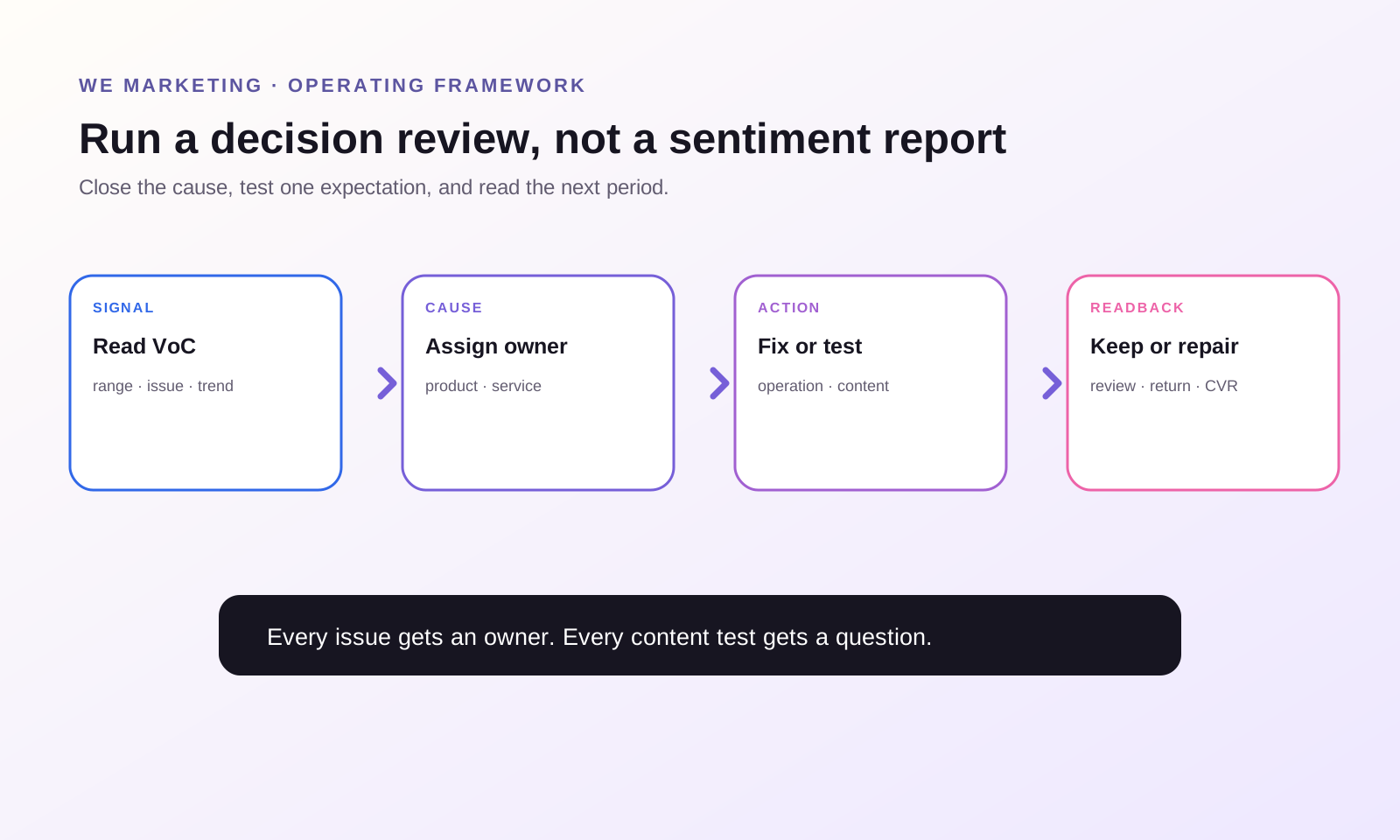
1. Check the VoC last-updated time, data range, status, indexes, issue distribution, and 90-day direction. 2. Review the underlying customer language and order evidence in Product Ratings, returns, tickets, and service records. 3. Separate product, listing, fulfillment, service, and expectation causes. 4. Close urgent product or customer issues first. 5. Select no more than three content jobs for the next cycle. 6. Assign one asset owner, one reviewer, one SKU or variation, one claim boundary, and one publish date. 7. Compare the next period's customer language, returns, product conversion, and VoC direction.
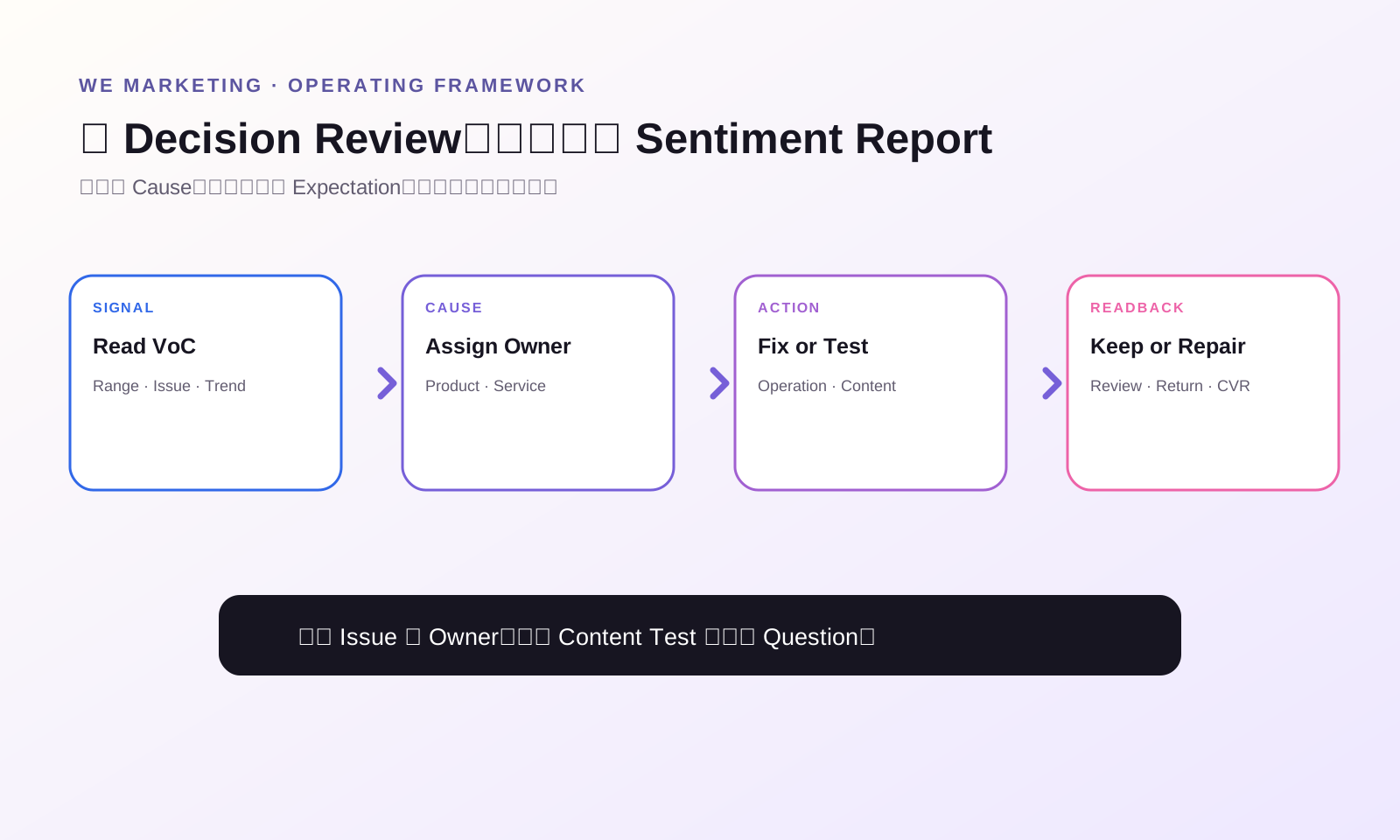
This meeting should end with decisions, not a sentiment report. Every issue needs an owner and one next action. Every content test needs an expectation it is supposed to clarify.
Change the creator brief without scripting the creator's opinion
Customer feedback should improve product truth available to creators. It should not become a request for a positive testimonial.
Give creators:
- the repeated shopper question;
- the verified product fact or limitation;
- the exact SKU and variation;
- a demonstration or comparison that can be performed honestly;
- claims and policy boundaries;
- the customer language to understand, without personal information;
- a request to share their genuine experience in their own voice.
Do not tell creators to deny real complaints, promise a guaranteed result, hide a limitation, or ask customers for a positive review. TikTok Shop's current Review Policy prohibits incentives and manipulation outside official platform-supported review features, including selectively soliciting satisfied customers or pressuring buyers to change negative reviews.
Operational example: a compatibility complaint becomes a qualification system
This is a hypothetical operational example, not a WEM client result.
A home-electronics seller sees repeated feedback that an accessory "does not connect." The team first checks affected orders and discovers two causes. Some units are compatible but require a setup step that the listing barely explains. Other buyers selected the product for an unsupported device because creators used the word "universal."
The seller updates the product title, variation names, compatibility table, images, and setup instructions. It removes the universal claim from live assets and sends a change notice to active creators. The next content cycle has two jobs: qualify supported device models in the first seconds and demonstrate setup from unboxing to working state.
The team then reviews product clicks, conversion, compatibility questions, returns, review language, and VoC direction. Success is not simply more views. Success means the right buyers understand compatibility before ordering and fewer customers report the same failure.
Smallest useful next action: close one expectation gap
Open one priority product in Voice of Customer and record the data range, status, biggest issue, and issue owner. Read five to ten underlying customer records where available. Rewrite the repeated complaint as one neutral buying question.
If the cause is operational, assign the correction and stop there. If it is an expectation gap, choose one content job and update one listing section, one brand asset, or one creator brief. Set a follow-up date inside the same data window. One closed expectation gap is more useful than a large unowned content backlog.
Frequently asked questions
What is Voice of Customer on TikTok Shop?
Voice of Customer is a Seller Center product insight tool that brings together actionable customer-feedback signals from channels such as product reviews, aftersales tickets, and platform customer service. It helps sellers compare product experience with category peers, identify product and fulfillment issues, and prioritize Poor or Fair products for review.
Should every negative review become a TikTok video?
No. First identify whether the cause belongs to the product, listing, fulfillment, service, or customer expectation. Product defects, wrong items, damage, delays, and support failures need operating fixes. Content is useful when it can accurately clarify an expectation, demonstrate use, qualify the buyer, or replace a misleading promise.
How should a brand prioritize customer feedback for content?
Score issue clusters by frequency, consequence, controllability, and available proof. Address safety, policy, misleading claims, and high-return issues quickly. For normal expectation gaps, prioritize questions that recur, affect conversion or returns, and can be answered honestly with visible evidence.
Can TikTok Shop VoC data tell a brand which hook to use?
Not by itself. VoC can reveal issue categories, relative performance, and repeated customer language. The team still needs to verify the underlying cause, decide the owner, define one content job, and test the creative against product, customer, and commercial evidence.
How often should a TikTok Shop team review Voice of Customer?
Review high-volume or high-risk products at least weekly and check urgent signals more frequently when a product, campaign, creator video, or fulfillment change increases exposure. Always read the page's last-updated time and data range before comparing periods.
Can a seller ask customers to leave positive reviews after fixing an issue?
No. Sellers may invite honest, optional feedback using neutral language, but current TikTok Shop policy prohibits manipulating reviews, selectively asking only satisfied customers, offering unauthorized incentives, or pressuring a customer to change or remove a negative review. Use only official platform-supported incentive features when they are available and applicable.
WE Marketing · TikTok Shop 美国站 · Content Operations
把 Voice of Customer 变成更有效的 TikTok Shop 内容
WE Marketing Team · 2026 年 8 月 2 日
把 Customer Feedback 变成一个有 Owner 的 Content Decision
Voice of Customer 不能直接变成“多拍一条视频”的任务。团队应该先判断到底是商品、Listing、履约、客服,还是消费者预期出了问题。商品缺陷、错发、破损、延迟和客服失误要先修运营;只有当问题来自可控制的 Expectation Gap,内容才应该负责讲清适用人群、真实使用、限制、差异和购买前必须知道的事实。
Customer Feedback 是 TikTok Shop 品牌最有价值的内容输入之一,也是最容易被用错的输入之一。团队看到几条关于尺码、气味、安装、效果或物流的差评,就马上让达人“再拍几条解释视频”。这样做可能增加了内容数量,却没有解决消费者失望的真正原因。
TikTok Shop 美国站当前 Voice of Customer Guide 提供了更清楚的起点。VoC 汇总多个渠道的可行动反馈,把商品与同类目水平对比,并区分 Product 与 Fulfillment 问题。平台同时还有 Review Performance、Product Ratings、Product Analytics、Review Policy 和 Content Policy。这些 Surface 可以告诉团队消费者经历了什么,但不会自动替品牌决定下一条内容该做什么。
WEM 的建议是建立一条 VoC-to-Content Operating Loop:先分类 Failure,再修 Owner 能控制的原因,然后把剩余 Expectation Gap 转成一个明确 Content Job,做小范围测试,再回读 Customer 与 Commerce Evidence。最小有用单位不是一份 Monthly Sentiment Deck,而是一个 Product、一个重复 Issue、一个 Owner、一个修正 Asset 和一个 Follow-up Date。
Customer Feedback 是 Evidence,不是现成 Brief
TikTok Shop 当前 VoC 页面首先是 Product Insight Tool,而不是 Creative Generator。它汇总 Product Review、Aftersales Ticket、Platform Customer Service 等渠道的反馈,并按照同类目平均水平把 Product 标记为 Poor、Fair 或 Good。单品页面会显示整体 VoC Index、Product Index、Fulfillment Index、90-day Trend、Critical Issue 与 User Perception Issue。
这个结构很重要,因为同一句“不能用”可能对应完全不同的原因:商品真的坏了、安装步骤没讲清、设备不兼容、达人夸大了功能,或者 Buyer 把商品用在错误场景。只有其中一部分应该进入 Content Backlog。
写 Brief 以前,先看四层 Evidence:
| Evidence Layer | 能看见什么 | 单独不能证明什么 |
|---|---|---|
| VoC Diagnosis | 重复的 Product 或 Fulfillment Issue、Issue Distribution、同类目相对表现 | 具体哪种 Creative 一定能改善转化 |
| Review Content 与 Review Performance | 消费者原话、Rating Mix、差评集中在哪些 Product | 某一条 Complaint 是否代表所有 Buyer |
| Product 与 Content Analytics | Traffic Source、Click、Conversion、GMV、Top Content、Creator Contribution | 消费者预期为什么失败 |
| Return、Ticket 与 Customer Service | 具体订单事实、商品状态、使用问题、服务失误 | 下一个 Hook 能否吸引正确人群 |
Operator 的工作是连接这四层,而不是把任何一个 Metric 当成整个系统的解释。
先过 VoC Ownership Gate
每一组重复 Issue 在进入 Content Backlog 前,都应该先经过 Ownership Gate。
Product-owned
商品有缺陷、不一致、不安全、设计有问题,或者实际交付与承诺不符。内容不能修好商品。团队应该先停止误导性 Promotion,必要时隔离相关 Inventory,修 Quality Control,并判断商品是否继续售卖。
Listing-owned
商品本身可能没问题,但 PDP 没讲清 Size、Compatibility、Quantity、Ingredient、Included Parts、Limitation 或正确使用。先修 Listing,让所有 Traffic Source 都落到同一个 Product Truth,再让内容演示这个 Truth。
Fulfillment-owned
Buyer 收到错货、少配件、破损包装或延迟包裹。达人 Tutorial 不能替代仓库 Picking 和 Parcel Protection。应该先修 Fulfillment Process 和 Customer Recovery Path。
Service-owned
客户拿不到准确答案或及时处理。先修 Staffing、Permission、Operating Hour、Script 与 Escalation。内容可以减少重复问题,但不能代替 Customer Service。
Expectation-owned
商品按设计工作,但 Buyer 反复误解 Fit、Feel、Setup、Compatibility、Routine、Result Timing 或 Intended Use。这才是最强的 Content Opportunity。内容的 Job 是在购买前把正确预期变得可见。
TikTok Shop 官方 VoC Case Study 也体现同样逻辑。根据不同 Root Cause,平台建议修改 Listing、补充真实使用图片、Size 与 Compatibility Table、Instructional Video、Creator Guidance、Product Improvement、Quality Inspection、Customer Service Response 或 Fulfillment Control,而不是统一要求“多拍视频”。
用 WEM CLEAR Framework 把反馈变成内容
CLEAR 让一组 Feedback 只对应一个受控的 Content Decision。
C: Confirm the signal
先看 VoC 的 Last Updated 与 Data Range,再读 Review、Return、Ticket 或 Service 原话,并和 Order Volume、近期 Trend 一起判断。TikTok Shop 说明,只有达到最低订单与反馈门槛的 Product 才会出现在 VoC,所以“页面没有显示”不等于“没有问题”。
L: Locate the owner
把 Issue 分配给 Product、Listing、Fulfillment、Service 或 Expectation。如果涉及多个 Owner,先写清 Dependency。运营还没修好的 Product Defect,不应该交给 Content Team 包装。
E: Extract the customer question
把 Complaint 改写成中性的 Pre-purchase Question。“尺码偏小”变成“按这些 Measurement 应该选哪个 Size?”“连不上”变成“支持哪些 Model,Setup 需要什么步骤?”“味道太重”变成“这个 Scent Profile 适合什么偏好?”
A: Assign one content job
只选一个主要 Job:Qualify Audience、Demonstrate Use、Set Limitation、Compare Variations、Show What Arrives、Explain Care、Answer Objection,或者 Correct Inaccurate Promise。一条视频可以做很多事,但测试必须有一个主要 Job 才能判断结果。
R: Read the next evidence
发布后回看 Qualified Watch Behavior、Product Click、Conversion、Repeated Question、Review Language、Return 与 VoC Trend。决定 Keep、Repair 还是 Retire。View 增长不等于 Expectation Gap 已经关闭。
把不同 Issue 映射到正确 Content Job
| 重复 Customer Signal | 第一 Owner | 有用的 Content Job | 不要做什么 |
|---|---|---|---|
| Size、Color、Quantity 不符 | Listing 与 Product | 展示 Measurement、Model、Light、Pack Content 与 Variation Difference | 用更强 Hook 隐藏 Limitation |
| Setup 或 Use 困惑 | Listing 与 Content | 做 15 到 30 秒 Setup、Use 或 Care Demonstration | 把问题归咎于消费者 |
| Compatibility 困惑 | Product 与 Listing | 先讲 Supported 与 Unsupported Model,再做 Demo | 使用无法兑现的 Universal Claim |
| Scent、Feel、Fit、Taste 偏好 | Expectation | 准确描述 Sensory Profile 与适合人群 | 把主观偏好说成保证事实 |
| 效果过强或过快预期 | Product、Claim 与 Expectation | 讲清 Intended Use、Limitation、Routine 与真实 Result Context | 发明更快、更强的 Outcome |
| 少货、错货、破损、延迟 | Fulfillment | 先修流程,必要时用内容解释 Package Structure | 把运营故障当 Creative Problem |
| 客服慢或回答错误 | Service | 修 Response Ownership,为高频问题做 Reusable Help Content | 用 Video Library 取代客服 |
| Misleading Promotion | Content 与 Listing | 下架或修正 Asset,再发布 Evidence-based Replacement | 因为还在出单就保留旧 Asset |
TikTok Shop 当前 Content Policy 要求所有 Promoted Content 准确、合规,并与商品保持一致。这个要求覆盖 Video、LIVE、Title、Description、Spoken Statement、On-screen Text、Product Demonstration 等内容元素。真正有效的 VoC Content System,应该缩短 Content Promise 与 Customer Receipt 之间的距离。
不要按情绪音量排序,要按 Consequence 排序
最激烈的 Comment 不一定是最高优先级。每组 Issue 用四个维度评分:
1. Frequency:在 Review、Ticket、Refund、Chat 和 Creator Comment 中出现多少次? 2. Consequence:是否影响 Safety、Policy、Return、Cancellation、Margin、Trust 或 Repeat Purchase? 3. Controllability:团队能否在明确时间内修改 Product、Listing、Fulfillment、Service 或 Content? 4. Proof:修正后的 Claim 或 Demonstration 能否在 PDP、Short Video、LIVE 或 Creator Brief 中被准确展示?
高 Consequence 问题即使 Volume 不大,也要优先处理。Safety、Compatibility、Misleading Claim 不应该等到 Sample 足够大。普通 Expectation Question 则可以结合 Frequency 和 Commercial Impact 选择下一轮 Content Test。
一行合格的 Content Backlog 应该记录 Product、Source Period、Customer Language、Root Cause、Owner、Content Job、Proof Required、Channel、Asset Owner、Publish Date 与 Follow-up Date。不要把 Customer 的 Personal Information 复制进 Creative Brief。
从消费者语言建立五种 Reusable Content Job
Qualification Content
帮助错误 Buyer 在购买前退出。讲清适合谁、哪个 Variation 合适、不支持什么、哪个 Use Case 超出商品设计。Qualification 可能减少 Broad Click,却提高 Buyer Fit。
Demonstration Content
展示 Setup、Texture、Size、Compatibility、Included Parts、Care 或 Realistic Use。要让 Product 与 Variation 可见。当失败来自一个看不见的操作步骤时,Demonstration 最有价值。
Expectation Content
讲清 Fit、Scent、Flavor、Feel、Timing、Quantity、Packaging 或 Result Context。语言要具体,不要把一条重复 Complaint 改写成新的 Unsupported Promise。
Objection Content
用 Evidence 回答高频问题,例如 Comparison、Measurement、Ingredient Label、Model Table、Real-use Example 或 Accurate Limitation。目标不是赢下每个 Objection,而是帮助正确 Customer 做更好的决定。
Recovery Content
旧 Asset 制造了错误预期时,要先下架或修正,并给 Creator 更新 Product Fact。Recovery 需要 Content Inventory、Affected Creator List、Link 或 SKU Version、Replacement Brief 与 Stop-use Instruction。它是 Change Control,不是新的 Campaign Theme。
把 Voice of Customer 放进 Weekly Content Review
每周安排一次 45 分钟 Review,由 Product Owner、Content 或 Creator Owner、Customer Service Owner,以及能控制 Listing 或 Fulfillment 的 Operator 参加。
1. 检查 VoC Last Updated、Data Range、Status、Index、Issue Distribution 与 90-day Direction。 2. 在 Product Ratings、Return、Ticket 与 Service Record 中读底层 Customer Language 与 Order Evidence。 3. 把原因分成 Product、Listing、Fulfillment、Service 与 Expectation。 4. 先关闭紧急 Product 或 Customer Issue。 5. 下一轮最多选择三个 Content Job。 6. 给每个 Job 指定 Asset Owner、Reviewer、SKU 或 Variation、Claim Boundary 和 Publish Date。 7. 下一个周期比较 Customer Language、Return、Product Conversion 与 VoC Direction。
会议最后必须产生 Decision,而不是一份 Sentiment Report。每个 Issue 都要有 Owner 和 Next Action,每个 Content Test 都要写清它负责澄清哪个 Expectation。
更新 Creator Brief,但不要 Script Creator Opinion
Customer Feedback 应该让 Creator 拿到更完整的 Product Truth,而不是要求达人给出正面 Testimonial。
给 Creator 的信息包括:
- 重复出现的 Shopper Question;
- 已验证的 Product Fact 或 Limitation;
- 准确 SKU 与 Variation;
- 可以真实完成的 Demonstration 或 Comparison;
- Claim 与 Policy Boundary;
- 去除 Personal Information 的 Customer Language;
- 请 Creator 用自己的真实体验与表达方式创作。
不要要求 Creator 否认真实 Complaint、承诺 Guaranteed Result、隐藏 Limitation,或请 Customer 留 Positive Review。TikTok Shop 当前 Review Policy 禁止在非官方 Platform-supported Review Feature 之外进行 Incentive 与 Manipulation,也禁止只邀请满意客户评价,或施压 Buyer 修改 Negative Review。
Operational Example:把 Compatibility Complaint 变成 Qualification System
这是一个 Hypothetical Operational Example,不是 WEM Client Result。
某 Home Electronics Seller 反复看到“连不上”的 Feedback。团队查看相关订单后发现有两个原因:一部分商品兼容,但 Listing 几乎没解释 Setup Step;另一部分 Buyer 买给了不支持的 Device,因为 Creator 使用了“Universal”这个词。
Seller 更新 Product Title、Variation Name、Compatibility Table、Image 与 Setup Instruction,下架所有 Universal Claim,并向 Active Creator 发出 Change Notice。下一轮 Content 只有两个 Job:前几秒先 Qualify Supported Device Model,再完整演示从 Unboxing 到正常工作的 Setup。
团队随后回看 Product Click、Conversion、Compatibility Question、Return、Review Language 与 VoC Direction。成功不只是 View 增加,而是正确 Buyer 在下单前理解 Compatibility,同类 Failure 更少出现。
Smallest Useful Next Action:关闭一个 Expectation Gap
打开一个 Priority Product 的 Voice of Customer,记录 Data Range、Status、Biggest Issue 与 Issue Owner。在能取得底层记录的情况下,阅读 5 到 10 条 Customer Record,把重复 Complaint 改写成一个中性 Buying Question。
如果原因属于运营,就分配 Correction,到这里停止。如果属于 Expectation Gap,就选择一个 Content Job,更新一个 Listing Section、Brand Asset 或 Creator Brief,并在同一个 Data Window 内设置 Follow-up Date。关闭一个 Expectation Gap,比建立一份没有 Owner 的大型 Content Backlog 更有用。
常见问题
TikTok Shop 的 Voice of Customer 是什么?
Voice of Customer 是 Seller Center 的 Product Insight Tool,会汇总 Product Review、Aftersales Ticket、Platform Customer Service 等渠道的可行动反馈。它帮助 Seller 与同类目 Product 比较 Customer Experience,识别 Product 与 Fulfillment Issue,并优先处理 Poor 或 Fair 商品。
每条差评都应该变成一条 TikTok Video 吗?
不应该。先判断 Root Cause 属于 Product、Listing、Fulfillment、Service 还是 Expectation。商品缺陷、错货、破损、延迟和客服问题需要先修运营。只有当内容能准确澄清预期、演示使用、筛选 Buyer 或替换误导承诺时,才应该创建 Content Job。
品牌应该怎样决定哪些 Customer Feedback 先做内容?
按照 Frequency、Consequence、Controllability 与 Proof 给 Issue Cluster 评分。Safety、Policy、Misleading Claim 和高 Return 问题要快速处理。普通 Expectation Gap 则优先选择重复出现、影响 Conversion 或 Return,而且能够用可见 Evidence 真实回答的问题。
TikTok Shop VoC 能直接告诉品牌下一条 Hook 吗?
不能。VoC 能显示 Issue Category、相对表现与重复 Customer Language。团队仍然需要验证底层原因、决定 Owner、定义一个 Content Job,并用 Product、Customer 与 Commercial Evidence 测试 Creative。
TikTok Shop 团队应该多久 Review 一次 Voice of Customer?
高销量或高风险 Product 至少每周 Review 一次。商品、Campaign、Creator Video 或 Fulfillment Change 快速扩大 Exposure 时,要更频繁查看 Urgent Signal。比较周期以前,必须先读页面的 Last Updated 与 Data Range。
解决问题以后,可以请 Customer 留 Positive Review 吗?
不可以。Seller 可以用中性语言邀请真实、自愿的 Feedback,但当前 TikTok Shop Policy 禁止操纵 Review、只选择满意 Customer、提供未经授权的 Incentive,或施压 Customer 修改和删除 Negative Review。只有在 Official Platform-supported Incentive Feature 实际可用并适用时,才使用该功能。