TikTok Shop Does Not Become a Party to Your Creator or Agency Contract
Direct answer: TikTok Shop does not become a party to the private contract you make with a creator, creator agency, MCN, or other service Partner. It does not become your representative, decide commercial terms, guarantee the service, or enforce the agreement for you. The seller must define the work, payment, approvals, evidence, access, remedies, and exit before the relationship starts.
This boundary is easy to miss because discovery, invitations, service listings, account authorization, and performance tools may all appear inside a TikTok interface. A platform surface can make a relationship easier to start without taking ownership of it. Ask: what agreement governs this work, who owns each decision, and what evidence proves the control happened?
Start with the platform boundary
TikTok Shop U.S. Seller Terms §5 says sellers are solely responsible for contracts and terms with creators or other third parties, including parties found or contracted through Seller Center or TikTok Shop Partner Center. TikTok is not a party, does not act as the seller’s representative, does not determine commissions or other payment terms, and will not enforce the contract.
Appendix 2 applies the same boundary to Partner Services. A listed agency, MCN, affiliate partner, software provider, or other Partner contracts directly with the seller. TikTok does not itself provide those services and is not the buyer, seller, or agent in that service contract.
Operating rule: treat platform controls and private-contract controls as two connected systems. Complete both. A green status in one does not prove the other is complete.
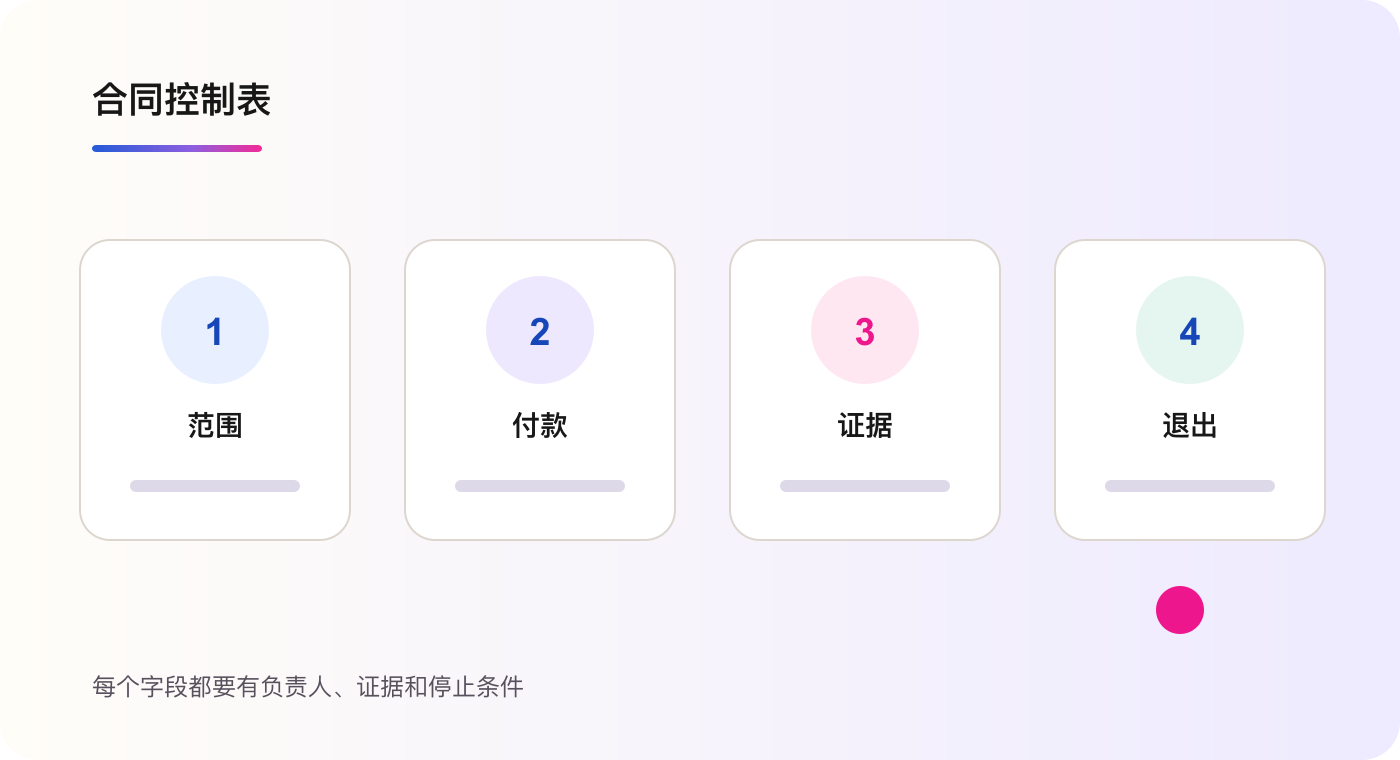
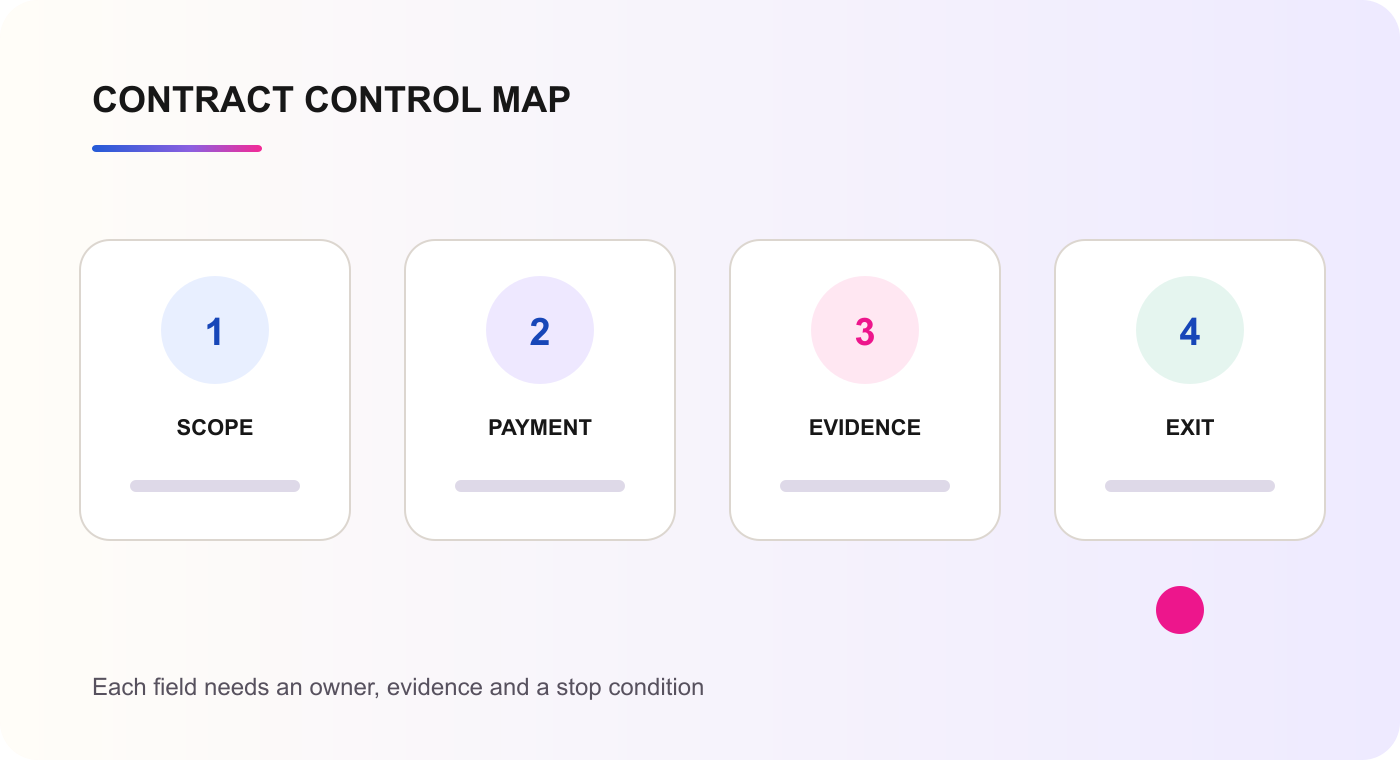
Write eight contract control fields
- Parties and authority: legal names, authorized signer, brands and accounts.
- Scope: deliverables, formats, quantity, channels, milestones, products, claims and exclusions.
- Acceptance: reviewer, evidence, revision limit, response window and accepted state.
- Payment: fees, commissions, milestones, invoice, timing, expenses, taxes and disputes.
- Content and data rights: posting, ownership, reuse, paid media, edits, files, term and access.
- Compliance: disclosures, product truth, privacy, security, records and escalation.
- Remedies and change: what happens when work is late, rejected, inaccurate or expanded.
- Exit: termination, final payment, content, asset handback, access removal and data deletion.
Do not let a brief impersonate a contract
A creator brief explains the assignment: product, angle, talking points, prohibited claims, deadline, and examples. It may not settle the legal entity, payment triggers, intellectual-property permissions, cancellation, confidentiality, or dispute process. A platform message may document part of the relationship without answering every issue the brand must manage.
Build a handoff. The contract supplies durable terms. The brief turns them into the current deliverable. The reviewer records whether the actual post matches product truth and claims boundaries. The payment owner links acceptance evidence to payout. When one artifact changes, identify which others must change.
Make agency scope measurable
Verbs such as manage, support, optimize, or grow do not establish completion. Replace them with outputs and cadence: a weekly creator pipeline with stages; an approved campaign brief; a response-time target; a report with agreed source fields; reconciliation of samples, posts, orders, fees and exceptions; and a monthly access review.
State what cannot happen without written approval, including changing prices, accepting campaign terms, approving samples, publishing claims, changing commission, creating accounts, exporting data, adding subcontractors, or spending above a threshold. The goal is to stop vague scope from becoming accidental authority.
Separate payment evidence from opinion
The contract should tell finance what event creates an obligation. “Good performance” is too vague. A milestone can require an accepted deliverable and invoice. A commission can rely on eligible attribution and settlement. A bonus can define its window and exclusions for returns. Name the source dashboard, date range, timezone, status, and reconciliation owner.
Keep three states distinct: submitted, accepted, and payment earned. A post link proves publication, not acceptance or settlement. A screenshot proves what an interface displayed at one moment, not that funds cleared.
Control authorization as a lifecycle
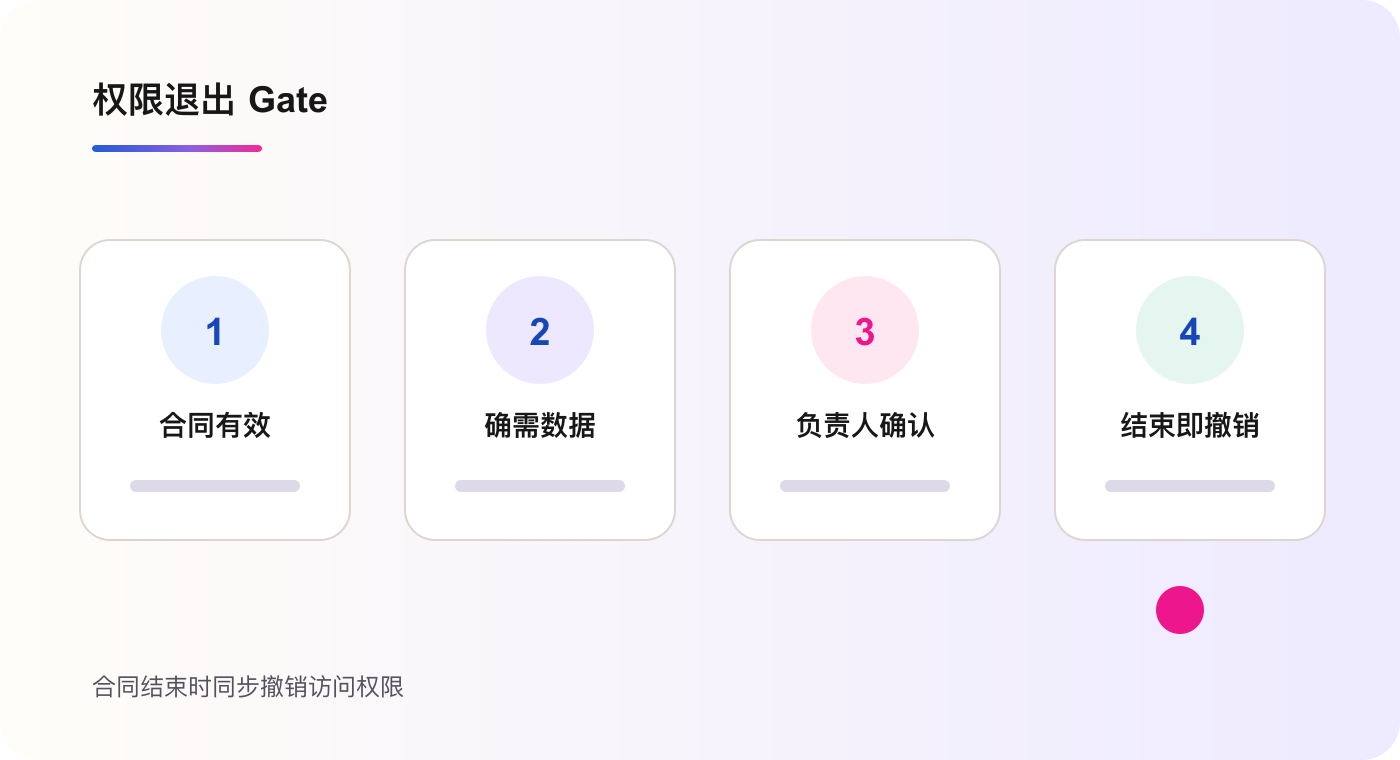
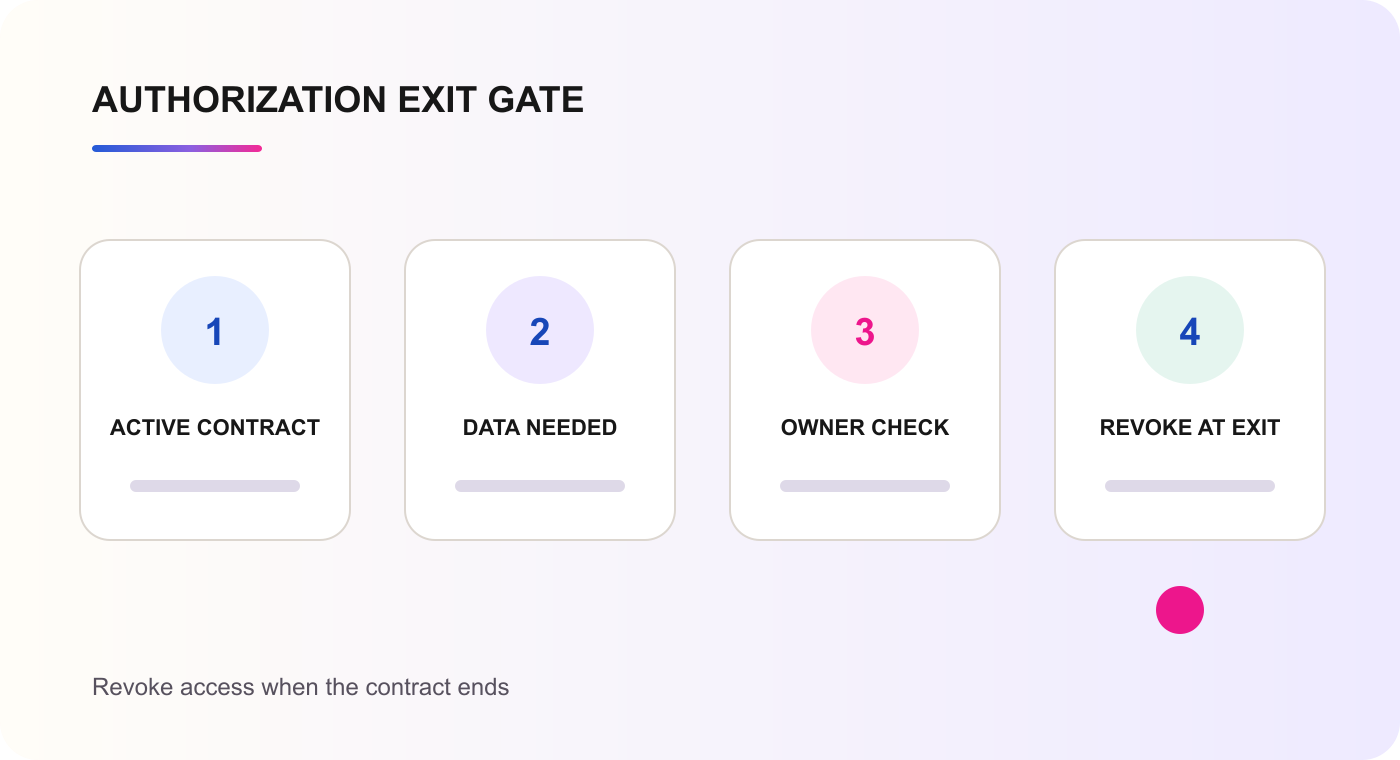
Appendix 2 explains that when a seller clicks Authorize for a Partner, the seller declares a service contract exists and permits disclosed data sharing until expiration or cancellation. If the contract ends, service changes, or data is no longer needed, cancel authorization promptly.
Use four gates: confirm an active contract; verify each requested data category is necessary; record the accountable owner and successful access readback; and revoke access at exit. Review authorization whenever scope, personnel, subcontractors, systems, or the commercial relationship changes.
Prepare for service failure
Partner Services may change, suspend, discontinue, or terminate, and TikTok does not guarantee their quality, accuracy, reliability, or suitability. Preserve credential ownership, source files, campaign history, creator communications, reporting definitions, open obligations, and the ability to continue essential work without one vendor.
Write an incident path: pause unauthorized activity; preserve logs and messages; identify affected accounts, content, payments or personal data; notify the owner; execute notice or cure; revoke access where needed; and document resolution. TikTok may coordinate some disputes, but your contract cannot depend on platform intervention as the only remedy.
Use a responsibility table
| Control | Brand | Creator or agency | Evidence |
|---|---|---|---|
| Scope and claims | Approves truth and boundaries | Confirms and follows scope | Terms, brief, approval |
| Payment | Defines trigger and reconciles | Submits evidence and invoice | Acceptance and settlement |
| Access | Grants least privilege | Uses only for service | Authorization and log |
| Exit | Revokes and confirms handback | Returns assets and deletes data | Closure readback |
Build one evidence packet
Keep signed terms, current statement of work, approved brief, change orders, deliverable links, acceptance, invoices, settlement evidence, data authorization, access reviews, incidents, notices and termination proof in one indexed location with versions and effective dates.
An independent reviewer should answer without guessing: what did the parties agree, what happened, who approved it, and what remains open? If the answers require searching private chats, the control is not ready.
The smallest useful next action
Before approving the next relationship, add four rows to the decision record: scope, payment, access, and exit. Put an owner, evidence requirement and stop condition on each row. Mark unresolved fields unresolved and hold dependent actions. Do not use a listing, invitation, authorization or dashboard as a substitute for a complete agreement.
Source notes and execution boundary
This original WE Marketing framework draws on the current TikTok Shop U.S. Seller Terms of Service, revalidated October 3, 2026, especially §5 and Appendix 2. Interfaces, Partner listings, data fields, authorization flows and terms can change. Verify the current surface and terms before execution. This is operational guidance, not legal advice.
Common questions
Does TikTok become a party to my creator contract?
No. TikTok says it is not a party to agreements between a seller and creators or other third parties.
Will TikTok enforce my agency agreement?
No. Define your own remedies, notice, escalation and exit.
Who sets creator or agency payment terms?
The seller and the creator or agency do; TikTok does not determine those private terms.
What should an agency scope include?
Name deliverables, owners, timing, approvals, reporting, fees, data access, change control and exit.
When should Partner data access be revoked?
Promptly when the service ends, the contract expires, or the access is no longer needed.
Is this legal advice?
No. Use qualified counsel for your actual contract.