TIKTOK SHOP U.S. · COMMERCIAL CONTROL
TikTok Shop Does Not Become a Party to Your Creator or Agency Contract
Direct answer: the platform connection does not replace your contract
Direct answer: TikTok Shop may help a seller discover or work with a creator, agency or other service provider, but the current U.S. Seller Terms say the seller is responsible for the agreement and TT Commerce & Global Services is not a party to it. The terms also say TikTok does not act as the seller's representative and is not responsible for enforcing those third-party contracts.
That boundary changes the operating job. A profile, marketplace listing, Partner Center connection, chat, commission setting or platform workflow is not a substitute for a contract that names the actual parties, work, acceptance rules and exit duties. Treat platform access as a route to a commercial relationship, not as the commercial control itself.
What the current source actually says
Section 5.1 says sellers are solely responsible for contracts and terms made with creators or other third parties, including parties found through Seller Center or TikTok Shop Partner Center. It states that TT Commerce & Global Services is not a party to those agreements, does not act as the seller's representative, and does not determine the amount or terms of commissions or other service payments.
Section 5.2 adds that TikTok has no liability for claims relating to those contracts or the third party's services and will not enforce the agreement. Appendix 2 describes Partner Services as services contracted directly between the seller and the applicable Partner. It says the service contract is solely between seller and Partner and that TikTok itself does not provide Partner Services.
Those are source facts. The checklists below are WEM operating guidance. They do not decide enforceability, local law, employment classification, tax, intellectual property or privacy questions. Route those matters to qualified counsel.
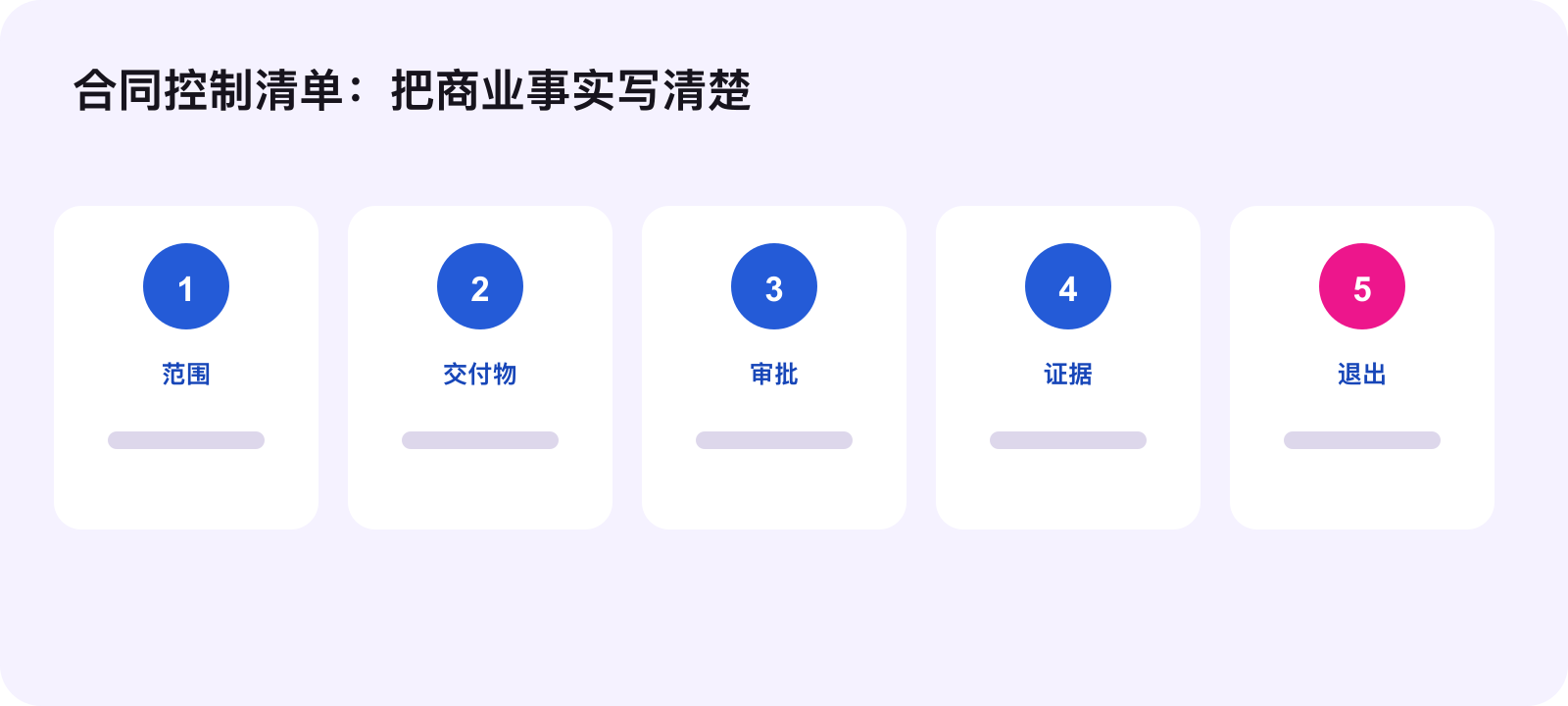
Split one relationship into six controlled records
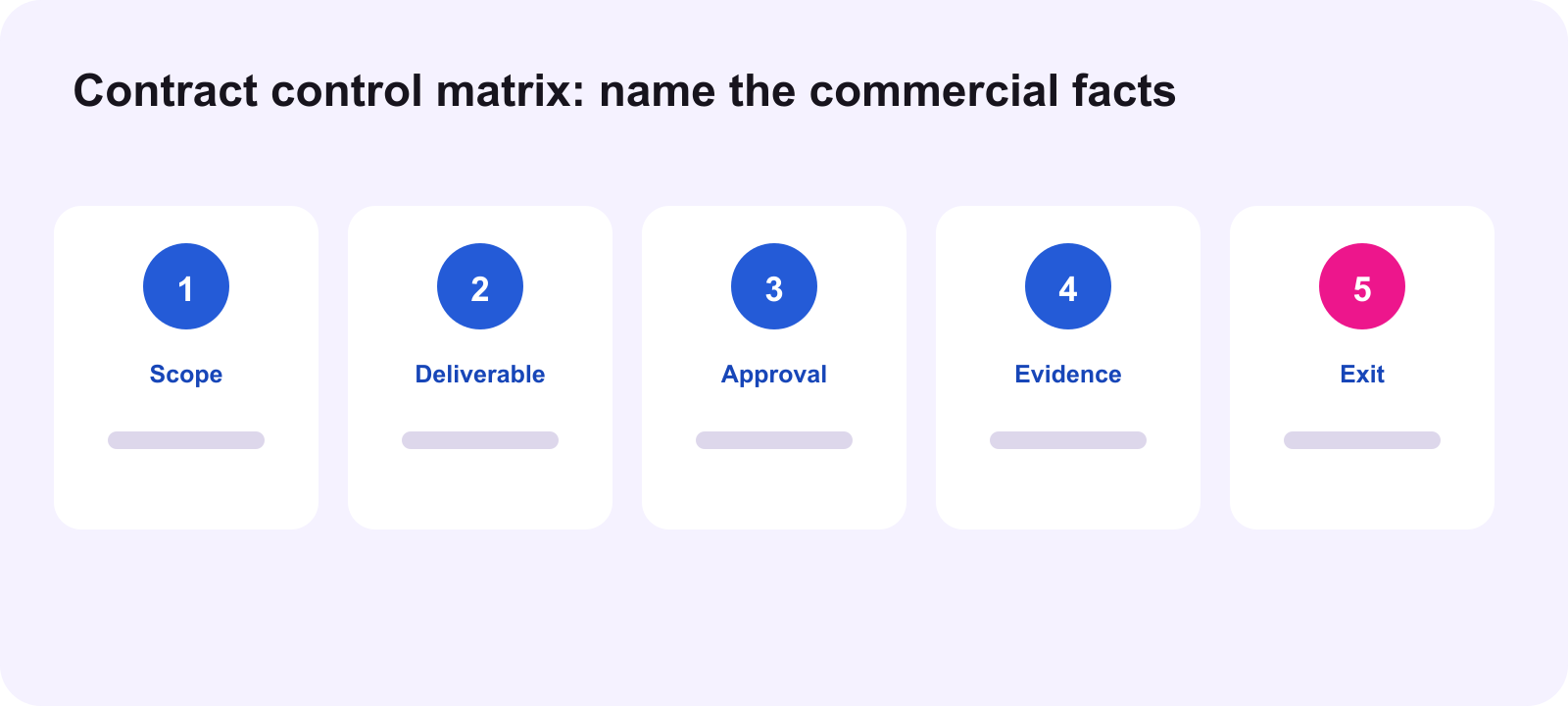
Parties and authority: name the legal entities, signers and approved channels. Confirm who may change budget, grant access, approve content or bind the business.
Scope and exclusions: list channels, markets, products, campaigns and services included. State what is excluded. A vague promise to “manage TikTok Shop” is not an operational scope.
Deliverables and acceptance: define file types, quantities, deadlines, review rounds, claim evidence, approval owner and what counts as accepted. Separate delivery from acceptance.
Commercial terms: record fees, commission, reimbursable costs, invoice timing, payment triggers and any change-control process. A dashboard value does not settle every off-platform commercial term.
Rights and evidence: name usage rights, channels, term, territory, edits, paid amplification, data access, retention and proof of approval. Do not infer rights from payment.
Exit and survival: define notice, final delivery, credential removal, data return or deletion, outstanding payment, content takedown, license expiry and the evidence that closes each duty.
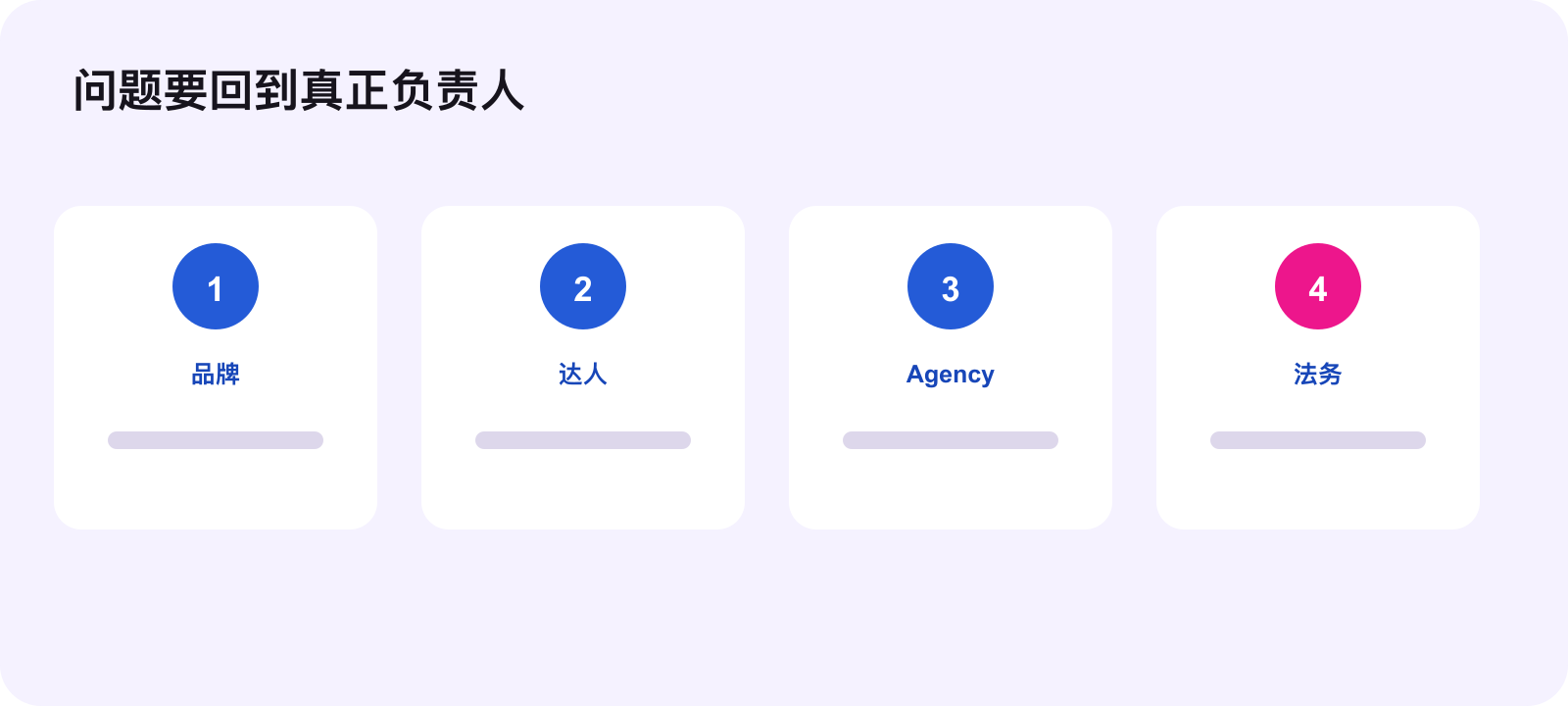
Use an owner matrix instead of one overloaded manager
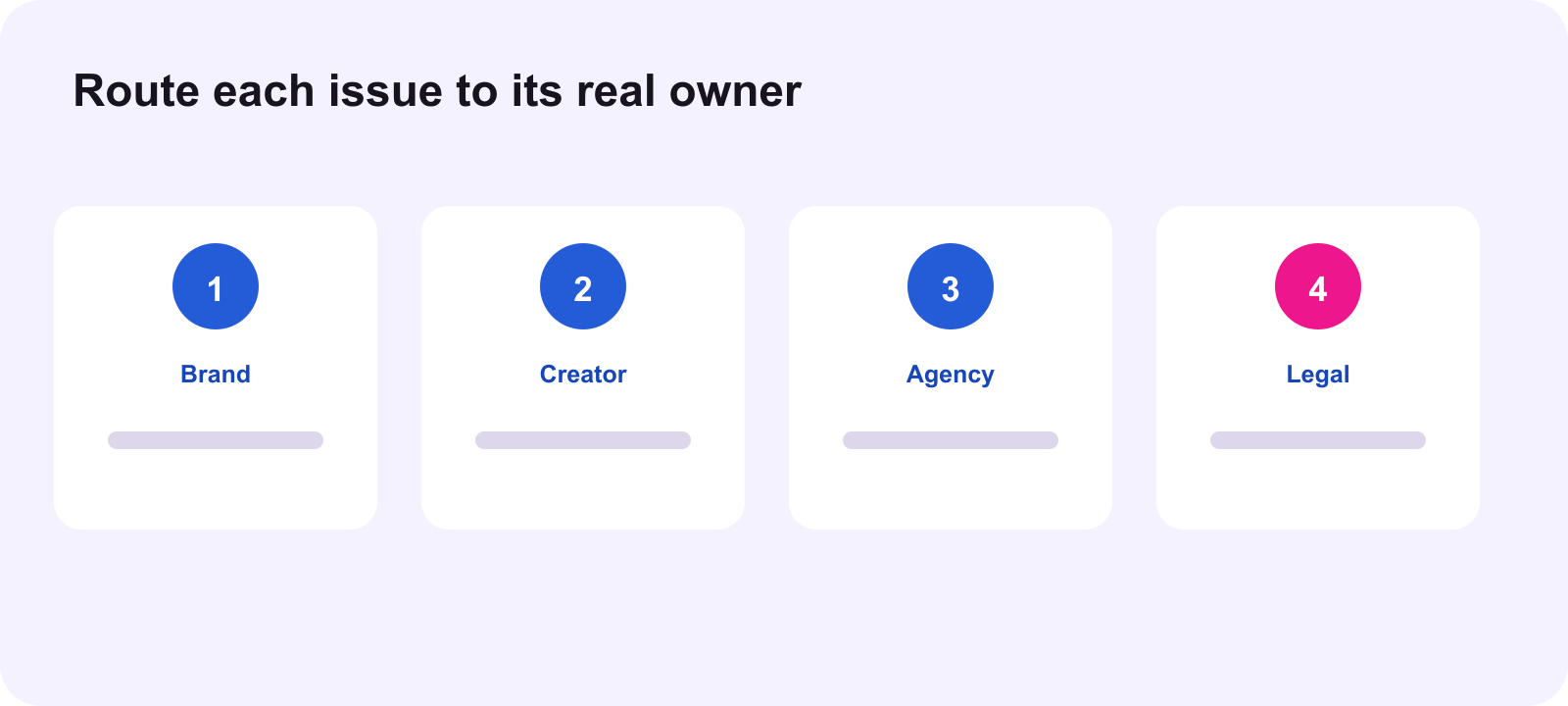
The brand owner approves business scope and spend. The creator or agency owner confirms capacity, delivery and subcontractors. The operator controls accounts, product facts, deadlines and readbacks. Qualified legal reviewers handle enforceability, rights, privacy, classification, indemnities and jurisdiction. One creator manager should not be forced to invent missing legal or product facts.
Record one decision owner and one evidence owner for every material term. The decision owner authorizes the result. The evidence owner preserves the signed version, approval, delivery and readback. When those roles are unnamed, teams often discover after a missed deadline that everyone assumed someone else owned the contract.
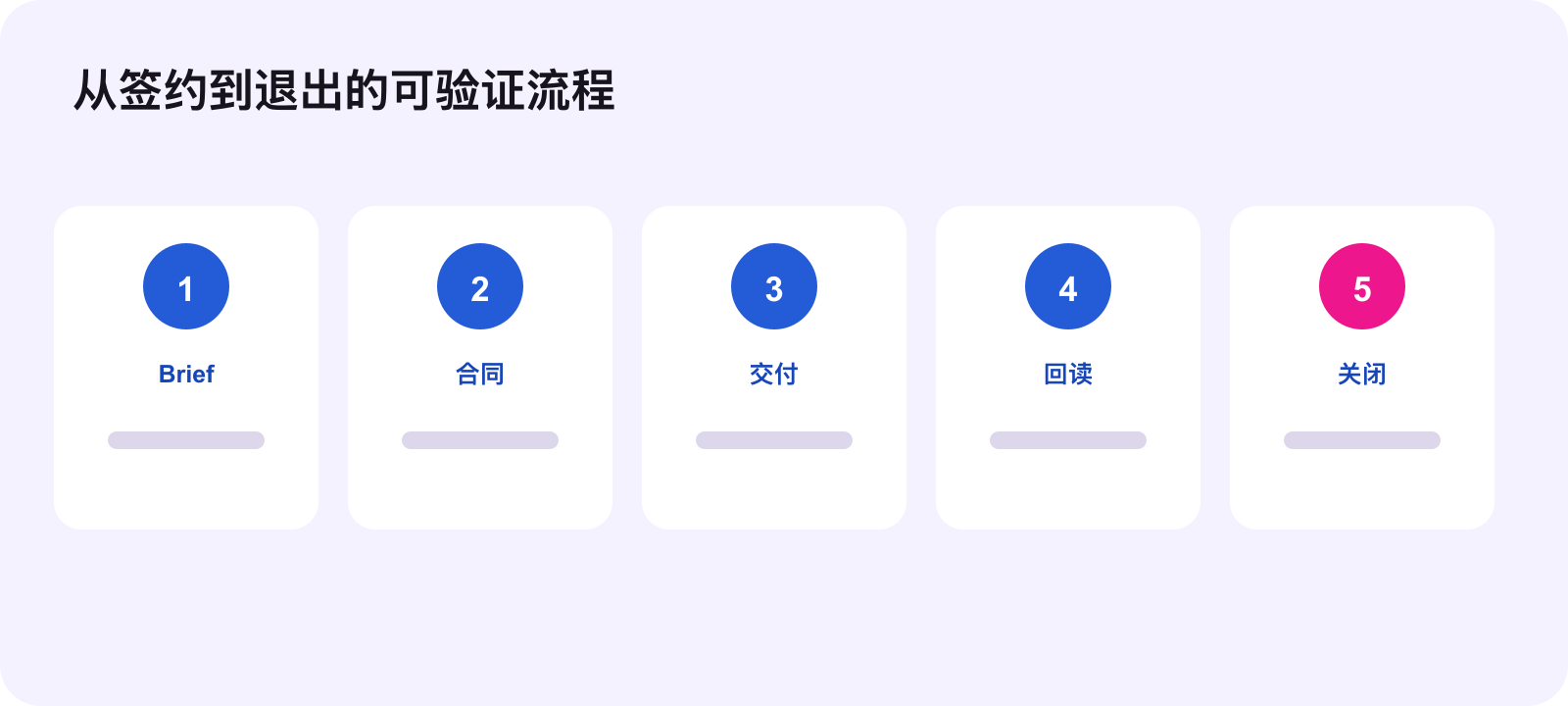
Build a release gate around each deliverable
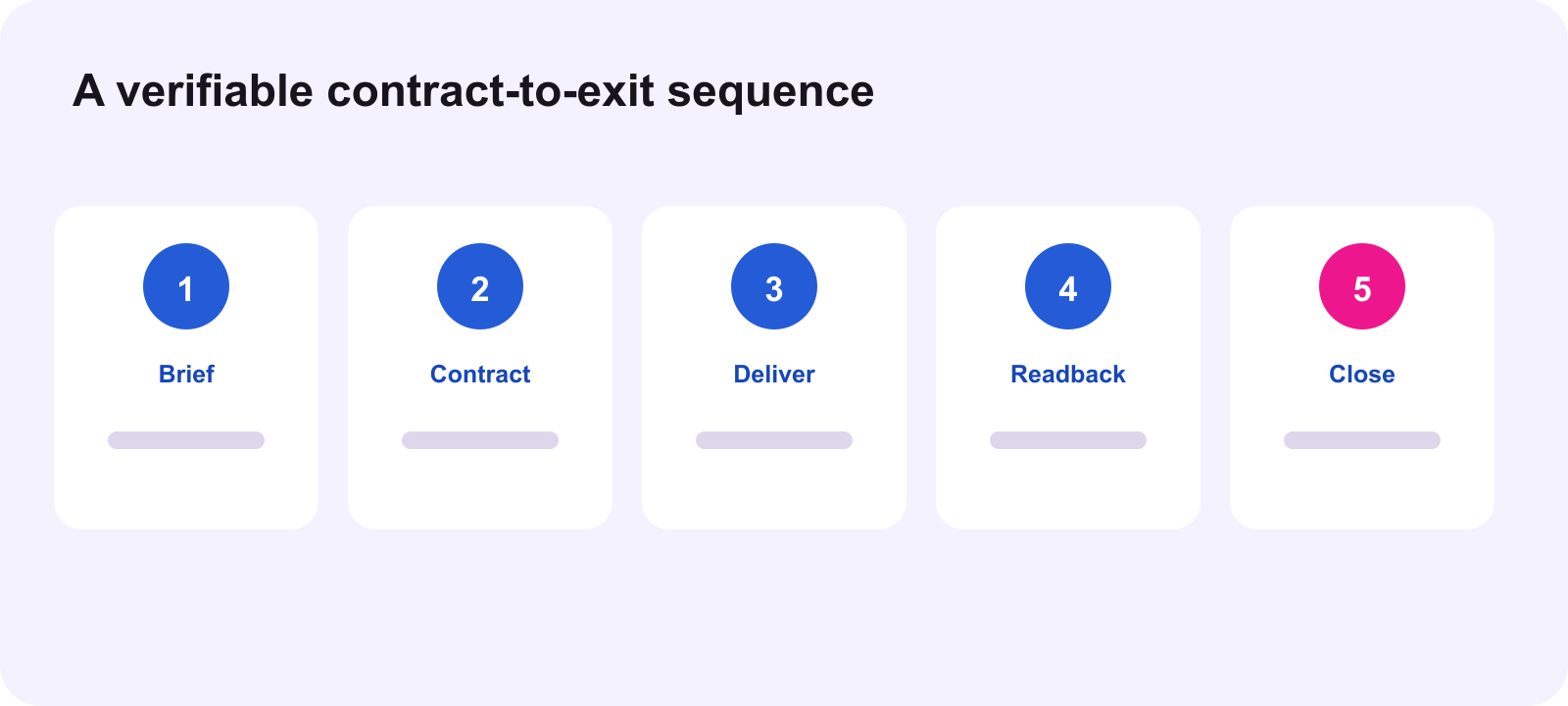
Before work starts, confirm the signed version, active scope and required access. Before content or campaign launch, compare the deliverable with the brief, product truth, claim evidence, price and approved rights. At release, save who approved what version and where it may run. After release, confirm the live URL, account, spend and date. At close, remove access and reconcile files, data, invoices and surviving rights.
A platform status can support this process, but it cannot answer every contractual question. “Connected,” “accepted,” “commission set,” or “service completed” may describe platform state. They do not automatically prove that the brand received every promised file, obtained a reusable license, approved additional spend or completed offboarding.
Operational example: a creator agency manages a launch
Consider a hypothetical U.S. launch in which an agency recruits ten creators and coordinates content. The contract should identify whether the agency only coordinates or also contracts with creators, who pays creators, who approves claims, whether the brand may reuse videos, who owns raw files, and which accounts the agency may access. The brief should link each deliverable to a SKU and deadline. The release ledger should record the final asset, approval and live URL.
If two creators miss the deadline, the team should use the agreed replacement or change process. It should not assume TikTok will compel delivery. If the agency relationship ends, the exit checklist should remove account access, return brand data, identify content that can remain live, document licenses that survive, and reconcile unpaid amounts. This is not a legal conclusion; it is a way to make the operating facts visible before counsel resolves disputed terms.
The smallest useful next action
Open one active creator or agency agreement today. Create four columns: promise, owner, evidence and exit condition. Put the highest-risk missing item at the top and assign a due time. Do not approve the next deliverable until its scope, acceptance rule and evidence location are clear. If the missing item is legal, privacy, tax, employment or intellectual-property language, pause the operating decision and route it to qualified counsel.
Source notes
Primary source: TikTok Shop U.S. Seller Terms of Service, Section 5 and Appendix 2, revalidated October 3, 2026. The source states that sellers are responsible for contracts with creators and other third parties, TikTok is not a party or representative, it does not enforce those contracts, and Partner Services are contracted directly with Partners. The control matrix, owner routing, release gate and example are WEM operating guidance, not legal advice. Verify current terms and obtain qualified legal review for your agreement.
Frequently asked questions
Does TikTok Shop become a party when we find a creator in Seller Center?
No. The current Seller Terms say the seller remains responsible for the agreement and TikTok is not a party to it.
Does TikTok Shop enforce our creator or agency contract?
The current terms say TikTok is not responsible for enforcing contracts between sellers and creators or other third parties.
What should a creator contract name?
At minimum, define scope, deliverables, deadlines, approvals, compensation, usage rights, evidence, changes, termination and post-exit duties.
Is choosing an agency in Partner Center the same as TikTok guaranteeing the service?
No. Appendix 2 describes Partner Services as contracted directly between the seller and the Partner, not as part of the TikTok Shop offering.
Who should review legal clauses?
Use qualified legal counsel for jurisdiction-specific language and risk. This article is an operating-control framework, not legal advice.
What is the smallest action we can take today?
Open one active agreement, assign one owner, and verify scope, acceptance, evidence and exit terms before approving the next deliverable.