Collection by TikTok Warehouse Handoff: The Cutoff, Scan and Exception SOP
Control the warehouse moment when an order moves from seller responsibility into a verified carrier handoff.
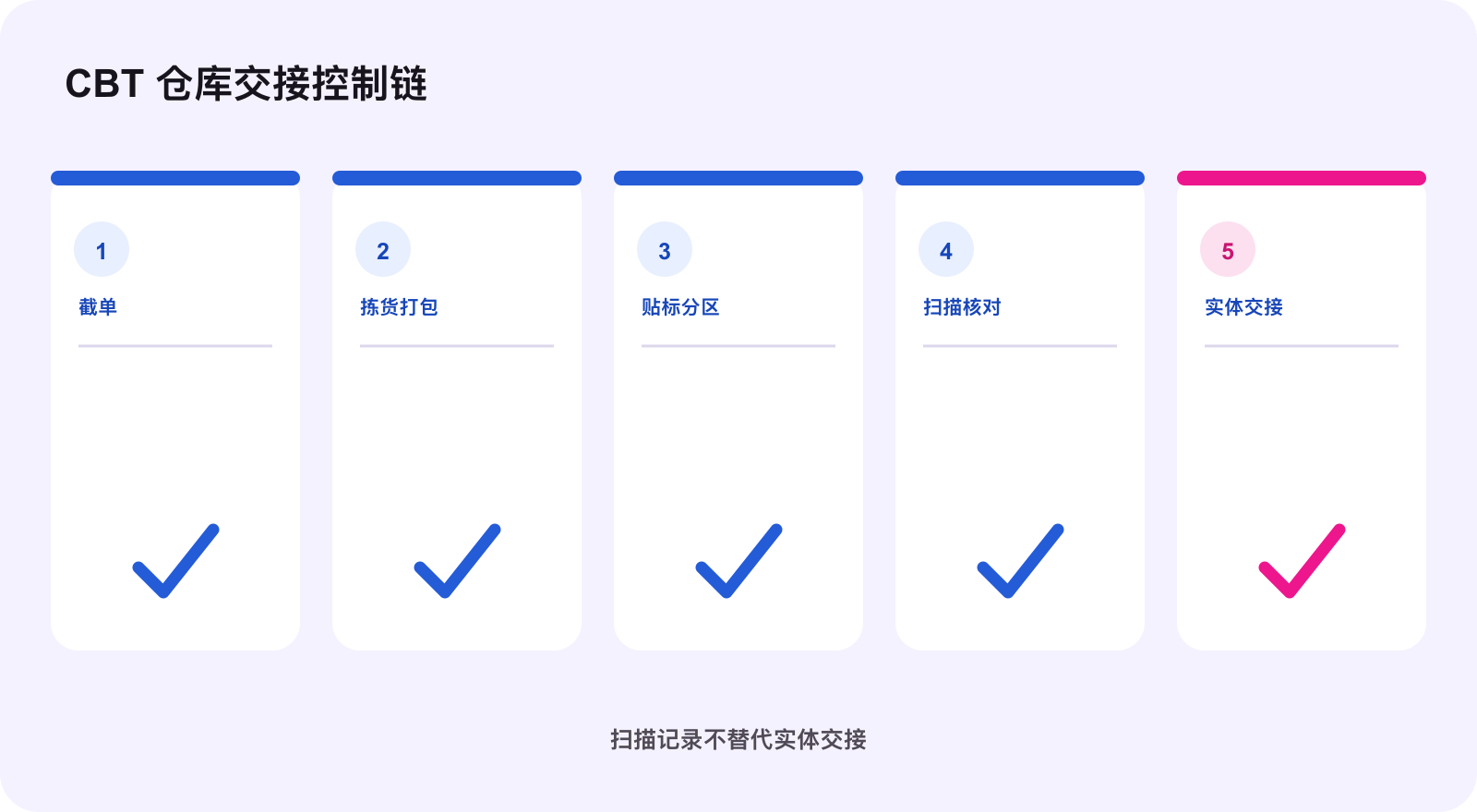
Direct answer: treat Collection by TikTok handoff as a controlled batch release, not as a driver arrival. Lock a warehouse cutoff, pick and pack against one package list, use the official CBT label, stage CBT parcels separately, reconcile the physical count to the scan record, and release the batch only to the designated CBT pickup carrier. A manifest or in-app scan can create useful dispatch evidence, but it does not replace the physical handoff or the carrier acceptance scan.
Collection by TikTok combines pickup and last-mile services under TikTok Shipping for eligible U.S. sellers. The current overview says sellers can keep their existing warehouses while using pickup in supported areas. That convenience does not remove warehouse responsibility. Before pickup, the seller still owns SKU accuracy, packaging, label quality, origin integrity, readiness, and exception communication.
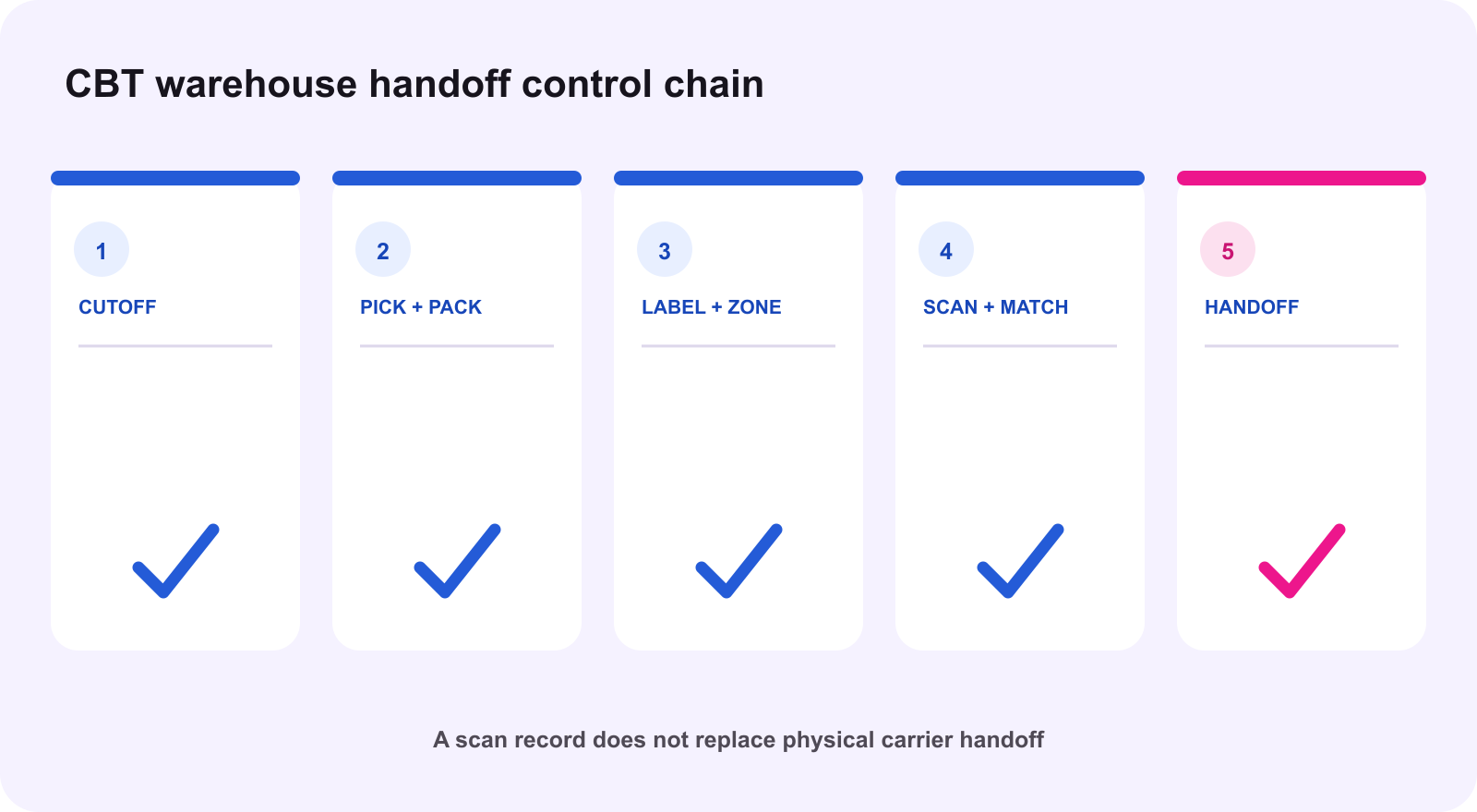
Define the handoff boundary before writing the SOP
The operating boundary has three different records. First, the warehouse creates an order and package record. Second, a TikTok Manifest or in-app scan may record that a prepared batch exists. Third, the designated carrier physically receives and scans the parcels. These events are related, but they are not interchangeable. The shipping requirements warn sellers not to use manifest or scan functions to misrepresent actual handoff activity, and they monitor unusually long gaps between Awaiting Collection and In Transit.
Your warehouse SOP should therefore identify the exact release event. A supervisor signs only after the package count, warehouse origin, labels, scan evidence and pickup carrier all match. The exception owner then watches for the first carrier movement. If it does not appear within the operating threshold, the batch becomes an active exception rather than an assumed success.
Build one cutoff clock backward from pickup
The current CBT warehouse SOP describes a typical daily pickup window of 10:00 to 18:00 local time and says sellers should have packages ready before pickup. It also states that same-day pickup cancellations must be communicated directly to carriers by 9:00 AM local time. Treat these as current official reference points, not as a promise for every warehouse. Your assigned provider, local schedule, holidays and account arrangement remain controlling.
Set a warehouse-specific pickup time and work backward. A practical control schedule has five gates: order cutoff, pick completion, pack completion, label and scan reconciliation, and dock release. Add buffer between each gate. If the carrier comes early, the batch is ready. If volume spikes, the team can stop adding orders rather than mixing incomplete parcels into a released batch.
| Gate | Required evidence | Stop condition |
|---|---|---|
| Order cutoff | Frozen package list by warehouse and pickup date | Late orders move to the next controlled batch |
| Pick | SKU, variant, quantity and order match | Short pick or substitution is isolated |
| Pack | Package protection, weight, dimensions and handling marks | Unsafe or inaccurate package is repacked |
| Label and scan | Official readable label, batch count, scan result and photo | Count or barcode mismatch stops release |
| Handoff | Designated carrier, time, parcel count and warehouse record | Wrong carrier or missing record stops release |
Pick and pack for auditability
Use a package-level worklist, not only an order total. Each row should contain order ID, package ID, SKU and variant, quantity, warehouse, label ID, actual packed weight, dimensions, special handling status and final staging zone. One person can pick and another can verify. For high-risk SKUs, photograph the packed contents before sealing when privacy and internal policy permit.
Packaging has to protect the product and support the carrier path. The shipping requirements place responsibility on sellers using CBT for secure packing and compliant labels. The CBT warehouse SOP expects labels to be clear, legible, securely attached to a flat surface, and scannable without folds, wrinkles or obstruction. A label that exists but cannot scan is an exception, not a completed package.
Keep CBT parcels in a separate physical lane
The CBT warehouse SOP requires sellers to sort and pack CBT parcels separately and have them collected by the CBT pickup carrier. It specifically warns against handing CBT parcels directly to a last-mile delivery carrier. The label may name a downstream network, but the warehouse release path remains the assigned CBT pickup flow.
Create a clearly marked staging area for each pickup date and warehouse. Do not mix CBT with Seller Shipping, other TikTok Shipping handoffs or returns. Use a visible batch card that shows package count, manifest ID when used, cutoff time, assigned carrier and exception count. Physical separation makes the final count faster and prevents a busy dock from releasing the right package to the wrong network.
Use scans as evidence, not theater
For invited sellers, TikTok Manifest can group packages from the same warehouse. The official guide says the team should print the manifest, scan its QR code in the Seller App, verify that the recognized package list matches the physical batch, take the required photo and then hand the parcels to the carrier promptly. TikTok Shop retains the first recorded manifest scan time, so rescanning does not replace an earlier time.
A scan should happen only when every included package is ready for handoff. If the count is wrong, stop and reconcile. If a label was canceled and replaced, the prior manifest scan does not carry over to the new label. Create the correct record again. Never scan unfinished packages merely to improve a metric. The shipping requirements explicitly prohibit misuse of manifest or in-app scan events.
Record the physical handoff separately
At pickup, verify the service provider and driver route against the assigned CBT information. Count the parcels with the driver or approved process, record the time and retain the available receipt, photo or dock log. The supervisor should be able to answer four questions later: which packages left, from which warehouse, with which carrier, and at what time.
After release, monitor the first logistics movement. A scan record may qualify for dispatch treatment in some eligible cases, but it does not remove the need for physical movement. Use a next-check deadline. If the package remains Awaiting Collection or lacks expected movement, open an exception with the provider while the batch evidence is still easy to retrieve.
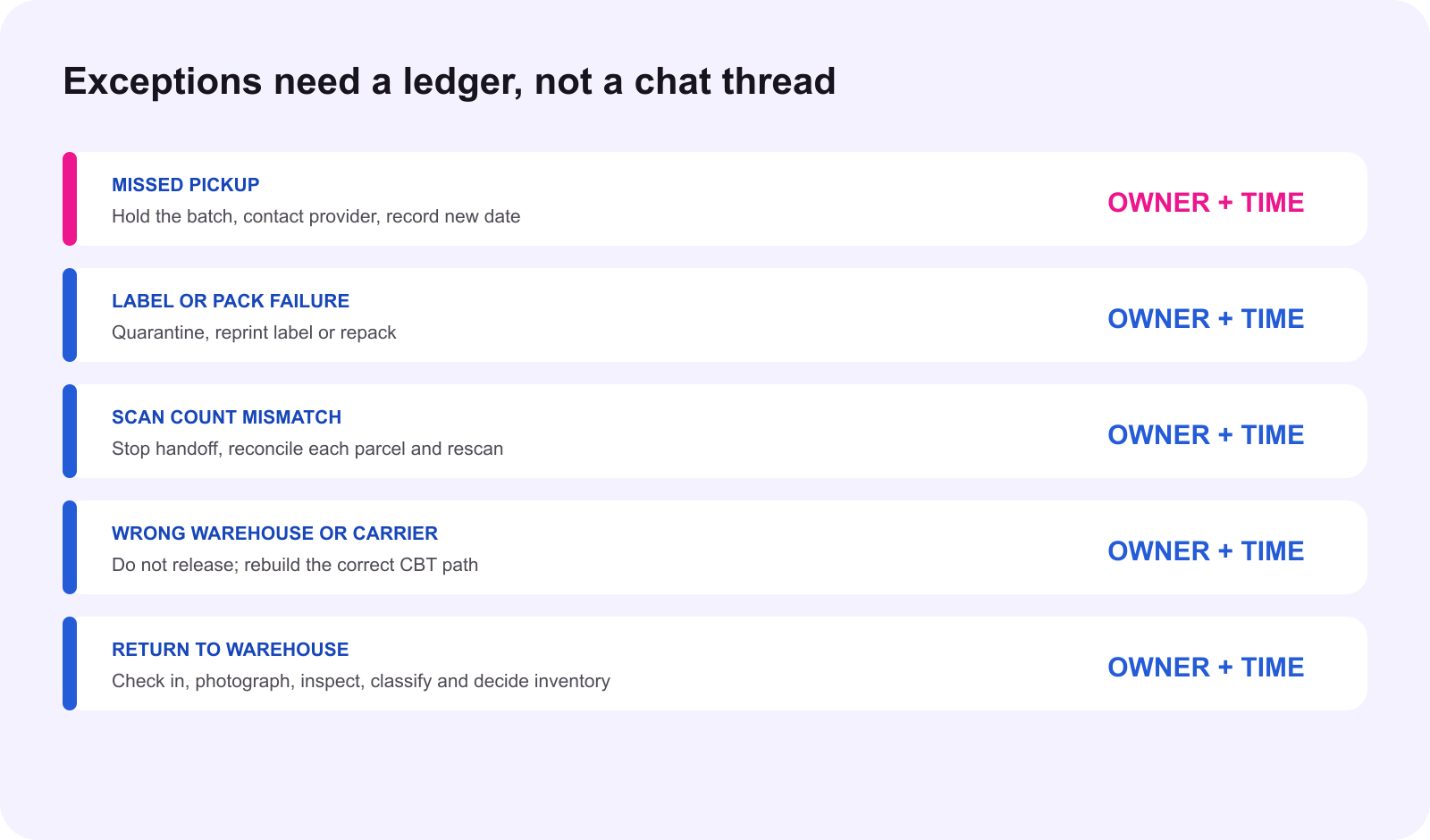
Run one exception ledger
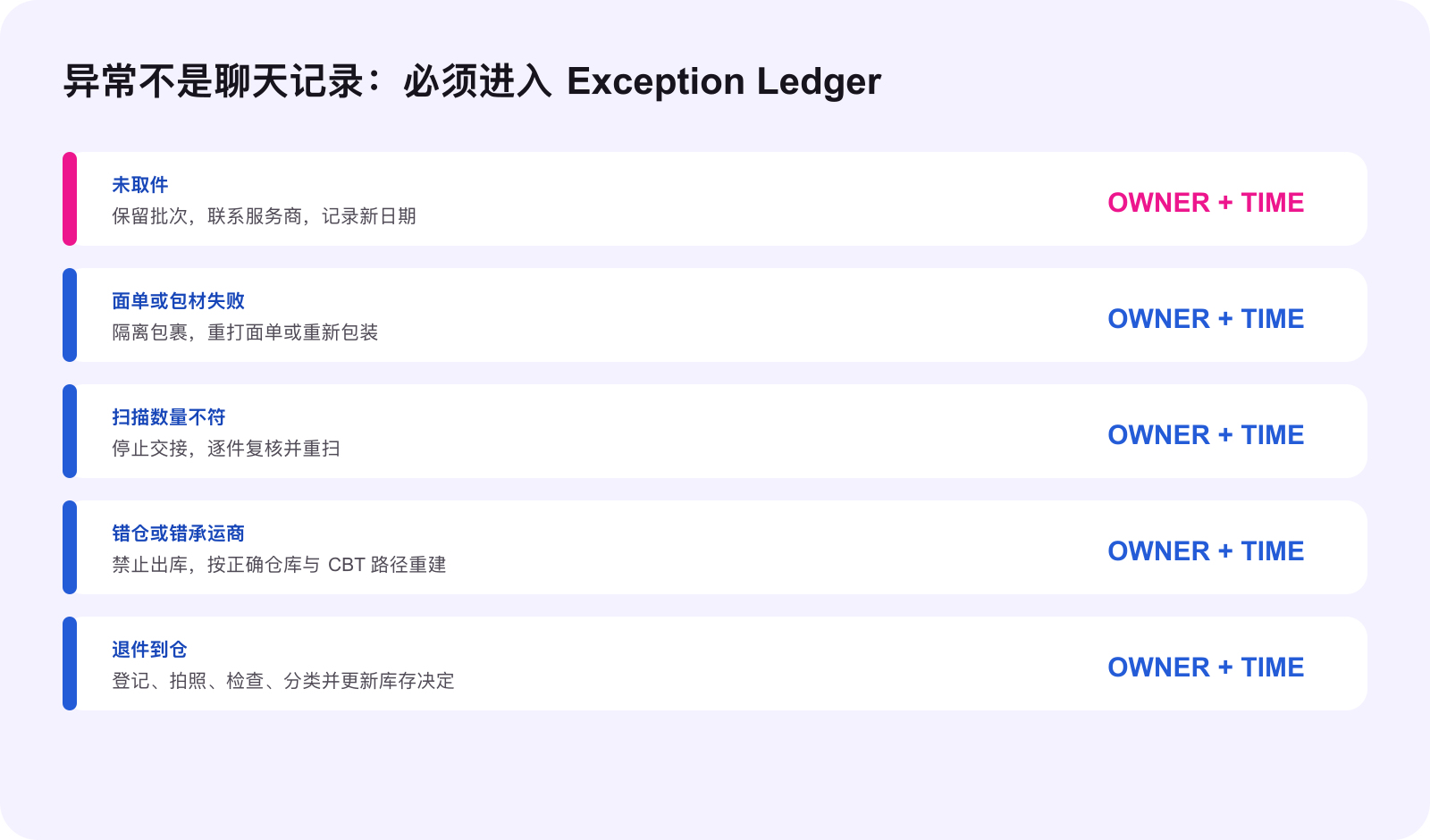
A warehouse chat can coordinate, but it is not the system of record. The exception ledger should name the package, batch, failure type, discovery time, current custody, evidence, owner, next deadline and resolution. Use a short controlled taxonomy: late order, short pick, wrong SKU, packaging failure, unreadable label, scan mismatch, missed pickup, wrong carrier, wrong warehouse, delayed first movement, failed delivery and return.
For a missed pickup, keep the batch controlled, contact the provider and record the new plan. For a labeling or packaging failure, remove the package from the release count, correct it and repeat verification. For a count mismatch, stop the dock handoff until the physical and digital lists agree. For a wrong carrier or origin, do not improvise an offline route. Rebuild the correct CBT path.
Handle returns as a new warehouse event
The CBT SOP includes a failed-delivery and return process. When a parcel returns, check it into a separate return area, photograph the exterior condition, verify the package and item identity, inspect the product, record the reason and decide whether it can return to sellable inventory. Do not quietly place it back into stock. The original shipment record and the return disposition should remain linked.
Use return patterns to improve the outbound SOP. Repeated address issues, label damage, packaging failures or SKU mistakes should create a named corrective action. The goal is not merely to close exceptions; it is to reduce how often the same failure reaches the dock.
Daily CBT warehouse review
- Confirm today's warehouse, pickup provider and expected window.
- Lock the order cutoff and package list.
- Review open exceptions from the prior batch.
- Verify pick, pack, weight, dimensions and labels.
- Stage CBT parcels separately by batch.
- Reconcile scan count, package count and photos.
- Release only to the designated CBT pickup carrier.
- Record the physical handoff and first movement.
- Escalate missed pickup or status gaps by owner and deadline.
- Review returns and update the corrective-action list.
The smallest useful action today
Choose one warehouse and one pickup batch. Write the five gate times, print a package-level checklist, create a CBT-only staging zone and assign one handoff supervisor. Reconcile the physical package count to the scan record and keep a signed release record. The next day, review every package that lacks expected movement before expanding the process.
Source notes
This original WE Marketing operating framework draws on the complete current TikTok Shop U.S. Seller University What is Collection by TikTok (CBT), CBT Order Processing: Warehouse Operations SOP, Customer Order Shipping Requirements, and How to Create and Scan a TikTok Manifest, revalidated October 12, 2026. Eligibility, pickup areas, carrier assignments, time windows, interface paths, scan treatment and fulfillment rules can change. Verify the current U.S. Seller Center and assigned service-provider instructions before execution.
Common questions
Does a TikTok Manifest scan prove that the carrier received every package?
No. The official guide says a manifest scan records the batch and may qualify for dispatch treatment on eligible orders, but it does not replace physical handoff or the carrier acceptance scan.
Can CBT parcels be handed directly to the last-mile carrier named on the label?
No. The CBT warehouse SOP says CBT parcels must be separated and handed only to the pickup carrier designated by CBT, not directly to a last-mile carrier.
What is the same-day CBT pickup cancellation cutoff?
The current CBT warehouse SOP says same-day cancellations must be communicated directly to the carrier by 9:00 AM local time. Confirm the current provider instructions before acting.
Can one TikTok Manifest contain packages from multiple warehouses?
No. The manifest guide requires one warehouse per manifest. Filter by warehouse and create a separate manifest for each physical origin.
What should the warehouse do when a package fails label or packaging inspection?
Remove it from the handoff batch, record the exception, reprint a clear official label or repack the parcel, then repeat verification before release.
What is the smallest useful CBT control test?
Run one pickup batch with a locked cutoff, independent package count, scan evidence, signed physical handoff record and next-day exception review. Repair any mismatch before expanding volume.