TIKTOK SHOP U.S. · FULFILLMENT OPERATIONS
TikTok Shop Fulfillment Is a Growth System, Not Back Office
WE Marketing Team · Sep 19, 2026 · 15 min read
Direct answer
Treat fulfillment as a growth release gate, not a task that starts after marketing succeeds. Before adding content, creators, promotions or paid reach, prove that the exact SKU is available, the chosen shipping model fits the product and warehouse, the team can pick and pack accurately, the carrier can scan within the current service window, and exceptions can be resolved without hiding customer harm. Growth is safe only when the operation can keep the promise created by demand.
A fulfillment growth system is the owned chain from sellable inventory to final delivery and after-sales readback. It joins demand forecasts, order type, shipping eligibility, warehouse capacity, product protection, correct labels, carrier acceptance, tracking events, delivery quality, cancellations, returns and customer feedback. Its purpose is not merely to ship faster. It is to keep each public promise true as order volume changes.
The operating question is never “what can the tool do?” It is “what decision can the team safely make from current evidence, and who owns the readback?”
Why promise and shipping model comes before execution
Marketing can promise a speed or shipping benefit that the selected model, SKU or warehouse cannot deliver. That is why the first operating move is specific: Freeze the exact SKU, delivery promise, order type and current eligible shipping choices. Compare Seller Shipping, TikTok Shipping and FBT using product constraints, warehouse control, service protection, cost and current account access rather than choosing from a generic ranking. The evidence is equally specific: Live product page, shipping template, Seller Center eligibility, product dimensions and weight, order-type rules, destination mix and current official requirements. A fast interface cannot repair a wrong classification or an unverified starting point. It can only execute the team's assumption more quickly.
This article therefore treats promise and shipping model and inventory and capacity gate as connected release gates. The team does not advance because a recommendation looks confident or a dashboard tile turns green. It advances when the exact object is known, the current account evidence supports the action and the consequence of being wrong is inside a written guardrail.
The evidence packet for this decision
Build one packet from the evidence families used across this workflow: Live product page, shipping template, Seller Center eligibility, product dimensions and weight, order-type rules, destination mix and current official requirements. Variant inventory, open inbound stock, replenishment lead time, daily capacity, staffing roster, packaging stock, pickup limits and promotion calendar. Packing list, scan record, package photos where appropriate, final weight and dimensions, label, prohibited-item or special-handling check and operator. These records answer different questions and should not be collapsed into one score. Platform evidence describes access and observed state. Brand evidence describes product truth, cost, stock, staffing and what the customer can actually receive.
Keep the later-stage records beside them: Handoff manifest, carrier scan, tracking ID, warehouse timestamp, assigned service and exception ticket. Delivered status, OTDR or applicable metric, negative reviews, non-buyer-fault returns, seller-fault cancellations, messages and after-sales cases. Closed tickets, refunds and replacements, root-cause owner, capacity utilization, contribution cost, inventory forecast and a named next-volume threshold. Mark unavailable facts as unknown, with an owner and resolution date. If the missing fact affects product identity, permission, customer safety, sellable inventory, fulfillment or the economic floor, it is a stop condition. If it only limits confidence in an optimization idea, the team may choose a smaller reversible test.
1. Promise and shipping model
Operating move: Freeze the exact SKU, delivery promise, order type and current eligible shipping choices. Compare Seller Shipping, TikTok Shipping and FBT using product constraints, warehouse control, service protection, cost and current account access rather than choosing from a generic ranking.
Required evidence: Live product page, shipping template, Seller Center eligibility, product dimensions and weight, order-type rules, destination mix and current official requirements.
Failure mode: Marketing can promise a speed or shipping benefit that the selected model, SKU or warehouse cannot deliver.
Before closing this gate, assign one owner and one readback time. Save the exact page, asset, product, session or order identifier. If the live state differs from the approved state, stop the sequence, record the exception and repair the earliest broken handoff rather than compensating later with more traffic, discount or content.
2. Inventory and capacity gate
Operating move: Translate the demand plan into available-to-promise units, daily pick-pack capacity, cutoff times, labor, packaging and carrier handoff capacity. Reserve a safety buffer and define when exposure or orders must pause.
Required evidence: Variant inventory, open inbound stock, replenishment lead time, daily capacity, staffing roster, packaging stock, pickup limits and promotion calendar.
Failure mode: Orders can remain technically available while the warehouse has already exceeded the volume it can dispatch accurately.
Before closing this gate, assign one owner and one readback time. Save the exact page, asset, product, session or order identifier. If the live state differs from the approved state, stop the sequence, record the exception and repair the earliest broken handoff rather than compensating later with more traffic, discount or content.
3. Pick, pack and label truth
Operating move: Match each order to the correct product and variation, use suitable protective materials, measure the final packed parcel and apply a readable label for the intended carrier. Record exceptions before the parcel leaves control.
Required evidence: Packing list, scan record, package photos where appropriate, final weight and dimensions, label, prohibited-item or special-handling check and operator.
Failure mode: Wrong items, poor protection, inaccurate measurements or an unreadable label create cancellations, damage and tracking failures downstream.
Before closing this gate, assign one owner and one readback time. Save the exact page, asset, product, session or order identifier. If the live state differs from the approved state, stop the sequence, record the exception and repair the earliest broken handoff rather than compensating later with more traffic, discount or content.
4. Carrier handoff and tracking
Operating move: Create the shipment only when the parcel is ready, follow the assigned drop-off or pickup flow and obtain a valid acceptance scan. Keep CBT or other dedicated flows separated exactly as required.
Required evidence: Handoff manifest, carrier scan, tracking ID, warehouse timestamp, assigned service and exception ticket.
Failure mode: Printing a label is not dispatch; a long gap before In Transit can create complaints, late metrics and lost service protection.
Before closing this gate, assign one owner and one readback time. Save the exact page, asset, product, session or order identifier. If the live state differs from the approved state, stop the sequence, record the exception and repair the earliest broken handoff rather than compensating later with more traffic, discount or content.
5. Delivery and buyer experience
Operating move: Monitor delivery status, damaged or missing parcels, wrong items, cancellations and buyer questions by SKU, warehouse, shipping model and carrier. Connect logistics outcomes to reviews, returns and the next growth decision.
Required evidence: Delivered status, OTDR or applicable metric, negative reviews, non-buyer-fault returns, seller-fault cancellations, messages and after-sales cases.
Failure mode: A growth team can celebrate GMV while fulfillment defects reduce shop experience, repeat intent and access to future growth tools.
Before closing this gate, assign one owner and one readback time. Save the exact page, asset, product, session or order identifier. If the live state differs from the approved state, stop the sequence, record the exception and repair the earliest broken handoff rather than compensating later with more traffic, discount or content.
6. Recovery and scale decision
Operating move: Reconcile every exception to a terminal state, identify the earliest controllable cause and choose repair, repeat, expand or stop. Increase demand only after live capacity, inventory and customer outcomes support the next volume band.
Required evidence: Closed tickets, refunds and replacements, root-cause owner, capacity utilization, contribution cost, inventory forecast and a named next-volume threshold.
Failure mode: A submitted claim, carrier promise or temporary metric improvement can be mistaken for a closed operational risk.
Before closing this gate, assign one owner and one readback time. Save the exact page, asset, product, session or order identifier. If the live state differs from the approved state, stop the sequence, record the exception and repair the earliest broken handoff rather than compensating later with more traffic, discount or content.
Tradeoffs and stop rules for delivery and buyer experience
The central tradeoff is between pick, pack and label truth and delivery and buyer experience. Moving early may capture demand or learning, but it also exposes the failure mode already named in the workflow: A growth team can celebrate GMV while fulfillment defects reduce shop experience, repeat intent and access to future growth tools. Waiting for perfect information may waste a time-bound opportunity. The practical answer is not maximum speed or maximum caution. It is the smallest release whose downside the owner can observe and stop.
Write stop rules from the actual failure modes: Marketing can promise a speed or shipping benefit that the selected model, SKU or warehouse cannot deliver. Orders can remain technically available while the warehouse has already exceeded the volume it can dispatch accurately. Wrong items, poor protection, inaccurate measurements or an unreadable label create cancellations, damage and tracking failures downstream. Printing a label is not dispatch; a long gap before In Transit can create complaints, late metrics and lost service protection. A growth team can celebrate GMV while fulfillment defects reduce shop experience, repeat intent and access to future growth tools. A submitted claim, carrier promise or temporary metric improvement can be mistaken for a closed operational risk. Convert the relevant conditions into observable thresholds and give one person authority to pause. The rule should also name the safe state after a stop, such as hold the product, end paid support, remove the item from the session, repair the listing or reconcile affected orders.
Hypothetical operating example
A hypothetical beauty seller plans a creator campaign for one serum. The marketing forecast would triple normal daily orders, but the warehouse can accurately pick and pack only twice its usual volume before the carrier cutoff. The team does not treat this as a warehouse problem for later. It reserves variant inventory, adds a second scanning station, confirms final packed dimensions, stages packaging and sets an order-capacity threshold. During the first release, the operator notices that parcels marked Awaiting Collection are not receiving carrier scans on time. Paid reach is paused, the handoff manifest is reconciled and the carrier pickup is repaired before the next volume band opens. The decision protects the buyer promise and preserves interpretable campaign results.
This example is illustrative, not a WEM client result. The point is the decision sequence: classify the object, gather current evidence, separate hard gates from optimization choices, release the smallest defensible action and verify the named live state. If the conditions change materially, the team starts a new comparison rather than forcing the result into the old test.
Review the six gates as one sequence
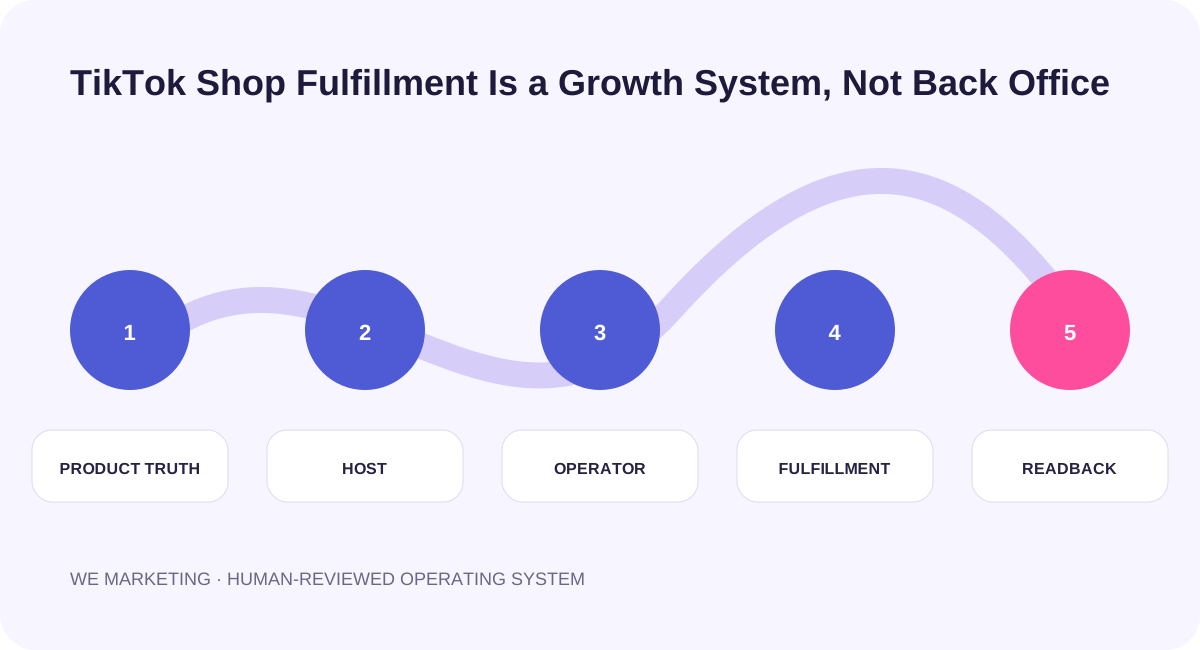
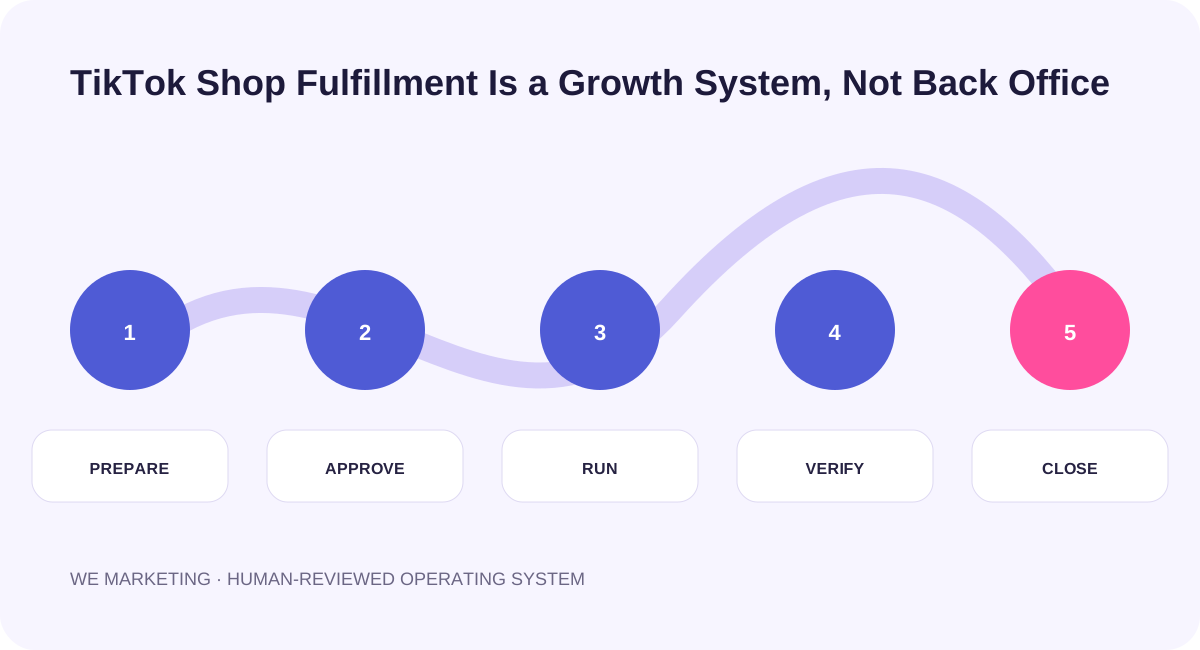
The review order is Promise and shipping model, Inventory and capacity gate, Pick, pack and label truth, Carrier handoff and tracking, Delivery and buyer experience, Recovery and scale decision. Keep one active row for each unresolved gate and connect it to the exact product, event, campaign or decision. A row is pending when its required evidence is missing, blocked when a named condition prevents safe work, released when the approved action is visibly live and verified only after recovery and scale decision closes the consequence.
The weekly decision must be topic-specific. Close the row as repeat when the same controlled conditions should run again, repair when an earlier gate failed, expand when comparable evidence supports more exposure, monitor when no action is currently justified or stop when the risk or economics no longer support the path. A draft, upload, submission or recommendation cannot close this sequence.
Smallest useful next action
Choose one promoted SKU and one expected daily order band. Map its sellable stock, pick-pack capacity, packaging, cutoff, carrier handoff, first valid scan, delivery readback and exception owner. If any link lacks evidence, cap demand at the last proven volume until the gap closes.
Source notes
This original WEM fulfillment-growth framework draws on current TikTok Shop U.S. Seller University guidance on Logistics & Fulfillment: Shipping Options, Policies, and Best Practices, the Fulfillment Policy and Customer Order Shipping Requirements, revalidated September 20, 2026. The official sources establish current shipping options, seller responsibilities, service windows, tracking and fulfillment-quality boundaries. WEM adds the demand-capacity release gate and growth decision loop. Availability, thresholds, exemptions, fees and interface paths may change. Verify the current U.S. Seller Center and exact order type before acting.
Frequently asked questions
Is the fastest shipping option always best?
No. Choose the current eligible model that fits the exact product, warehouse capability, service risk and unit economics.
Does printing a label prove the order was dispatched?
No. The parcel must follow the correct handoff and receive the valid carrier event required by the current workflow.
When should marketing pause demand?
Pause when sellable inventory, accurate pick-pack capacity, carrier handoff or exception handling exceeds its written threshold.
Should fulfillment metrics belong only to operations?
No. They affect customer experience and can influence cancellations, reviews, repeat intent and access to growth benefits.
Can FBT remove every fulfillment responsibility?
No. The seller still owns product eligibility, accurate inventory planning, inbound preparation and the commercial decision to use the service. Verify current terms.
What is the smallest useful action today?
Map one promoted SKU from available stock to delivered status and name the first unproven handoff.