BFCM · CREATOR SAMPLE READINESS
Can a Small Creator Still Join Your BFCM Plan? Check Access, Product Fit and Real Trial Time
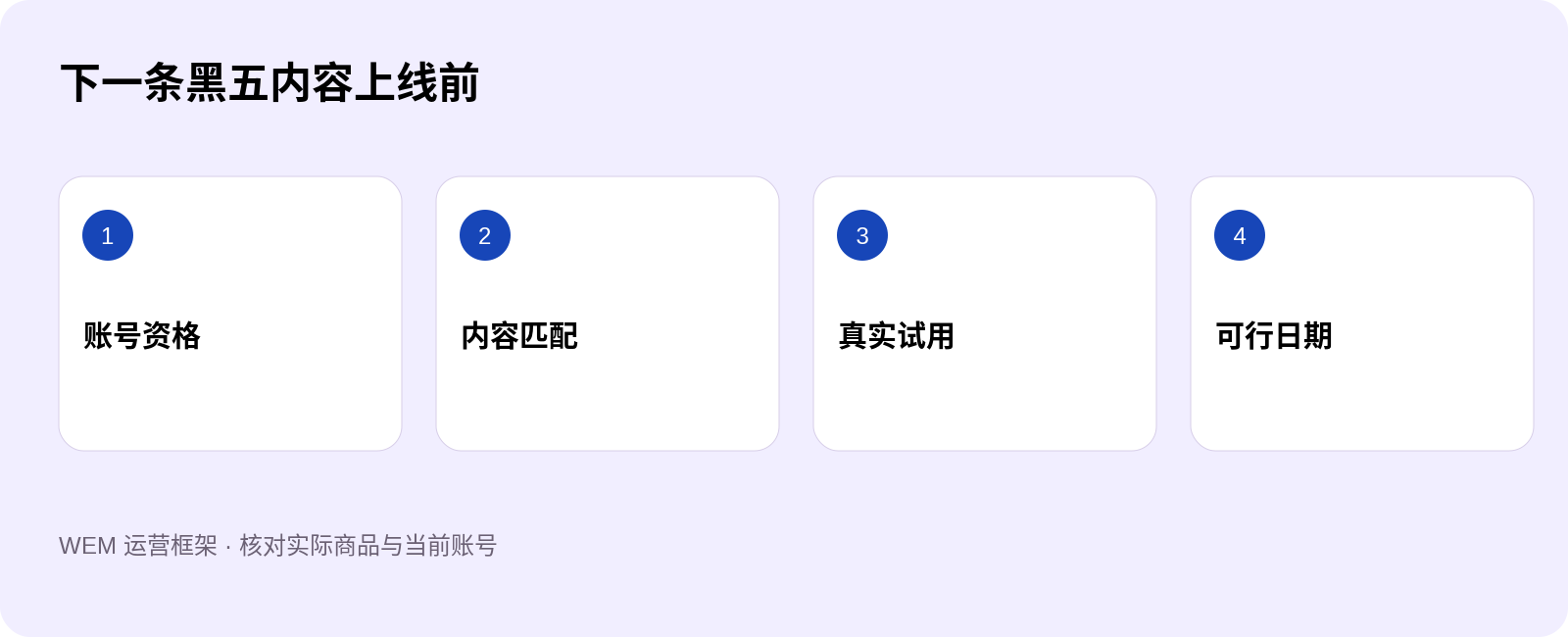
A small TikTok Shop creator can be a useful brand partner, but follower count does not establish current account access, content quality or readiness to publish during BFCM. For a U.S. brand reviewing a last-minute sample on November 26, check those questions separately. Then confirm actual product access and a realistic task before assigning the creator to the remaining holiday plan.
WEM recommends two decisions before a shipment: is this an appropriate creator-product match, and is there an authorized, fulfillable reason to send this sample now? A strong answer to one does not answer the other. Someone may deserve a place in the next testing cohort without being ready for an immediate campaign post.
Separate general creator access from campaign eligibility
TikTok Shop's current eligibility policy distinguishes affiliate, marketing and official shop creators. Their access and requirements are not interchangeable. A creator who can make ordinary content or promote certain products is not automatically eligible for a particular platform campaign.
The official materials also describe pilot and extended pilot conditions. Posting limits, product access and campaign participation can depend on the creator's current status. Ask for the relevant current account confirmation rather than interpreting follower count as a complete answer. Do not request identity documents or private information when a limited status readback is sufficient for the collaboration decision.
This matters during BFCM because a brand may use “join our campaign” to mean an ordinary paid or affiliate collaboration, while the creator hears a platform campaign with separate rules. Name the actual activity. Confirm its requirements without promising that the brand or agency can unlock a platform restriction.
Avoid turning every published number into a universal rule
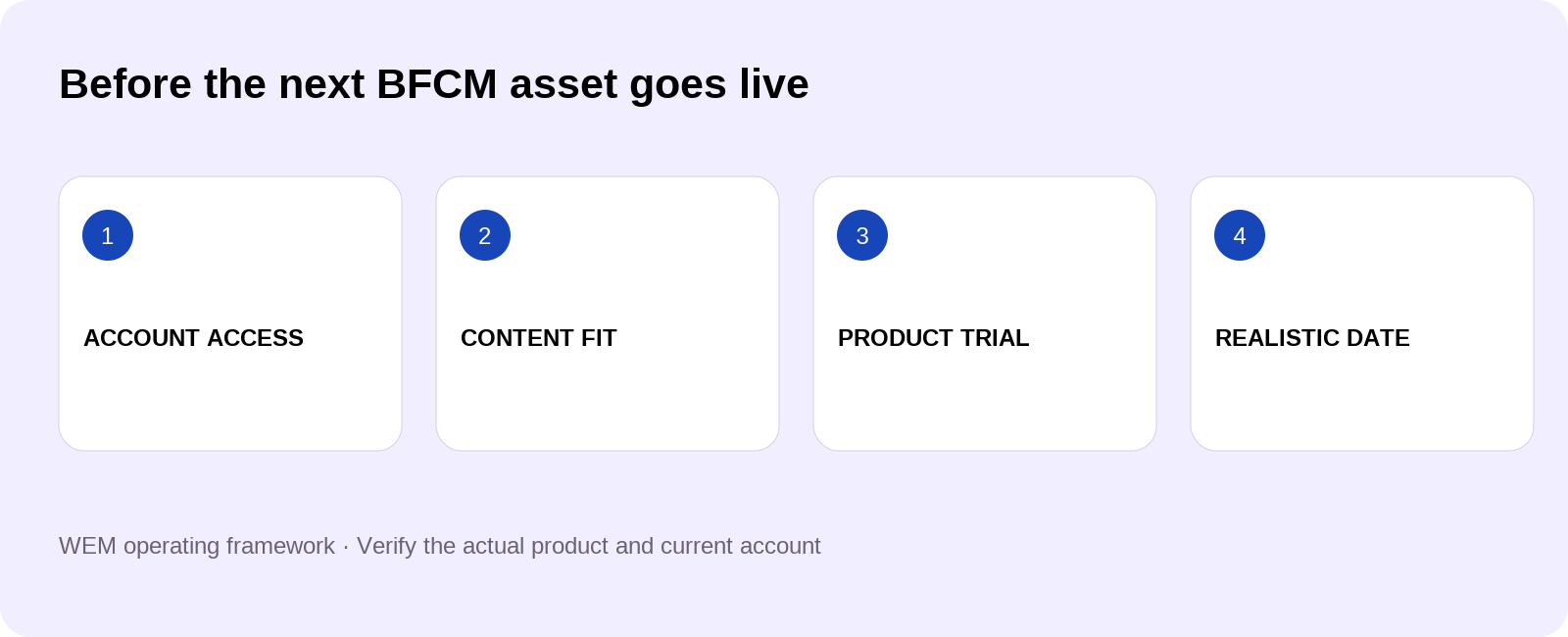
Official pages cover different program stages and describe daily or weekly limits in different contexts. Use the applicable current policy and the creator's actual status together. A general posting ceiling does not remove a stricter pilot restriction, and a task completed by one creator does not prove another has graduated.
The eligibility page also uses a product-access score formulation that should not be casually mapped to the ordinary seller score scale. If the relevant product-access rule is unclear in a specific account, check what the creator can actually select and seek clarification before making a commitment. Do not invent a conversion between differently expressed metrics.
WEM would record whether the necessary product and activity are available now, the time of that confirmation and any unresolved restriction. That is more useful for a shipment decision than a blanket statement that all small creators can or cannot participate. Avoid trying to work around a restriction by relabeling the same activity.
Review the creator's ability to explain this product
Look at recent, relevant work. Does the creator show an actual item clearly, explain what matters and keep the result believable? Can viewers understand the use without an unsupported promise? A smaller account may show these skills, while a larger account may not suit the particular product.
For a beauty brand, inspect how the creator describes texture, application and routine context. Do not ask for a long-term result when the proposed content only allows an initial trial. For a household product, check whether the creator can demonstrate a realistic task in an appropriate setting. These are matching questions, not predictions of sales.
Also consider audience fit. Relevant comments can reveal whether viewers ask questions your product can answer. They do not prove that every follower is a qualified customer. Use the evidence to choose a small, defined test rather than converting a promising video into a guaranteed return forecast.
Confirm the exact product and sample authority
Before offering a sample, verify the brand's authorization, available allocation and the exact SKU. A creator may have promoted a similar product or another brand, which does not establish verified promotion of your brand. Check the evidence required by your own program before making an offer.
Product access is more specific than an address in a spreadsheet. Does the creator already possess the right size, formula or bundle? Is a new shipment necessary? If a sample is requested, who can approve it, what stock is reserved and how will the actual request be recorded? An outreach operator should not imply approval that belongs to someone else.
Keep the sample decision separate from the commercial agreement. A free product does not automatically establish a paid deliverable, usage rights or a posting date. Explain the actual arrangement and obtain agreement to any required task. Do not treat silence or delivery as consent to additional advertising use.
Work backward from a truthful content task
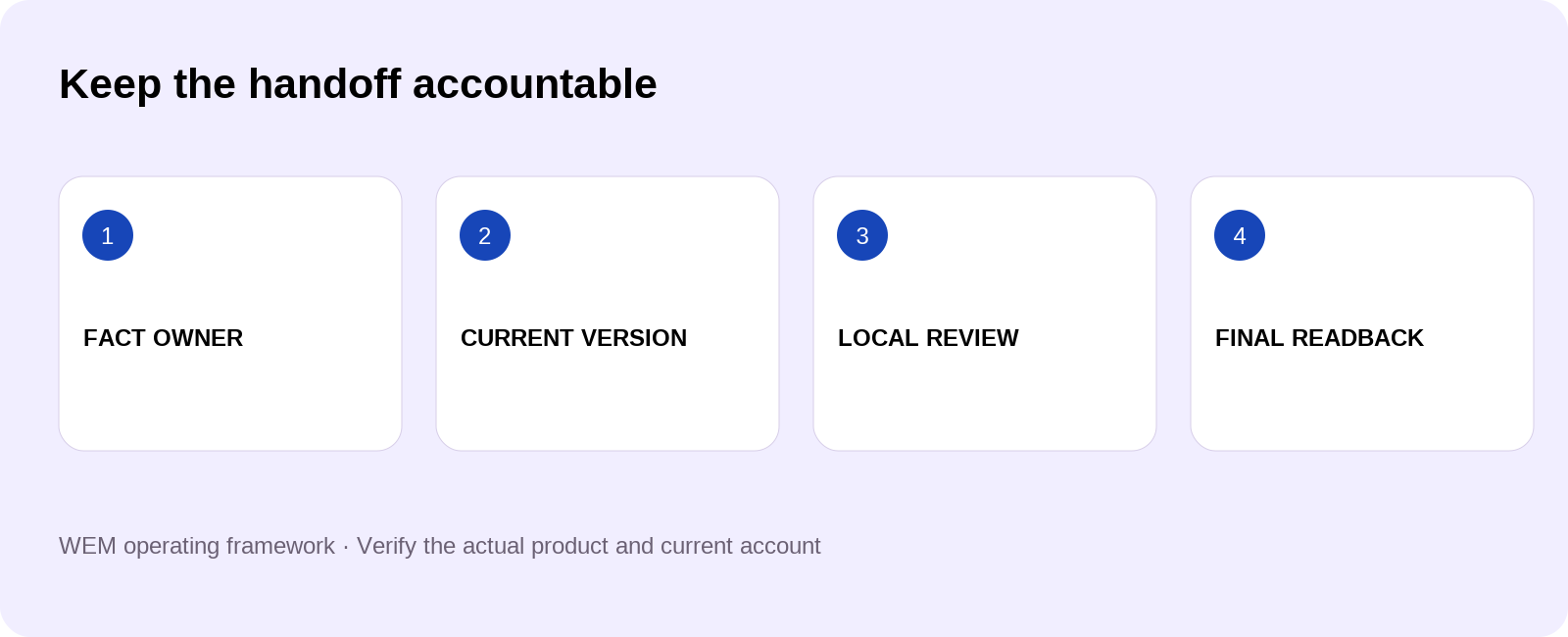
For remaining BFCM activity, list the real dependencies: shipment approval, dispatch, receipt, relevant use, filming, review and publication. Ask the creator about the time they need after receipt. A carrier's estimated arrival does not reserve the creator's weekend or establish that a meaningful demonstration can be completed.
If the product requires time to evaluate, choose a task that fits the experience actually available, when appropriate. Packaging, setup or an initial application may answer a useful customer question. They do not support claims about an outcome that requires a longer period. Avoid suggesting that the creator pretend to have used the product before receiving it.
When the schedule does not fit, move the collaboration to a named next period. You can preserve the relationship and the learning objective without manufacturing a Black Friday deadline. This is especially sensible for products whose strongest explanation depends on careful use rather than an unboxing alone.
Give a small creator a clear, limited brief
Define one customer question, the exact product and the supported facts the creator needs. Offer a possible way to show the answer while leaving room for their voice. Include what the product cannot be claimed to do, current offer details when relevant and a contact for questions.
Agree what happens if delivery or testing takes longer than expected. A useful fallback is a revised date or a different supported task, accepted by both parties. It is not an instruction to skip experience or invent a result. Keep any required review timing realistic and avoid open-ended revisions that a small creator cannot plan around.
WEM's U.S. agency perspective is to make this collaboration understandable for both sides. The brand supplies product truth and approval authority; the creator supplies an honest account of what they can do; the operator keeps the task, sample and timing aligned. That work is more valuable than claiming access to a large pool of creators who have not agreed to participate.
Evaluate learning before scaling shipments
After the first content test, review whether the creator answered the intended question accurately, whether the product was visible and whether customer responses exposed a useful next question. Keep those observations separate from orders and revenue. An informative video can guide the next test without establishing a profitable acquisition model.
Track approved samples, dispatch, receipt, agreed content and accepted output as separate stages. If a sample does not become content, determine whether the cause was fit, communication, account access, timing or a different agreement. Do not automatically classify every missing post as misconduct.
For a repeat cohort, change one clearly identified constraint. That might be better product instructions, fewer simultaneous tasks or a more realistic shipping window. Sending more products without understanding the first cohort increases cost without necessarily increasing learning or output.
The smallest action today
Choose one pending sample and verify current access, product fit, authorization and the actual time needed after receipt. Decide whether it belongs in the remaining BFCM work or a later test. Record the decision and the creator's agreed next step before promising a shipment or a publication date.
Frequently asked questions
Are creators with fewer than 5,000 followers always ineligible?
No. Creator types and program stages have different requirements and capabilities. Check the current relevant status and the specific product or activity instead of using one follower number as a universal rule.
Can a creator with shopping access join every BFCM campaign?
No. General commerce access and eligibility for a particular campaign are different. Pilot status and campaign-specific terms may limit participation, so confirm the actual activity and current account state.
Which posting quota should we put in the brief?
Use the applicable current status and requirements. General and pilot limits are not interchangeable. If daily and weekly descriptions appear inconsistent for the account, clarify before assigning output rather than choosing the larger number.
Does approving a sample confirm a video?
Not by itself. Sample approval, the content arrangement, usage rights and timing are separate decisions. Record what both parties actually agreed; do not infer extra deliverables from shipment or silence.
Can a last-minute beauty sample still be useful?
It can be useful if product fit, authorization and a truthful task are clear. When meaningful testing cannot fit the remaining window, use a later campaign rather than ask for an unsupported experience or rushed efficacy claim.
How should we judge a small creator's first test?
Review accurate explanation, product visibility, the intended customer question and useful audience response alongside commercial data. One test does not guarantee sales or profit; use it to identify the next specific decision.
Source notes
Reviewed November 26, 2026: Creator Eligibility Policy, Affiliate Creator Pilot Program and Creator Fraud, Abuse and Misconduct Policy. Program descriptions have context-specific limits; check current status and the exact activity. WEM's sampling workflow and examples are recommendations, not platform access guarantees or client results.