BFCM LIVE · PROMOTIONS
BFCM LIVE Giveaway or Gift With Purchase? Choose the Promise Your Shop Can Deliver
For a U.S. brand running the final Black Friday and Cyber Monday LIVEs, the first decision is whether the shopper must buy. A free giveaway and a purchase gift create different promises, use different operational paths and need different explanations. Choose the mechanism your current account, inventory and fulfillment team can actually support before the host announces it.
WEM's recommendation is to start with one offer, one qualifying product or product group, and one person responsible for checking what shoppers can see. A louder announcement cannot fix a gift that is missing from the actual promotion. The advice below is written for November 26, 2026, with the remaining holiday activity in mind; it is not a universal offer template or a prediction of conversion lift.
Ask what the promotion needs to accomplish
A giveaway can support a LIVE moment that introduces a product and invites participation. A purchase gift can give a shopper a concrete reason to choose a qualifying basket. Neither mechanism guarantees that viewers will become profitable customers. Your objective should determine what you measure and what stock you reserve.
For a U.S. beauty brand, a small, useful accessory may help explain a routine. That does not make every accessory an effective gift. Ask whether the item is relevant, whether shoppers can understand the combination without a long explanation, and whether the warehouse can fulfill the promise. An unrelated item may produce more questions than value.
Keep the economic decision explicit. Write down the cost of the gift, additional shipping, handling, support and any discount already available on the paid product. A higher order value does not by itself prove that the promotion improves contribution. If the team cannot see those inputs today, reduce the complexity of the offer before expanding its reach.
Separate a free giveaway from a purchase condition
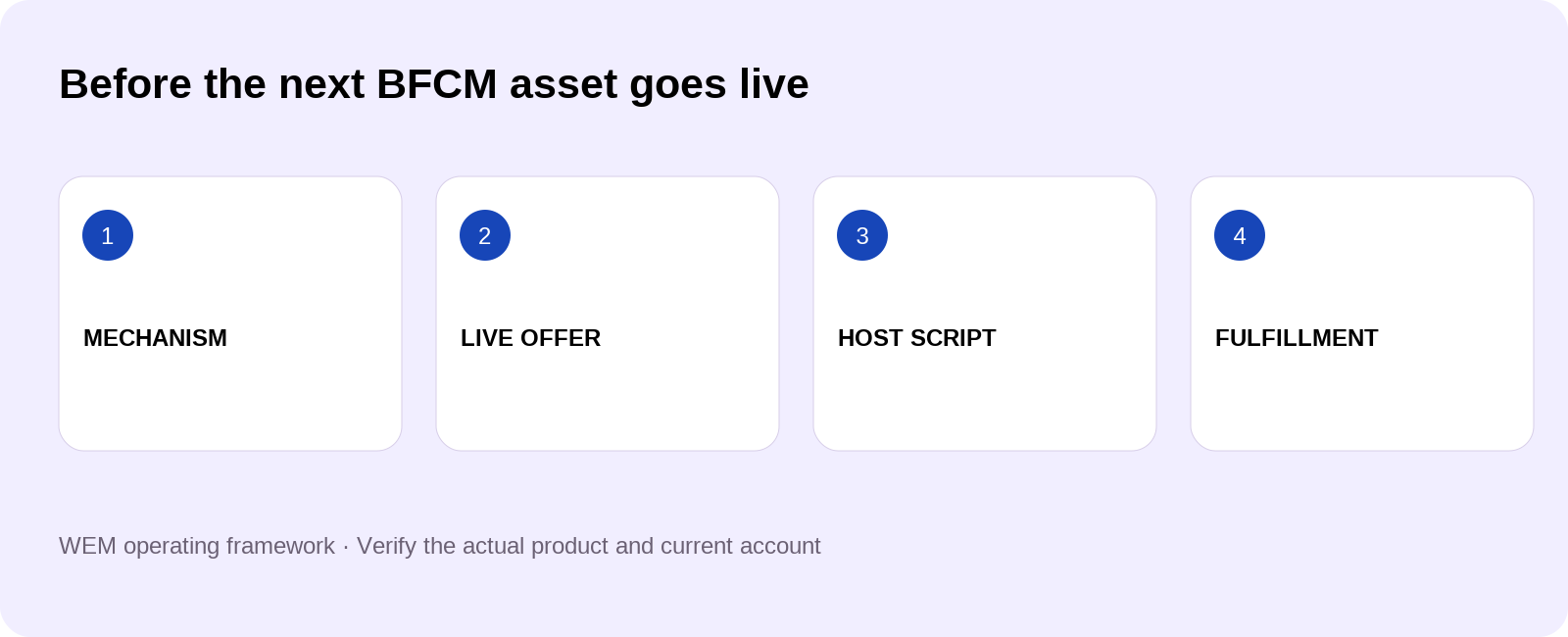
TikTok Shop's October 30 Giveaways and Promotions Policy distinguishes free giveaways from purchase-based incentives. Review the complete current policy before announcing an event. For a giveaway, do not turn a free opportunity into an implied purchase requirement or add conditions that conflict with the current requirements. Use the official LIVE Giveaway feature where available; the policy describes limited alternatives when it is unavailable.
WEM would not use an old tutorial screenshot as permission to add purchase or extra engagement tasks. The older LIVE Giveaway tool guide and newer policy do not describe every participation condition consistently. If the current account presents a setting whose use is unclear, resolve that specific question before using it. A visible control is evidence that the control exists, not proof that every possible configuration is appropriate.
A purchase gift needs a different explanation: which product or basket qualifies, who qualifies, which gift is included and when the promotion operates. Do not call an ordinary purchase gift a prize that everybody can enter to win for free. The customer should understand the condition before placing the order.
Check the tool limits instead of using the broadest policy number
The general promotion policy and the Gift with Purchase feature guide serve different purposes. The feature guide reviewed for this article sets a gift-set value cap of $75 and describes active inventory, gift selection and promotion compatibility. A broader policy ceiling does not increase a tool-specific cap. Read the applicable current tool requirements and the settings shown in your own Seller Center together.
This is particularly relevant when a marketer proposes an expensive holiday bundle because another campaign offered one. The example may involve a different mechanism, market or date. Do not copy its prize value into your own GWP configuration. Confirm that the exact products can be used, that the gift inventory is active and that the promotion is successfully created.
The official materials also contain an ambiguous sentence about BOGO items alongside examples of different-item gifts. We would not turn that sentence into an invented permission or prohibition for an unusual offer. For a nonstandard combination, seek a clear answer for the actual configuration. Simpler, fully verified offers are easier to explain during a busy LIVE.
Make the customer-visible offer the source of the host script
Build a short offer record after checking the promotion, not before. It should identify the qualifying item or basket, eligible shoppers, exact gift, available quantity or claim limit, start and end time, shipping arrangement and the owner who can change the announcement. Include the relevant timezone. A countdown that outlives the event is not a useful urgency device.
Then read the record back against the customer experience. The GWP guide describes segmented offers that may only appear to eligible shoppers. If a host says everyone receives a gift while the event only applies to a particular customer segment, a correct backend setup can still produce misleading content. State the real eligibility in plain language.
For a hypothetical beauty LIVE, the host might explain that a qualifying purchase receives a named accessory during the displayed event window, subject to the actual stock and eligibility shown. This is an example of the information to communicate, not a ready-made promotion claim. Replace every detail with the verified offer. Avoid saying the gift ships in the same box unless operations has confirmed that arrangement.
Treat stock changes as content changes
The GWP guide explains that a set can be partially fulfilled when one gift runs out while other gifts remain available. That operational detail matters to the words on screen. If the host continues showing the complete original set, the viewer may expect more than the current event provides.
Give one operator responsibility for checking gift availability during the LIVE. When an item reaches its limit, check the actual offer again, update the visual and tell the host exactly what changed. Do not leave the moderator to improvise an explanation in comments while the main presentation repeats the old promise.
Also check whether gift and paid inventory share a stock pool and whether items ship from different warehouses. The feature guide places gift shipping costs on the seller. A small product can become an expensive incentive if it creates a separate parcel on every qualifying order. Reserve stock against the current mechanism rather than a spreadsheet estimate alone.
Give the host, moderator and warehouse the same record
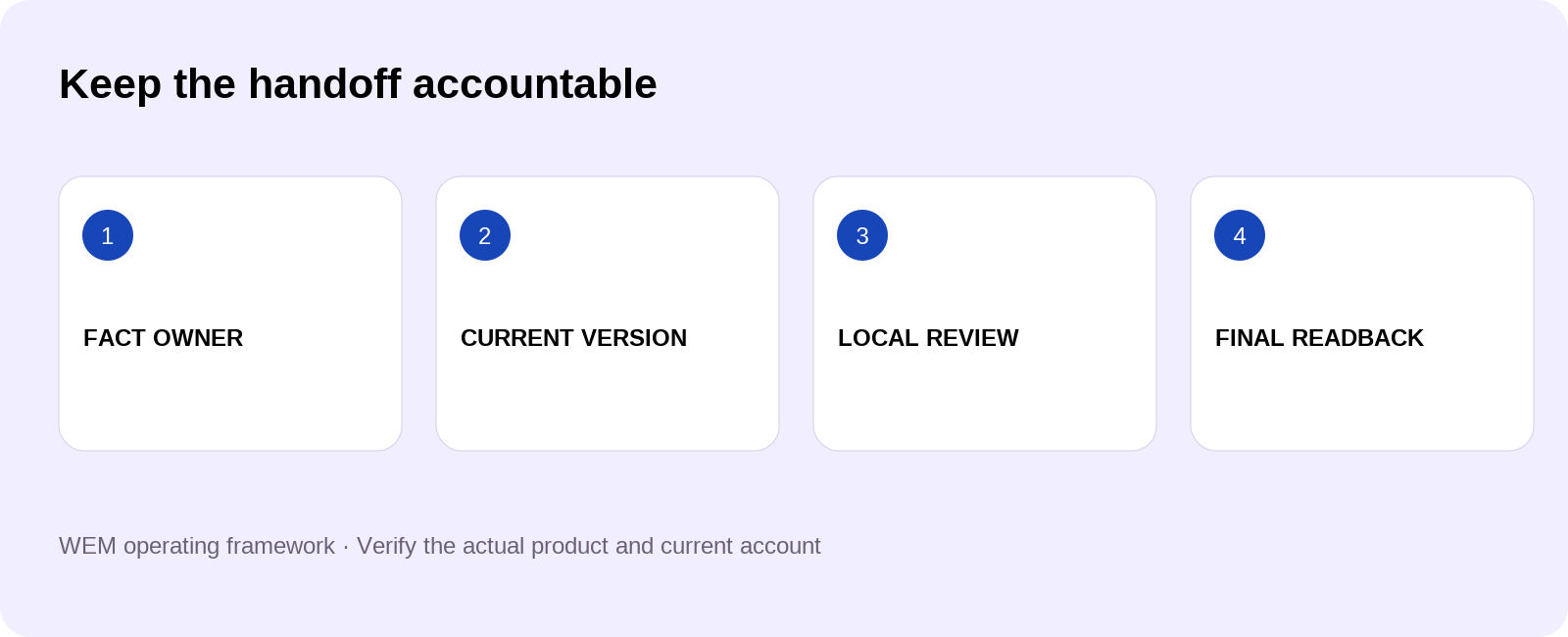
An offer has at least three audiences inside the brand. The host needs a short explanation that can be repeated accurately. The moderator needs answers about eligibility, missing gifts and timing. The warehouse needs the actual items and fulfillment instructions. Each audience can use a different format, but the underlying facts must match.
WEM's role as a U.S. agency is to close the gap between a brand's promotion idea and its customer-facing execution. That means checking the live setup, the language used by creators and the operational owner. It does not mean promising that a gift will rescue a weak product or replacing the seller's responsibility for inventory and fulfillment.
If there is insufficient time to resolve a complex offer before the next broadcast, simplify the plan. A truthful demonstration of the product can still be useful without a new gift mechanic. Do not announce an unconfirmed gift to preserve a slide or script that the team already designed.
The smallest action before the next LIVE
Choose one planned announcement and ask an operator to show the exact promotion as it currently appears, including the gift and qualifying conditions. Compare that evidence with the host's next sentence. Fix the mismatch, name the person monitoring changes and agree what the host says if the gift becomes unavailable.
After the LIVE, evaluate the promotion using qualified orders, gift cost, extra shipping, fulfillment exceptions and customer questions. Participation and revenue provide useful context, but they do not establish incremental profit. Preserve the offer version and time window so the next review compares the right event.
Frequently asked questions
Is a TikTok Shop LIVE giveaway the same as a gift with purchase?
No. A giveaway is a free opportunity under the giveaway requirements. A purchase gift depends on a qualifying purchase and must be configured and explained as the applicable purchase-based promotion.
Can we require a purchase to enter our free giveaway?
Do not add a purchase requirement to a free giveaway. The newer policy requires giveaways to be entirely free. Older tool instructions describe some different settings; resolve any conflict against the current applicable requirements before announcing participation conditions.
Does the general policy limit mean any GWP below $500 is allowed?
No. The reviewed GWP feature guide has a stricter $75 gift-set cap and other requirements. Tool-specific limits and the exact current configuration still apply alongside the general policy.
What should a host explain about a purchase gift?
Explain the actual qualifying purchase, eligibility, gift contents, timing, stock limits and shipping arrangement. Keep required on-screen disclosures visible and consistent with the current promotion rather than relying only on a quick spoken sentence.
What happens when one gift in a set runs out?
The guide describes partial fulfillment while other gifts remain. Check the actual offer, update the announcement and avoid continuing to promise the original complete set. An operator should own that change during the LIVE.
What should a U.S. brand do if its offer is still unconfirmed today?
Verify one simple configuration before promoting it. If availability, eligibility or fulfillment remains unclear, remove the unconfirmed promise from the next LIVE and use a product demonstration the team can support.
Source notes
Reviewed November 26, 2026: Giveaways and Promotions Policy, Gift with Purchase feature guide and LIVE Giveaway tool guide. The newer policy and older tool guide contain participation-condition differences; this article does not recommend exploiting those differences. The operating workflow and hypothetical beauty example are WEM recommendations, not a reported client result.