TIKTOK SHOP U.S. · EVIDENCE OPERATIONS
Build One TikTok Shop Evidence Ledger From Order to Appeal
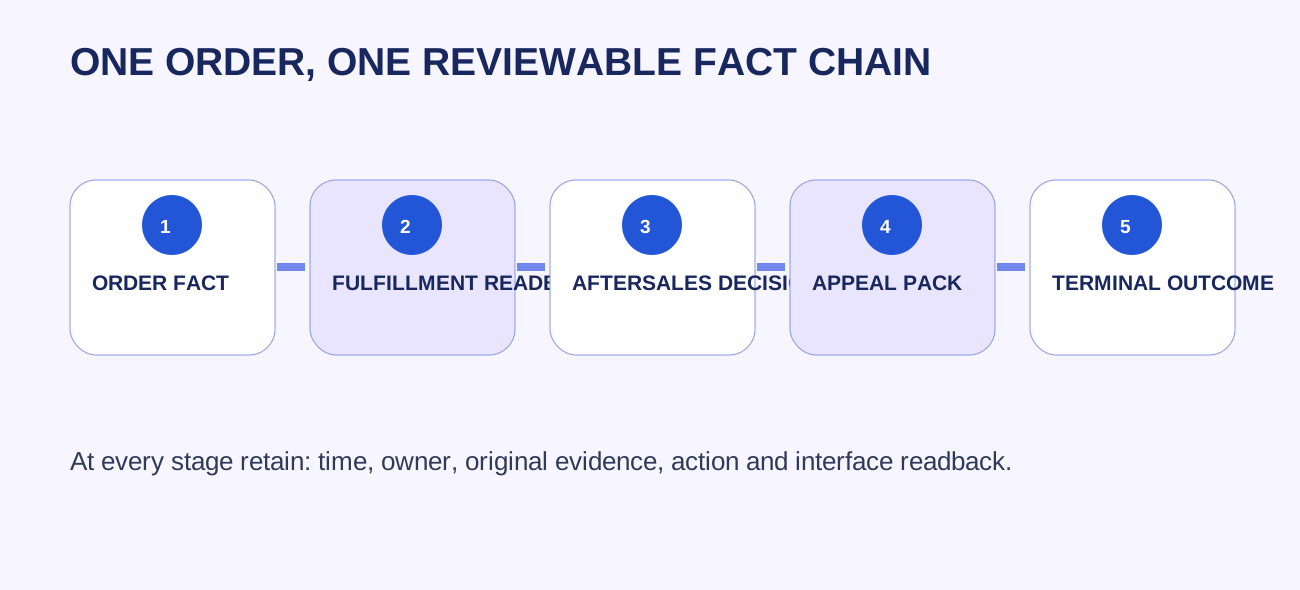
Direct answer: a ledger is the shared record that connects an order to its operational facts, not a spreadsheet of links. For each material event, preserve the order-safe identifier, time, owner, original artifact, action taken, system readback and status. That makes a later return, chargeback or enforcement review traceable without reconstructing the story from inboxes.
Start with one row per order and append events. Do not overwrite an earlier claim with a cleaner later version. Evidence that cannot be connected to a specific order, event and owner is hard to use when the case clock is running.
1. Open the record at order creation
Capture the order reference, SKU and variant, buyer-visible offer facts, payment or fulfillment status available to the team, and the responsible operational lane. Keep customer personal information out unless it is necessary and authorized for the case. The ledger is an index to controlled evidence, not a duplicate customer database.
The smallest useful action is a required order identifier and a link to the source-of-truth order page. A screenshot without its retrieval time, or a CSV without the order reference, is not enough context for a later reviewer.
2. Record fulfillment as observable handoffs
The Fulfillment Policy is a policy boundary, not a promise that a label proves delivery. Keep the specific timestamps and readbacks for preparation, carrier handoff, tracking updates and any exceptions. Preserve the source record that supports each assertion, and state clearly which events are observed versus inferred.
If an action is taken in Seller Center, retain the post-action state. “We shipped it” is a conclusion. A readable scan, tracking state and the resulting interface status are the facts that make the conclusion reviewable.
3. Add the aftersales decision, not just photos
When a return, refund or replacement arrives, attach the request state, the displayed deadline, inspection record, submitted files, selected grade or action, comment and confirmation. The current returns material distinguishes the policy workflow and the live case; use the live Seller Center case as the final instruction for a particular order.
For physical returns, maintain unedited original evidence alongside any resized or annotated derivative. The previous inspection guide can be linked as an internal operating protocol, but it cannot replace the platform case readback.
4. Treat a chargeback as its own timed packet
A chargeback often reuses order and fulfillment evidence, but its submission clock and required proof should be tracked separately. The current Chargeback Policy says appeals generally must be submitted within seven calendar days of notification and should include sufficient evidence such as proof of delivery and product information. Put the notification time, packet owner, submitted version and Seller Center result in dedicated rows.
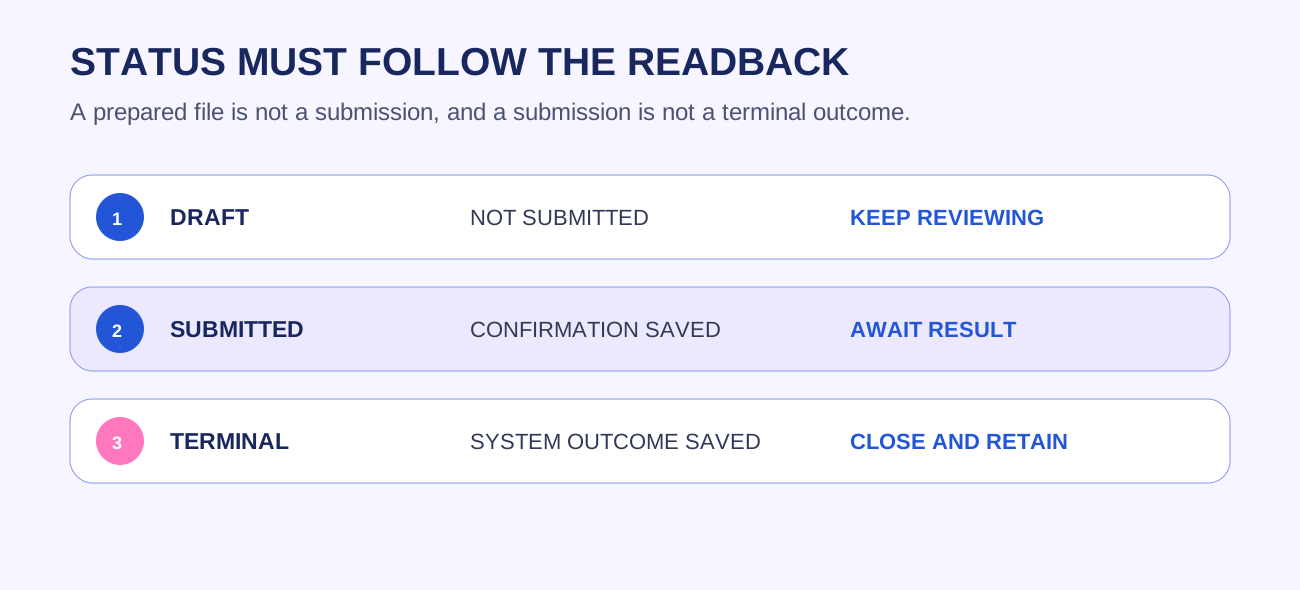
A prepared folder is not a submission. Capture the confirmation and continue to a terminal outcome. Do not label a case won, lost or closed until the applicable system provides that result.
5. Keep enforcement and appeals separate from the underlying incident
Seller Enforcement Policy can apply a different review path from a return or chargeback. Link an enforcement notice to the same order facts only when it actually concerns them, then track the notice, stated reason, response deadline, appeal artifact and decision separately. This avoids making a compliance record look like an aftersales outcome.
Use neutral descriptions. Record what the notice says and what the source evidence shows. Do not write motive, blame or legal conclusions into an operational ledger unless a verified decision explicitly establishes them.
6. Define fields before you need them
A practical minimum schema is: order key; event key; event time and timezone; owner; source system; immutable original location; derivative location; action; displayed deadline; readback; status; and next reviewer. Add a version field whenever an artifact can be replaced. Use an append-only history or audit trail for material corrections.
Set one controlled storage location per evidence type. A document sent through chat may be useful for collaboration, but the ledger should still point to the controlled original and say which version was submitted.
7. Review exceptions weekly
Audit a small sample across fulfilled orders, returns, chargebacks and notices. Look for missing order keys, absent readbacks, mixed files, timezone ambiguity, ownerless deadlines and premature “complete” labels. Repair the earliest broken handoff, then update the checklist or training that caused it.
This is an operating framework, not a TikTok Shop guarantee or legal advice. Policies, deadlines, eligibility and interface paths can change. Revalidate the official page and the actual case before acting.
8. Make the next review possible
A strong record lets a new reviewer answer what happened, when it happened, what proves it and what action is still due. Link the exact page or original artifact, identify the next owner and distinguish a draft from a submitted action.
This prevents a later chat message from being mistaken for proof of an earlier event, and turns an operational handoff into a real control.
9. Make retention deliberate
Set retention access and deletion rules with the owners of privacy security and finance. A useful ledger tells an operator where to find evidence, but it should not widen access to sensitive information or silently create a second uncontrolled copy. Regularly test whether a reviewer can retrieve only the needed artifact, then record that test.
The practical result is a smaller clearer decision record: enough proof to explain the operational choice, without turning every order into a permanent dump of unrelated materials.
Source notes
This WEM operating framework draws on complete current TikTok Shop U.S. material read and revalidated October 21, 2026: Fulfillment Policy, Requirements for Managing Returns, Refunds, and Replacements, Chargeback Policy and Seller Enforcement Policy. The ledger fields and review method are WEM operational design, not a platform guarantee or legal advice.
Related WEM guides
Frequently asked questions
Is a shipment label proof of delivery?
No. Record the actual observable tracking and handoff readbacks for the relevant case.
What belongs in the original evidence field?
The unedited source artifact or its controlled immutable location, with retrieval time and version.
Can one ledger cover returns and chargebacks?
Yes, if it uses event-specific rows and separate deadlines, submissions and outcomes.
When is a case complete?
Only after the applicable system shows a terminal result and that readback is retained.
Who should own the ledger?
Assign an operational owner for field quality and separate case owners for deadlines, submissions and final readbacks.
What is the smallest next action?
Create the minimum fields for five recent orders and ask another operator to retrieve one case.