TIKTOK SHOP U.S. · OPERATING CADENCE
The Weekly TikTok Shop Operating Review
WE Marketing Team · Aug 19, 2026 · 15 min read
Direct answer: the weekly review is a decision meeting, not a reporting meeting
A useful TikTok Shop weekly review connects assortment, creators, content, shop operations, paid support, customer experience, and economics in one room. Each workstream arrives with evidence, but the meeting does not end with a tour of dashboards. It ends with a small number of decisions: keep, repair, concentrate, expand, pause, or stop, each with a named owner and a dated readback.
WEM uses the week as the smallest practical operating cycle for most brand decisions. Daily data can be noisy or incomplete. Monthly reviews are often too slow for inventory, creator follow-up, content learning, campaign deadlines, or listing problems. A weekly cadence is frequent enough to protect execution and long enough to see whether the previous action created a usable signal.
If the same numbers appear next week and nobody changed an action, the meeting was reporting, not operating.
Start with data freshness and definitions
Before discussing performance, label each source. Note the selected date range, refresh time, attribution scope, paid versus settled status, returns and refunds treatment, timezone, and whether the number is product, creator, campaign, agency, or shop level. Current TikTok Shop tools do not all update on the same cadence. For example, the current Affiliate Partnerships Overview states that its data updates daily for the previous day rather than in real time.
Do not replace missing evidence with zero. Use verified, partial, missing, blocked, or unknown. A missing creator follow-up log does not mean no follow-up occurred. An unavailable margin row does not mean margin is zero. The status should tell the room what can be decided and what evidence must be collected before the next decision.
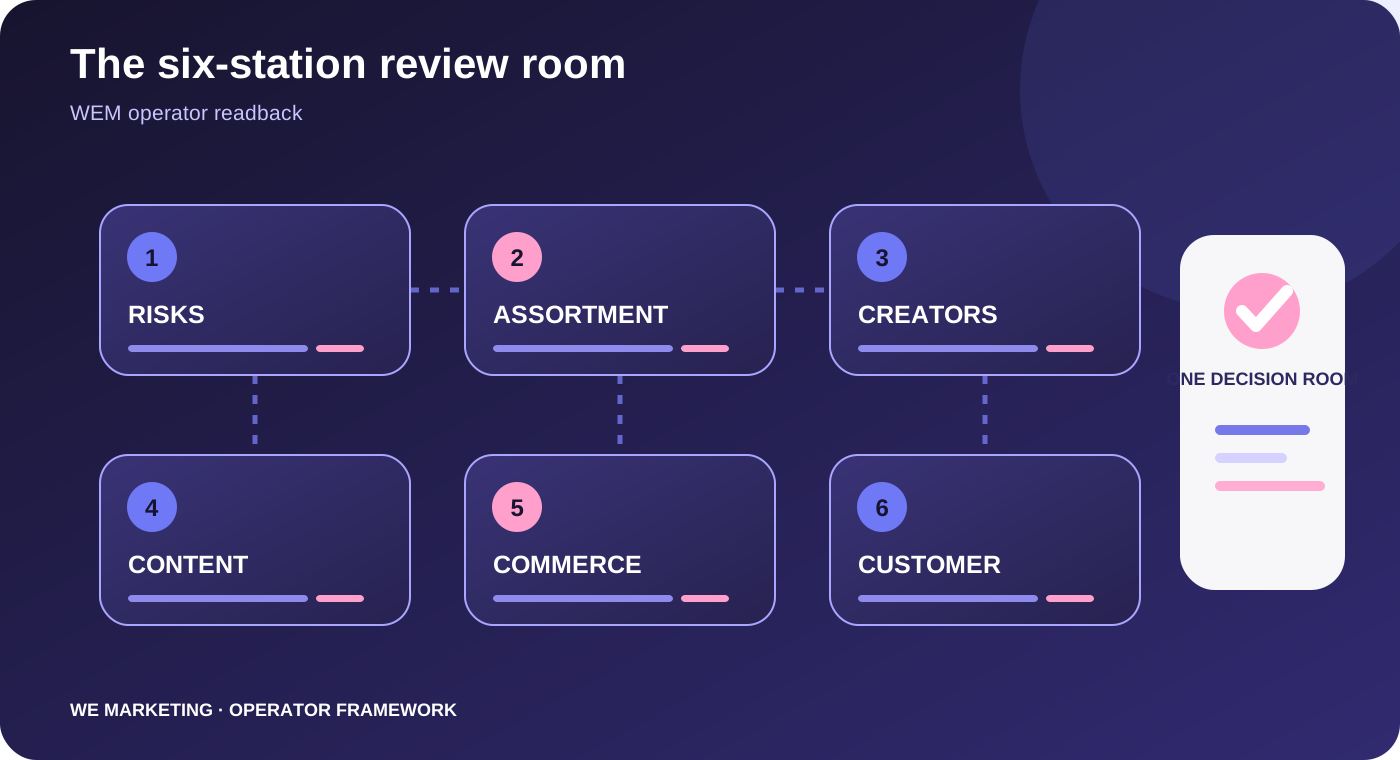
The six stations in the WEM weekly review
| Station | Evidence | Decision question |
|---|---|---|
| Risk and capacity | Account health, OVL, stock, late shipping, cancellations, returns, support exceptions, campaign deadlines. | What must be protected or paused now? |
| Assortment | Hero SKU role, listing quality, variation demand, price, offer, inventory, margin, customer questions. | Which products stay active, need repair, or leave the focus set? |
| Creators | Qualified outreach, response, sample approval, delivery, posting, repeat content, relationship notes. | Which creator cohort deserves more support or a different offer? |
| Content | Hooks, demos, objections, views, product clicks, conversion, linked-item accuracy, content rights. | Which content job should be repeated, repaired, or stopped? |
| Commerce | Paid and settled orders, commission, discounts, media, fulfillment, refunds, contribution. | Where is growth commercially supportable? |
| Customer | Reviews, messages, service issues, return reasons, repeat questions, replenishment or repeat signals. | What promise or product detail must change? |
Read the funnel in operating order
Start upstream. Are the right products active and supportable? Are the right creators seeing and accepting them? Are approved samples arriving? Is content being published with the correct product and truthful promise? Are viewers clicking? Does the product page convert? Are orders settling? Can inventory, fulfillment, service, and margin support the demand? The first meaningful break determines the next action.
Do not jump to more outreach when creators already accept samples but do not post. Do not jump to more content when product clicks are healthy but the PDP cannot convert. Do not scale paid traffic when the winning variant is low in stock. Do not call a product a winner because one creator and one discount produced GMV. The review should protect the next test from inheriting the previous bottleneck.
A 45-minute agenda that forces decisions
- Before the meeting: every owner updates a one-page pre-read and flags evidence as verified, partial, missing, blocked, or unknown.
- Minutes 0 to 5: read account, inventory, fulfillment, customer, and deadline exceptions. Decide immediate protection actions.
- Minutes 5 to 15: review the active product portfolio. Confirm role, stock, listing, offer, margin, and stop rule.
- Minutes 15 to 25: review creator cohorts from outreach through repeat content. Select relationships that need follow-up or a different structure.
- Minutes 25 to 35: review content jobs and the product funnel. Choose the proof, hook, demo, objection, or page repair for the next cycle.
- Minutes 35 to 42: reconcile paid and settled commercial quality, customer signals, and inventory capacity.
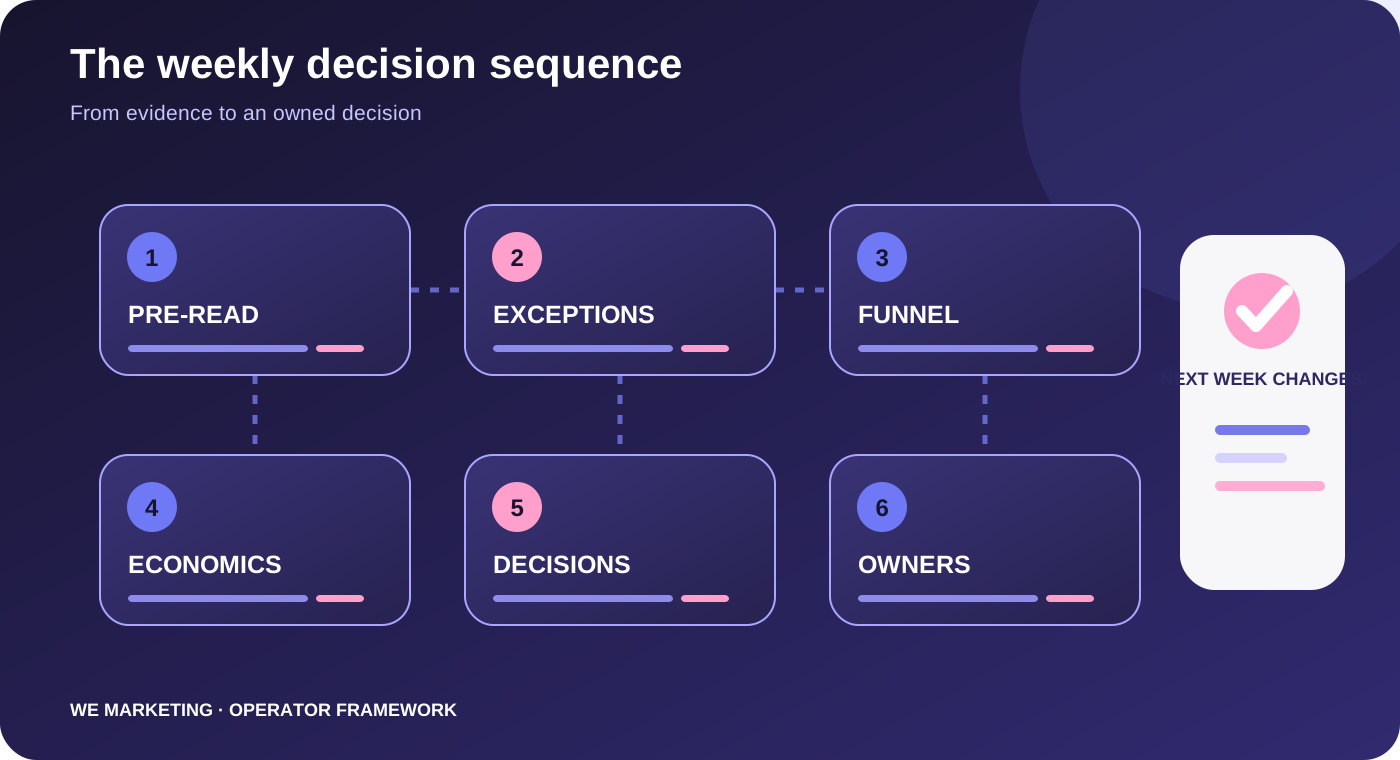
- Minutes 42 to 45: confirm no more than five decisions, each with an owner, due date, stop condition, and readback metric.
Owners should report decisions, not defend functions
The product owner explains product role, listing truth, stock, price, offer, and variation risk. The creator owner explains fit, outreach, samples, follow-up, posting, and relationship development. The content owner explains what the shopper needed to see or understand and what the next creative job is. The shop operator owns account health, fulfillment, customer exceptions, and platform tasks. The commercial owner reconciles price, discounts, commission, media, fulfillment, refunds, and contribution. One meeting owner resolves conflicts and records the final decision.
Shared metrics do not remove ownership. Product clicks may involve content and listing. Returns may involve product truth, content promise, customer expectation, and fulfillment. The meeting owner assigns the next investigation to one person while keeping contributing owners visible. If every problem belongs to everyone, it usually belongs to no one.
Use a decision log, not a slide archive
For each decision, record the date, problem, evidence, chosen action, owner, deadline, stop condition, and readback. Link the supporting dashboard, export, screenshot, or customer examples. At the next meeting, start with the prior log: completed, not completed, result, and changed belief. This creates institutional memory and prevents the team from rediscovering the same explanation every month.
A good log also makes Agency or Partner performance easier to evaluate. The brand can see whether the operating partner identified the bottleneck, proposed a reasonable action, executed it, and learned from the result. Activity without an owned decision leaves no fair basis for judging either the internal team or the Partner.
Hypothetical example: views are up, but the next action is not more videos
This is a hypothetical example, not a WEM client result. A fashion brand reports higher weekly video views. The content owner shows that product clicks also improved, but orders remained weak. The product owner finds that the most-clicked color is low in stock and the size chart creates repeated questions. The commercial owner confirms that another discount would weaken contribution without fixing the choice problem. The weekly decision is to repair the size and variation path, replenish the clicked color, brief creators on fit proof, and hold additional paid traffic until the page and stock are ready.
Smallest useful next action
Create next week's one-page review with six rows: risk, assortment, creators, content, commerce, and customer. Put one verified signal, one exception, one decision question, and one owner in each row. Add a final section with no more than five decisions and their readback dates. If a metric does not change a decision, move it to the appendix.
Source notes and operating boundary
Primary U.S. materials revalidated on August 20, 2026 include ACE Your Shop Seller Playbook 2026, ACE-powered diagnostic material, and Affiliate Partnerships Overview. Platform metrics, definitions, freshness, paths, access, eligibility, and recommendations can change. Confirm the current Seller Center and the brand's own financial definitions before acting.
Related WEM modules: growth bottleneck diagnosis, content versus assortment balance, and Partner performance scorecard.
Frequently asked questions
How often should a TikTok Shop team run an operating review?
Weekly is a practical default for connected product, creator, content, and shop decisions, with short daily exception checks for urgent risk.
Which metric should come first?
Start with risk and capacity, then read the funnel from product readiness through settled economics. The first meaningful break determines the action.
How many actions should leave the meeting?
Usually no more than five important decisions. Every action needs one owner, due date, stop condition, and readback.
Should we review views and GMV?
Yes, but in context. Views need product clicks and content job; GMV needs paid versus settled status, refunds, commission, cost, stock, and concentration.
What if evidence is missing?
Label it missing or unknown, assign an owner to collect it, and avoid inventing zero or making a high-confidence decision without the required input.
Who should own the meeting?
One operating owner who can resolve cross-functional conflicts, record decisions, and make sure the next readback occurs. Functional owners still own their evidence and actions.