TIKTOK SHOP U.S. · PERFORMANCE DIAGNOSIS
Make More TikTok Shop Videos or Fix Conversion First?
WE Marketing Team · Aug 13, 2026 · 15 min read
Direct answer: fix conversion first when the buyer path is already receiving qualified attention
More TikTok Shop videos are useful when a brand has a clear product, a believable buyer story, and too little qualified opportunity to learn. They are wasteful when shoppers already reach the product but cannot understand the offer, choose a variation, trust the proof, find stock, or complete a purchase. The question is not whether content matters. It is which constraint is currently preventing the next unit of demand from becoming a useful commercial signal.
WEM uses a simple rule: do not solve a conversion problem with volume until you can name the broken step. A video can earn discovery. It cannot reliably repair an unclear product page, an unsafe price, inconsistent delivery promise, weak product evidence, unavailable variation, or an unowned customer question. Conversely, a tidy product page does not create demand on its own. The right next move depends on where the buyer path is losing clarity.
Choose one route, one priority SKU, and one constraint. Then change only the work that can plausibly repair that constraint.
Define the two decisions before you debate them
Video volume means increasing the number of eligible, product-linked seller or creator videos designed to create qualified discovery and learning. Conversion repair means improving the conditions that let an interested shopper choose and complete a purchase: product facts, imagery, variations, price and offer clarity, stock, shipping expectations, proof, service answers, and the handoff between the video and product card. Neither is a universal growth lever.
Current TikTok Shop U.S. material presents content as one growth path alongside product preparation, creator collaboration, campaigns, and ads. The current Video Insights and Video Diagnosis materials also frame insight as a way to inspect particular videos and improvement opportunities, rather than a reason to post blindly. Feature availability and the exact Seller Center or app path vary by account, role, region, and current rollout, so confirm the live interface before assigning work.
The WEM video-versus-conversion decision table
| Observed signal | First decision | Owner this week |
|---|---|---|
| Few product-linked videos reach the intended buyer, while the product page and fulfillment facts are complete. | Add a controlled set of videos. | Content owner with SKU owner. |
| Videos earn relevant views or product interest, but shoppers repeat basic product, variation, price, or delivery questions. | Repair the product truth and handoff first. | Merchandising and customer-experience owner. |
| Product-card visits occur but orders lag after a price, stock, offer, or page change. | Audit that change before increasing reach. | Commercial owner. |
| A video has weak response and the team cannot state its buyer, proof, or linked product job. | Rewrite the brief, not merely the hook. | Content owner. |
| Several issues change together. | Pause expansion and stabilize one learning lane. | Weekly operating-review owner. |
These are decision cues, not platform thresholds. A video with a large view count can still send the wrong audience, and a lower-view video can create high-quality product questions. Read the account's current reporting definitions, date range, attribution, eligibility notices, and data freshness before comparing periods or making a spend decision.
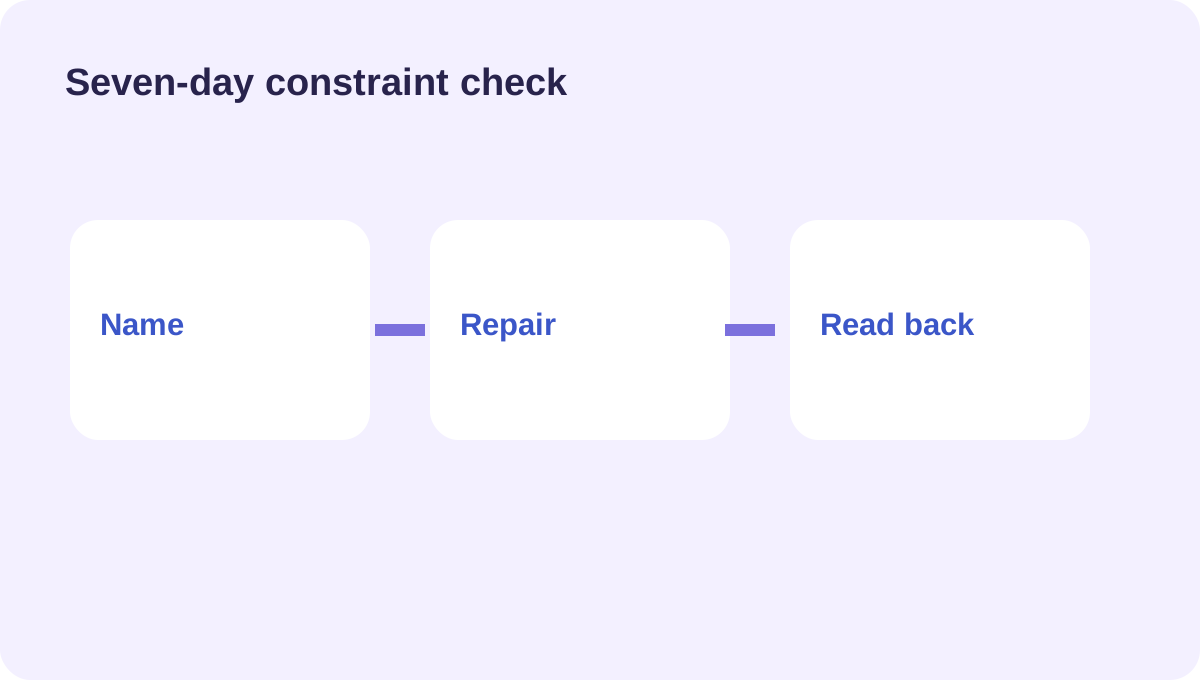
Run a seven-day constraint check
- Choose the priority SKU. Record its buyer job, current price and offer, sellable stock, fulfillment promise, main proof, linked variation, and contribution floor. If those are unknown, it is not ready for incremental demand.
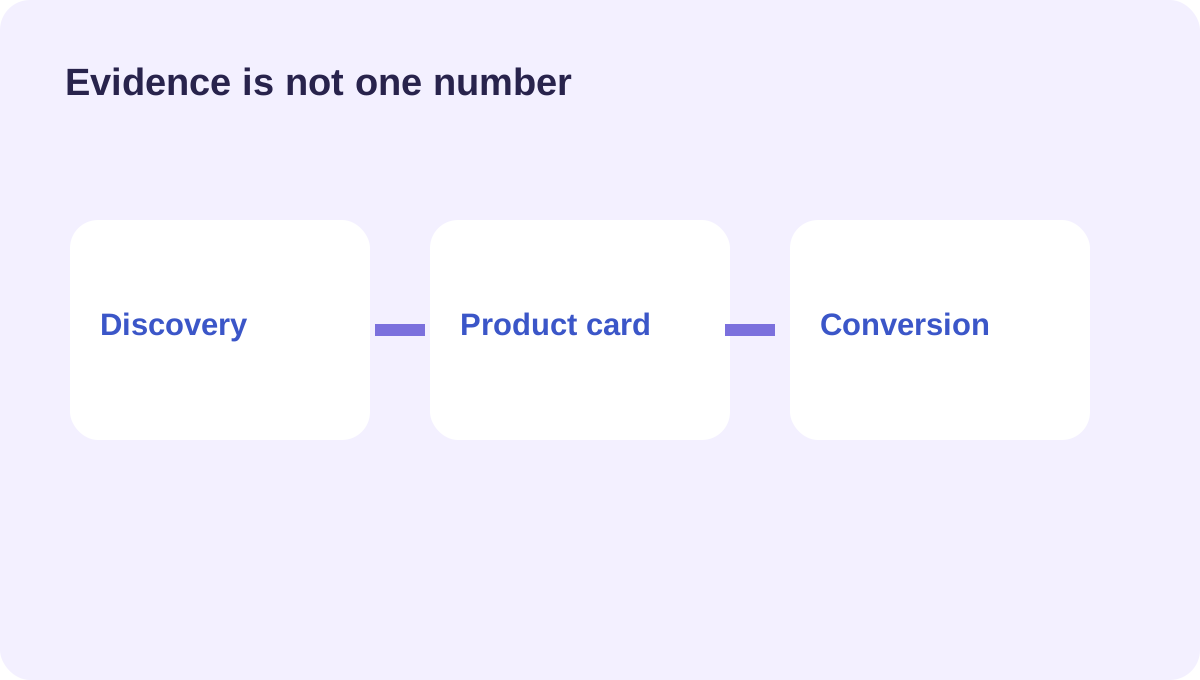
- Classify the evidence. Separate discovery signals, product-card behavior, conversion signals, recurring questions, customer-service issues, cancellations or returns, and inventory exceptions. Do not mix them into one “performance” number.
- Name one constraint. Examples: no usable demonstration exists; the product card does not resolve size selection; the offer is unclear; a variant is unavailable; the video is attracting an audience with the wrong use case.
- Pick one repair. Add three product-linked videos, rebuild one comparison block, clarify one shipping promise, or pause an item. Do not apply all four at once.
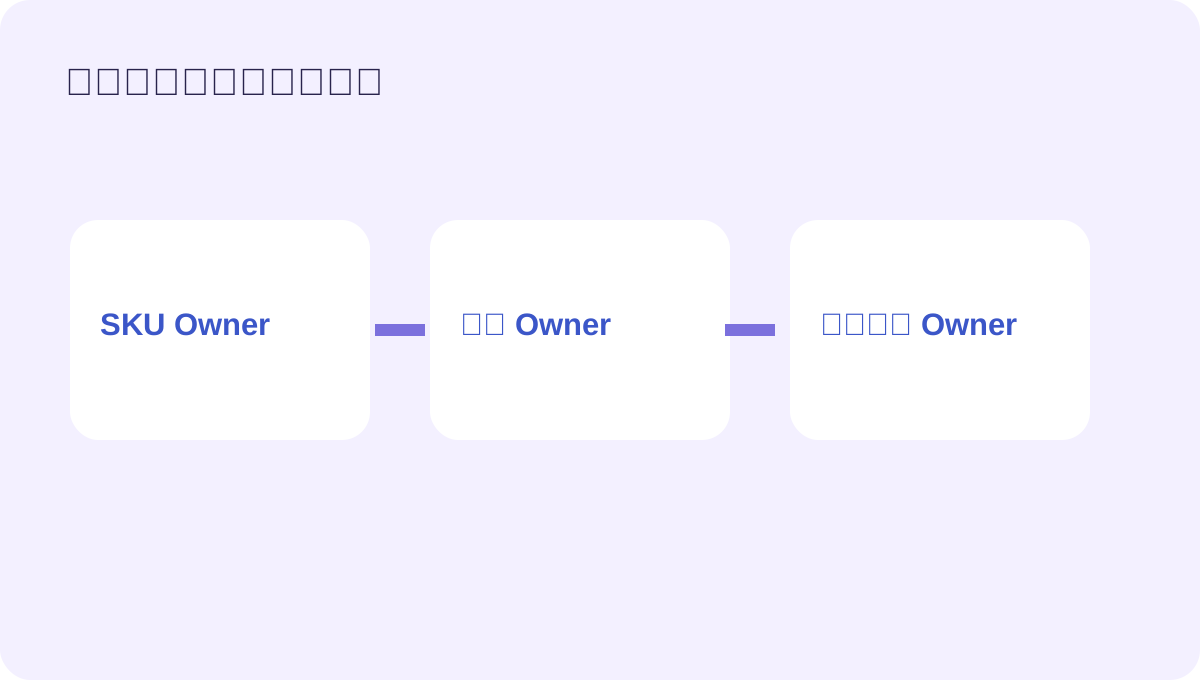
- Assign an owner and readback date. The content owner cannot silently own stock, and the SKU owner cannot silently own a creative brief. End the week with continue, repair, or pause.
When more videos are the right answer
Add video supply when the selected product is commercially safe to learn from and the existing content is simply too thin, too repetitive, or not connected to the buyer's real decision. Each new video should earn its place in the test: one shopper context, one product, one factual proof point, one linked item, and one question the product card can finish answering. A useful set may cover demonstration, comparison, setup, objection handling, or a realistic use moment. It does not require every creator to say the same thing.
For a low-volume seller, current Video Insights material describes prompts, product recommendations, inspiration, and drill-down views intended to help a seller begin or increase e-commerce-video activity. Use those tools as prompts for a controlled experiment, not as proof that a recommendation fits a specific brand's margin, inventory, claims, or service capacity. For established teams, Video Diagnosis can help focus the review on individual-video evidence, but WEM still asks whether the linked buying system can keep its promise.
When conversion repair is the right answer
Repair conversion when attention already exposes a mismatch. The most common mismatch is not “the algorithm.” It is a promise gap: the video makes a benefit feel simple, but the product page cannot explain how to choose; the creator demonstrates one variant, but the linked option is confusing; the price or promotion changes late; the product is low in stock; delivery expectations are left unanswered; or customers ask the same question after watching. More content may increase the size of the same leak.
Start with the smallest repair that removes a real blocker. Add an accurate comparison image, clarify a bundle, replace a misleading visual, reserve a tested variant, tighten a claim, or give support a written answer that matches the page and brief. Then reread product questions, conversion, service signals, stock, and margin together. If the repair does not change the named constraint, do not hide that result by immediately changing the creative, offer, and budget again.
A hypothetical operator example
This is a hypothetical example, not a WEM client result. A home-goods brand posts eight short videos for one organizer. Views increase, but comments repeatedly ask whether it fits a specific shelf size. The product page lists dimensions in a long paragraph, the featured video uses a different shelf, and the most visible variant is temporarily unavailable. The brand does not commission twenty more hooks. It updates the first product image with a clear fit guide, links the demonstrated variant, confirms stock, gives customer service an accurate answer, and uses the next three videos to show real fit cases. At the next weekly review, it can judge whether discovery, product clarity, or demand is the constraint.
Owner cadence and smallest next action
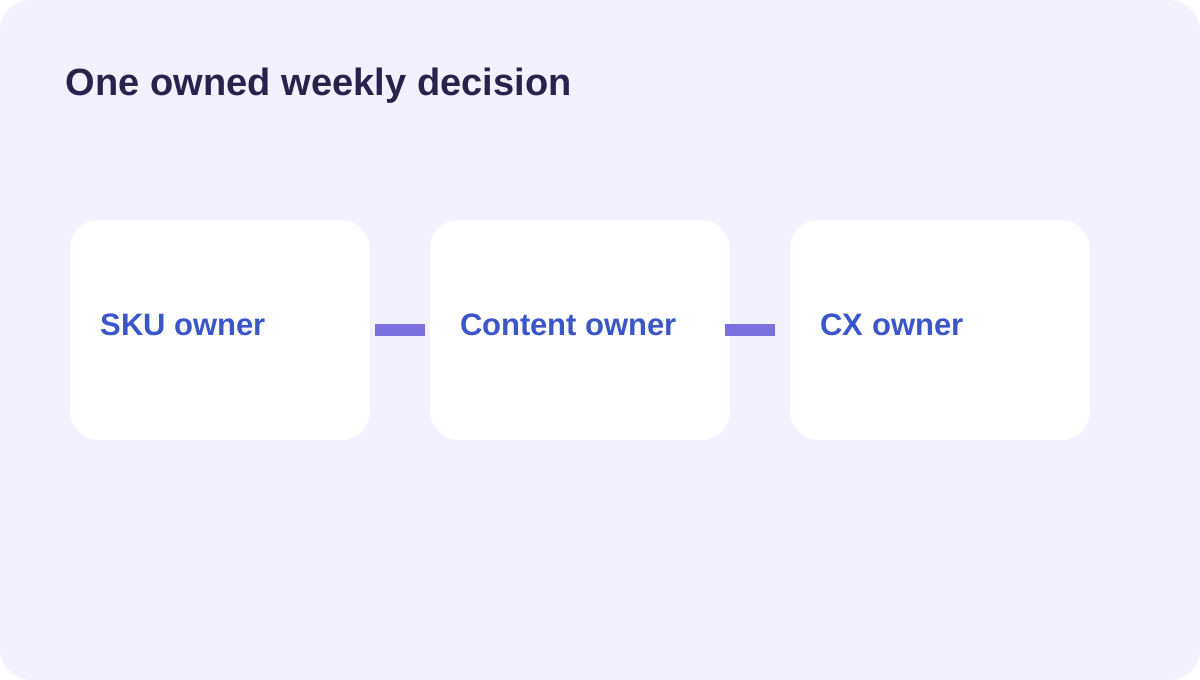
Run this review weekly, with a short exception check whenever stock, price, policy, or an important asset changes. The growth owner convenes the decision; the SKU owner confirms product and inventory truth; the content owner supplies the selected creative; the customer-experience owner brings repeated questions and promise gaps; the commercial owner confirms margin and offer boundaries. The output is not a dashboard. It is one sentence: “For this SKU, we will repair X before adding Y videos,” plus an owner and next readback date.
Smallest useful next action: choose one SKU that received attention in the last seven days. Create a one-page evidence row with its buyer job, video promise, linked product, top three questions, available variants, current offer, stock status, and one named constraint. If the row is incomplete, pause new video requests for that SKU until the missing truth is owned.
Source notes
Primary material read on August 13, 2026: TikTok Shop U.S. Academy, Video Insights for new Sellers, How to Use Video Diagnosis, and New Seller Growth Strategy Step 3: Scale up your exposure and GMV by content, campaigns and advertising. TikTok Shop features, reporting definitions, recommendations, eligibility, account access, campaign rules, and UI paths can change. Validate the current account surface in U.S. Seller Center before acting.
Frequently asked questions
Should we always make more TikTok Shop videos when sales slow?
No. First determine whether qualified shoppers are reaching a product that is clear, available, and commercially safe to promote.
Can a better video fix an unclear product page?
It can create attention, but it cannot reliably resolve variation, price, delivery, stock, and factual questions after the click.
What is a qualified view?
It is a view from an audience that plausibly matches the product's buyer job. Confirm it with downstream product and customer evidence, not views alone.
How many videos should one SKU receive?
There is no universal number. Add only enough distinct videos to test a named buyer question while product truth and fulfillment remain stable.
Should we change price, product page, creative, and ad budget at once?
No. That removes the learning signal. Stabilize the system and repair one named constraint at a time.
Where do we find the current TikTok Shop video tools?
Availability varies. Check the current Seller Center, relevant account app, and official Academy guidance for your role and region.