TIKTOK SHOP U.S. · BFCM PREP
TikTok Shop BFCM Search Strategy: Connect Gift Discovery to the Product Page
A creator can make someone interested in a product, and the shop can still lose that person when they try to find it again. If the video shows a useful gift idea but the listing gives a confusing name, unclear variants, or a different product story, the interest has nowhere easy to go.
For TikTok Shop BFCM, connect gifting content to search and the product page through accurate product language, a recognizable use case, and clear offer details. Give shoppers enough information to identify the item, choose the right variant, and understand what arrives. Use relevant search terms where they help that decision.
TikTok Shop's supplied 2026 Seller Success Guide connects hero products, shopper trends, keyword-aligned content, and product-page quality. I read that as an operating task: the person seeing a product for the first time should be able to find the same product and verify the story later.
What does the gift-to-search path include?
The gift-to-search path is the shopper journey from a content-led gift idea to finding and evaluating the product. It includes the recipient, use case, product name, relevant search language, listing details, variants, offer, and delivery information that help a buyer complete the decision.
This is different from adding as many seasonal keywords as possible. A phrase belongs in the content or listing when it accurately describes the product or helps a real shopper understand it. If the phrase creates an expectation the product cannot meet, extra visibility may create the wrong kind of demand.
For a cross-border brand selling in the United States, literal translation can make this harder. A factory name or internal specification may be correct but unfamiliar to the buyer. Keep the product facts accurate while explaining the function and buying occasion in natural language.
Start with the recipient and the use case
“A perfect gift for everyone” gives the buyer almost no useful information. The buyer needs to understand who would use the item, why that person would want it, and what they receive. Specificity helps a creator choose a believable scene and helps the listing hold the same promise.
For a hypothetical home product, the angle might be a useful upgrade for someone setting up a small apartment. For a hypothetical fashion item, it might be an everyday piece with clear sizing information. These are content examples, not claims about a WE Marketing client or evidence that the phrases will rank.
Before adopting a seasonal trend, check whether the actual product fits. A giftable appearance does not resolve confusing sizing, unsupported performance claims, or unclear included items. Those details still determine whether a buyer can choose responsibly.
Make the product recognizable after the video
Give the creator the correct product name and the details viewers are likely to remember. That might include the function, material, style, or a distinguishing feature. Let the creator sound natural, but avoid a nickname that sends interested shoppers looking for something the listing never mentions.
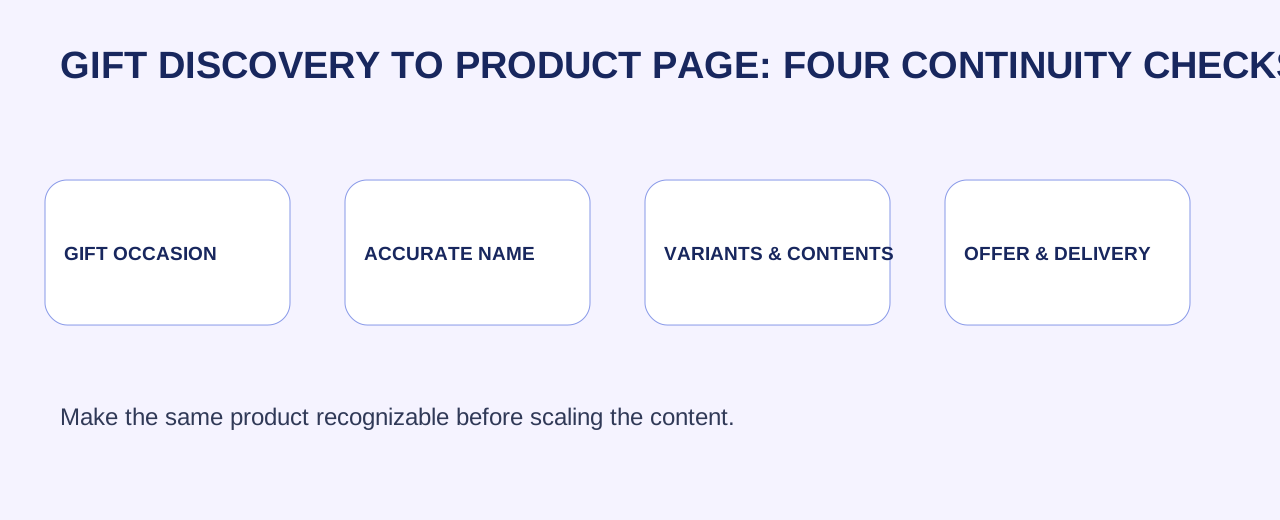
On the product page, make the image, title, variant names, and description tell the same story. The featured image should show the actual purchasable item. If the video displays several pieces, the listing should make the included quantity unmistakable.
This table is a continuity check. It is not a formula for recommendation eligibility.
WE Marketing case: fashion needed a better discovery and purchase path
WE Marketing's published men's fashion case describes a brand with limited traction after six months. The work included broader creator casting, listing optimization, and hero-content development. The case reports more than 10,000 orders after relaunch. WE Marketing fashion case
The published summary does not establish a BFCM result or isolate the effect of search optimization. The useful connection here is the execution scope: finding relevant buyers and improving the place where those buyers evaluate the product were both part of the work.
For holiday planning, I would apply that lesson by reviewing the content and listing together. If an item fits an audience beyond the obvious category label, test that audience through relevant creators. Then check whether the product page answers the questions those new buyers bring. Do not invent a seasonal identity that the product cannot support.
Use search language as evidence, not decoration
Where available, review current Seller Center search insights, shopper questions, and the language appearing in relevant content. Those inputs can help identify what buyers are trying to understand. They do not make every popular term appropriate for your product.
Separate the product's stable identity from the holiday context. Function, material, quantity, and relevant fit information usually remain useful after the sale. A gifting occasion can belong in a content angle or a suitable description without replacing the product's actual identity.
Do not claim measured search volume when you have no export. Do not interpret a phrase in one comment as proven market demand. Record the observation, test a relevant version, and check the response. A disciplined small test is more useful than a confident keyword list built from guesses.
Decide which friction an offer should remove
A bundle, gift with purchase, or multi-item offer should help a buyer understand value. It can also create complexity. If the shopper needs to calculate several conditions or cannot tell which items arrive, the offer may be increasing hesitation.
Use an offer only when the product relationship makes sense and the economics can support it. For a first-purchase product, the important question may be whether shipping or uncertainty is stopping the order. For a gift, the buyer may need clear presentation and contents more than another discount line.
The public BFCM seller guide notes that many seller promotion tools do not stack with campaign pricing. Confirm the actual shopper-facing offer before creators or hosts explain it. Detailed campaign pricing belongs in the separate pricing workstream; the task here is to keep the purchase story accurate. TikTok Shop BFCM promotion FAQ
Keep the gift promise tied to inventory and delivery
The buyer choosing a gift also cares about receiving the correct item. Show accurate contents, packaging, available variants, and the delivery information applicable to the order. Do not imply guaranteed arrival for an occasion unless the actual service and order conditions support it.
Have an owner for updates when stock or offers change. That person should know which creator content, LIVE talking points, and product pages carry the affected message. A product page repair does not automatically correct a video that still describes an expired offer.
Customer questions are useful here. Repeated questions about quantity, sizing, accessories, or packaging can indicate that the content and listing leave a gap. Address that gap in the relevant surfaces before spending more to bring new people into the same confusion.
Run one content-to-listing check before scaling
Choose one hero product and open a current creator or seller video alongside its product page. Write down the promise the video makes. Then check whether the page helps a first-time shopper verify that promise and select the correct item.
Review the main image, name, options, included quantity, supported claims, offer conditions, and current availability. Ask someone unfamiliar with the catalog to explain what they would receive. Their answer may reveal ambiguity the internal team no longer notices.
After making a change, record what changed and why. Use available content, click, order, and support data to judge the next step. Without a controlled comparison, avoid claiming that one title change caused the full result. We explain the broader listing work in our product listing guide.
Make the next action small enough to finish
In late October, I would prioritize a few products whose gift or upgrade story is already credible. Improve the path around those products, then reuse what is working in the next content round. Adding more seasonal products can wait until the first path is clear enough to support expansion.
The next useful action is one product, one buying occasion, and one continuity review. Give the content owner and listing owner the same findings. A shopper should not need to decode the internal organization of your team to understand the product.
Frequently asked questions
How should TikTok Shop sellers optimize BFCM gifting content for search?
Use accurate product language and a specific recipient or use case. Align creator content with the listing's name, imagery, variants, contents, and offer. Review available search insights and customer questions, then test relevant language rather than adding unrelated holiday keywords.
Should every product title include Black Friday or holiday gift keywords?
No. Keep the product identity clear and follow current listing requirements. Seasonal language should accurately describe the product and help the buyer. Do not replace useful function, material, quantity, or fit information with broad promotional wording.
What makes a TikTok Shop product gift-ready?
The buyer can understand who the item suits, what arrives, how options differ, what the offer includes, and the delivery information that applies. Packaging and gifting presentation should reflect the actual order. Gift readiness includes clarity and fulfillment, not just a seasonal visual.
Can a bundle improve a BFCM offer?
It can when the items belong together and the value is easy to understand. Confirm contents, inventory, economics, and campaign promotion compatibility. A complicated bundle can create more uncertainty, so review the buyer's actual selection path before promoting it.
Does keyword alignment guarantee TikTok Shop search visibility?
No. Accurate keyword alignment helps maintain a clear discovery and purchase path, but it does not guarantee ranking, recommendations, or sales. Evaluate available search and commerce data, and distinguish observed results from operating hypotheses.
What should a brand do before expanding creator volume?
Review the hero product pipeline from creator response through useful content, identify the stage with the most unresolved work, and assign one owner and next action.
Related WEM guides
Source notes
Reviewed September 30, 2026: the supplied TikTok Shop 2026 Seller Success Guide and campaign training materials, the public U.S. BFCM campaign guide, and the historical WE Marketing fashion case. Gift-to-search continuity is Wendy Lin's operating framework. Examples are hypothetical where labeled. No keyword volumes, ranking results, or BFCM client outcomes are claimed.
If content is generating interest but buyers still struggle to choose, bring one video and its product page to a WE Marketing consultation. We can start with the gap the shopper actually sees.