U.S. CREATOR OPERATIONS · REPEAT DECISION
After the First Creator Collaboration: Repeat, Repair or Stop?
The first creator collaboration should answer a practical question: is there enough verified value to repeat the operating system, or is one specific part worth repairing first? Do not judge the relationship from views alone. Review the handoff, product accuracy, buyer usefulness, commercial signal and management cost together. Then choose one of three outcomes: repeat with a named reason, repair one named constraint, or stop with a documented reason.
This is a WEM operating framework for U.S. TikTok Shop teams. It is not a platform rule, a guaranteed performance model or a substitute for the actual agreement with a creator. A gifted collaboration, affiliate sample, flat-fee video and broader paid package carry different obligations and should not be scored as if they were the same job.
Treat the first collaboration as a controlled learning cycle
A first collaboration is not a final verdict on a creator. It is the smallest complete cycle that lets a brand observe how product truth moves through a real person and reaches a real audience. The cycle begins before a sample ships. It includes the brief, access to the correct SKU, questions from the creator, the actual product experience, the content, any review or revision process, publishing, comments, commerce signals and the brand's own follow-through.
That distinction matters because a weak result can have several causes. The creator may have been a poor fit. The product page may have contradicted the brief. The package may have arrived late. The creator may have understood the product but produced an opening that attracted the wrong viewer. The content may have been useful while the offer, inventory or shipping promise was not competitive. One number cannot identify which handoff failed.
Start by writing down the collaboration type and the promise made by each side. Record the exact SKU, delivery date, required disclosures, content expectations, usage rights, review rights, posting window and compensation. Use the actual agreement. A brand should not downgrade a creator for failing to deliver an item that was never agreed, and a creator's strong sales result should not erase a material product or compliance error.
Score the operating evidence, not the loudest metric
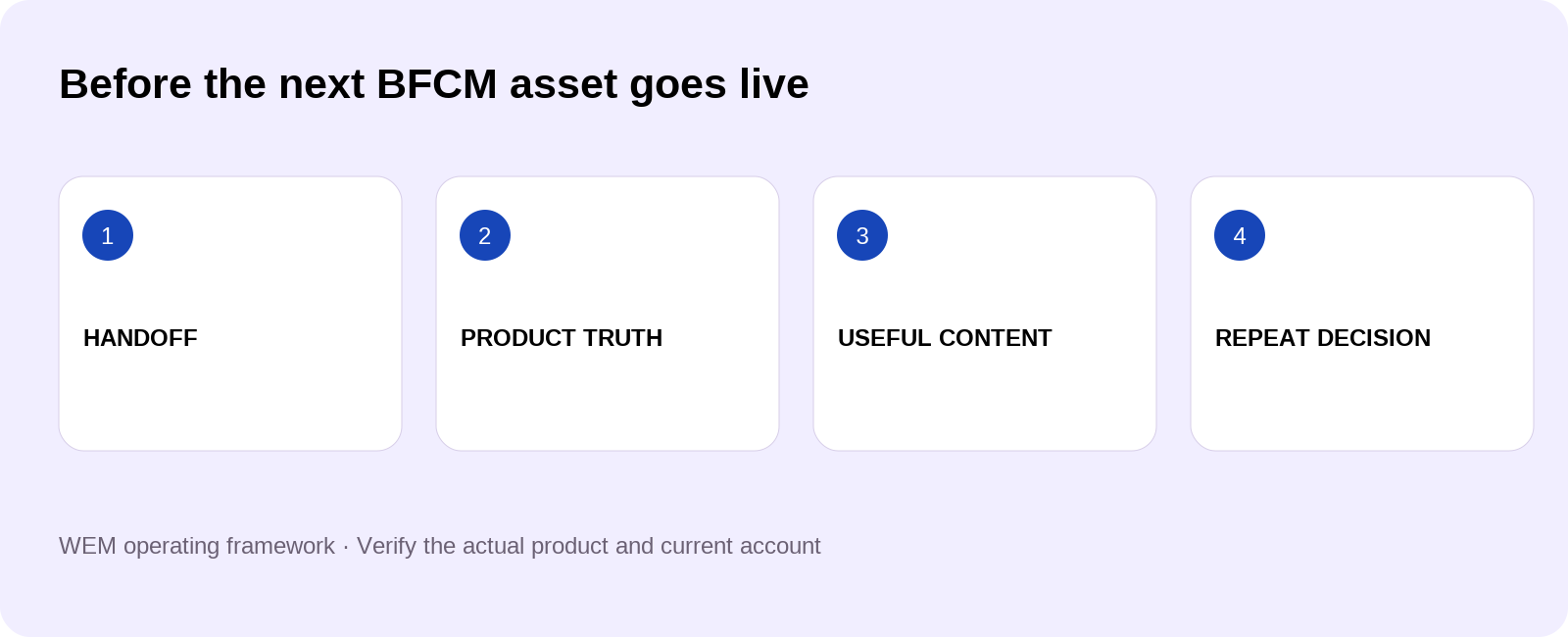
Use a simple scorecard with six dimensions. A three-point scale is enough: green means repeatable, yellow means repairable, and red means the condition makes another collaboration unsafe or wasteful. The purpose is not to manufacture a perfect total. It is to make the next decision traceable.
1. Handoff reliability
Ask whether both teams could move the work without repeated rescue. Did the creator confirm receipt? Were questions raised early enough to answer? Did the brand provide the correct product facts, current links and a reachable owner? Was the agreed timing followed, or did a delay get communicated before it created a downstream problem?
Green means the handoff was clear and predictable. Yellow means one repair, such as a simpler brief or an earlier product check-in, could remove the friction. Red means repeated silence, unexplained missed commitments, incorrect shipping information or another pattern made the work impossible to manage. Separate a one-time carrier delay from a behavior the team can reasonably expect to repeat.
2. Product truth and compliance
Check the published content against the actual product, current listing and permitted claims. Does the creator show the correct variant? Are material features, size, application, scent description or use conditions presented accurately? Are disclosures visible where required? Does the content imply an outcome the product evidence does not support?
This dimension is a gate, not a cosmetic preference. A visually polished video with an unsupported claim should not earn a repeat because it attracted attention. A correctable wording error can be yellow if the creator responds promptly and the agreement permits a revision. A deliberate or repeated false claim, hidden disclosure or refusal to correct a material error is red.
3. Buyer-question fit
Useful creator content reduces a named uncertainty. For apparel, that may be fit, fabric movement or styling context. For fragrance, video cannot transmit smell, so the creator needs honest language about notes, mood, occasion and comparison without pretending the viewer experienced the scent. For beauty, the content may need to show texture, application sequence and who the product is for. For a device, it may need to demonstrate setup, controls and a realistic use case.
Review comments and saves for evidence that the content reached the intended question. “What size are you wearing?” can be a useful signal when size context was the conversion barrier. Repeated confusion about what the product does is a different signal. Neither should be reduced to an engagement rate without reading the language.
4. Content usefulness beyond vanity metrics
Views are distribution, not a complete quality score. Look at the first seconds, demonstration clarity, product visibility, spoken and on-screen facts, pacing, comment quality and whether a buyer can take the next step. Ask whether the asset teaches the brand something reusable: a buyer phrase, objection, demonstration angle, comparison frame or unexpected use context.
A modest-view video can be worth repeating if it produces qualified questions and gives the team a clearer content hypothesis. A high-view video can be a stop if the attention came from an unrelated joke, product misunderstanding or audience mismatch. If the brand has permission to reuse the asset, evaluate that separately from organic performance. Usage rights are contractual, not automatically created by a good result.
5. Commerce and operational signal
Read orders, clicks, product-page behavior, inventory availability, returns and customer questions together where the account makes those records available. Do not claim that the creator caused a sale unless the available attribution supports that conclusion. Do not treat zero attributed orders as proof that the content failed when the product was out of stock, the link was wrong or delivery expectations broke the path.
For a first test, a useful commercial signal can be smaller than profitable scale. It may be a cluster of qualified product clicks, a repeated question that reveals a listing gap, a strong conversion rate from limited traffic, or evidence that the audience wants a different variant. Record the observation and the limitation. “Three attributed orders from a small qualified audience while inventory remained available” is more useful than “the creator did well.”
6. Management cost and relationship health
Count the work required from both sides. How many reminders, corrections and internal escalations were needed? Did feedback stay specific and respectful? Could the creator explain why a requested change would damage authenticity? Did the brand answer questions quickly enough for the creator to work responsibly?
Low management cost does not mean no communication. A good first collaboration often includes thoughtful questions. The warning sign is effort that does not improve the output: repeated re-explanations, contradictory approvers, untracked changes or avoidable last-minute demands. Score the brand's behavior too. A repeat decision is only credible if the brand repairs its own constraint.
Choose Repeat, Repair or Stop
Repeat when product truth is green, the operating handoff is reliable, and at least one useful buyer or commerce signal is present. Name what you are repeating. It may be the same creator and product with a new hook, a different product that serves the same buyer job, or the same concept with clearer proof. Set the next test before expanding volume.
Repair when the creator-product fit remains plausible but one named constraint prevented a fair test. Examples include a confusing brief, late sample delivery, weak product-page facts, an opening that attracted the wrong audience, or an unclear call to action. Change one major variable at a time. If price, brief, product, hook and paid support all change together, the next result will not tell the team what improved.
Stop when the mismatch is structural or the risk is unacceptable. Stop for repeated unsupported claims, refusal to use the correct product, undisclosed conflicts that violate the agreement, persistent missed commitments without communication, or an audience-product mismatch that no reasonable brief can fix. Document the reason without turning a business decision into a personal judgment.
A weighted total can help sort a large roster, but it should never hide a red gate. Product truth, required disclosure and contractual permission override a high aggregate score. Conversely, one low-view result should not override a clean operation and a specific learning signal.
Run a 72-hour debrief
Within roughly three business days of the content or agreed delivery milestone, capture the facts while the handoff is still fresh. The exact timing should follow the collaboration and the account's reporting delay. Use one short record:
- What did each side agree to deliver?
- What actually happened, with links and dates?
- Which buyer question did the content address?
- What product-truth or compliance checks passed or failed?
- Which distribution and commerce signals are observable, and what is not known?
- Which single constraint should remain stable or change next?
- Is the decision Repeat, Repair or Stop, and who owns the next action?
Attach evidence rather than memory. Save the published URL, screenshots of material comments, the current listing, the relevant agreement and the account readback used for the decision. Avoid copying personal information into a shared scorecard when it is not needed.
Apply the scorecard by category
For a beauty product, imagine that the creator delivered on time and showed the correct application sequence. View volume was modest, but comments repeatedly asked whether the texture works under makeup. The product page does not answer that question. This is likely a repair or repeat decision, not an automatic stop. The next test could keep the creator and product stable while clarifying the under-makeup demonstration and updating the listing truth.
For apparel, imagine strong reach but many comments show confusion about sizing because the video and listing use different size references. The content should not be declared a winner from reach alone. Repair the size handoff, state the creator's worn size and fit preference where appropriate, and test whether qualified product-page behavior improves.
For fragrance, a creator may produce beautiful storytelling but use language that sounds like an objective guarantee. Because viewers cannot smell through video, the next brief should separate personal perception from verifiable product facts. If the creator corrects the framing and the audience shows relevant curiosity, repair may be justified. If the creator refuses accurate framing, stop.
For a device, the content may attract clicks but comments reveal setup confusion. Review whether the creator had the correct model, current instructions and enough time to use it. The next action may belong to product education or listing operations rather than creator selection.
These are labeled operating examples, not results from the external brands cited below. Every actual decision requires the brand's own agreement, product truth and account evidence.
Build the next collaboration from the decision
If the result is Repeat, write a one-sentence hypothesis: “This creator can explain the product to this buyer because the first asset produced this observable signal.” Keep the proof visible and define the next test. If the result is Repair, write the constraint and owner: “The brand will correct the fit reference before the creator tests a second opening.” If the result is Stop, close the sample, payment, usage-right and recordkeeping obligations cleanly.
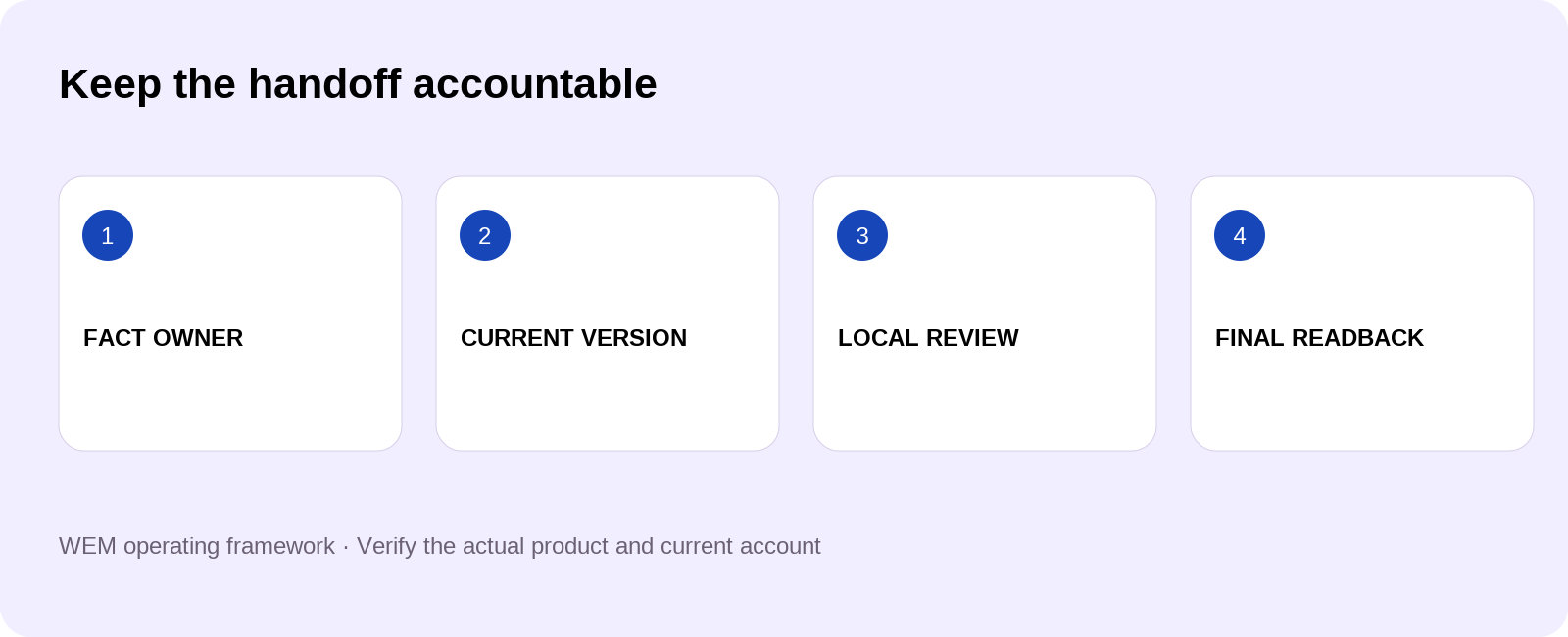
For cross-border teams, also name which fact belongs to headquarters and which decision belongs to the U.S. operator. Headquarters may own formula, material, manufacturing and approved product evidence. The U.S. operator may own local buyer language, creator communication, current listing presentation and comment review. The creator owns their truthful experience and the deliverables they accepted. Clear ownership reduces the temptation to blame the last person in the chain.
The smallest useful next step is not “send more samples.” It is to score one completed collaboration with evidence, choose Repeat, Repair or Stop, and write the single reason. Once the team can make that decision consistently, it can scale without confusing activity with learning.
Source notes and execution boundary
This original WEM framework uses two current external references revalidated on November 28, 2026. TikTok Shop's official article about Princess Polly, Dossier and SharkNinja illustrates how different product categories use visible explanation and how content feedback can connect with product operations. Those brands are external examples, not WEM clients, and the article does not prove that content volume alone caused the results.
DAMI's article on creator cold starts is vendor guidance. Its suggestions to use a simple brief, onboarding, sample tracking and a pre-filming check-in are useful operating inputs. Its fixed-fee framing and two-to-three-week timing are not universal TikTok Shop rules. The actual agreement, creator circumstances, product testing needs, account access and current platform guidance control execution.
Related WEM guides: the sample decision system, creator collaboration models, and creator matchmaking.
Common questions
Should we repeat a creator who had high views but no attributed orders?
Not automatically. Check product availability, link accuracy, buyer-question fit, qualified clicks, comments and the limits of the account's attribution. Repeat only when the evidence supports a specific next hypothesis and product truth remains clean.
Is one missed deadline enough to stop the relationship?
Usually the context matters. Separate a communicated carrier, health or production issue from a repeated pattern of silence and missed commitments. Score the impact, communication and likelihood of recurrence against the actual agreement.
Should every first collaboration use the same score weights?
No. A gifted seeding test, affiliate sample, flat-fee deliverable and paid usage package have different goals and obligations. Keep product truth and permission as gates, then adjust the commercial evidence to the collaboration type.
Can the brand request a revision after content is produced?
Only within the agreement and applicable rules. The best protection is a clear factual brief before filming. When a material product or compliance error appears, address it specifically and preserve the creator's authentic voice where possible.
How many collaborations are needed before a creator is proven?
There is no universal number. Repeat only enough to test the named uncertainty while keeping the product, offer and operating conditions visible. Stop calling the creator “proven” when the evidence applies only to one SKU, moment or audience.
What should the team save after the decision?
Save the agreement, exact SKU, delivery and publication dates, live URL, material review notes, current listing, observable account signals, decision and next owner. Store only the personal information needed for operations and access control.