WE Marketing · TikTok Shop U.S. · Creator Operations
Free, Refundable or Auto-Approved Samples: A Better Decision System
By the WE Marketing Team · Published July 29, 2026
Choose the sample mode from evidence, economics, and risk
The best TikTok Shop sample method is the one that matches product evidence, creator evidence, inventory risk, and the job the sample must do. Use manually reviewed free samples when fit needs human judgment, refundable samples when creators should carry the initial product cost and prove conversion, and auto-approved samples only when the rules, quota, stock, and monitoring loop are strong enough to make speed safer than individual review.
Samples are not a shipping tactic. They are a controlled exchange of product, fulfillment cost, creator effort, content opportunity, and commercial evidence. The wrong decision is rarely “we sent a sample.” The costly decision is sending the wrong SKU to the wrong creator under a mode that hides who is carrying the risk.
TikTok Shop’s current U.S. Academy materials describe free samples, refundable samples, custom auto-approval rules, automatic approval inside Target Collaboration, auto-approved campaign samples, and Auto-optimized Samples for eligible products and sellers. These tools are not interchangeable. A brand still needs an operating decision before it turns on a feature.
WEM’s practical answer is to treat sample mode as a routing decision. First define the job. Then score evidence and economics. Only then choose manual free, refundable, or one of the available automated approval paths. Feature availability and exact controls should always be read back in the live Affiliate Center before inventory is committed.
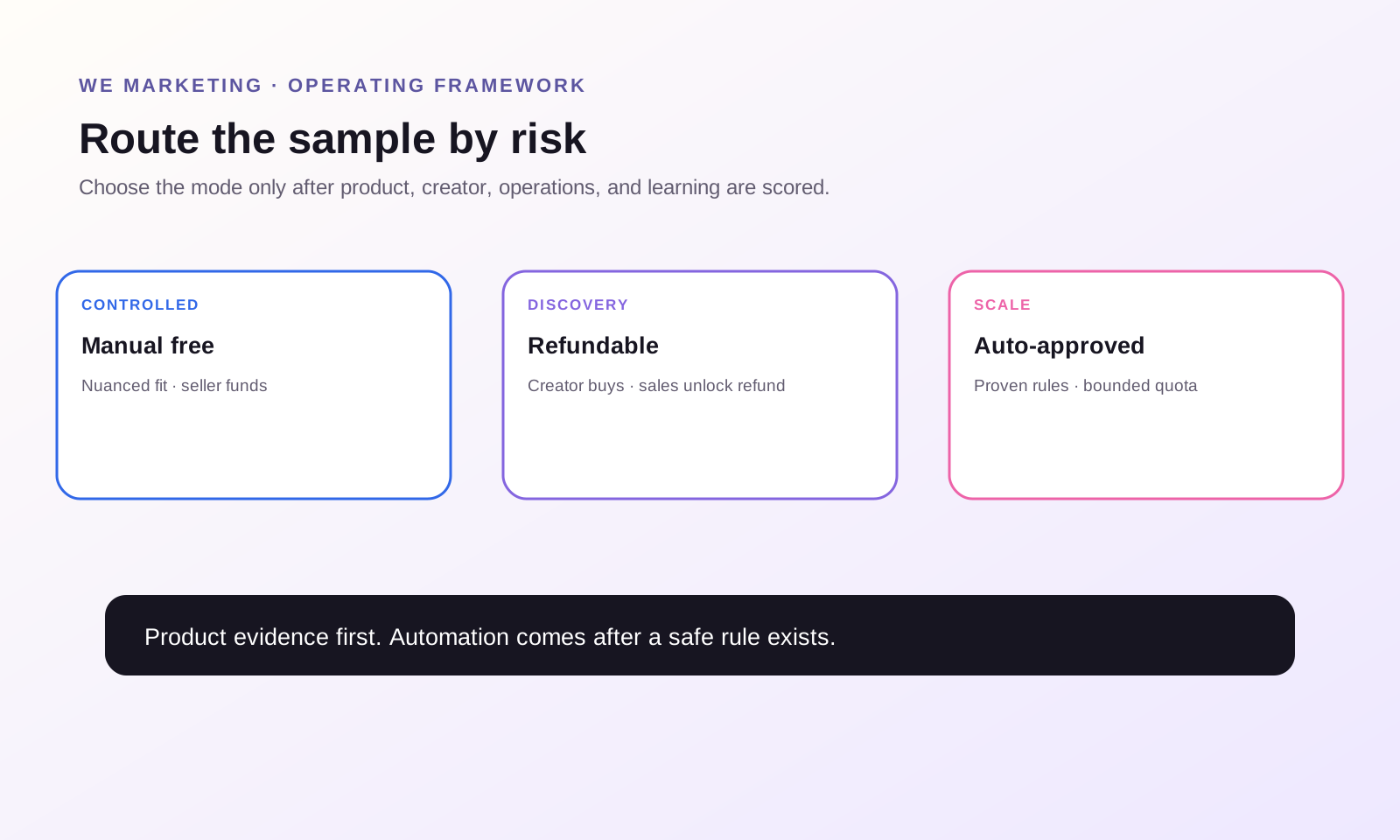
The three labels answer different risk questions
| Mode | Who funds the product first? | Who controls approval? | Best first use |
|---|---|---|---|
| Manually reviewed free sample | Seller funds product, shipping, and tax | Seller reviews each request | New SKU, high product cost, nuanced creator fit, regulated claims |
| Refundable sample | Creator purchases first; refund follows qualifying sales | No free-sample approval; seller sets sales criteria | Always-on discovery, broader creator access, conversion-motivated testing |
| Auto-approved free sample | Seller funds the sample | Platform or seller rules approve qualifying requests | Proven SKU, repeatable creator criteria, reliable inventory and fulfillment |
The first mistake is treating refundable samples as a delayed free sample. They change the risk structure. The creator purchases the product and earns a refund only after the applicable qualifying sales requirement is met. The seller receives an order if the threshold is not met, while the creator carries the initial cash and performance risk.
The second mistake is treating every automated approval as the same feature. TikTok Shop currently documents custom auto-approval automations, automatic approval for selected Target Collaboration creators, auto-approved free-sample campaigns, and Auto-optimized Samples for eligible products. Each path has different rules, access, quota behavior, and decision ownership.
The third mistake is selecting a mode before choosing the product and content job. A fragile glass product with expensive shipping, a $12 impulse accessory, and a claim-sensitive wellness product should not share one sample rule.
Calculate the full sample economics before choosing a mode
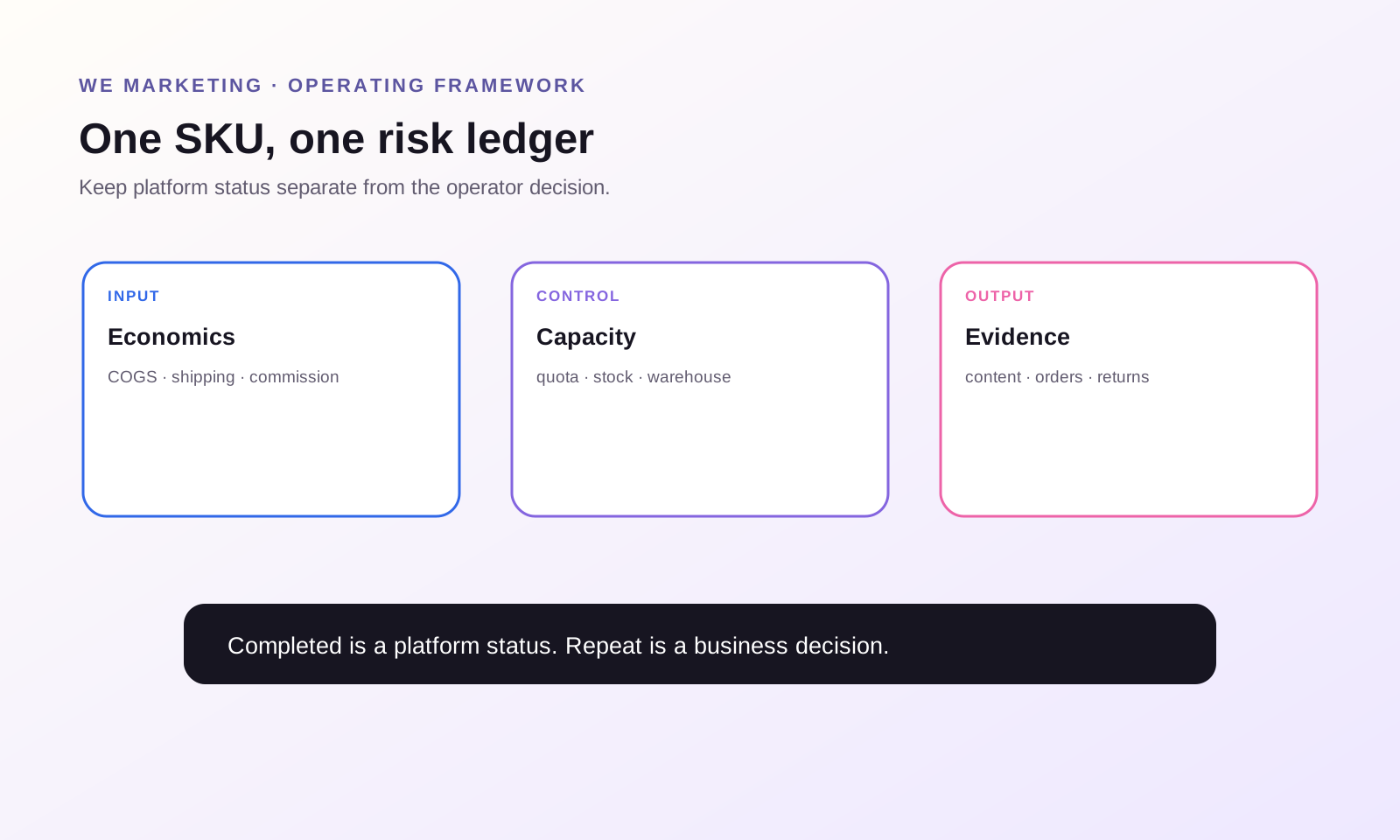
The product retail price is not the seller’s sample cost. Build a contribution view that includes product cost, pick and pack, shipping, tax treatment, replacement risk, creator support time, commission, returns, and any fixed creator payment. Keep content licensing and paid usage rights separate because providing a sample does not automatically grant those rights.
For each SKU, record five ceilings:
- Inventory ceiling: how many units can leave sellable stock without creating an availability problem.
- Fulfillment ceiling: how many approved samples the warehouse can ship within the platform window.
- Cost ceiling: the maximum all-in sample investment the product’s margin and learning objective can support.
- creator-risk ceiling: how much mismatch the brand can tolerate before manual review is required.
- evidence ceiling: how long the team will keep funding the same cohort without better posting, content, or commerce evidence.
A low-cost product can still be a bad auto-approval candidate when shipping is expensive or inventory is unstable. A high-margin product can still be a bad refundable candidate when creators need extensive education before they can reasonably sell it. Economics are necessary, but product demonstrability and creator effort matter too.
Use the sample decision gate before turning on a feature
Score four inputs for one SKU, not the entire catalog.
Product evidence
Does the listing convert? Is the product easy to demonstrate honestly? Are claims, variations, price, inventory, and delivery stable? If product evidence is weak, broad automated sampling can multiply uncertainty instead of learning.
Creator evidence
Does the creator make relevant content, fulfill sample obligations, communicate clearly, and produce useful shopper response? Followers alone do not answer this. Review category fit, recent content, sample history, estimated posting behavior where available, and the quality of past collaborations.
Operating control
Can the team review exceptions, ship quickly, answer product questions, track content, and stop or adjust the rule? TikTok Shop’s current seller guide says free-sample requests should be reviewed within seven days and approved samples shipped within another seven days. Speed is part of the offer.
Learning job
Is the brand trying to discover creator fit, obtain product education, test a hook, create broad content supply, or scale a proven conversion pattern? One sample cannot be judged fairly if the team never wrote down what it was supposed to learn.
The routing logic is simple:
- Low product evidence or nuanced creator fit: manually reviewed free samples.
- Broader discovery with controlled seller downside and a product creators can confidently buy: refundable samples.
- Strong product evidence, repeatable creator rules, stable stock, and fast fulfillment: auto-approved free samples.
- High-value named creators: Target Collaboration with the exact sample approval setting read back before sending.
When manually reviewed free samples fit best
Manual free samples are the right default when human judgment adds material value. This is common during a cold start, with a new SKU, expensive inventory, specialized use cases, sensitive claims, or a narrow target customer.
TikTok Shop’s current seller guide lets sellers configure free samples in Open and Target Collaborations, set quantities and request periods, and apply creator thresholds through Sample Settings. The seller reviews requests in Affiliate Center and can approve or reject them. This creates a useful control point before inventory leaves the warehouse.
Manual review should not become vague taste. Use a short scorecard:
1. Category and audience fit 2. Recent content quality and product-demonstration ability 3. Prior sample fulfillment or collaboration behavior 4. Product-specific risk, including claims and variations 5. Expected content job and next action
Approve when the evidence is strong enough for this SKU and this learning job. Reject or redirect when the creator may fit another product. Record a reason so the next operator can learn from the decision.
Manual free samples are weak when the team has hundreds of requests, no shared rules, slow approval, or no follow-up. In that case, “manual” does not mean controlled. It means inconsistent.
When refundable samples fit best
Refundable samples are useful when the brand wants wider creator discovery without funding every product up front. TikTok Shop’s current seller material describes a sales-based model: creators buy the product, create linked content, and receive a refund when qualifying sales meet the seller’s threshold. The creator’s own purchase does not count toward that threshold.
This mode fits products that are understandable, accessible in price, easy to demonstrate, and commercially ready. It also gives creators who lack free-sample access or quota another path to try the product.
Use refundable samples when:
- the product page and offer already support conversion;
- the creator can evaluate the product without heavy brand support;
- the seller wants an always-on discovery lane;
- a small seller-set sales threshold is economically rational;
- the team can support creators who ask product or fulfillment questions.
Do not use refundable samples as a way to push product risk onto creators when the listing, quality, delivery, or claims are not ready. A creator purchase is still a customer experience. If the product disappoints, the program can create distrust rather than advocacy.
The current Academy pages do not present one perfectly consistent public timing description across every sample surface. The seller setup guide refers to a 90-day criteria window, while the newer creator guide describes a 120-day window and recommends generating sales within the first 90 days so qualifying orders can clear the return period. Treat the live order terms as the governing control and avoid promising a public timeline from memory.
When auto-approved free samples fit best
Auto-approval is a speed tool. It becomes a quality tool only when the eligibility logic and feedback loop are sound.
TikTok Shop currently documents several automated paths:
- Custom sample auto-approval automations use seller-defined creator criteria, a required shop quota, and optional product price limits. Requests that miss the rules or arrive after quota is consumed move to manual review.
- Target Collaboration can automatically approve invited creators for the selected collaboration flow.
- TikTok Shop campaign registrations can allocate free-sample quantities to platform-selected eligible creators whose requests are automatically approved.
- Auto-optimized Samples can automate inventory, creator matching, approvals, and product-level reporting for eligible products and select managed U.S. sellers. Availability is not universal.
These distinctions matter. A seller-controlled rule is not the same as platform-selected campaign eligibility, and neither is the same as Auto-optimized enrollment. Before enabling anything, record the exact feature name, eligible product, approval source, quota behavior, inventory rule, and stop control visible in the account.
Auto-approval fits when the SKU is proven, creator criteria can be expressed as reliable rules, sample cost is bounded, inventory is stable, shipping is fast, and someone checks exceptions daily. It is risky for new products, high-cost variations, unstable stock, products with complicated education, or teams that will not monitor the Ready to Ship queue.
Keep one sample risk ledger
Every active sample rule should have one row per SKU:
| Field | What to record | Why it matters |
|---|---|---|
| Job | Discovery, education, content supply, conversion, or relationship | Defines success before shipment |
| Mode | Manual free, refundable, custom auto-approval, Target auto-approval, campaign, or Auto-optimized | Prevents feature names from being mixed |
| Economics | COGS, fulfillment, commission, refund threshold, and cost ceiling | Makes downside visible |
| Eligibility | Creator evidence and product requirements | Explains who can enter |
| Capacity | Sample quota, sellable stock, and warehouse capacity | Prevents sampling from damaging sales |
| Milestones | Requested, approved, shipped, delivered, posted, completed, refunded | Shows where work is stuck |
| Result | Content quality, views, questions, orders, returns, and next decision | Turns activity into evidence |
The ledger should separate platform status from WEM’s operator decision. “Completed” may confirm a platform obligation, but it does not automatically mean the content is useful, the unit economics work, or the creator should receive another product.
Operate the same seven-stage workflow for every mode
1. Define the product and sample job. 2. Confirm listing truth, inventory, fulfillment, claims, and economics. 3. Choose the mode and record the exact live-account setting. 4. Route creators through manual review, refundable access, or the approved automation. 5. Ship or fulfill on time and provide concise product truth, not a scripted positive review. 6. Track delivery, content obligation, linked content, shopper response, orders, returns, and exceptions. 7. Decide to scale, repeat, change the rule, switch mode, redirect the creator, or stop.
TikTok Shop’s current guidance says free-sample creators generally must post qualifying linked content within 14 days of delivery, with a public short video or a LIVE format that meets the applicable requirements. Sellers can monitor content and performance in Sample Requests and Affiliate Center. Those milestones should be used as a baseline, then augmented with the brand’s own quality and economics review.
Do not pressure creators to make a positive claim because they received a sample. Product experience, disclosure, accuracy, and platform policy still apply. Sample support should help a creator understand the product, not dictate an inauthentic opinion.
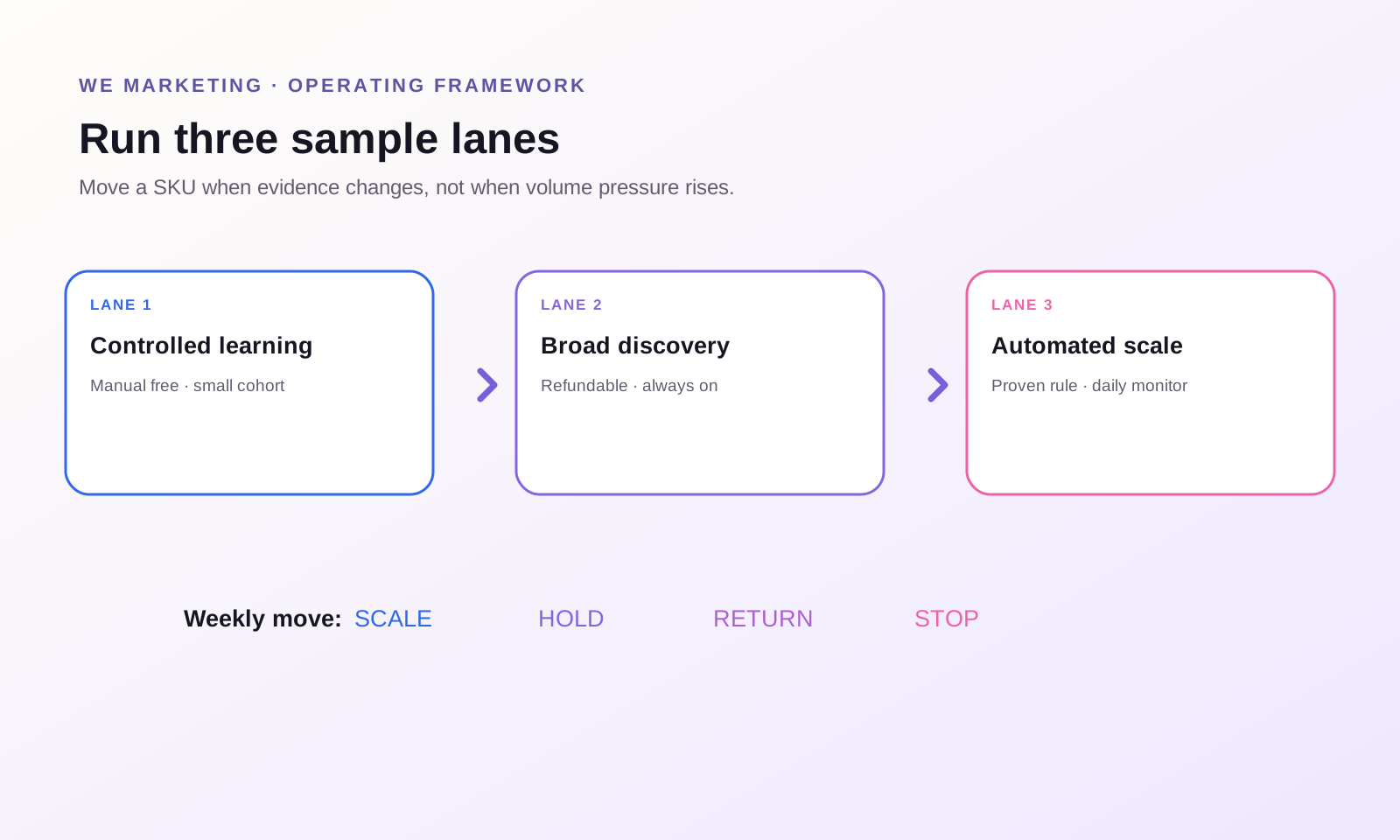
Run three sample lanes instead of one global rule
Lane 1: Controlled learning
Use manually reviewed free samples for new SKUs and uncertain creator fit. Keep batches small. Review what creators understood, what shoppers asked, and where the listing or brief failed.
Lane 2: Broad discovery
Use refundable samples for commercially ready products where motivated creators can choose to invest and prove conversion. Watch refund completion, content quality, returns, and creator support needs.
Lane 3: Automated scale
Use the exact eligible auto-approval path for proven products. Set quota, price, inventory, and exception controls. Compare actual performance with the evidence that justified automation. Move the SKU back to manual review if stock, fulfillment, content quality, or economics deteriorate.
Review movement between lanes by SKU every week. A product can graduate from controlled learning to automated scale. It can also move backward. Automation is not a permanent badge.
Operational example: one hero product, three sample lanes
This is a hypothetical operating example, not a WEM client result.
A beauty brand has a $36 serum. The listing is accurate and fulfillment is stable, but the product is new and the team does not yet know which creator angle will work. It begins with 20 manually reviewed free samples across three creator profiles. The team records delivery, posting, content angle, repeated questions, attributed orders, and returns.
After the first cohort, the brand learns that routine-based creators explain the product clearly, while general deal accounts create clicks but weak product understanding. The listing and FAQ are improved using repeated questions. Refundable samples are then offered as an always-on discovery path for creators outside the first cohort.
Once the SKU has reliable stock, stable contribution, a repeatable creator profile, and a proven fulfillment process, the team creates a bounded auto-approval rule for the matching segment. A shop quota and product price limit constrain exposure. Requests outside the rule stay in manual review. The team checks the queue daily and compares the automated cohort with the manual and refundable cohorts each week.
The product did not start with automation because speed was not the first problem. It moved to automation after the brand had enough evidence to write a safe rule.
Smallest useful next action: audit one SKU in 30 minutes
Choose one priority SKU. Write down its sample job, product cost, fulfillment cost, current stock, creator evidence required, content expectation, and maximum sample exposure. Then open Affiliate Center and record the exact free, refundable, and automated sample options currently available for that product.
Pick one lane for the next cohort. Do not activate a catalog-wide default during this audit. Set an owner and a weekly review date. The smallest useful system is one SKU, one rule, one bounded cohort, and one evidence-based next decision.
Frequently asked questions
What is the difference between a free sample and a refundable sample on TikTok Shop?
A free sample is funded by the seller and is usually subject to seller or platform approval. With a refundable sample, the creator purchases the product first and can receive a refund after meeting the applicable qualifying sales criteria. The modes allocate product cost and performance risk differently.
Should a new TikTok Shop brand turn on auto-approval for samples?
Usually not across the whole catalog. A new brand should first validate the product, creator fit, listing, fulfillment, and economics with a bounded cohort. Auto-approval can make sense later for a proven SKU when rules, quota, stock, shipping, monitoring, and a stop condition are clear.
Are all auto-approved samples the same TikTok Shop feature?
No. Current U.S. Academy material describes custom seller rules, automatic approval in some Target Collaboration flows, campaign-based auto-approved samples, and Auto-optimized Samples for eligible products and sellers. Read the exact feature name and controls in the live account before relying on it.
How long does a creator have to post after receiving a free sample?
TikTok Shop’s current seller and creator guides generally state that qualifying content is due within 14 days of delivery. Exact obligations, extensions, and exceptions should be verified in Manage Samples or Affiliate Center for the specific order.
How should a seller choose the sales threshold for refundable samples?
Start with product price, contribution margin, expected returns, creator effort, and the purpose of the test. TikTok Shop’s current seller guide describes thresholds from one to three sales in its setup flow. Confirm the live range and terms before publishing the offer.
What should a brand measure after sending samples?
Track request source, approval mode, shipment, delivery, content obligation, published link, content quality, shopper questions, clicks, orders, returns, full sample cost, and the next creator-product decision. Compare cohorts by SKU and mode rather than using one blended posting rate.
WE Marketing · TikTok Shop 美国站 · Creator Operations
免费、可退款还是自动批准寄样:品牌该怎么选?
WE Marketing Team · 2026 年 8 月 1 日
先按 Evidence、Economics 与 Risk 选择寄样 Mode
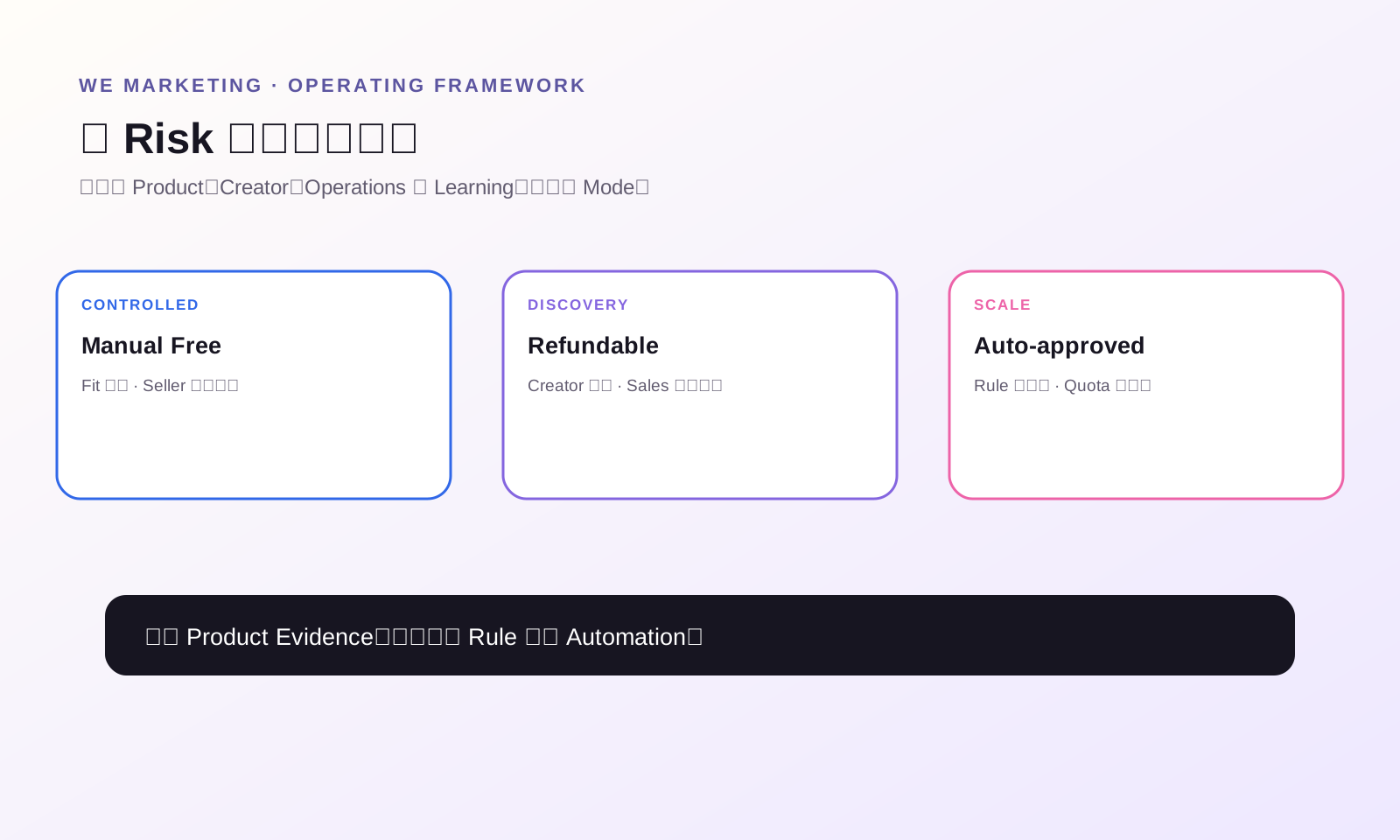
TikTok Shop 寄样方式不是越自动越好。品牌应该先看商品证据、达人证据、库存风险和这次寄样必须完成的 Job,再决定 Manual Free Sample、Refundable Sample,还是某一种 Auto-approved Sample。新品、高货值、复杂讲解通常先人工审核;商品已经成熟、达人愿意先购买并证明转化时,可以用 Refundable;只有规则、Quota、库存、发货和复盘都稳定以后,才适合自动批准。
寄样不是“把货发出去”这么简单。每一次寄样都在交换 Product、履约成本、达人时间、内容机会和商业证据。真正贵的错误,不是寄出一个样品,而是用错模式,把错误 SKU 发给错误 Creator,却没人知道 Risk 到底由谁承担。
TikTok Shop 美国站当前 Academy 资料同时提到 Free Sample、Refundable Sample、自定义 Auto-approval Automation、Target Collaboration 自动批准、Campaign Auto-approved Sample,以及面向部分合资格商品与 Seller 的 Auto-optimized Samples。它们不是同一个 Feature,也不能用同一条规则管理。
WEM 的建议是把寄样方式当成 Routing Decision:先写清 Job,再判断 Evidence 和 Economics,最后才选择具体功能。真正投入库存前,还要在 Live Affiliate Center 里重新读回 Feature Name、资格、Quota、库存和 Stop Control。
三个模式,其实在回答三种不同的风险问题
| 模式 | 谁先承担商品成本 | 谁控制批准 | 最适合的第一用途 |
|---|---|---|---|
| 人工审核 Free Sample | Seller 承担商品、Shipping 与 Tax | Seller 逐个审核 | 新 SKU、高成本、达人匹配复杂、Claim 敏感 |
| Refundable Sample | Creator 先购买,满足有效 Sales 条件后退款 | 不走免费样品批准,Seller 设置 Sales Criteria | Always-on Discovery、扩大达人入口、测试转化意愿 |
| Auto-approved Free Sample | Seller 承担样品成本 | Platform 或 Seller Rule 批准 | 已验证 SKU、规则可重复、库存和履约稳定 |
Refundable 不是“晚一点免费的样品”。达人先付款,并承担初始现金与 Performance Risk;满足适用 Sales 条件后才退款。Auto-approved 也不是一个统一功能。Seller 自定义 Rule、Target 自动批准、Campaign 自动批准、Auto-optimized 的资格和控制权都不同。
所以不能先问“哪个功能更先进”,而应该先问:这个 SKU 的内容 Job 是什么?品牌愿意承担多少 Downside?达人需要投入多少教育和制作?
先算完整寄样经济账,再选择模式
Retail Price 不是寄样成本。至少要记录 COGS、Pick and Pack、Shipping、Tax、补寄风险、运营时间、Commission、Return,以及任何 Flat Fee。Content Licensing 和 Paid Usage Rights 必须单独计算,因为寄样本身不自动等于品牌拿到素材使用权。
每个 SKU 先设五个 Ceiling:
- Inventory Ceiling:最多能从可售库存拿出多少件,不影响正常销售。
- Fulfillment Ceiling:仓库在平台节点内能发出多少批准样品。
- Cost Ceiling:毛利和 Learning Objective 能承受的 All-in Sample Cost。
- Creator-risk Ceiling:错配风险到什么程度必须转回人工审核。
- Evidence Ceiling:一个 Cohort 连续多久没有改善,就停止继续投入。
低客单商品如果 Shipping 贵、库存不稳,也不适合自动批准。高毛利商品如果需要复杂教育,也未必适合 Refundable。Economics 是底线,但 Demonstrability 和 Creator Effort 也必须进入判断。
用 Sample Decision Gate 决定下一步
只给一个 SKU 打分,不要一次给整个 Catalog 设规则。
Product Evidence
Listing 能不能转化?商品是否容易真实 Demonstrate?Claim、Variation、Price、Inventory、Delivery 是否稳定?Evidence 弱的时候,大量自动寄样只会放大不确定性。
Creator Evidence
Creator 是否做过相关 Category?能不能清楚演示?过去是否按时完成样品义务?有没有真实 Shopper Response?Follower Count 不能单独证明 Fit。
Operating Control
团队能不能每天处理 Exception、及时发货、回答产品问题、追踪内容,并在规则出问题时 Stop?TikTok Shop 当前 Seller Guide 说明,Free Sample Request 需要在 7 天内审核,批准后还有 7 天发货。速度本身就是合作体验的一部分。
Learning Job
这次要发现 Creator Fit、教育用户、测试 Hook、扩大 Content Supply,还是复制已经验证的 Conversion Pattern?如果没写 Job,就无法公平判断结果。
Routing Logic:
- Product Evidence 低,或者 Creator Fit 很复杂:人工审核 Free Sample。
- 商品商业准备充分,想扩大 Discovery,又希望控制 Seller Downside:Refundable Sample。
- Product Evidence 强、Creator Rule 可重复、库存稳定、履约快:Auto-approved Free Sample。
- 明确的高价值 Creator:进入 Target Collaboration,并读回准确批准设置。
人工审核 Free Sample 什么时候最好用
新品、冷启动、高货值、特殊使用场景、Claim 敏感、目标用户很窄时,Human Judgment 很有价值。TikTok Shop 当前 Seller Guide 支持在 Open 与 Target Collaboration 里设置 Free Sample、数量、Request Period,并通过 Sample Settings 管理 Creator Threshold。
人工审核不能靠感觉。用五项 Scorecard:Category Fit、近期 Content Quality、过去 Sample Fulfillment、Product-specific Risk、Expected Content Job。批准时写清原因;不适合这个 SKU 的达人,可以 Redirect 到另一个更适合的 Product。
如果团队有几百个 Request,却没有共同规则、审批很慢、没人跟进,Manual 不等于 Controlled,只代表 Inconsistent。
Refundable Sample 什么时候最好用
Refundable 适合商品已经容易理解、Price 可接受、Listing 与 Fulfillment 能承接转化,而且品牌希望建立更广的 Always-on Discovery Lane。Creator 先购买,再通过挂车内容产生符合条件的 Sales,达到门槛后获得退款。Creator 自己的 Purchase 不计算进 Sales Threshold。
适合使用的条件包括:
- Product Page 与 Offer 已经有基本转化能力;
- Creator 不需要大量 Brand Support 才能讲清商品;
- Seller 希望扩大入口,但不想预付每一件样品;
- 较小的 Sales Threshold 在经济上合理;
- 团队仍然会回答 Product 和 Fulfillment 问题。
不要用 Refundable 把一个没准备好的商品风险推给 Creator。Creator 的 Purchase 仍然是 Customer Experience。如果 Quality、Delivery 或 Claim 有问题,最后损失的是 Trust。
当前公开 Academy 不同页面对 Window 的描述并不完全一致。Seller Setup Guide 提到 90 天 Criteria Window;较新的 Creator Guide 描述 120 天,并建议前 90 天产生 Sales,让订单有时间通过 Return Period。运营时应以具体 Order 的 Live Terms 为准,不要凭记忆对外承诺。
Auto-approved Free Sample 什么时候最好用
Auto-approval 首先是 Speed Tool。只有 Eligibility Logic 和 Feedback Loop 可靠,它才会变成 Quality Tool。
TikTok Shop 当前资料区分几种路径:
- Custom Auto-approval Automation:Seller 自己设置 Creator Criteria、Shop Quota 和可选 Price Limit;不符合 Rule 或 Quota 已满的 Request 转入人工审核。
- Target Collaboration:针对特定 Invite 可以选择自动批准。
- Campaign Auto-approved Samples:平台选择合资格 Creator,Seller 在 Campaign Registration 里设置 Sample Quantity。
- Auto-optimized Samples:面向部分合资格 Product 与 Managed U.S. Seller,自动处理 Inventory、Creator Match、Approval 与 Product Reporting。
所以开启前必须记录 Exact Feature Name、Eligible Product、Approval Source、Quota Behavior、Inventory Rule 和 Stop Control。
Auto-approved 适合 Proven SKU、规则能准确表达 Creator Profile、Sample Cost 有 Ceiling、库存稳定、发货快,而且每天有人检查 Ready to Ship 与 Exception。新品、高成本 Variation、库存波动、教育复杂或没有 Daily Owner 时,不适合。
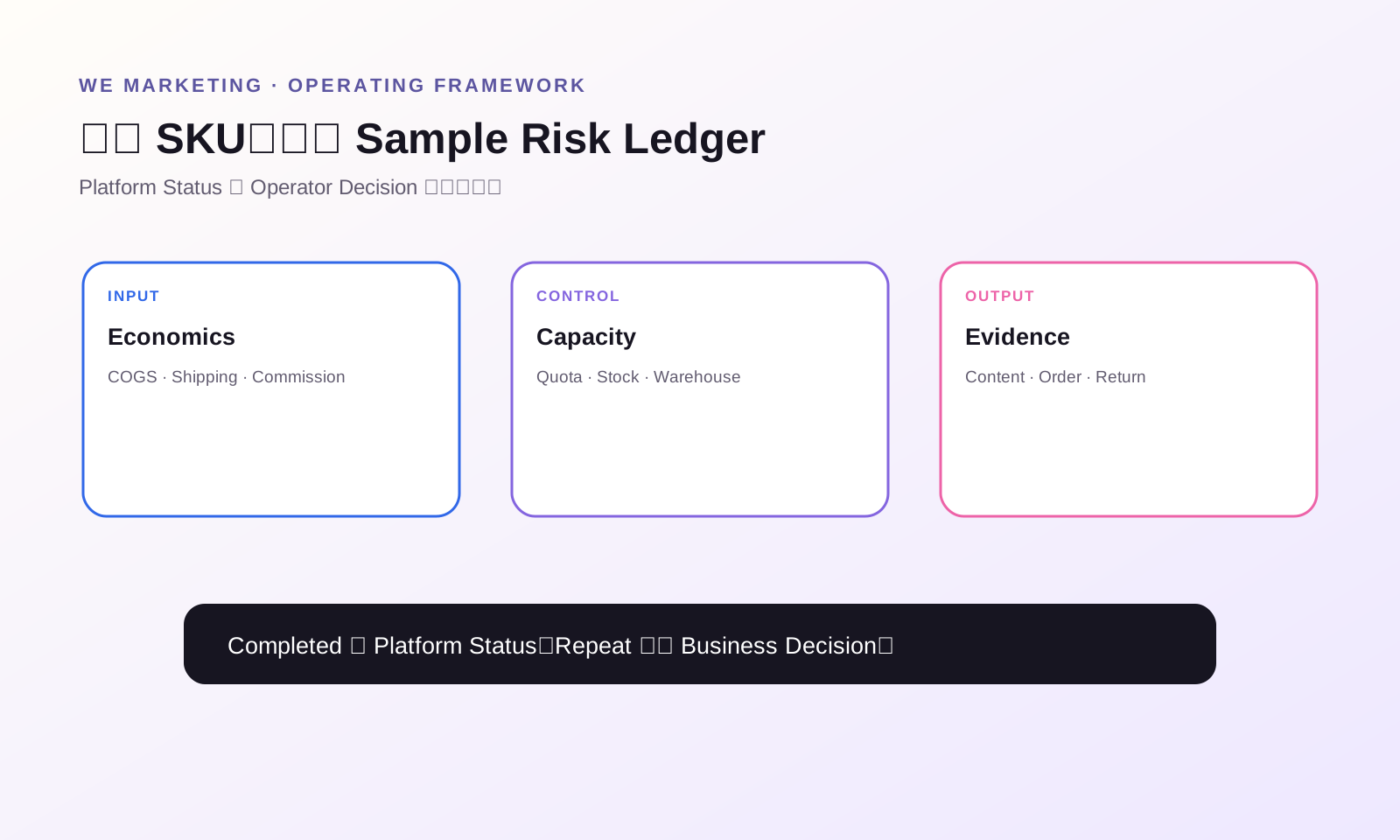
建一张 Sample Risk Ledger
| 字段 | 记录什么 | 为什么重要 |
|---|---|---|
| Job | Discovery、Education、Content Supply、Conversion 或 Relationship | 发货前定义成功 |
| Mode | Manual Free、Refundable、Custom Auto、Target Auto、Campaign 或 Auto-optimized | 避免混淆 Feature |
| Economics | COGS、Fulfillment、Commission、Refund Threshold、Cost Ceiling | 看见 Downside |
| Eligibility | Creator Evidence 与 Product Requirement | 解释谁可以进入 |
| Capacity | Sample Quota、Sellable Stock、Warehouse Capacity | 防止寄样伤害正常销售 |
| Milestone | Requested、Approved、Shipped、Delivered、Posted、Refunded | 找到卡点 |
| Result | Content Quality、Question、Order、Return、Next Decision | 把 Activity 变成 Evidence |
Platform 显示 Completed,只能说明某个义务完成,不代表 Content 一定有用、Economics 一定成立,也不代表这个 Creator 应该拿下一件样品。WEM Decision 必须单独记录。
所有模式都走同一套七步 Operating Sequence
1. 写清 Product 与 Sample Job。 2. 检查 Listing Truth、Inventory、Fulfillment、Claim 与 Economics。 3. 选择 Mode,并保存 Live Account 的准确设置。 4. 让 Creator 进入 Manual Review、Refundable 或已批准 Automation。 5. 按时发货,并提供简洁 Product Truth,不要求“必须正面评价”。 6. 追踪 Delivery、Content Obligation、Link、Shopper Response、Order、Return 与 Exception。 7. 决定 Scale、Repeat、Change Rule、Switch Mode、Redirect 或 Stop。
TikTok Shop 当前 Guide 通常要求 Free Sample Creator 在收货后 14 天内发布符合要求的挂车内容,并满足适用 Video 或 LIVE 条件。品牌可以用这个平台节点做 Baseline,再增加自己的 Content Quality 与 Economics Review。
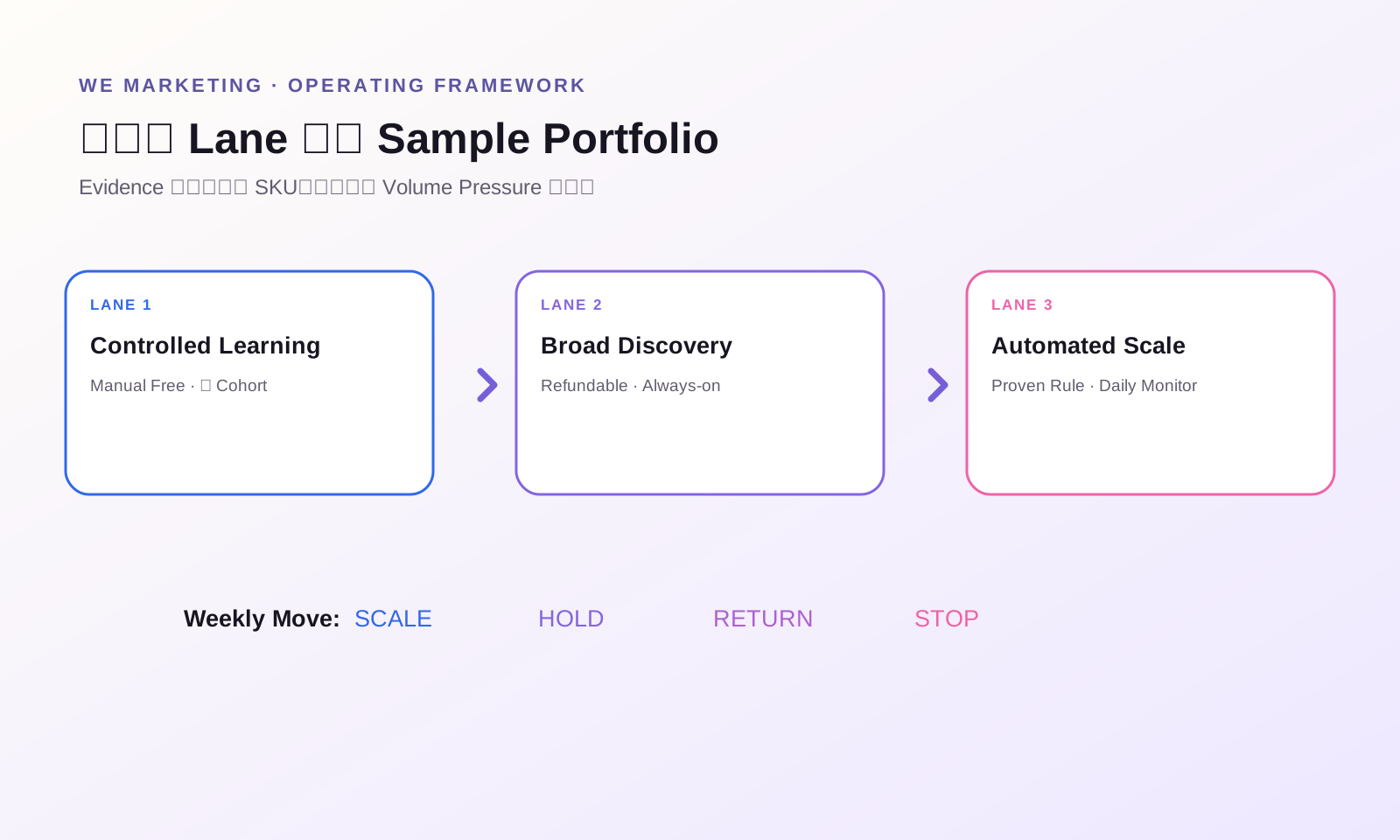
用三条 Sample Lane 管理 Portfolio
Lane 1:Controlled Learning
新品或 Creator Fit 不确定时,用人工审核 Free Sample。Cohort 保持小,重点学习 Creator 如何理解商品、Shopper 问什么、Listing 与 Brief 哪里失败。
Lane 2:Broad Discovery
商品已经 Commercial-ready 时,用 Refundable 给有意愿的 Creator 更宽入口。追踪 Refund Completion、Content Quality、Return 与 Support Need。
Lane 3:Automated Scale
Proven SKU 使用账户里准确可用的 Auto-approval Path。设置 Quota、Price、Inventory 与 Exception Control。如果 Stock、Fulfillment、Content Quality 或 Economics 变差,就退回 Manual。
每周按 SKU Review Lane Movement。Automation 不是永久身份,Evidence 变了,Lane 也应该改变。
Operational Example:一个 Hero Product,三条寄样 Lane
这是一个假设运营案例,不是 WEM 客户结果。
一个 Beauty Brand 有一款 $36 Serum。Listing 准确、Fulfillment 稳定,但商品刚上线,团队不知道哪个 Creator Angle 最有效。第一轮先人工审核 20 个 Free Sample,覆盖三种 Creator Profile,并记录 Delivery、Posting、Content Angle、Repeated Question、Attributed Order 与 Return。
第一轮发现 Routine 类 Creator 讲解清楚,Deal Account 虽然有 Click,但 Product Understanding 较弱。团队用重复问题修改 Listing 与 FAQ,再开启 Refundable,作为第一批之外 Creator 的 Always-on Discovery Path。
等 SKU 有稳定库存、Contribution 清楚、Creator Profile 可重复、仓库流程稳定以后,团队才设置一个有边界的 Auto-approval Rule,并用 Shop Quota 与 Price Limit 控制 Exposure。不符合 Rule 的 Request 继续进入 Manual Review。团队每天检查 Queue,每周对比 Manual、Refundable 与 Auto Cohort。
这个 Product 没有一开始就 Automation,因为当时最重要的问题不是 Speed,而是先获得足够 Evidence,写出安全 Rule。
最小下一步:30 分钟 Audit 一个 SKU
选择一个 Priority SKU。写下 Sample Job、COGS、Fulfillment Cost、Current Stock、Creator Evidence、Content Expectation 与 Maximum Exposure。然后打开 Affiliate Center,记录这个 Product 当前真实可用的 Free、Refundable 和 Automated Options。
下一轮只选一条 Lane。不要在这次 Audit 里开启 Catalog-wide Default。指定 Owner 和 Weekly Review Date。最小可用系统就是一个 SKU、一条 Rule、一个有边界 Cohort,以及一个 Evidence-based Next Decision。
常见问题
TikTok Shop Free Sample 和 Refundable Sample 有什么区别?
Free Sample 由 Seller 承担商品与履约成本,并通常经过 Seller 或 Platform Approval。Refundable Sample 由 Creator 先购买,满足适用 Sales Criteria 后再退款。两种模式分配 Product Cost 与 Performance Risk 的方式不同。
新品牌应该直接开启 Auto-approval 吗?
通常不应该全 Catalog 开启。先用小 Cohort 验证 Product、Creator Fit、Listing、Fulfillment 与 Economics。等 Proven SKU 的 Rule、Quota、Stock、Shipping、Monitoring 和 Stop Condition 都清楚以后,再考虑 Auto-approval。
所有 Auto-approved Sample 都是同一个 TikTok Shop 功能吗?
不是。当前美国站 Academy 资料区分 Seller 自定义 Rule、Target Flow 自动批准、Campaign Auto-approved Samples,以及面向合资格 Product 与 Seller 的 Auto-optimized Samples。必须先读 Live Account 里的准确 Feature 和 Control。
Creator 收到 Free Sample 后多久要发布内容?
TikTok Shop 当前 Seller 与 Creator Guide 通常写明,符合要求的内容需要在收货后 14 天内发布。具体 Obligation、Extension 与 Exception 应以该 Order 在 Manage Samples 或 Affiliate Center 的实时状态为准。
Refundable Sample 的 Sales Threshold 应该怎么设置?
从 Product Price、Contribution Margin、Expected Return、Creator Effort 和 Test Job 开始。TikTok Shop 当前 Seller Guide 的 Setup Flow 描述 1 到 3 个 Sales 的范围。上线前仍要确认 Live Range 与 Terms。
品牌寄样后应该追踪什么?
至少追踪 Request Source、Approval Mode、Shipment、Delivery、Content Obligation、Published Link、Content Quality、Shopper Question、Click、Order、Return、Full Sample Cost 和 Next Creator-product Decision。按 SKU 与 Mode 比较 Cohort,不要只看一个混合 Posting Rate。