TIKTOK SHOP U.S. · SHORT VIDEO
Localize TikTok Shop Short Video Content for U.S. Shoppers
WE Marketing Team · Sep 10, 2026 · 15 min read
Localization is a buyer-comprehension system, not an accent swap
Localizing TikTok Shop short video for U.S. shoppers means rebuilding the buying situation so a viewer can recognize the problem, understand the product, trust the demonstration, and reach the correct shopping destination without translating the brand's internal logic. A fluent English voiceover is not enough when the scene, proof, product variation, price language, pacing, or link asks the viewer to decode unfamiliar context.
The practical unit of localization is one buyer question answered with visible evidence. Who is this for? What does it do in an ordinary U.S. use case? Which exact item is shown? What will arrive? What condition applies to the price or offer? What should the viewer tap next? The script, demonstration, on-screen text, product link, listing, and fulfillment promise must answer the same question. If any element disagrees, the content is not localized even when every sentence is grammatically correct.
Start with the U.S. buying moment
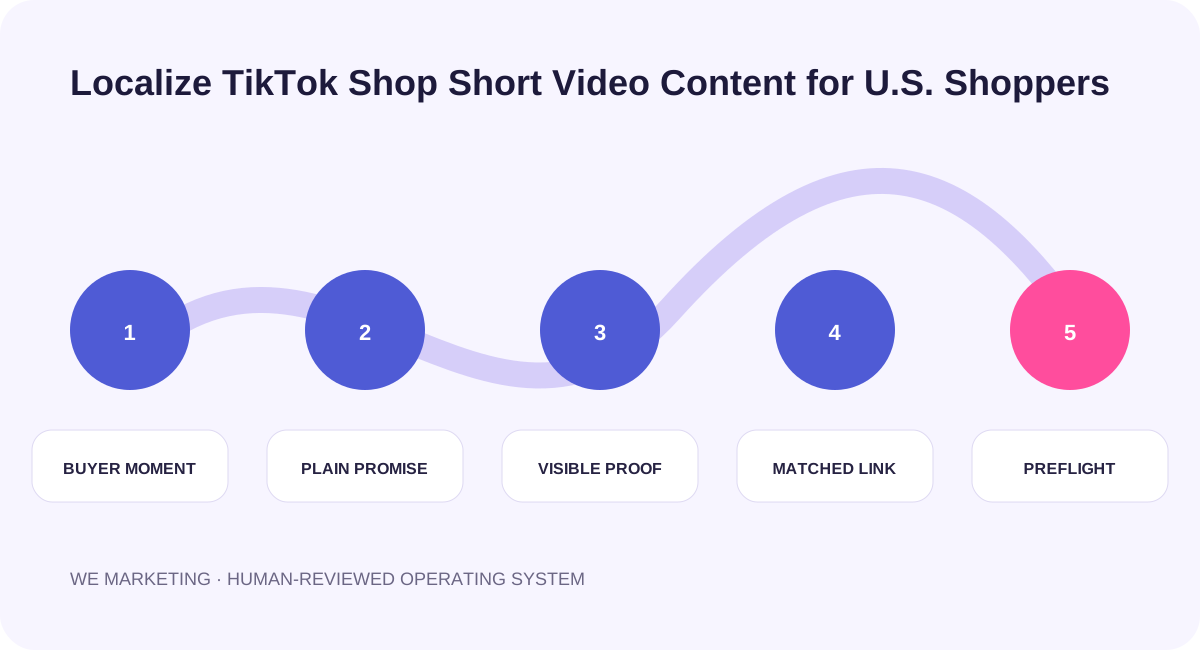
Begin with a real situation, not a translated feature list. Name the moment in which an American shopper would notice the problem: getting ready for work, packing a school lunch, organizing a small apartment, replacing a familiar household item, preparing for travel, or solving a recurring beauty routine. Then decide which part of that moment the product can truthfully improve. The opening should let the right viewer self-identify before the video asks for attention.
A good local brief records the audience, situation, tension, current workaround, visible proof, and next action in plain language. It also marks what the team does not know. Do not assume that a successful Chinese hook, platform phrase, holiday reference, measurement unit, home layout, beauty routine, or social norm carries the same meaning in the United States. Preserve the underlying customer truth, then rewrite the scene from the U.S. shopper's point of view.
This is where cultural judgment matters most. Local relevance does not require stereotypes, flags, forced slang, or pretending the brand was born in the United States. It requires familiar context and honest specificity. A brand can explain where it comes from while showing how the product fits the buyer's current life.
Translate the promise into plain buyer language
Write the first script in the language the shopper would use to describe the job, not the language a product manager uses to describe the specification. Replace internal category terms with a concrete observation, demonstration, or choice. A feature can stay in the video, but it should arrive after the viewer understands why it matters. If a phrase needs a long explanation before it sounds useful, the opening is carrying the wrong level of abstraction.
Keep the spoken line, caption, and visual proof synchronized. TikTok Shop's current quality guidance calls for clear audio, readable on-screen text, dynamic real-world content, visible people and physical products, and demonstrations from useful angles. Localization should make those elements easier to understand, not cover the screen with translated copy. Use short captions for the decision point and let the product demonstration carry the evidence.
Avoid borrowed U.S. slang unless the speaker naturally uses it. Forced idioms create distance and can hide important conditions. Plain English is usually stronger: name the product, show the use, state the verified benefit, and explain the relevant condition. The goal is not to sound maximally American. The goal is to make the buying decision unusually easy to understand.
Localize the demonstration, not only the words
The physical demonstration should match the shopper's environment and the actual product page. Show the exact size, quantity, color, material, included pieces, and intended use where they influence the decision. Use familiar units where useful, but do not convert a measurement casually if the delivered product or packaging uses a different standard. Put both units on screen when that prevents ambiguity.
Choose props and settings that explain scale and use without distracting from the product. A storage item can be shown in a realistic cabinet or apartment corner. A kitchen product can be shown with ordinary ingredients and portion sizes. A beauty product can be shown through a truthful routine without filters that exaggerate the result. The scene should answer a buyer question that the listing alone cannot answer well.
TikTok Shop requires the promoted product to match the listed product and discourages static, repetitive, or irrelevant promotional content. Treat that as a production control. Before publishing, compare the item in the frame, the spoken description, the on-screen text, and the linked product or shop destination. A polished video with a mismatched variation is still a broken shopping experience.
Choose the link that matches the video's promise
The destination is part of the creative. Current U.S. Seller University guidance allows eligible sellers to link a shop, category, collection, or individual product, and creators to link a showcase or product. Use a product link when the video demonstrates one item and makes a specific product promise. Use a broader shop, collection, category, or showcase destination only when the video genuinely presents a range or a broader brand story.
Do not use a broad destination to avoid deciding which product the video sells. The viewer should know what will happen after the tap. If the video compares several products, state the comparison and make the destination easy to navigate. If it focuses on one variation, the link should not send the shopper to a confusing assortment with no clear match. Preview the final anchor and confirm that its name, product state, and destination still agree with the published video.
The link decision also affects measurement. A single-product video can be evaluated against product views, clicks, and orders for that item. A shop or collection story may be better judged by qualified exploration across several products. Record the intended action before publishing so a broader path is not incorrectly labeled a conversion failure.
Build a U.S. proof hierarchy before writing the hook
Rank evidence by how directly it helps the shopper decide. First comes visible product truth: what the item is, how it works, what is included, and how it appears in ordinary use. Next comes supported context such as materials, dimensions, ingredients, care, compatibility, shipping, or offer conditions. Social proof and brand story can support trust, but neither should replace a useful demonstration.
Every claim needs an approved source. Do not turn a supplier phrase, translated testimonial, visual effect, or creator impression into a guaranteed outcome. Current promotional-content guidance emphasizes accurate product matching, original content, transparent pricing, and avoidance of misleading or digitally exaggerated results. If the product is regulated or the statement implies a medical, weight, safety, or performance outcome, route it through the appropriate review before the script is released.
A useful hook opens a decision gap that the rest of the video can honestly close. It can show a recognizable mistake, a surprising product detail, a comparison, or the first step of a demonstration. It should not promise a result the evidence cannot deliver. When the hook and proof are designed together, retention and trust reinforce each other instead of competing.
A hypothetical localization repair
Imagine a Chinese home brand translating a successful storage video word for word. The English is accurate, but the opening names a factory specification, the demonstration uses an unfamiliar cabinet layout, the measurements appear only in centimeters, and the video links to the whole shop. U.S. viewers may watch without knowing whether the product fits their shelf or which listing matches the item on screen.
The team rebuilds the video around one question: will this fit the narrow shelf beside a typical bathroom sink? It shows the exact unit next to a tape measure with inches and centimeters, demonstrates the door clearance, names the included pieces, and links the matching product variation. The caption states the verified dimensions instead of claiming it fits every bathroom. This is a hypothetical operating example, not a WEM client result. The improvement comes from reducing buyer interpretation, not from adding louder language.
Test one localization variable at a time
Separate the variables the team can learn from: buying situation, opening question, demonstration order, presenter, spoken wording, caption, offer framing, and destination. Keep the product, price, inventory, and distribution conditions stable where possible. When several creative elements change at once, a better result does not tell the team which local decision worked.
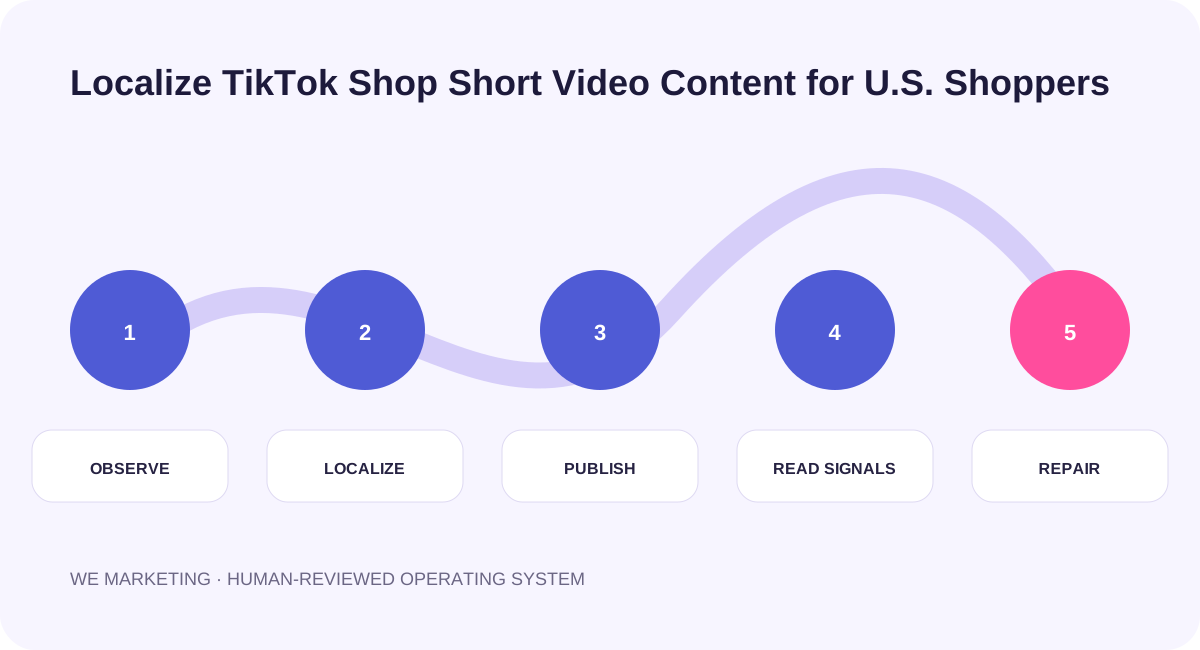
Read the sequence rather than one headline metric. Reach shows whether the video entered enough feeds to observe. Early retention tests whether the situation and first proof were understandable. Comments reveal missing language or buyer objections. Product clicks test whether the item and destination were clear. Orders and downstream issues test whether the promise survived the product page and fulfillment path. Save exact viewer wording where privacy and policy allow because it is a better input for the next script than a generic request to make the content more local.
Stop and repair when the product shown does not match the link, a price condition is outdated, a claim lacks support, captions conflict with speech, or the setting makes the intended use misleading. Those are not creative preferences. They break the buyer path or introduce policy risk.
Run a six-point localization preflight
Before the next U.S. short video goes live, review six items on one page: the named buyer situation, the exact product and variation, the first visible proof, plain spoken and written language, the current offer conditions, and the final product, shop, collection, or showcase destination. Watch the export once without sound and once without captions. Then open the live destination and confirm that the item, units, price language, and promise still match. Publish only when a U.S. shopper can understand the decision without translating the brand's internal context.
Source notes
This original WEM operating framework draws on complete current TikTok Shop U.S. Seller University material revalidated September 10, 2026: official source 1, official source 2, official source 3, official source 4, official source 5. The official material establishes current product-linking, video-quality and promotional-content requirements. WEM adds the buyer-situation, proof hierarchy, localization test and release discipline. Interface paths, availability, thresholds and policies can change. Verify the current U.S. Seller Center, exact product state and qualified legal or compliance guidance where required before execution.
Frequently asked questions
Is localization the same as translating a Chinese script into English?
No. Translation changes language. Localization aligns the buying situation, product proof, units, wording, offer conditions, destination, and customer expectation for the U.S. shopper while preserving accurate product truth.
Should every U.S. video use an American creator or U.S. slang?
No. Credibility comes from natural delivery, familiar context, and useful proof. Forced slang or a performed identity can reduce trust. Choose a presenter who can explain the product clearly and authentically.
When should a video link one product instead of a shop or showcase?
Use a product link when the video focuses on one exact item or variation. Use a shop, category, collection, or showcase when the content genuinely presents a range and the broader destination matches the promise.
Should measurements appear only in inches?
Use the units that prevent buyer confusion. Inches may be more familiar for many U.S. shoppers, but showing both inches and centimeters is useful when packaging, specifications, or cross-border operations use metric units.
What should stop a localized video from publishing?
Stop when the item and link do not match, an offer condition is outdated, a claim lacks support, captions conflict with speech, the product is unclear, or the setting creates a misleading use case.
What is the smallest useful localization test?
Keep the product, offer, and distribution conditions stable. Change one buyer-facing variable, such as the opening situation or demonstration order, then compare retention, questions, clicks, orders, and downstream issues.