TIKTOK SHOP U.S. · PRODUCT COMPLIANCE
TikTok Shop Product Compliance Preflight: Prohibited, Restricted, Prop 65 or CPSC?
WE Marketing Team · Sep 4, 2026 · 15 min read
Direct answer: classify the product before building the listing
Do not begin with the listing form. Freeze the exact product and decide whether it is prohibited, restricted or generally permitted in the United States. Then resolve category qualification, federal and state obligations, required documents, product-page accuracy and every public claim. If the team cannot prove the classification or a required approval, the safe state is hold, not publish.
This preflight is different from a copy review. It asks whether the exact item can be sold, under what conditions, with which evidence and with which warnings or limitations. An item that is legal or sold on another marketplace is not automatically eligible for TikTok Shop. Platform acceptance also does not replace the seller's responsibility to follow applicable law.
Freeze product identity before searching policy
Record the brand, model, formulation, ingredients or materials, intended use, age range, size, quantity, condition, package contents and every variation. Photograph the actual packaging and label. Connect the supplier record and the exact unit that fulfillment will send. A broad name such as accessory, cosmetic or wellness product can hide the fact that changes the policy or legal pathway.
Treat variations as separate when the relevant evidence differs. A new formula, size, age claim, electrical component or included accessory can change the analysis. Do not reuse a certificate because the product names look similar. The preflight row should show which document covers which offered unit, who verified the match and when the evidence was last checked.
Gate 1: prohibited means do not list
Check the current U.S. prohibited-products policy using the exact product identity. TikTok Shop states that prohibited products cannot be listed under any circumstances. The official guide includes illegal, stolen, counterfeit or gray-market, recalled, unsafe and sanctioned or import-blocked items among the core risk families. If the product falls inside a prohibition, stop the listing project rather than trying a different category or softer title.
A rejection is not a prompt to submit the same item again without changes. Read the exact message, identify whether the problem is the product itself, the category, the evidence or the listing representation, and record the reason. Appeal only when the seller believes the item was flagged incorrectly and can support that position. Repeated blind submission can add account risk without answering the underlying question.
Gate 2: restricted products need the right qualification path
Restricted is not the same as prohibited. A restricted product may be sold only when the seller, product and documentation meet the current pathway. Open the relevant restricted-products policy and Seller Center qualification surface. List every required approval, certificate, test, registration, label or seller condition. Keep the product on hold until the exact account and item show the required state.
Do not borrow another seller's approval, use a supplier's general assurance as a platform qualification or assume a prior category approval covers a new formula. Qualification is evidence tied to the product and account. Record the submitted version and terminal result. An upload confirmation proves only that a file moved; it does not prove the qualification was accepted.
Gate 3: resolve CPSC, Prop 65 and other legal duties
Map the product's actual characteristics and sales destination to applicable federal and state duties. Depending on the item, that may involve CPSC product-safety requirements, FDA rules, labeling, recalls, hazardous materials, California Proposition 65 warnings or other obligations. This article is an operating framework, not legal advice. Questions with legal consequence should be reviewed by qualified counsel or the appropriate compliance professional.
Create a legal-evidence column separate from the platform column. TikTok Shop approval does not prove that a warning, test or registration is legally sufficient. Likewise, a legal opinion does not automatically create platform access. Release requires both pathways where both apply. Save the current record, decision owner, market and effective date so a future policy or product change triggers a new review.
Gate 4: make the PDP match the evidence
Compare the final title, category, images, brand, condition, quantity, materials, dimensions, ingredients, warnings, variations and delivered unit with the approved product record. The page must not imply a different product, omit a material limitation or show an accessory that is not included. The category should describe the item truthfully, not serve as a workaround for a qualification problem.
Use a side-by-side preflight before bulk publication. One reviewer reads the evidence and another follows the buyer path from search result to checkout. Check that the selected variation, image, price and package quantity stay consistent. A product may be generally permitted but still have a misleading or noncompliant product page. Product eligibility and PDP truth are two separate gates.
Gate 5: control claims across listing and content
Separate observable product facts from medical, performance, comparative, safety, environmental or guaranteed-result claims. Connect each approved claim to its substantiation, scope and exact wording. If a statement cannot be supported for the offered product and intended use, remove it. Do not allow an AI draft, creator paraphrase or campaign headline to strengthen the claim beyond the evidence.
The claims library must cover the full public system: title, bullets, image text, video captions, LIVE scripts, creator briefs, paid creative and customer-service macros. A cautious product page does not protect the seller when a creator promises a cure or guaranteed result. Route corrections to the earliest source and notify every downstream owner using the old wording.
Gate 6: submit once, then read the exact state
Submit the approved product and evidence package with version control. Save the product ID, category, document names and submission time. Then read the terminal state in Seller Center. If rejected, capture the reason before changing anything. Decide whether the correct action is evidence repair, PDP correction, category correction, appeal or permanent stop.
Completion requires more than a successful upload or a page that briefly appears. Verify the live product, variation, claims and warnings, and confirm that fulfillment can ship the exact unit shown. Keep open issues visible until they reach a named terminal state. This prevents a bulk catalog project from hiding one dangerous exception inside a large number of successful rows.
A preflight decision tree for operators
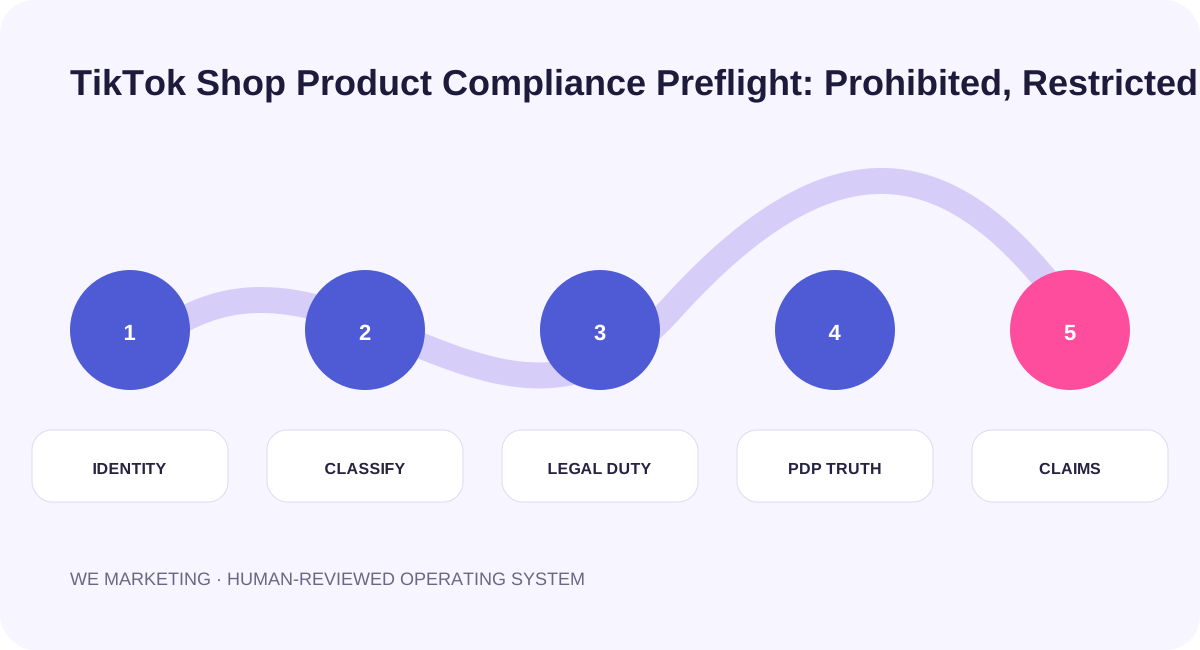
Ask the questions in order. Is the exact item prohibited? If yes, stop. If no, is it restricted? If yes, obtain the current qualification before continuing. What federal, state and category duties apply? Which documents cover the exact unit? Does the PDP match those facts? Are all public claims supportable? Only after every hard gate is closed should the release owner approve publication.
Keep optimization questions out of the hard-gate meeting. Keyword opportunity, creative quality and conversion potential matter only after the team knows the product may be sold and represented truthfully. Mixing growth ideas into the classification review creates pressure to reinterpret evidence. Compliance determines the available path; marketing chooses how to operate inside that path.
Keep a short change log after the initial release. A supplier may replace packaging, update a component, or revise a formula while the commercial SKU name stays the same. Ask the purchasing owner to flag those changes before new stock reaches fulfillment. Compare the changed product with the evidence that supported the original listing, then decide which checks need to be repeated. This also helps the content team retire images or statements that no longer match the item. A previously accepted listing should not become a permanent exemption from reviewing a materially changed product.
Hypothetical children's accessory example
A hypothetical seller wants to list a children's accessory already sold elsewhere. The product name looks ordinary, but the intended age and physical design create a safety-document question. The team freezes the exact model, packaging and included parts, checks the prohibited and restricted policies, and routes the CPSC question to qualified review. Marketplace history is treated as context, not approval.
The reviewer discovers that a supplier certificate names a different model and that the proposed hero image says completely safe. The listing remains on hold. The seller obtains matching evidence, removes the unsupported guarantee, verifies any required warning and then prepares the PDP. The extra time is not a delay caused by compliance. It is the work required to know what can honestly be sold.
Smallest useful next action
Choose one proposed SKU and create a seven-field preflight row: exact product identity, prohibited check, restricted pathway, federal and state duties, required evidence, approved claims and release owner. Attach the current sources and mark any missing required field unknown. Keep the item on hold until the hard-gate unknowns are resolved.
Source notes
This original WEM operating framework draws on complete current TikTok Shop U.S. Seller University material revalidated September 9, 2026: official source 1, official source 2, official source 3. The official material establishes the current platform capabilities, eligibility, policy or measurement context used here. WEM adds the decision gates, ownership, economics, stop rules and readback discipline. Interface paths, availability, thresholds, attribution and policies can change. Verify the current U.S. Seller Center, the exact account state and qualified legal or compliance guidance where required before execution.
Frequently asked questions
What is the difference between prohibited and restricted?
A prohibited product cannot be sold under any circumstances. A restricted product may be sold only when the current seller, item and documentation meet the required pathway.
Does approval on another marketplace prove TikTok Shop eligibility?
No. Each marketplace has its own policies and qualification process. Check the current U.S. TikTok Shop rules for the exact product.
Does TikTok Shop approval prove legal compliance?
No. Platform approval does not replace federal, state or local legal obligations. Use qualified advice when the question has legal consequences.
What should we do after a listing rejection?
Read and save the exact reason, repair the actual evidence or PDP problem, and resubmit only after a material correction. Appeal only when the flag appears incorrect and evidence supports that position.
Can one certificate cover every variation?
Only when the certificate and supporting record clearly cover those exact variations. A formula, model, age, size or component change may require separate evidence.
When is the preflight complete?
When every hard gate is resolved, the release owner approves the exact package and the live product is read back against the approved identity, claims and warnings.