TIKTOK SHOP U.S. · PRICING STRATEGY
Price for Discovery, Margin and Repeat Purchase: A TikTok Shop Decision Framework
WE Marketing Team · Sep 18, 2026 · 15 min read

Direct answer
Do not choose a TikTok Shop price by copying the cheapest visible competitor or by maximizing a single campaign conversion rate. Set a defensible everyday price for the exact unit, calculate the seller-funded floor, check what shoppers actually see after promotions and shipping, then test whether the first order leaves a credible reason to return. Discovery, contribution and repeat purchase are separate questions that must agree on one truthful offer.
A price architecture is the controlled relationship among the exact product unit, everyday listing price, legitimate reference price, seller-funded promotion, platform-funded benefit, shipping charge, creator message, contribution after variable costs and the future purchase path. It is not a single sticker price. Each price state needs an owner, start and end time, source of funding, buyer-facing readback and stop rule.
The operating question is never “what can the tool do?” It is “what decision can the team safely make from current evidence, and who owns the readback?”
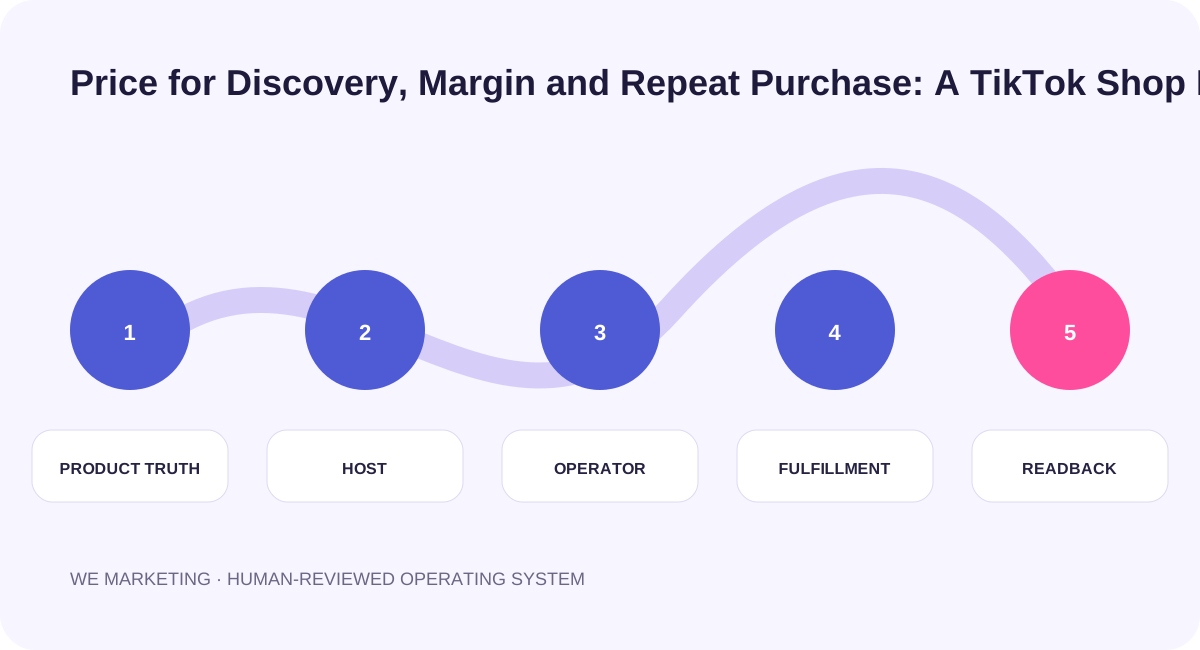
Why truthful unit and anchor comes before execution
The lowest displayed variant can promise a different or smaller product than the shopper expects. That is why the first operating move is specific: Define the exact SKU, pack size and delivered unit before comparing prices. Keep materially different products in separate listings, and do not create a cheap placeholder variation or inflate a reference price to manufacture a discount. The evidence is equally specific: Physical unit, variant map, listing image and title, genuine selling-price history, current U.S. pricing policy. A fast interface cannot repair a wrong classification or an unverified starting point. It can only execute the team's assumption more quickly.
This article therefore treats truthful unit and anchor and discovery value proposition as connected release gates. The team does not advance because a recommendation looks confident or a dashboard tile turns green. It advances when the exact object is known, the current account evidence supports the action and the consequence of being wrong is inside a written guardrail.
The evidence packet for this decision
Build one packet from the evidence families used across this workflow: Physical unit, variant map, listing image and title, genuine selling-price history, current U.S. pricing policy. Comparable specifications and packs, search or Shop Tab card, buyer comments, product-card clicks and current shipping display. SKU cost sheet, active fee and commission terms, promotion funding, shipping economics, return assumptions and minimum contribution approved by finance. These records answer different questions and should not be collapsed into one score. Platform evidence describes access and observed state. Brand evidence describes product truth, cost, stock, staffing and what the customer can actually receive.
Keep the later-stage records beside them: Current Seller Center registration and stacking view, price estimator, active promotion calendar, exact variant and start/end times. Approved creative, product anchor, current buyer price, coupon expiry, repeat-order cohort, customer feedback and next-order offer economics. Before/after screenshots, live checkout, order-level funding and contribution, inventory, return data, cohort definition and named decision owner. Mark unavailable facts as unknown, with an owner and resolution date. If the missing fact affects product identity, permission, customer safety, sellable inventory, fulfillment or the economic floor, it is a stop condition. If it only limits confidence in an optimization idea, the team may choose a smaller reversible test.
1. Truthful unit and anchor
Operating move: Define the exact SKU, pack size and delivered unit before comparing prices. Keep materially different products in separate listings, and do not create a cheap placeholder variation or inflate a reference price to manufacture a discount.
Required evidence: Physical unit, variant map, listing image and title, genuine selling-price history, current U.S. pricing policy.
Failure mode: The lowest displayed variant can promise a different or smaller product than the shopper expects.
Before closing this gate, assign one owner and one readback time. Save the exact page, asset, product, session or order identifier. If the live state differs from the approved state, stop the sequence, record the exception and repair the earliest broken handoff rather than compensating later with more traffic, discount or content.
2. Discovery value proposition
Operating move: Compare like-for-like products and identify the buyer question the price must answer. Test whether the card explains size, quality, delivery and value before assuming that a lower number is the only way to win a click.
Required evidence: Comparable specifications and packs, search or Shop Tab card, buyer comments, product-card clicks and current shipping display.
Failure mode: A low click-through rate may come from unclear value or a misleading unit, not necessarily an expensive product.
Before closing this gate, assign one owner and one readback time. Save the exact page, asset, product, session or order identifier. If the live state differs from the approved state, stop the sequence, record the exception and repair the earliest broken handoff rather than compensating later with more traffic, discount or content.
3. Contribution floor
Operating move: Model the seller earnings and variable costs for the exact SKU and channel. Include seller-funded markdowns, coupons, creator commission, paid acquisition, fulfillment support, payment and platform fees, expected returns and service cost.
Required evidence: SKU cost sheet, active fee and commission terms, promotion funding, shipping economics, return assumptions and minimum contribution approved by finance.
Failure mode: GMV and order volume can rise while every incremental order loses money.
Before closing this gate, assign one owner and one readback time. Save the exact page, asset, product, session or order identifier. If the live state differs from the approved state, stop the sequence, record the exception and repair the earliest broken handoff rather than compensating later with more traffic, discount or content.
4. Promotion stack and campaign gate
Operating move: Before registering or publishing a deal, inspect the current campaign price range, estimated shopper price and discount breakdown. Separate seller-funded from platform-funded benefits, and check cart promotions, coupons and SKU-specific prices.
Required evidence: Current Seller Center registration and stacking view, price estimator, active promotion calendar, exact variant and start/end times.
Failure mode: A campaign price that looks safe alone can become a much lower buyer price after eligible offers stack.
Before closing this gate, assign one owner and one readback time. Save the exact page, asset, product, session or order identifier. If the live state differs from the approved state, stop the sequence, record the exception and repair the earliest broken handoff rather than compensating later with more traffic, discount or content.
5. Content and repeat-purchase promise
Operating move: Make creator and merchant content describe a price that is currently obtainable for the featured unit. Prefer durable benefit language when a video may outlive a coupon. Judge repeat potential from product experience, replenishment timing and honest bundle value, not from an assumed lifetime-value number.
Required evidence: Approved creative, product anchor, current buyer price, coupon expiry, repeat-order cohort, customer feedback and next-order offer economics.
Failure mode: An expired price claim or forced subscription promise can erode trust and disconnect first-order conversion from repeat value.
Before closing this gate, assign one owner and one readback time. Save the exact page, asset, product, session or order identifier. If the live state differs from the approved state, stop the sequence, record the exception and repair the earliest broken handoff rather than compensating later with more traffic, discount or content.
6. Release and readback
Operating move: Release one controlled price or offer change, verify the live card and checkout for the intended SKU and eligible shopper, then compare qualified clicks, orders, contribution, refunds and repeat behavior over an appropriate window.
Required evidence: Before/after screenshots, live checkout, order-level funding and contribution, inventory, return data, cohort definition and named decision owner.
Failure mode: A submitted promotion or rising GMV is not proof that the buyer saw the intended price or that the business kept the intended margin.
Before closing this gate, assign one owner and one readback time. Save the exact page, asset, product, session or order identifier. If the live state differs from the approved state, stop the sequence, record the exception and repair the earliest broken handoff rather than compensating later with more traffic, discount or content.
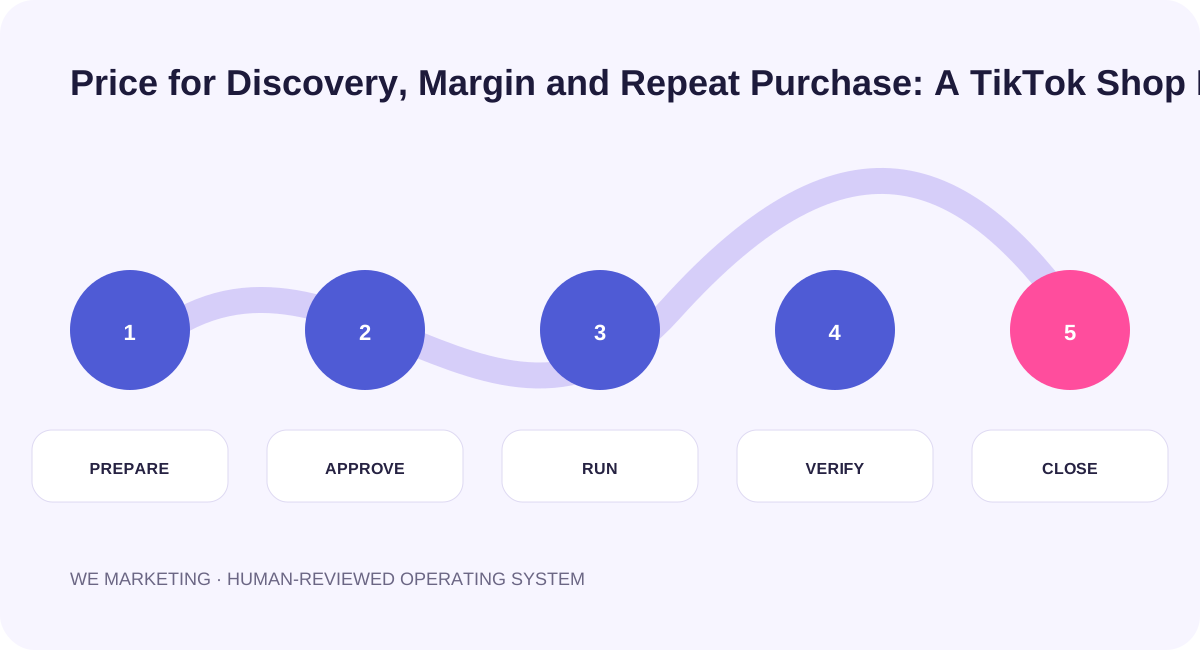
Tradeoffs and stop rules for content and repeat-purchase promise
The central tradeoff is between contribution floor and content and repeat-purchase promise. Moving early may capture demand or learning, but it also exposes the failure mode already named in the workflow: An expired price claim or forced subscription promise can erode trust and disconnect first-order conversion from repeat value. Waiting for perfect information may waste a time-bound opportunity. The practical answer is not maximum speed or maximum caution. It is the smallest release whose downside the owner can observe and stop.
Write stop rules from the actual failure modes: The lowest displayed variant can promise a different or smaller product than the shopper expects. A low click-through rate may come from unclear value or a misleading unit, not necessarily an expensive product. GMV and order volume can rise while every incremental order loses money. A campaign price that looks safe alone can become a much lower buyer price after eligible offers stack. An expired price claim or forced subscription promise can erode trust and disconnect first-order conversion from repeat value. A submitted promotion or rising GMV is not proof that the buyer saw the intended price or that the business kept the intended margin. Convert the relevant conditions into observable thresholds and give one person authority to pause. The rule should also name the safe state after a stop, such as hold the product, end paid support, remove the item from the session, repair the listing or reconcile affected orders.
Hypothetical operating example
A hypothetical skincare seller offers one 30 ml serum at an everyday price of $28. A competing card appears to start at $18, but that listing includes a 10 ml travel unit. The team compares equal units and improves the first image to show size and routine role rather than immediately cutting price. For a creator test, it models a $3 seller coupon, commission, shipping support and expected returns against an approved contribution floor. The campaign estimator then shows that an additional cart offer can stack, so the seller narrows the eligible SKU and removes an overlapping seller coupon before launch. The creator says the exact live offer and its end time. After orders arrive, the team compares contribution and return rate, then checks whether buyers of the 30 ml unit return when it would reasonably be used up. The example demonstrates a decision process, not a claim that $28 is an optimal market price.
This example is illustrative, not a WEM client result. The point is the decision sequence: classify the object, gather current evidence, separate hard gates from optimization choices, release the smallest defensible action and verify the named live state. If the conditions change materially, the team starts a new comparison rather than forcing the result into the old test.
Review the six gates as one sequence
The review order is Truthful unit and anchor, Discovery value proposition, Contribution floor, Promotion stack and campaign gate, Content and repeat-purchase promise, Release and readback. Keep one active row for each unresolved gate and connect it to the exact product, event, campaign or decision. A row is pending when its required evidence is missing, blocked when a named condition prevents safe work, released when the approved action is visibly live and verified only after release and readback closes the consequence.
The weekly decision must be topic-specific. Close the row as repeat when the same controlled conditions should run again, repair when an earlier gate failed, expand when comparable evidence supports more exposure, monitor when no action is currently justified or stop when the risk or economics no longer support the path. A draft, upload, submission or recommendation cannot close this sequence.
Smallest useful next action
Choose one live SKU. Record its exact delivered unit, everyday price, current shopper checkout price, every discount and funding owner, variable cost and contribution floor, then inspect one live product card and one eligible checkout. If any price or unit differs from the approved record, repair it before adding reach or another promotion.
Source notes
This original WEM price-architecture framework draws on current U.S. Seller University guidance on Your Guide to Product Pricing, Fair Pricing Policy, Campaign Price Transparency and Setting the Price that May Work for Your Product, revalidated September 18, 2026. The official sources describe truthful listings, seller-visible campaign ranges, possible promotion stacking and price-positioning tools. WEM adds the contribution-floor and repeat-purchase decision gates. Platform rules, promotion eligibility, funding and interface paths can change. Verify the current U.S. Seller Center and exact SKU before acting.
Frequently asked questions
Should we match the lowest visible competitor price?
Not before confirming the same delivered unit, variant, specifications, shipping and offer period. A low starting price can represent a smaller or different product.
Is the campaign sale price the final shopper price?
Not always. Eligible cart offers and coupons may stack. Inspect the current estimated campaign price and its breakdown for the exact SKU.
Does a lower first-order price guarantee repeat purchase?
No. Repeat depends on product experience, the natural replenishment cycle, service and a credible next-order value proposition. Measure a defined cohort rather than assuming lifetime value.
May a creator quote a short-lived promotional price?
Only when it is accurate for the featured product and intended viewers at that time, with the offer boundary clear. Review persistent videos when the price expires.
What if the promotion improves GMV but misses the contribution floor?
Stop or repair the seller-funded offer according to the approved rule. Review discount stacking and variable costs before buying more reach.
What is the smallest useful action today?
Audit one exact SKU from listing through eligible checkout and reconcile each discount with its funding owner and contribution floor.