TIKTOK SHOP U.S. · LIVE DIAGNOSIS
Diagnose a TikTok Shop LIVE Funnel Before You Buy More Traffic
WE Marketing Team · Sep 5, 2026 · 15 min read

Find the first broken transition
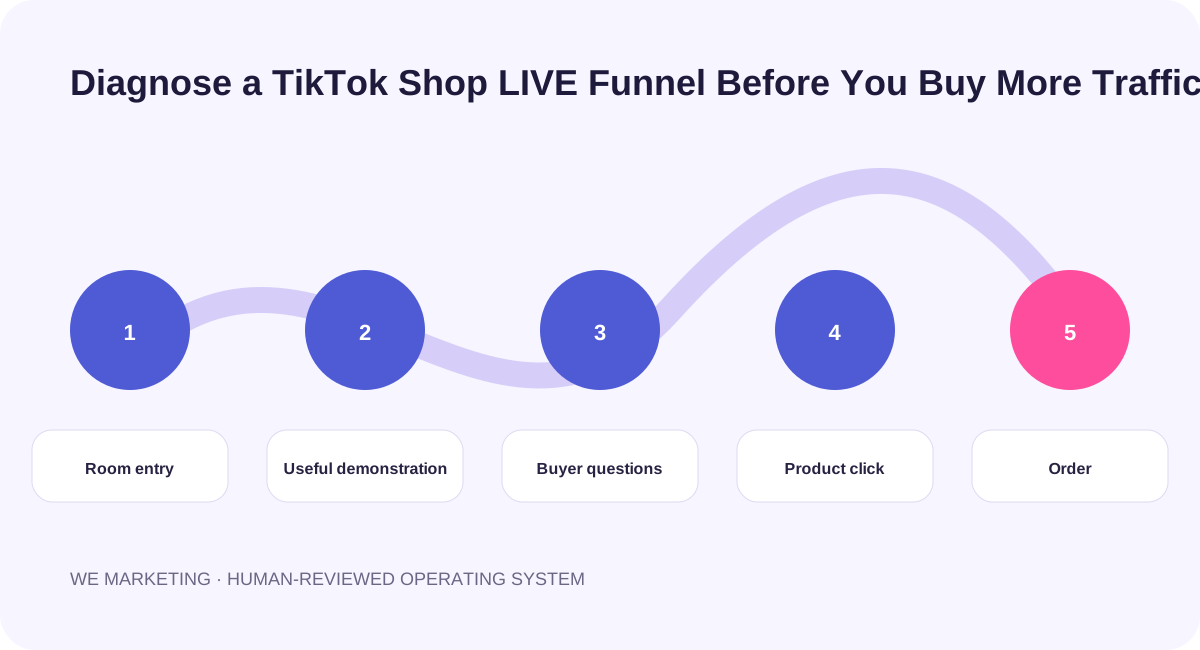
A quiet TikTok Shop LIVE does not automatically need more traffic. Start with the first place where a potential buyer stops moving: entering the room, staying for the demonstration, asking a useful question, opening the product, or completing an order. Fix the earliest weakness you can actually support with evidence. A bigger audience will not correct an unclear demonstration or an unavailable variant.
That does not mean waiting for perfect sales before testing paid distribution. A promising demonstration with limited reach can deserve a small, bounded test. The distinction is whether you know what you are testing. Buying more viewers to learn whether a clear product story travels is a decision. Buying more viewers because yesterday felt slow is a guess.
Make two sessions comparable before judging either
Start your review with the session date, duration, lead product, offer, host, traffic mix, and available inventory. A three-hour sale featuring a discounted bestseller is a poor baseline for a one-hour launch of an unfamiliar item. If those conditions changed, write them beside the result. Otherwise the team may credit a new script for a discount, or blame a host for a stock problem.
Keep the units visible. Views, unique viewers, clicks, orders, and units sold answer different questions. Copy the metric name and definition from the surface you are using instead of joining percentages that happen to share an abbreviation. An ad click is not automatically a product-card click inside the room. A person may return, click more than once, or purchase several units.
TikTok's creator analytics provides session and product performance views, including traffic and conversion information. Use that reporting to find a segment worth reviewing, then pair it with the replay. A small room needs particular patience: one order from ten observed clicks and ten orders from one hundred clicks may produce the same simple ratio, but they do not provide the same amount of evidence. Record the counts and look for a repeatable pattern before declaring a winner.
Low reach and weak room entry are different problems
When few people see the LIVE, first check the observable basics: whether the stream was running as intended, whether sound and picture were usable, whether the relevant account surface shows a restriction, and whether the planned traffic source was active. A low number alone does not identify an algorithm penalty. If a warning exists, review that specific warning rather than inventing a creative explanation for a delivery issue.
When exposure exists but people do not enter, inspect the promise visible before entry. Can someone understand the product and the reason to watch from the scene they encounter? A host arranging boxes while describing a future giveaway gives a different invitation from a close demonstration of a problem being solved. Review the actual incoming view and the supporting short video, where available.
Short video and LIVE should form a coherent shopping experience. If the video promises a space-saving kitchen solution, the room should make that solution easy to find. Sending that viewer into an unrelated product discussion can waste the interest the video created. Test a clearer entrance promise while keeping the product and offer stable enough to understand the result.
If viewers leave early, move the useful moment forward
People entering halfway through a broadcast did not hear the opening explanation. They need a quick orientation: what the product is, which problem it addresses, and what they are about to see. Review the moment a new viewer actually encounters, not only the opening five minutes that the team rehearsed.
For a storage product, show the drawer before and after arranging it. For a beauty item, use an appropriate, truthful demonstration that lets the viewer see application or texture without unsupported outcome claims. Remove dead time between explaining the problem and showing the product in use. Check whether the camera can capture the detail the host is describing.
Watch-duration data helps locate a retention problem; it does not explain the cause by itself. Mark replay timestamps for product changes, long introductions, off-camera preparation, and confusing demonstrations. Choose one plausible interruption to remove. Repeating the same sales phrase more loudly is unlikely to fix a scene that still does not show why the product matters.
Use questions to uncover purchase friction
A lively comment feed can hide a weak shopping conversation. Separate greetings and giveaway responses from questions about size, materials, compatibility, use, delivery, and value. The latter reveal what someone needs to know before deciding. A quiet audience is not proof of weak demand either; some viewers prefer to watch and open the product without commenting.
Give the host one concrete question to answer through demonstration. For a drawer organizer, ask viewers which type of drawer they want to organize, then show how the item fits and what measurements they should check. Avoid turning the broadcast into a questionnaire. The answer should lead back to a useful product explanation.
If the same objection returns, change the explanation where buyers encounter it. Repeated questions about what comes in the package may indicate that the host, product image, or pinned item makes the bundle ambiguous. Save a short list of recurring buyer questions after the session. It is more useful for the next script than a total comment count on its own.
Good attention with few product clicks needs a clearer bridge
When people stay but rarely open the product, check the connection between what is being shown and what is available to buy. Is the exact item visible in the shopping surface? Does the host name the relevant variant? Can the viewer distinguish the demonstrated set from an accessory or a different pack size? Verify the current room and listing rather than relying on a preparation checklist.
Then inspect the buying reason. A satisfying demonstration can entertain without explaining fit, price, contents, or the next step. Add a short bridge after the useful moment: identify the item, explain whom it suits, and point to the matching product card. Do not ask for a click before giving the viewer enough information to care.
Start with one to three hero products rather than making a new viewer decode a large catalog. If the room jumps among four similar variants, the viewer may lose track of the one that solved their problem. Concentration makes the demonstration easier to follow and the resulting product data easier to interpret.
Clicks without orders call for a buying-path review
Open the exact product and variant a viewer was asked to buy. Check availability, package contents, displayed price, applicable offer, delivery information, and the consistency between the demonstration and listing. A compelling room cannot sell a sold-out preferred variant. A buyer who discovers a different pack size after clicking may leave even when the headline price looked attractive.
Review the unanswered questions on the listing. Does it show useful dimensions? Is there enough credible information to understand the product? Do the images represent the item being demonstrated? A missing detail can be a better next fix than a larger discount. Reducing price before identifying the obstacle spends margin without necessarily removing the reason buyers hesitate.
Also check whether your expectations match the purchase. A familiar low-cost accessory and an unfamiliar product that requires trust will not generate the same decision process. Compare against your own relevant sessions and products, with the counts visible. Do not label a host ineffective because one high-consideration item did not behave like a previous impulse purchase.
Use paid traffic to answer a defined question
Before adding spend, state the hypothesis in one sentence. For example: this demonstration holds attention and creates specific product questions, but it has not received enough relevant exposure to judge conversion. Set a spending limit, select the observation period, and decide which signals would justify continuing. The test may be worthwhile before a perfect return metric appears; it should still have a limit and a learning objective.
Keep attribution separate from incremental impact. TikTok's current LIVE GMV Max documentation says its reporting includes paid and organic conversions within the selected LIVE. The platform's reported ROI therefore should not be presented as proof that advertising alone created every reported order. Keep the exact reporting window and metric definition with any comparison.
Judge expansion using the business as well as the room. Consider contribution after product cost, relevant fees, commissions, fulfillment, discounts, and returns, alongside the reliability of the evidence. Confirm that stock and the team can support additional demand. A higher gross sales number can coexist with a weaker economic result. A bounded learning test and a decision to scale are different commitments.
A hypothetical review: attention drops before the product is clear
Consider an illustrative home-goods session, not a WEM client result. Reach is similar to recent comparable sessions, but watch duration and product clicks weaken. In the replay, the host starts each segment with brand history and introduces four organizer sizes before showing a drawer. The team cannot conclude that the product is unwanted from this sequence alone.
For the next comparable segment, feature one organizer, show the drawer problem immediately, and demonstrate the fit before explaining the broader range. Keep the offer, pinned item, and planned traffic source consistent where practical. Record any unavoidable changes. The primary question is whether moving the demonstration earlier improves attention; product interest is the next observation.
If attention improves but clicks remain weak, inspect the product-card bridge next. If clicks improve but orders do not, review the variant and buying path. If nothing changes across a useful body of comparable observations, revisit the product choice or audience fit. This is a sequence of decisions, not a promise that the first script edit will produce sales.
Leave the review with one executable change
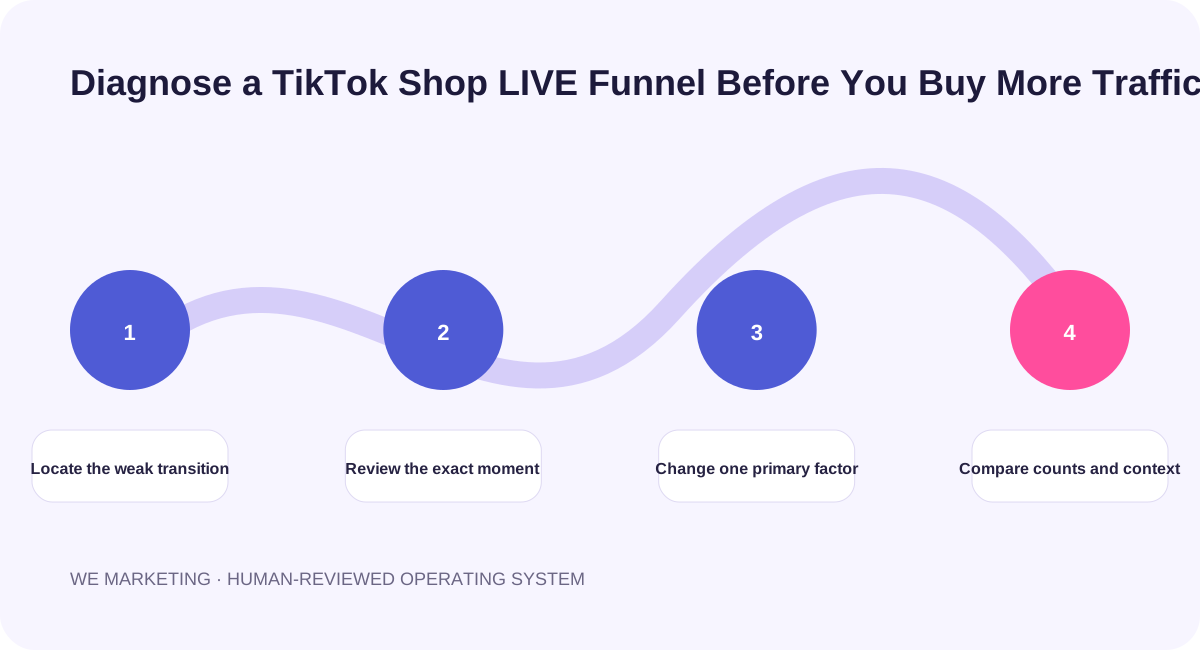
Before the next LIVE, save a short note with the weak transition, the replay timestamp that supports it, the change the host or operator will make, and the observations needed afterward. Name one person responsible for the change. Include the product and offer that should remain stable, plus any spending or stock limit that affects the test.
After the session, compare the relevant segment and record both counts and context. Keep a change when evidence supports it, revise it when the result is mixed, and remove it when it consistently makes the experience worse. If a checkout or stock issue appears, fix that operational problem before interpreting the session as a content experiment. The next useful action is usually smaller than rebuilding the entire broadcast, and more specific than buying more traffic.
Source notes
This original WEM operating framework draws on complete current TikTok Shop U.S. Seller University material revalidated September 9, 2026: official source 1, official source 2, official source 3, official source 4, official source 5. The official material establishes the current platform capabilities, eligibility, policy or measurement context used here. WEM adds the decision gates, ownership, economics, stop rules and readback discipline. Interface paths, availability, thresholds, attribution and policies can change. Verify the current U.S. Seller Center, the exact account state and qualified legal or compliance guidance where required before execution.
Frequently asked questions
What is a good LIVE click-through rate?
There is no single threshold that makes every room healthy. First confirm which clicks and denominator the report uses, then compare relevant products and sessions with similar conditions. Keep the raw counts visible so a small sample does not look more certain than it is.
Why can a LIVE have many likes but few orders?
Likes can reflect entertainment or support without a purchase decision. Review whether people understand the product, open its card, and find the expected variant and offer. Use recurring buyer questions to identify missing information instead of assuming that more engagement will automatically create sales.
Should a new room avoid paid traffic until it sells organically?
Not necessarily. A strong demonstration or promising content with limited distribution can justify a bounded test. Set a clear hypothesis and spending limit. Do not use additional reach to avoid fixing a known stock, listing, or demonstration problem.
Does LIVE GMV Max ROI show only sales caused by advertising?
No. TikTok documents paid and organic conversions within the selected LIVE as part of its attribution. Keep that reporting definition separate from an estimate of additional sales caused by spend. A reported result alone does not establish that causal effect.
What should a very small LIVE room measure first?
Keep actual viewer, click, and order counts beside any rates, and review the replay for clear friction. Use several relevant observations to judge patterns. Do not invent a universal minimum sample or call a tiny percentage change a reliable improvement.
Should the next session change the host, offer, and product together?
Only if the immediate business situation requires it. For diagnosis, choose one primary change and keep important conditions stable where practical. If stock, schedule, or staffing forces other changes, record them and avoid attributing the full outcome to the new script.