TIKTOK SHOP U.S. · LIVE OPERATIONS
The TikTok Shop LIVE Control Room: What Hosts, Operators and Fulfillment Owners Must Own
WE Marketing Team · Sep 9, 2026 · 15 min read
A LIVE control room protects the promise behind the performance
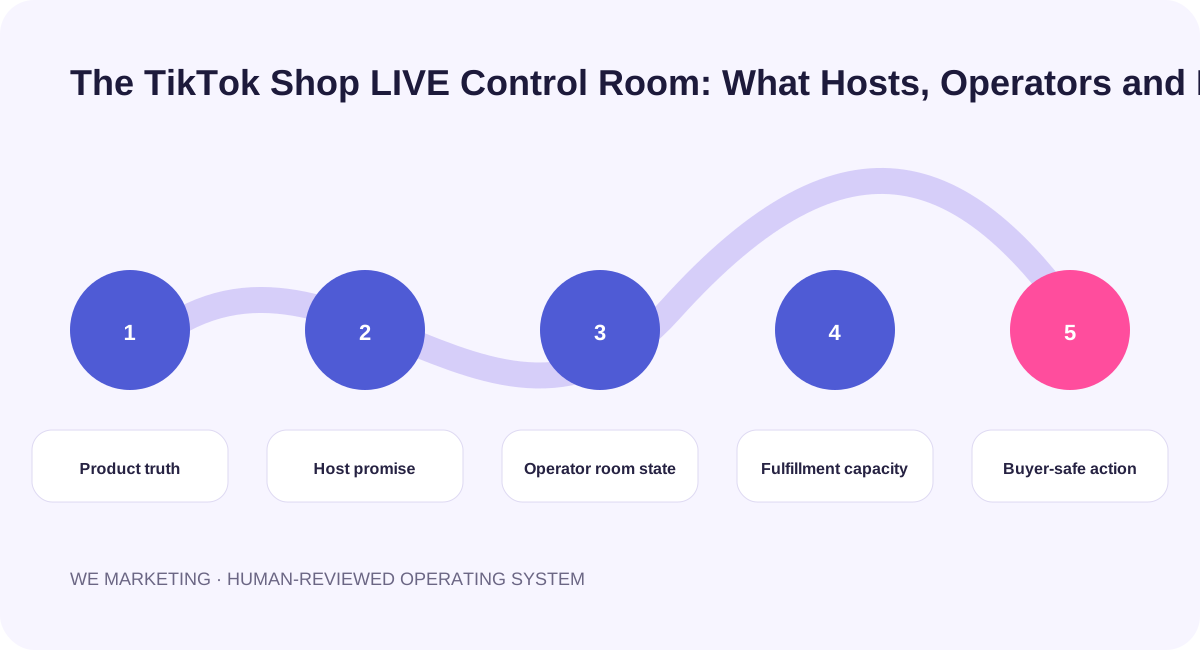
A strong TikTok Shop LIVE is not one person improvising faster. The host makes the product understandable and demonstrates only approved facts. The operator keeps the correct product, offer, comments, and room state under control. The fulfillment owner protects the inventory and delivery promise after the buyer taps purchase. A control room gives those owners one shared record and a clear way to stop when the live promise no longer matches reality.
This matters because viewers experience one continuous event while the business runs through several systems. The host may be describing one variation while the product card points to another. A promotion may end while the script still names the old price. Inventory may look available in a planning sheet but be inaccessible to the warehouse. The operating design must catch those differences before they multiply across orders.
Freeze product truth before the countdown
Build the run of show from the exact sellable products, not from a creative deck. For every item that may be shown or pinned, record the product and variation, current page, approved claims, live offer window, available-to-promise inventory, and any demonstration limitation. The host brief, operator product order, and fulfillment pick reference must point to the same item.
Complete a final readback close enough to the session that the information is still useful. Open the product page and the current LIVE setup, verify the visible variation and offer, then confirm the reserved quantity with fulfillment. A screenshot from rehearsal does not prove the state at show time. If a required fact is missing, mark the item held rather than asking the host to fill the gap with confident language.
Separate product truth from selling language. The host can make an accurate fact easier to understand, but cannot upgrade an estimate into a guarantee. Shipping timing, stock, compatibility, ingredients, performance, and promotional conditions should come from the current approved record. When the answer depends on an order or account, route it to the operator or service owner instead of answering broadly on camera.
Give the host a buyer-facing lane
The host owns attention, comprehension, and truthful demonstration. The brief should say who the product may fit, which problem the segment addresses, what can be shown, which claims are approved, which common questions have verified answers, and which questions require escalation. The host should also know the exact phrase that buys time without inventing a fact, such as asking the operator to verify the current variation or offer.
Do not make the host monitor every operational signal. Reading comments, switching products, checking promotion state, watching inventory, handling moderation, and demonstrating at the same time creates divided attention. The host needs a small set of visible cues: continue, repeat, correct, hold, and move on. The operator owns the evidence behind those cues.
A useful host handoff is short enough to use during a live segment. Put the product name, approved promise, demonstration sequence, prohibited or conditional language, three likely buyer questions, and escalation cue on one view. Long policy notes belong in the supporting record, not in the host's speaking lane.
Make one operator responsible for the room state
The operator owns what is happening in the room now. That includes the selected product, visible offer, comments and moderation, current activity or order signals, content or policy alerts, and every exception that could change what the host should say. Shared access is useful, but shared access without one decision owner produces delay and contradictory instructions.
Before the session, confirm that the operator can reach the required current tools and records. During the session, log material changes with a timestamp: wrong product pinned, promotion mismatch, stock warning, claim concern, buyer-service issue, or connection problem. The log does not need to capture every comment. It needs to preserve the exceptions that changed a buyer promise or an operating decision.
The operator also protects comparison quality. If the team changes the product order, offer, traffic support, or segment length, record when it happened. Later performance cannot be interpreted cleanly when the operating record treats several different conditions as one uninterrupted test.
Let fulfillment define what can safely be promised
Fulfillment ownership begins before the first viewer arrives. Reserve the exact sellable units or establish a reliable available-to-promise rule. Confirm warehouse cut-off, variation-level pick instructions, packaging requirements, tracking workflow, and the person who receives urgent stock or order exceptions. A total stock number is insufficient when the session sells different colors, sizes, bundles, or fragile items.
Define the threshold that changes the room. When a variation reaches its protected floor, the operator may remove the pin, ask the host to stop naming it, or switch to an approved alternative. The fulfillment owner supplies the trusted inventory signal; the operator applies the room action; the host communicates only the approved replacement wording. This is a handoff, not three people independently checking different numbers.
After the session, fulfillment confirms whether orders entered the expected workflow, inventory changed as expected, and any special packing instructions survived the handoff. A successful broadcast does not close the work if the promised units cannot be picked or tracked correctly.
Use a short exception ladder while the room is live
Classify exceptions by the buyer risk they create. A small presentation issue may be corrected at the next natural pause. A wrong product, wrong price, unsupported claim, safety concern, or unavailable variation requires an immediate hold. The control room should state who can call that hold and what safe state follows, such as removing the product, pausing the segment, or replacing the wording.
Keep the escalation path short: host signals uncertainty, operator verifies the current source, and the named business owner decides when the issue exceeds the operator's authority. Do not debate a material exception in a crowded chat while the host continues making the same promise. The first goal is to stop additional exposure; diagnosis can continue after the room is safe.
Prepare replacement language in advance for predictable failures. If a promotion changes, the host should know how to state that the operator is confirming the current offer. If a variation sells out, the host should know whether an approved alternative exists. Preparation makes the correction calm and accurate without pretending that every exception can be hidden from viewers.
A hypothetical wrong-variation incident
Imagine a home organization brand demonstrating a three-piece set. The operator notices that the pinned product is the two-piece variation and that the three-piece set has reached its inventory floor. The operator removes the pin and sends the hold cue. The host stops naming the set and tells viewers that the team is confirming the current option. Fulfillment checks the reserved units, and the operator restores only the verified variation.
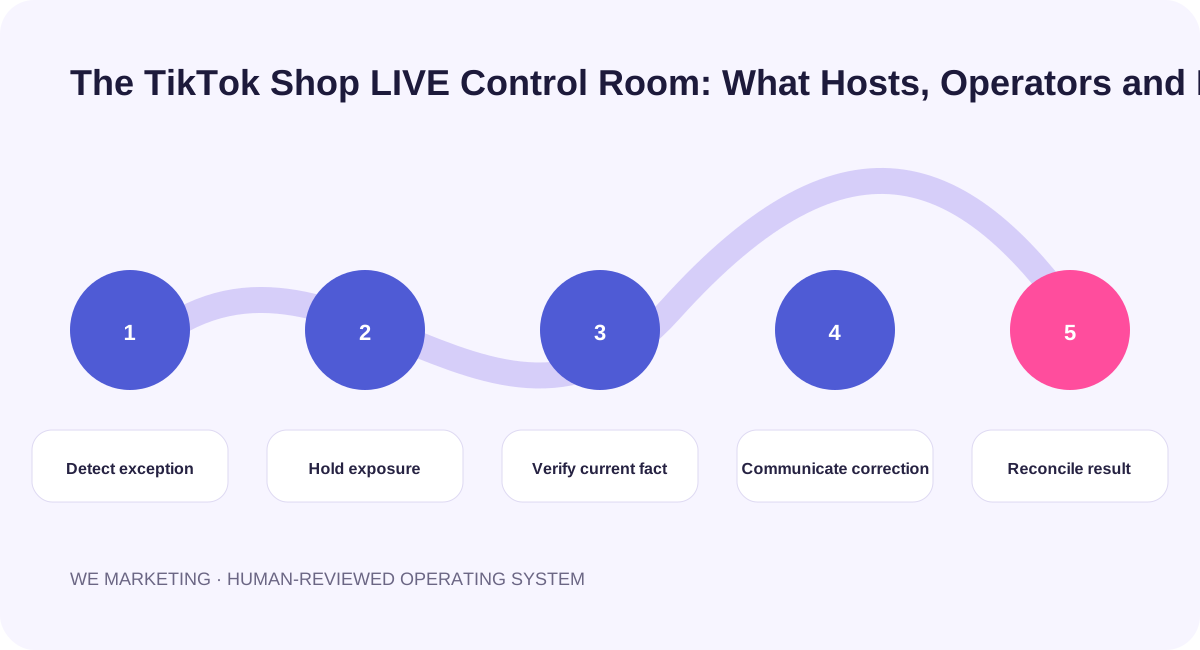
The room loses several minutes of selling rhythm, but the team avoids creating more mismatched orders. After the session, it checks the replay timestamp, affected clicks and orders, inventory movement, and any buyer questions. This is an illustrative operating example, not a WEM client result. Its value is the ownership sequence: detect, hold, verify, communicate, reconcile, and decide whether the offer can safely run again.
Close the session with a four-way readback
The closing readback connects the room, orders, inventory, and service queue. Record which products and offers were actually presented, the timestamps of material exceptions, current order status, inventory changes, tracking readiness, refunds or tickets already visible, and the owner of every open item. Do not substitute the end-of-session dashboard for these records.
Compare the final state with the approved plan. If the correct product stayed live, the promised variation was fulfillable, and no unresolved buyer-risk exception remains, the session can be marked reconciled. If an issue remains open, record the affected product or order, safe interim state, owner, and next check time. Unknown does not mean zero, and submitted does not mean resolved.
Use the readback to make one next decision: repeat the same conditions, repair an earlier handoff, change one controlled element, expand within verified capacity, or stop. More views are not the default answer when the room generated confusion, product mismatch, or unfulfilled promises.
Build the one-page control room for the next LIVE
Create three ownership columns for Host, Operator, and Fulfillment. Under each column, list the evidence that person must see, the decisions they may make, the facts they must escalate, and the final readback they owe. Add the exact products and variations, approved offer window, inventory floor, five high-risk exceptions, stop owner, and post-session reconciliation time. Review the page together before the next session starts.
Source notes
This original WEM operating framework draws on complete current TikTok Shop U.S. Seller University material revalidated September 9, 2026: official source 1, official source 2, official source 3, official source 4. The official material establishes the current platform capabilities, eligibility, policy or measurement context used here. WEM adds the decision gates, ownership, economics, stop rules and readback discipline. Interface paths, availability, thresholds, attribution and policies can change. Verify the current U.S. Seller Center, the exact account state and qualified legal or compliance guidance where required before execution.
Frequently asked questions
Does a small LIVE need a separate operator?
The role must be owned even when the team is small. One person may cover more than one role during a low-complexity session, but the host should not be expected to demonstrate, monitor every room signal, verify stock, and resolve exceptions simultaneously.
What should the host never guess?
Do not guess about the exact product or variation, current price or promotion, stock, shipping timing, safety, regulated or performance claims, or any fact that depends on a buyer's specific order. Use the agreed verification cue.
Who is allowed to stop a product segment?
Name the stop owner before the session. The operator usually needs authority to remove a wrong product or hold a risky segment immediately, with a named business owner available for decisions outside the operator's boundary.
How should low inventory be handled during LIVE?
Set a variation-level inventory floor and the action attached to it before going live. Fulfillment supplies the trusted signal, the operator changes the room state, and the host uses only the approved replacement wording.
Is the session complete when the stream ends?
No. Reconcile the products and offers shown, orders, inventory, fulfillment readiness, exceptions, and open service items. Give each unresolved item an owner and next check time.
What is the smallest useful control-room setup?
Use one page with Host, Operator, and Fulfillment columns, plus the exact products, offer window, inventory floor, exception ladder, stop owner, and post-session readback time.