TIKTOK SHOP U.S. · LISTING QUALITY
Your Listing Is Not Your Discovery Strategy
WE Marketing Team · Sep 16, 2026 · 15 min read
Direct answer
Published is only a product state. A listing becomes useful for discovery when a shopper can identify the exact item from a relevant query, understand its real attributes in the result and product page, select a sellable variation and complete the promised purchase path. Improve the listing for a named buyer question, then verify the current live result and the next decision. Do not confuse extra keywords, an AI-generated image or automatic Shop Tab access with guaranteed placement or sales.
A listing-to-discovery strategy is an owned product-information loop: establish exact item truth; map one relevant query family; express it in a compliant title, attributes, images and description; check the buyer-facing card and variation; measure a defined product-level window; repair the earliest mismatch. This is narrower than the content-search-Shop Tab channel architecture: it governs the listing itself, not the whole traffic system.
The operating question is never “what can the tool do?” It is “what decision can the team safely make from current evidence, and who owns the readback?”
Why exact product truth comes before execution
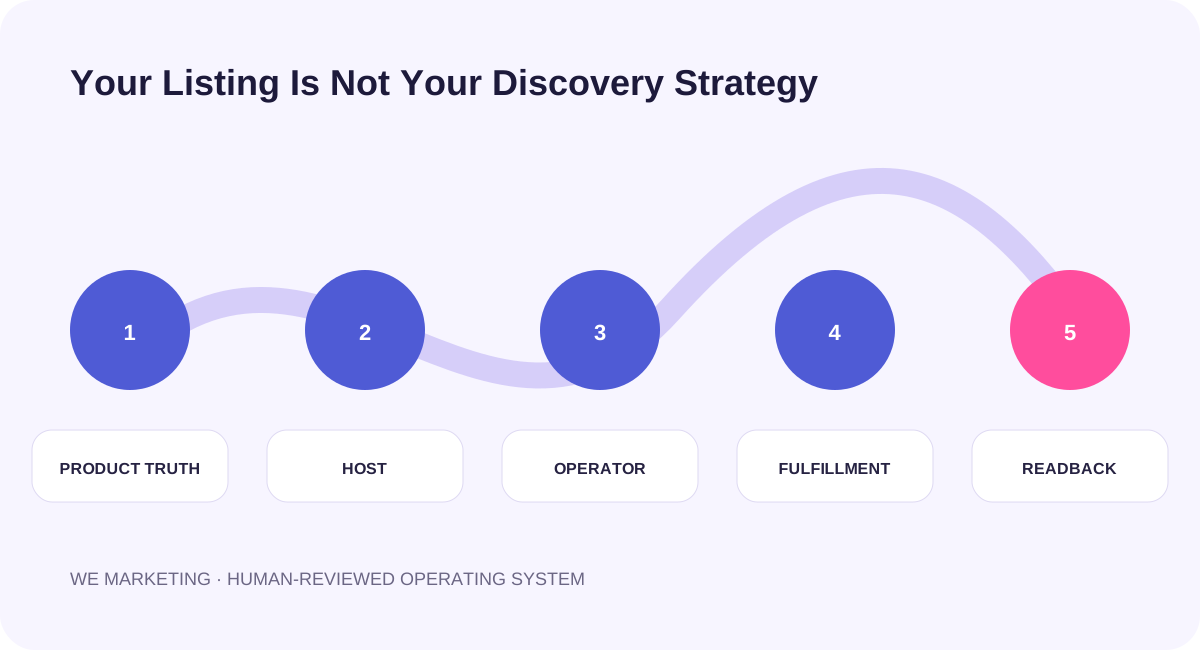
A well-ranked result is harmful if it describes a different bundle, use or size than the item delivered. That is why the first operating move is specific: Freeze the sold unit, brand, category, variant, material, size, included items and supported use before rewriting for search. Check what the buyer receives against the physical item and current fulfillment record. The evidence is equally specific: Current Seller Center listing, sample, packaging, variation and stock map, approved claims. A fast interface cannot repair a wrong classification or an unverified starting point. It can only execute the team's assumption more quickly.
This article therefore treats exact product truth and relevant buyer language as connected release gates. The team does not advance because a recommendation looks confident or a dashboard tile turns green. It advances when the exact object is known, the current account evidence supports the action and the consequence of being wrong is inside a written guardrail.
The evidence packet for this decision
Build one packet from the evidence families used across this workflow: Current Seller Center listing, sample, packaging, variation and stock map, approved claims. Query evidence, native search or product-card analytics, comments and buyer questions. Current title and attribute preview, platform suggestions, approved keyword-to-fact map. These records answer different questions and should not be collapsed into one score. Platform evidence describes access and observed state. Brand evidence describes product truth, cost, stock, staffing and what the customer can actually receive.
Keep the later-stage records beside them: Original product photographs, image order, detail page, dimensions, claim substantiation. Mobile search result, product card, Seller Center eligibility message, stock and offer readback. Versioned listing, submission state, live result, impressions, clicks, conversion, orders and exception log. Mark unavailable facts as unknown, with an owner and resolution date. If the missing fact affects product identity, permission, customer safety, sellable inventory, fulfillment or the economic floor, it is a stop condition. If it only limits confidence in an optimization idea, the team may choose a smaller reversible test.
1. Exact product truth
Operating move: Freeze the sold unit, brand, category, variant, material, size, included items and supported use before rewriting for search. Check what the buyer receives against the physical item and current fulfillment record.
Required evidence: Current Seller Center listing, sample, packaging, variation and stock map, approved claims.
Failure mode: A well-ranked result is harmful if it describes a different bundle, use or size than the item delivered.
Before closing this gate, assign one owner and one readback time. Save the exact page, asset, product, session or order identifier. If the live state differs from the approved state, stop the sequence, record the exception and repair the earliest broken handoff rather than compensating later with more traffic, discount or content.
2. Relevant buyer language
Operating move: Choose a small set of actual shopper questions and relevant terms. Separate an attribute the product has from a trend term it cannot satisfy. Use seller analytics or product questions to select one hypothesis.
Required evidence: Query evidence, native search or product-card analytics, comments and buyer questions.
Failure mode: A broad popular keyword may increase impressions while reducing qualified clicks and trust.
Before closing this gate, assign one owner and one readback time. Save the exact page, asset, product, session or order identifier. If the live state differs from the approved state, stop the sequence, record the exception and repair the earliest broken handoff rather than compensating later with more traffic, discount or content.
3. Title and fields
Operating move: Write a concise readable title identifying brand, product type and distinguishing facts; complete the proper category and attributes. Optional backend Search terms and Product highlights should remain relevant, accurate and compliant where available.
Required evidence: Current title and attribute preview, platform suggestions, approved keyword-to-fact map.
Failure mode: Keyword repetition, marketing superlatives, time-sensitive offers or irrelevant synonyms can create mismatch or policy risk.
Before closing this gate, assign one owner and one readback time. Save the exact page, asset, product, session or order identifier. If the live state differs from the approved state, stop the sequence, record the exception and repair the earliest broken handoff rather than compensating later with more traffic, discount or content.
4. Visual proof and detail
Operating move: Make the first image recognizable at card size; use truthful angles, scale, packaging and included pieces. Describe use, fit, care and limitations in plain language, with evidence for any claim.
Required evidence: Original product photographs, image order, detail page, dimensions, claim substantiation.
Failure mode: An attractive generated or enhanced image may misrepresent the item, and a long description cannot rescue a confusing first card.
Before closing this gate, assign one owner and one readback time. Save the exact page, asset, product, session or order identifier. If the live state differs from the approved state, stop the sequence, record the exception and repair the earliest broken handoff rather than compensating later with more traffic, discount or content.
5. Sellable destination
Operating move: Open the live result and product page as a shopper: variation, effective price, availability, delivery, reviews and add-to-cart path must agree with the title and image. Check current Shop Tab recommendation suitability separately from being listed.
Required evidence: Mobile search result, product card, Seller Center eligibility message, stock and offer readback.
Failure mode: Automatic inclusion in Shop Tab does not guarantee recommendation placement, and a dead variation wastes earned interest.
Before closing this gate, assign one owner and one readback time. Save the exact page, asset, product, session or order identifier. If the live state differs from the approved state, stop the sequence, record the exception and repair the earliest broken handoff rather than compensating later with more traffic, discount or content.
6. Controlled readback
Operating move: Record the before and after version for the same SKU, a comparable time window and major campaign or content changes. Use native product/search metrics to decide whether to keep, repair or roll back one edit.
Required evidence: Versioned listing, submission state, live result, impressions, clicks, conversion, orders and exception log.
Failure mode: A submitted optimization is not a live change; simultaneous title, image, price and traffic edits cannot isolate a useful learning.
Before closing this gate, assign one owner and one readback time. Save the exact page, asset, product, session or order identifier. If the live state differs from the approved state, stop the sequence, record the exception and repair the earliest broken handoff rather than compensating later with more traffic, discount or content.
Tradeoffs and stop rules for sellable destination
The central tradeoff is between title and fields and sellable destination. Moving early may capture demand or learning, but it also exposes the failure mode already named in the workflow: Automatic inclusion in Shop Tab does not guarantee recommendation placement, and a dead variation wastes earned interest. Waiting for perfect information may waste a time-bound opportunity. The practical answer is not maximum speed or maximum caution. It is the smallest release whose downside the owner can observe and stop.
Write stop rules from the actual failure modes: A well-ranked result is harmful if it describes a different bundle, use or size than the item delivered. A broad popular keyword may increase impressions while reducing qualified clicks and trust. Keyword repetition, marketing superlatives, time-sensitive offers or irrelevant synonyms can create mismatch or policy risk. An attractive generated or enhanced image may misrepresent the item, and a long description cannot rescue a confusing first card. Automatic inclusion in Shop Tab does not guarantee recommendation placement, and a dead variation wastes earned interest. A submitted optimization is not a live change; simultaneous title, image, price and traffic edits cannot isolate a useful learning. Convert the relevant conditions into observable thresholds and give one person authority to pause. The rule should also name the safe state after a stop, such as hold the product, end paid support, remove the item from the session, repair the listing or reconcile affected orders.
Hypothetical operating example
A hypothetical home-storage brand has a listed adjustable shelf with three sizes. A video generates questions about cabinet width, yet the live title says only “organizer,” the first image hides the dimensions and the linked default variant is sold out. The team checks the physical measurements and sellable variant, then edits a precise title and one scaled image without promising a fit it cannot prove. It verifies the live mobile card, records the change and watches relevant impressions, clicks and order quality over a comparable period. If qualified impressions improve but clicks do not, it tests the result image next. If clicks improve but orders do not, it checks variation, price and delivery before adding more keywords.
This example is illustrative, not a WEM client result. The point is the decision sequence: classify the object, gather current evidence, separate hard gates from optimization choices, release the smallest defensible action and verify the named live state. If the conditions change materially, the team starts a new comparison rather than forcing the result into the old test.
Review the six gates as one sequence
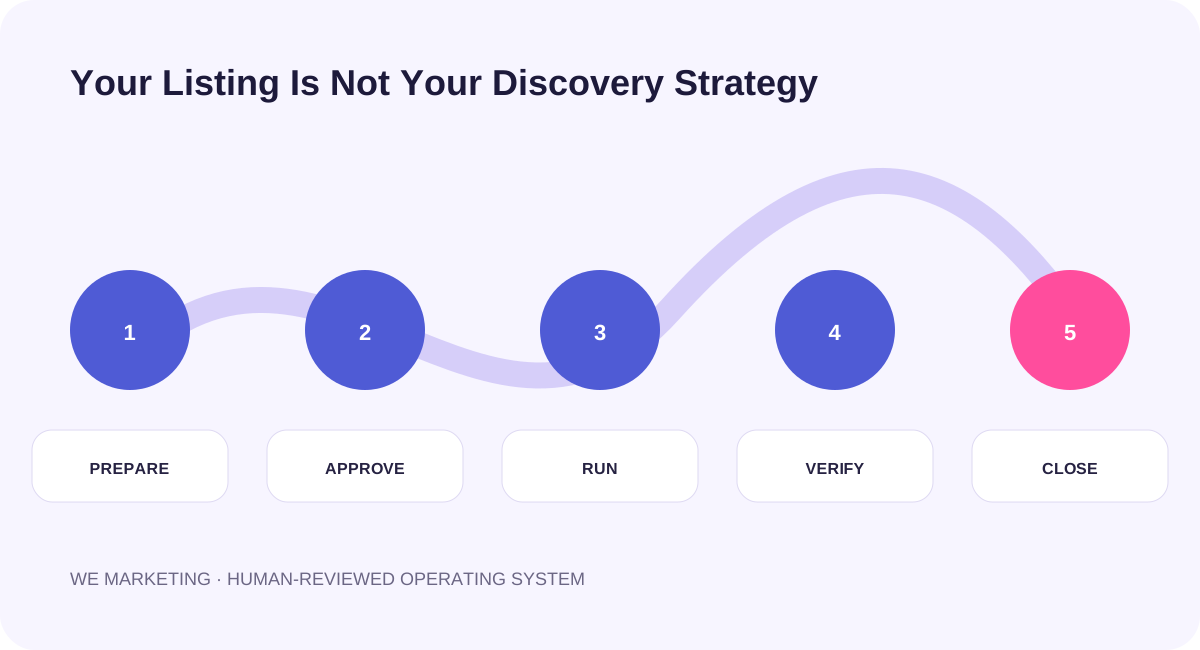
The review order is Exact product truth, Relevant buyer language, Title and fields, Visual proof and detail, Sellable destination, Controlled readback. Keep one active row for each unresolved gate and connect it to the exact product, event, campaign or decision. A row is pending when its required evidence is missing, blocked when a named condition prevents safe work, released when the approved action is visibly live and verified only after controlled readback closes the consequence.
The weekly decision must be topic-specific. Close the row as repeat when the same controlled conditions should run again, repair when an earlier gate failed, expand when comparable evidence supports more exposure, monitor when no action is currently justified or stop when the risk or economics no longer support the path. A draft, upload, submission or recommendation cannot close this sequence.
Smallest useful next action
Choose one listed SKU. Write the exact item facts and one real buyer question, inspect its live mobile search result and product page, then mark the earliest mismatch. Assign one owner to make a single justified change and read back the live version before treating it as complete.
Source notes
This original WEM listing-quality framework draws on current TikTok Shop U.S. Seller University guidance on Product Listing: What You Need to Know, Search terms and Product highlights, the Seller Guide to Shop Tab Success, Shop Tab & Search Analytics and Smart Listing Optimizer, revalidated September 17, 2026. The official material describes product information, optional fields, shopper discovery and optimization tools, not guaranteed placement or revenue. WEM adds the exact-item evidence gate, one-edit test and live readback. Verify current U.S. Seller Center access, listing policy and the buyer-facing result before execution.
Frequently asked questions
Is publishing a listing enough to appear in Shop Tab recommendations?
No. Shop Tab is available to listed products, but recommendation suitability depends on current product, shop and account conditions; placement is not guaranteed. Check the live eligibility and shopper view.
Should we add every popular keyword?
No. Use only terms that truthfully describe this exact product or answer a relevant buyer query. Irrelevant terms can reduce qualified engagement and be removed or rejected.
Are Search terms and Product highlights mandatory?
The official U.S. guidance describes these as optional fields where available. They can improve matching and buyer comprehension when accurate and compliant; availability and interface can change.
Can the Smart Listing Optimizer publish without review?
Treat AI suggestions as drafts. Check the actual title, images, attributes, claims and sync behavior before enabling or accepting changes; review the live product after any automated update.
What should we measure after one edit?
For the same product and comparable window, inspect relevant search or card impressions, clicks, conversion and orders alongside stock, campaigns and content changes. Do not call correlation proof of causation.
What is the smallest useful action today?
Choose one SKU and one buyer question. Compare the current card and product page with the real item, fix the first verified mismatch, then read the live result back.