TIKTOK SHOP U.S. · INCENTIVE ECONOMICS
TikTok Shop Incentives: Use the Window Without Building Your Growth Plan Around It
WE Marketing Team · Sep 25, 2026 · 15 min read
The direct answer
An incentive can make a sensible next action easier to fund. It cannot tell a brand whether the SKU has repeatable demand, whether the price still leaves room for service, or whether the buyer will return after the benefit ends. That distinction matters on TikTok Shop because incentives can arrive through different current programs, eligibility rules, milestones, promotion resources, advertising arrangements or fulfillment terms. They are opportunities with conditions and time limits, not a permanent operating model.
The practical answer is to treat every incentive as a bounded economic experiment. Before opting in, state the exact window, eligibility, qualifying event, funded benefit, cost that remains with the seller, maximum exposure, owner and stop rule. Then compare an incentive-period cohort with a normal-period baseline on contribution, conversion quality, cancellation, return and repeat signals. This is WEM's original operating framework. It does not promise access, performance or a platform benefit, and it does not replace the current terms shown to the specific U.S. Seller Center account.
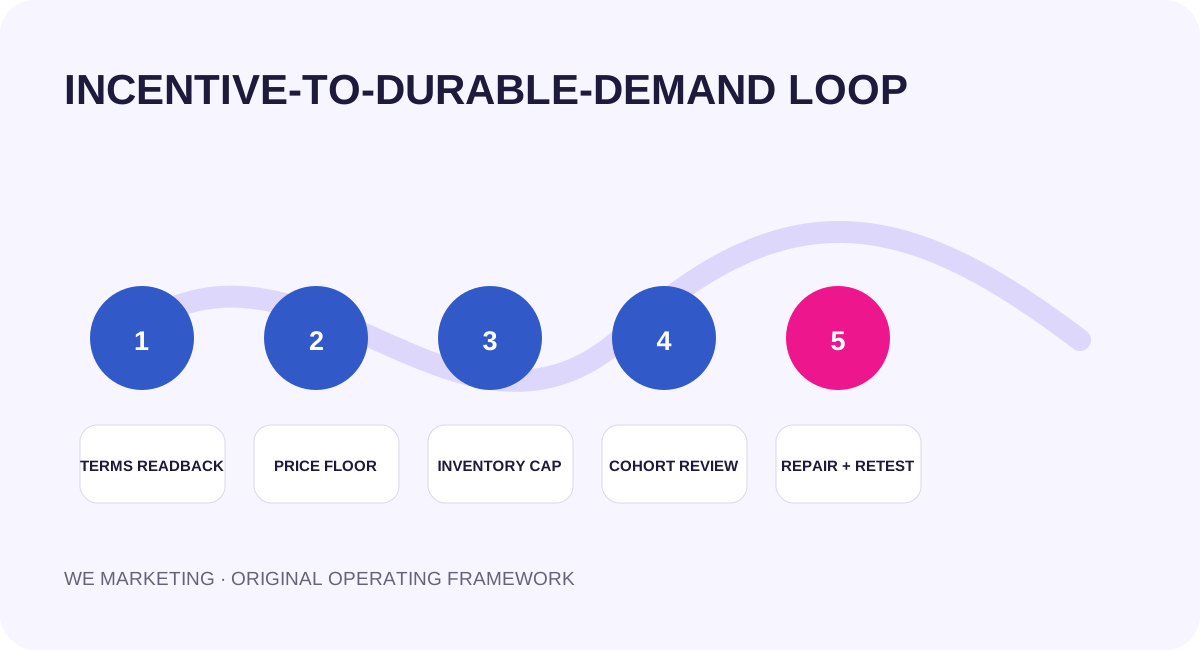
1. Separate the incentive from the business case
Start with the SKU business case as if the benefit did not exist. Write the standard selling price, landed product cost, referral and transaction costs, fulfillment, packaging, creator or media spend, expected support burden, return reserve and required contribution. If the item cannot make operational sense on ordinary demand, an incentive may make the dashboard look better while hiding a fragile offer. The purpose is not to reject every low-margin acquisition item. It is to make the acquisition cost, follow-on purchase path and time horizon explicit.
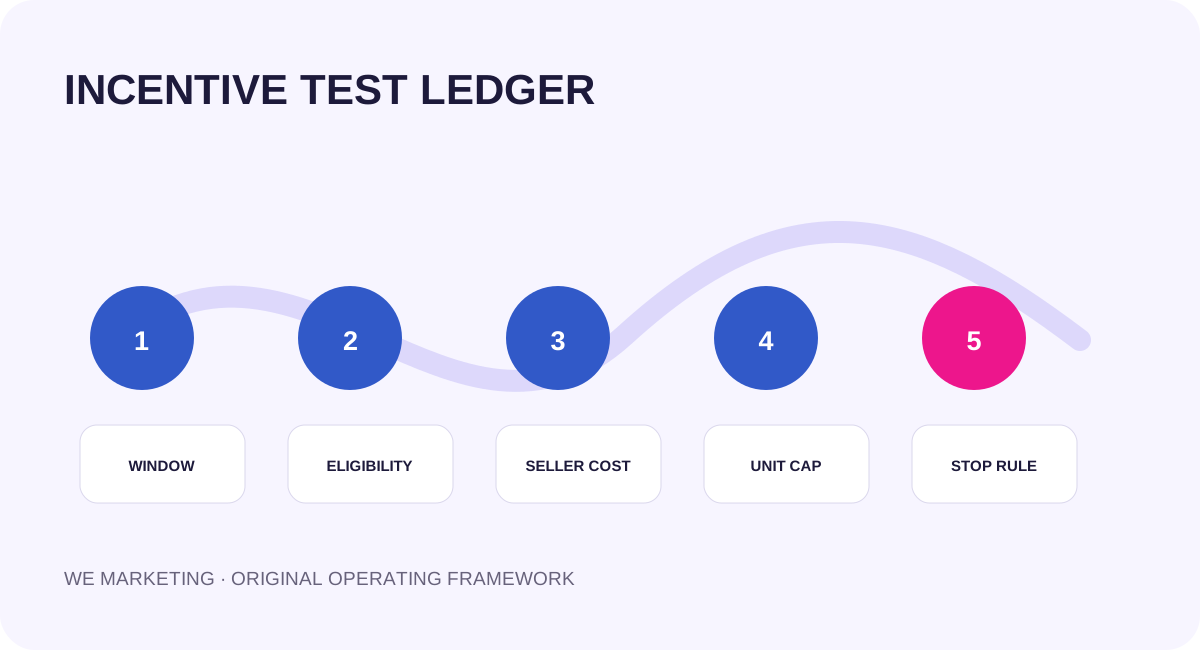
Next, create a separate incentive ledger. Record whether the benefit is a platform-funded discount, a seller-funded price change, a fee reimbursement, an ads credit, a bonus, a campaign resource or a conditional reward. Record when it is earned, when it is issued, what orders or units qualify, any cap and whether the amount can expire or be reversed. Do not combine a future reimbursement with cash already received. A finance owner should be able to read the ledger and see the difference between a lower price today, a possible reward later and a durable improvement in unit economics.
2. Read the current terms before you allocate inventory
Live program pages are primary evidence, but they are not interchangeable. A current Smart Promotion program, an FBT incentive, a Growth benefits task and a seller-specific campaign can have different account eligibility, dates, fee treatment, funding source, qualifying definitions and claim process. The current terms may also describe a benefit as limited, account-specific, first-come-first-served or subject to an active status. A headline or an old screenshot is not a release approval.
Use a two-person readback. The commercial owner captures the exact program name, URL, observed date and intended SKU. The operations owner confirms the account sees the same route, the time zone, applicable category and required action. Attach the terms to the campaign brief and write what is unknown. If a condition is unclear, model the test without assuming the reward. This avoids a common error: committing inventory, price or creator messaging because a generic program exists, then discovering that the shop, order type or period does not qualify.
3. Protect the price architecture
An incentive should not turn every customer into a wait-for-a-deal customer. Define a price architecture before the window opens: the normal price, the allowed promotion floor, the approved product set, the maximum units, the channel where the offer is communicated and the post-window recovery date. Keep the price reason legible. A product discount, a purchase-based incentive and a platform-funded coupon can create very different buyer expectations even when the checkout price looks similar.
For content, describe the product job first and the current offer second. Do not teach creators to imply that a temporary benefit is permanent, guaranteed or available to every buyer. Where a purchase-based incentive is used, the current policy requires clear listing and content terms; the offer should also be operationally feasible to pack and support. Save the exact creative, landing message and price at launch. When conversion changes, this record lets the team distinguish a stronger explanation from a deeper discount.
4. Limit inventory and cash exposure
Use an exposure cap, not only a revenue target. Decide how many units may be offered at the promotion economics, how much inventory may be reserved, what level of cancellation or late dispatch ends the test and which SKU substitutions are prohibited. A benefit tied to delivered units or a later reimbursement does not make inventory free. It can increase the damage if the team overbuys, ships the wrong configuration or loses the ability to serve full-price demand.
Build a simple weekly view with four clocks: promotional window, order cutoff, fulfillment/return window and expected reward or settlement date. The owner should forecast cash with the reward delayed or absent. This is especially important when a program calculates eligible activity by a defined month, applies a baseline, places a per-unit cap or does not carry progress to the next period. The operating decision is not whether the incentive sounds attractive. It is whether the shop can fulfill the commitment while its cash, support and inventory remain controlled.
5. Measure the cohort after the benefit ends
A campaign dashboard is an observation point, not a verdict. Tag the incentive-period orders and compare them with a matched normal-period cohort. Read conversion, average selling price, contribution after known costs, cancellation, delivery performance, return reason, support contacts, second purchase and whether full-price traffic holds after the window closes. Do not call a GMV increase durable if it disappears the day the offer ends.
Give each metric an owner and a review date. Marketing owns the offer and traffic context; merchandising owns SKU availability and price; operations owns delivery and exceptions; finance owns recognized cost and cash timing; customer care owns the buyer objections. At the review, decide one of three things: retain a product lesson, adjust a controlled lever, or stop. The goal is not to prove that the team deserves another incentive. It is to learn whether the product, explanation and service can carry demand without one.
6. Build the durable growth loop beside the offer
Use the window to improve an asset that survives it. Capture the buyer question that drove qualified clicks, strengthen the product page, standardize a creator demonstration, improve packing accuracy, document the FAQ and route recurring support signals to the owner who can repair the promise. These are durable assets. An incentive is most useful when it accelerates learning about them, rather than becoming the only reason a product moves.
A hypothetical example: a home-goods seller sees a current, eligible benefit and wants to place its full catalog into the offer. Its ledger shows that only two hero SKUs have stable stock, clear price floors and an established return profile. The team caps units, uses one approved offer message, logs the cohort and keeps the other SKUs at normal price while it repairs their descriptions. It does not assume results or eligibility. It uses the window to verify whether the two items can still convert and be supported after the benefit is gone.
A hypothetical operating example
The example is hypothetical and is not a performance claim, program recommendation or evidence that a specific seller is eligible. Its purpose is to show the difference between using a time-bounded opportunity to learn and using it to conceal an unresolved price, product or fulfillment problem.
The smallest useful action today
Today, open the current Growth or promotion page for one intended SKU. Save the URL and observed date, then create a one-page ledger with the benefit, qualifying event, time window, seller cost, possible payout timing, price floor, unit cap, owner and stop rule. If any field is unknown, do not use the benefit in the forecast. Compare the normal unit economics first.
Source notes
This original WEM incentive-economics operating framework draws on complete current TikTok Shop U.S. Seller University material revalidated September 25, 2026: US Smart Promotion Introduction / FAQ, Co-Funded Programs, Growth benefits center, TikTok Shop 2026 FBT Quarterly Incentive Program, Giveaways and Promotions Policy, How to Use Product Discount. The official material establishes current incentive, eligibility, promotion-disclosure, fee, issuance and time-window boundaries; the incentive ledger, price floor, exposure cap and post-window cohort review are WEM operating judgments. Program eligibility, funding, campaign rules and dates can change. Verify the current U.S. Seller Center and account-specific terms, and seek qualified finance, legal or compliance guidance where appropriate before execution.
Frequently asked questions
Are TikTok Shop incentives permanent?
No. Program availability, eligibility, funding, deadlines and terms can change. Check the live terms for the specific account before acting.
Should we reduce price whenever an incentive appears?
No. First protect the approved price floor, contribution requirement, inventory cap and post-window plan.
Can we count an expected rebate as current profit?
No. Keep a separate ledger for potential rewards and recognize them only according to the applicable terms and finance process.
What should creators say about a temporary offer?
Use approved, current terms and avoid implying permanent, universal or guaranteed availability. Disclose required purchase-based promotion terms clearly.
Which signals matter after the promotion ends?
Compare contribution, cancellation, delivery, returns, support contacts, repeat purchase and full-price demand with a normal-period cohort.
What is the smallest useful action?
Create an incentive ledger for one SKU and model the test as if the reward is delayed or unavailable.