TIKTOK SHOP U.S. · CONSUMER ELECTRONICS
TikTok Shop for Consumer Electronics: Make Demonstration, Trust and Service Work Together
WE Marketing Team · Sep 24, 2026 · 15 min read
The direct answer
Consumer electronics rarely fail on TikTok Shop because the brand lacks one more attractive video. They fail when the item shown, the specifications stated, the device tested, the accessory included, the battery declared, the unit packed and the promise supported by customer service are not the same product truth. A charger can look convincing in fifteen seconds while still leaving unanswered questions about power, port, cable, compatibility, certification and what arrives in the box. More reach magnifies those gaps rather than repairing them.
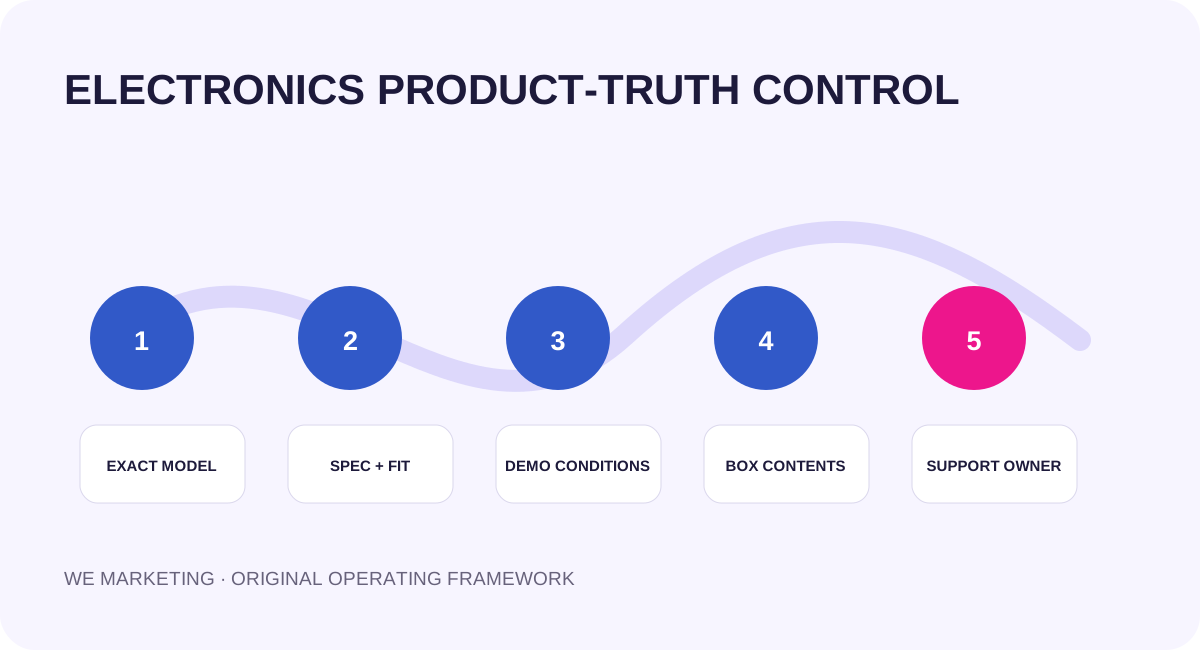
The practical answer is a consumer-electronics operating system. Give every sellable model one controlled truth record, then use it to approve the category, listing, demonstration, creator brief, packing instruction and support answer. Release a product only when the team can demonstrate what it does, name what it does not do and resolve the likely exception. This is WEM's original operating framework, not a TikTok Shop requirement and not a claim that every electronics category follows an identical document path.
1. Start with the exact model, seller role and category
Begin with the physical unit, not the marketing name. Record the manufacturer, brand, official model, version, plug type, wireless capability, battery configuration, included components, condition and intended use. Then verify the most accurate current U.S. Seller Center category and whether category qualification is requested. TikTok Shop's Electronic Products Requirements says electronic products may require qualification and that documents differ for manufacturers, importers, repackers and resellers. Children's electronics and refurbished products have additional paths. A generic supplier approval does not prove that the exact model in the listing is cleared.
Use four release states: approved with matching evidence, pending a named document, rejected with a recorded reason, or prohibited. Do not move an uncertain device into an easier category to test demand. The current category guidance says the selected category should match the product and warns against miscategorization. If the product emits radio frequency, contains a battery, is refurbished or depends on a third-party app, flag that condition before content begins. Marketing can decide how to explain a permitted product; it cannot convert missing qualification into permission.
2. Make one model-level evidence record
The evidence file must match the model shown and shipped. Current Electronic Products Requirements may ask a manufacturer, importer or repacker for a recent Certification of Compliance or Conformity that describes the tested product, applicable standards and accredited laboratory. A reseller may need a legible manufacturer invoice issued within the specified period. Product or packaging images may need valid electrical-safety markings, and Bluetooth or Wi-Fi products may require FCC information. Requirements can change, so the operator should read the live request rather than convert this article into a universal checklist.
Build a row for each model and meaningful version: internal SKU, official model, hardware revision, package contents, electrical input and output, wireless capability, battery chemistry and capacity, compliance identifier, source document, issue date, listing version and evidence owner. Store photos of labels and packaging with the record. When a supplier changes a chipset, cable, battery or enclosure, decide whether the evidence and demonstration still match before treating it as the same SKU. The purpose is not paperwork for its own sake. It is preventing one product's proof from being attached to a different unit.
3. Turn specifications into buyer-readable product truth
A specification is useful only when the shopper can connect it to a real device and use case. TikTok Shop's 3C listing guidance recommends titles that combine brand, core category, key specification, applicable device or scenario and a truthful differentiator. Keep the brand, model, capacity, power, interface and compatibility consistent across title, attributes, images and description. Avoid absolute claims such as never overheats, signal never drops or battery never runs out. These statements are not stronger selling; they create a promise the item cannot responsibly support.
Create a buyer-truth sheet beside the technical record. Translate 65W, USB-C, Bluetooth version, storage capacity or cable length into the exact question each fact answers. State compatible devices and exclusions precisely, including whether an adapter, cable, app or subscription is required. Show the actual included contents and physical scale. The 3C guidance asks for authentic images from useful angles, close-ups of ports and buttons and clarity when accessories shown are not included. A shopper should not have to freeze a creator video to discover the connector or search comments to learn what is in the box.
4. Design demonstrations as reproducible tests
The strongest electronics demonstration is not the most dramatic. It is the one another operator can repeat under named conditions. Define the test device, operating-system version, power source, cable, app version, starting state, duration and observable result. A charging demonstration should name the charger, cable and tested device rather than imply the same speed for every phone. A wireless demonstration should distinguish pairing success from long-term connection quality. Screen and audio demonstrations should avoid edits that exaggerate brightness, latency, range or sound.
Give every content asset one buyer job: identify the model, prove setup, compare compatible uses, show included contents, explain a limitation or resolve a repeated objection. The creator brief should inherit only approved facts from the model record and include a stop rule for questions outside evidence. Record the test setup and final edit. If a creator uses a different adapter or phone, do not silently transfer the result to the listed configuration. A repeatable test becomes a reusable support asset; an unexplained spectacle becomes a return risk.
5. Treat batteries and wireless functions as operating constraints
A battery is not just a selling point. It affects listing data, documentation, storage, packing, shipping and returns. TikTok Shop's battery guidance tells sellers to identify chemistry, voltage, capacity, whether the battery is rechargeable, and whether it is built in, packed with the product or standalone. Lithium batteries may require an SDS or UN 38.3 test summary and compliant shipping settings. Lead-acid batteries are prohibited. The operator should compare the label, manual and supplier specification rather than guess from the product category.
Wireless capability creates a second truth path. Confirm whether Bluetooth or Wi-Fi is present, what app is required, which operating systems are supported and what features depend on connectivity. Current electronics requirements describe FCC authorization or declaration information for applicable radio-frequency devices and require it to correspond to the exact product. Packaging and listing should disclose required apps or setup conditions when relevant. Route battery damage, swelling, overheating, failed pairing or app-access complaints to a named safety and support owner, not only to a social media manager.
6. Let fulfillment and aftersales prove the promise
Electronics packing needs a model-aware checklist. The picker confirms model and variation; the packer confirms device, cable, adapter, manual, warranty material when applicable, protective packaging and visible condition. The label and serial or internal identifier should remain traceable without exposing buyer data in content. Package weight, dimensions and battery declarations must match the shipping workflow. A polished unboxing video does not repair a missing cable, wrong plug, damaged port or undeclared battery.
Customer service needs approved answers for compatibility, setup, charging, connectivity, accessories, warranty scope, return handling and safe escalation. Do not promise universal compatibility or diagnose a safety complaint in comments. Link each ticket to the exact model and listing version, then send repeated confusion upstream. If buyers repeatedly ask whether a cable is included, the problem is not only customer service speed; the product page and demonstration have left a truth gap. The sale is complete only when the received unit, listing, content and support record agree.
7. Scale only after the trust loop closes
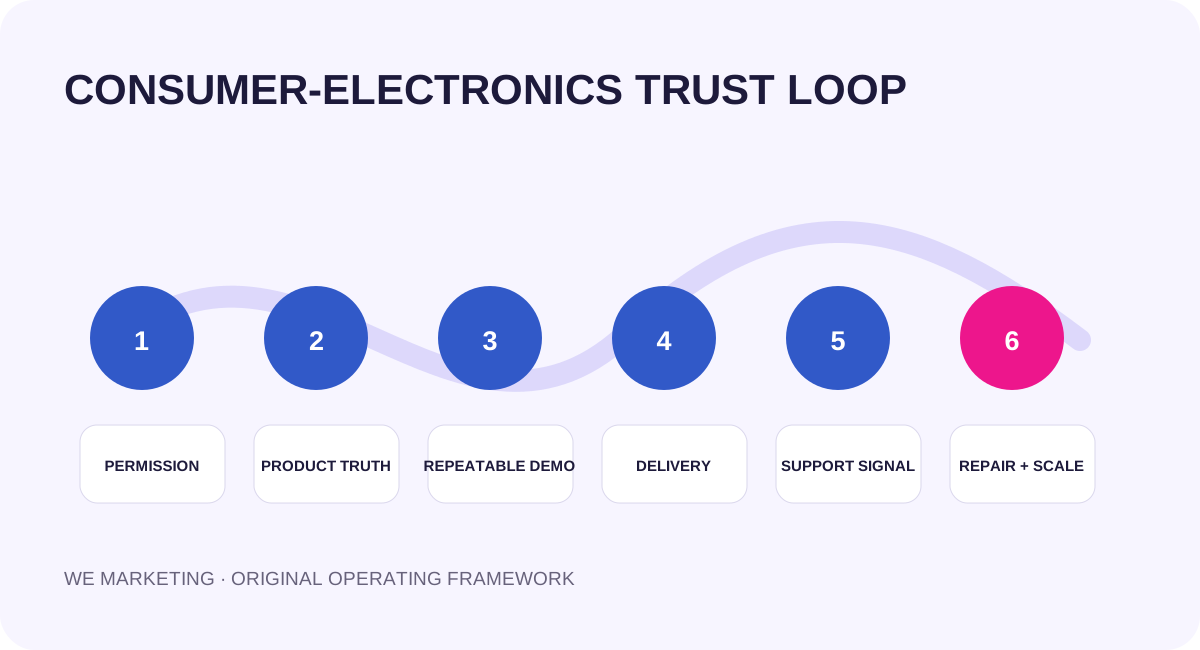
Use a six-field release board for a controlled first assortment: permission, exact model, buyer truth, reproducible demonstration, deliverability and aftersales ownership. Each field needs evidence and one owner. Choose two or three models with distinct buyer jobs rather than twenty variations that share the same uncertainty. Keep listing version, content version, price, inventory and test conditions visible. This makes a result interpretable and prevents the team from calling every weak outcome a creative problem.
Read the signals by stage. Views without qualified product clicks may mean the video entertained but failed to identify the device or use case. Clicks without orders may point to compatibility, included contents, price or delivery uncertainty. Orders followed by setup tickets, not-as-described claims or returns indicate that the front-end promise exceeded the received experience. Repair the earliest broken handoff before adding creators or paid reach. Scale the exact model and explanation that can carry more demand without creating a larger support debt.
A hypothetical operating example
Consider a hypothetical electronics brand selling a 65W charging hub, wireless earbuds and a compact power bank. The team initially plans one creator brief about faster everyday technology. Its release board finds that the hub's specification record is complete but the video uses a cable not included in the box; the earbuds pair correctly but the app requirement is absent from the listing; the power bank listing has correct capacity but its lithium documentation and shipping setup are still pending. The brand reshoots the hub with included contents, updates and tests the earbuds setup path, and holds the power bank. It does not infer platform endorsement or a performance lift. The example shows how WEM separates content readiness from product readiness.
The smallest useful action today
Today, choose one consumer-electronics SKU and write one row containing the exact model, seller role, category result, compliance evidence, ports, power, wireless and battery facts, compatible devices, included contents, repeatable demo conditions, packing check and aftersales owner. Open the current Seller Center and compare every field with the live listing. Hold the product wherever a required fact is missing or mismatched. Repair that first link before producing more content or buying reach.
Source notes
This original WEM consumer-electronics operating framework draws on complete current TikTok Shop U.S. Seller University material revalidated September 24, 2026: Electronic Products Requirements, Guidelines For Listing 3C Products, Guidelines for Listing Products Containing Batteries, Product Detail Pages & Listing Quality Guidelines, Your Guide to Selecting the Right Product Category. The official material establishes current category, electronics, 3C listing, battery and product-page boundaries; the model-level truth control, reproducible demonstration and cross-team trust loop are WEM operating judgments. Category access, documents, attributes, shipping and aftersales rules can change. Verify the current U.S. Seller Center and qualified legal, safety or compliance guidance where needed before execution.
Frequently asked questions
Does every electronics product need the same qualification documents?
No. Requirements vary by exact product, seller role and condition. Check the current category request for the specific model in U.S. Seller Center.
Can a creator demonstrate a different cable or phone?
Only if the difference is disclosed and the result is not transferred to the listed configuration. Approved demonstrations should name the tested setup.
What compatibility information should we publish?
Name the supported device, interface, operating system or app condition, important exclusions and whether required accessories are included.
Do lithium-battery products need special handling?
They may require battery attributes, an SDS or UN 38.3 test summary and compliant shipping settings. Verify the exact current requirement before listing.
What should customer service send back to the content team?
Repeated compatibility, setup, included-accessory, safety and not-as-described issues should become listing or demonstration repairs, not only support macros.
What is the smallest useful next action?
Audit one exact model across permission, evidence, listing, repeatable demonstration, packed contents and aftersales ownership, then hold it at the first unproven link.