TIKTOK SHOP U.S. · AFFILIATE GOVERNANCE
How to Change TikTok Shop Affiliate Commission Without Breaking Creator Trust
WE Marketing Team · Aug 16, 2026 · 14 min read
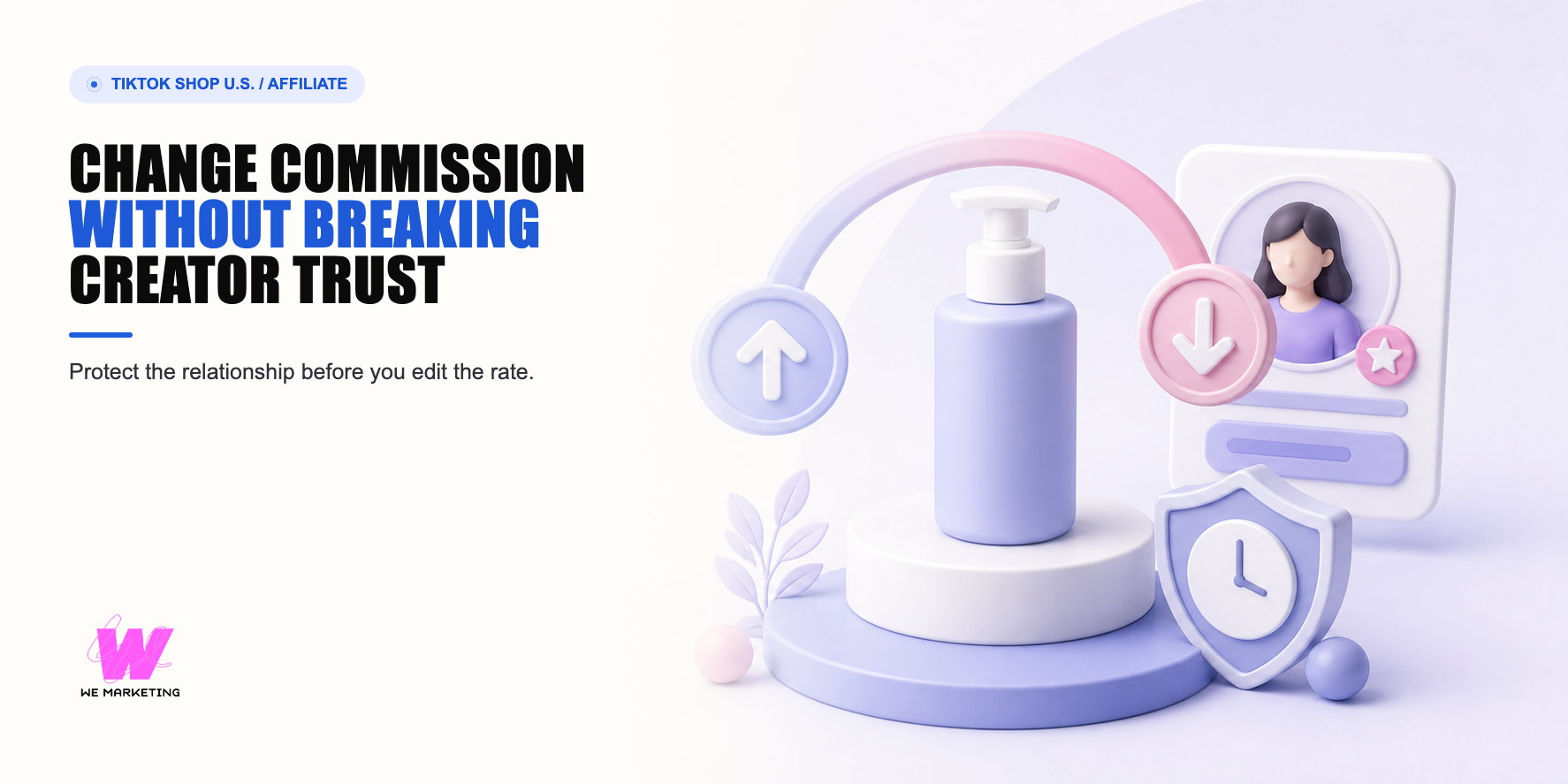
Direct answer: change the relationship before you change the rate
A TikTok Shop affiliate commission edit is not only a percentage change. It changes what creators believe the brand is asking them to risk for the next video or LIVE. Before touching the rate, map who is already promoting the product, which collaboration each creator is in, what rate is active, when a new rate can take effect, and why the business needs the change. Then decide whether to increase, decrease, split the cohort, or leave the rate alone.
WEM treats commission as one part of the creator offer. Product fit, sample support, the content angle, brand responsiveness, inventory, price, paid support, and the chance to build a repeat relationship all affect whether a creator will prioritize a product. A higher rate cannot repair a product nobody wants to explain. A lower rate can still damage a good relationship if the brand changes it without context after a creator has invested time in content.
The right question is not “What rate can we get away with?” It is “What commercial promise can we support, explain, and keep?”
Separate the four commission layers before making a decision
First separate Open Collaboration from Target Collaboration. Open is a broad discovery lane. Target is a selected creator and product relationship, and the current platform guidance says the Target commission takes priority when both apply. Second, separate standard commission from Shop Ads commission. They are related but represent different economic jobs. Third, separate creators who are already promoting the product from creators who may join later. Finally, separate the number entered today from the rate that is actually active during the applicable period.
The current U.S. Seller University material says an Open Collaboration increase applies immediately to affected promoting creators, while a decrease protects the prior rate for an applicable 30-day window. It also states that a new Open rate becomes effective after the edit period and that Target changes follow a separate five-day timing rule. The live interface exposes commission history, status, active period, and standard versus Shop Ads commission. These are volatile product and account controls. Read the current Seller Center screen for the exact shop before acting.
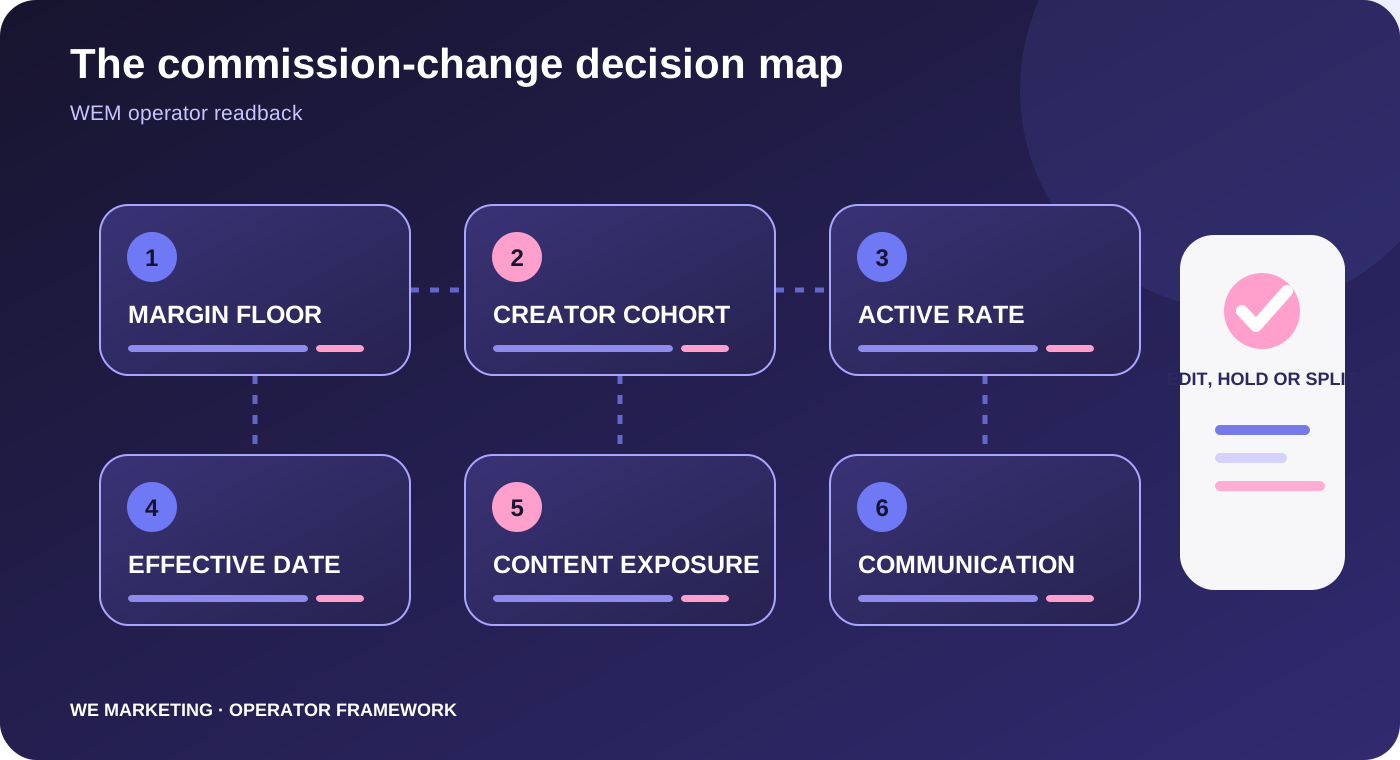
The WEM commission-change gate
| Gate | Question | Stop condition |
|---|---|---|
| Economics | Does the proposed rate still support contribution after price, discounts, samples, refunds, fulfillment, media, and partner cost? | No verified product-level margin floor. |
| Creator cohort | Who is active in Open, Target, partner, or private arrangements, and what have they already been told? | The team cannot name affected creators or commitments. |
| Content exposure | Which creators have a product in Showcase, posted content, planned content, or a LIVE commitment? | The edit could surprise an active creator. |
| Reason | Is the change tied to a defined product stage or business condition? | The only reason is a vague desire to save cost. |
| Timing | What rate is active now, what period applies, and when will each cohort see the new rate? | The team is reading only the input field, not history and status. |
| Communication | Who will tell priority creators what changed, why, when, and what support remains? | No owner or message exists. |
Use a different decision for a different problem
If creators are not accepting the product, test product fit, outreach relevance, the content angle, sample terms, listing trust, and total creator value before raising commission across the catalog. If good creators accept samples but do not publish, inspect fit, follow-up, product experience, and the brief. If content earns product clicks but economics are weak, repair price, bundle, conversion, refunds, or product-level cost before cutting the creator rate. Commission is useful when it is the actual bottleneck, not when it becomes the easiest field to edit.
An increase can be appropriate for a priority launch, a proven creator, a product that needs stronger creator attention, or a time-bounded campaign with clear eligibility. A decrease may be appropriate when a product has stabilized, the existing rate no longer fits the product economics, or the brand is reallocating support. In either direction, do not apply one answer blindly to every SKU. A hero launch product, an established repeat seller, and a low-margin basket builder have different jobs.
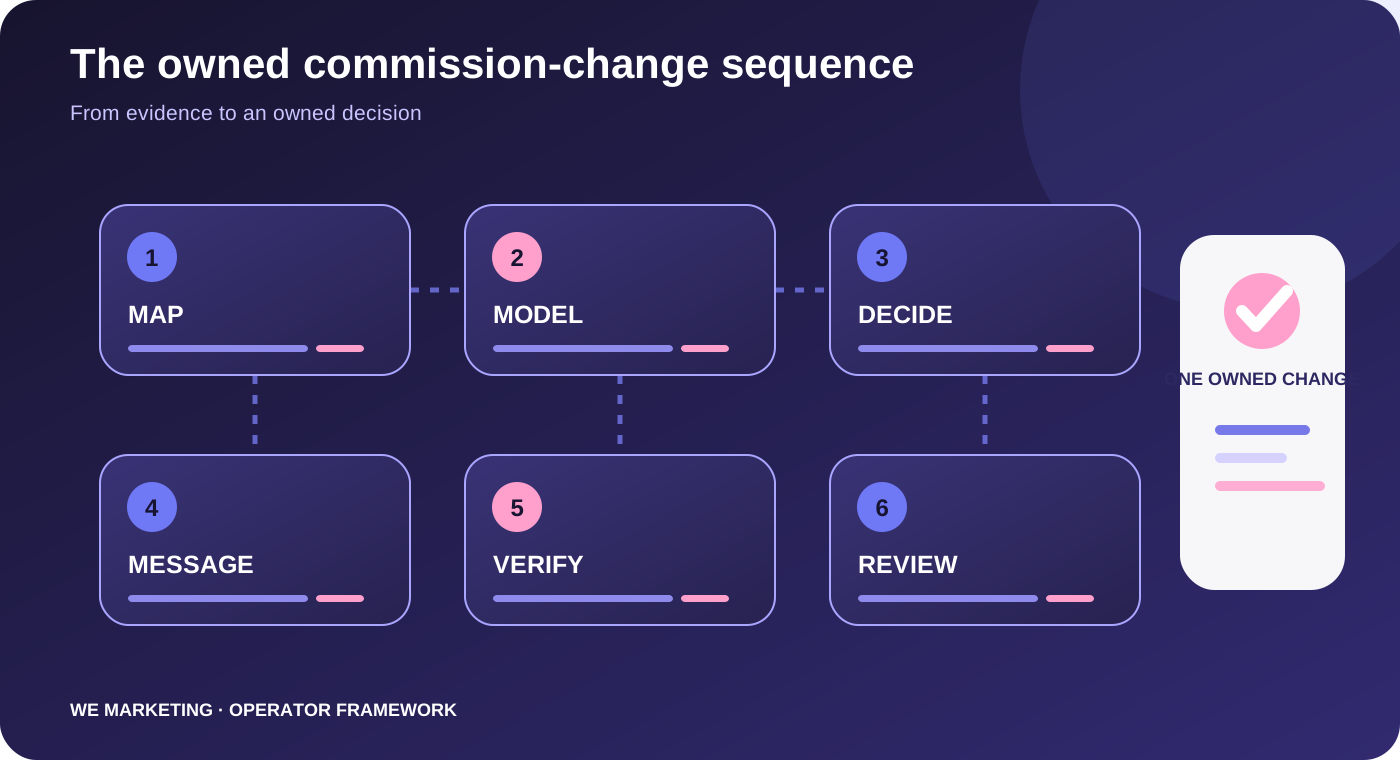
A seven-step operating sequence
- Commercial owner: calculate the product-level margin corridor using the current selling price and realistic refund, fulfillment, sample, media, and partner cost.
- Affiliate owner: export or record the active creator cohorts, collaboration type, current rate, content state, and any direct promise.
- Content owner: identify videos, LIVEs, and planned deliverables that still depend on the existing offer.
- Decision owner: choose increase, decrease, cohort split, temporary incentive, or no change. Record the business reason and stop condition.
- Creator owner: contact priority creators before they discover the change indirectly. State the effective timing and what support remains.
- Platform operator: make the edit, then read back commission history, status, active period, and standard versus Shop Ads fields.
- Weekly reviewer: compare creator acceptance, Showcase adds, posting, product clicks, orders, settled economics, and creator feedback before another change.
Do not use a successful Save message as completion evidence. The operating evidence is the active commission history for the correct product and collaboration, plus a record of which creator cohorts were informed. Keep a screenshot or export with the date, owner, and affected products so the next reviewer does not reconstruct the decision from memory.
Communicate the change like a partner
A useful message is short and specific. Name the product, current relationship, direction of change, applicable timing, and the support the brand will continue to provide. If a bonus applies only to new content or new LIVE sessions, state that boundary beside the offer. Do not invent a deadline, guarantee, cap, or urgency rule. For priority creators, invite a reply rather than treating the notification as a one-way administrative update.
Communication does not mean every creator needs a long custom email. It means the team distinguishes between broad platform notice and a creator relationship worth protecting. A creator who already produced useful content, agreed to another post, or built a buyer audience around the product deserves direct context. That small action often tells the creator more about the brand than the rate itself.
Hypothetical example: lower the catalog rate without surprising the launch cohort
This is a hypothetical operating example, not a WEM client result. A beauty brand used a higher Open rate while launching a hero serum. After the product gained reviews and a more stable conversion path, finance wanted to reduce the rate across the catalog. The affiliate owner found twelve creators with active content, four with a planned second video, and two in Target arrangements. The team kept the selected creator terms, communicated directly with the repeat-content cohort, changed the broad discovery rate only after checking the live effective period, and scheduled a two-week readback. The decision protected economics without pretending every creator had the same relationship.
Smallest useful next action
Choose one SKU proposed for a rate change. Make one row with current standard commission, current Shop Ads commission, Open and Target status, active creator count, posted or planned content, margin floor, proposed rate, effective timing, communication owner, and review date. If any field is unknown, pause the batch edit and fill the gap first.
Source notes and operating boundary
Primary U.S. TikTok Shop Seller University materials were revalidated on August 20, 2026: How Standard Affiliate Commission Works, Setting Up Affiliate Collaborations, and Affiliate Marketing Policy. Platform timing, eligibility, interface paths, commission protections, notifications, and account controls can change. Confirm the current U.S. Seller Center record for the specific product and creator cohort before execution.
For related WEM operating systems, see Open Collaboration product fit, the sample decision system, and creator affiliate management.
Frequently asked questions
Should we raise commission when creators do not respond?
Not automatically. First check product and audience fit, outreach relevance, sample terms, listing trust, and whether the creator can picture a useful content angle.
Can we lower Open Collaboration commission immediately?
The current U.S. material describes a protection window for existing promoting creators and a separate effective-period record. Check the live history and status for the product before relying on the newly entered number.
Do Target and Open commission work the same way?
No. They serve different collaboration lanes, and current guidance uses different priority and timing rules. Review both records when the same product is in both.
Should every product use the same commission?
No. Product role, margin, creator difficulty, content burden, launch stage, and support level can differ. Use a product-level decision, not a catalog default.
What should we tell creators about a decrease?
Name the product, direction, applicable timing, reason, and continuing support. Contact priority creators directly when they have active or planned content.
How soon should we review the result?
Set a dated review before the change. Read creator acceptance, posting, clicks, orders, settled economics, and qualitative feedback together rather than reacting to one day of GMV.