TIKTOK SHOP U.S. · PRODUCT OPERATIONS
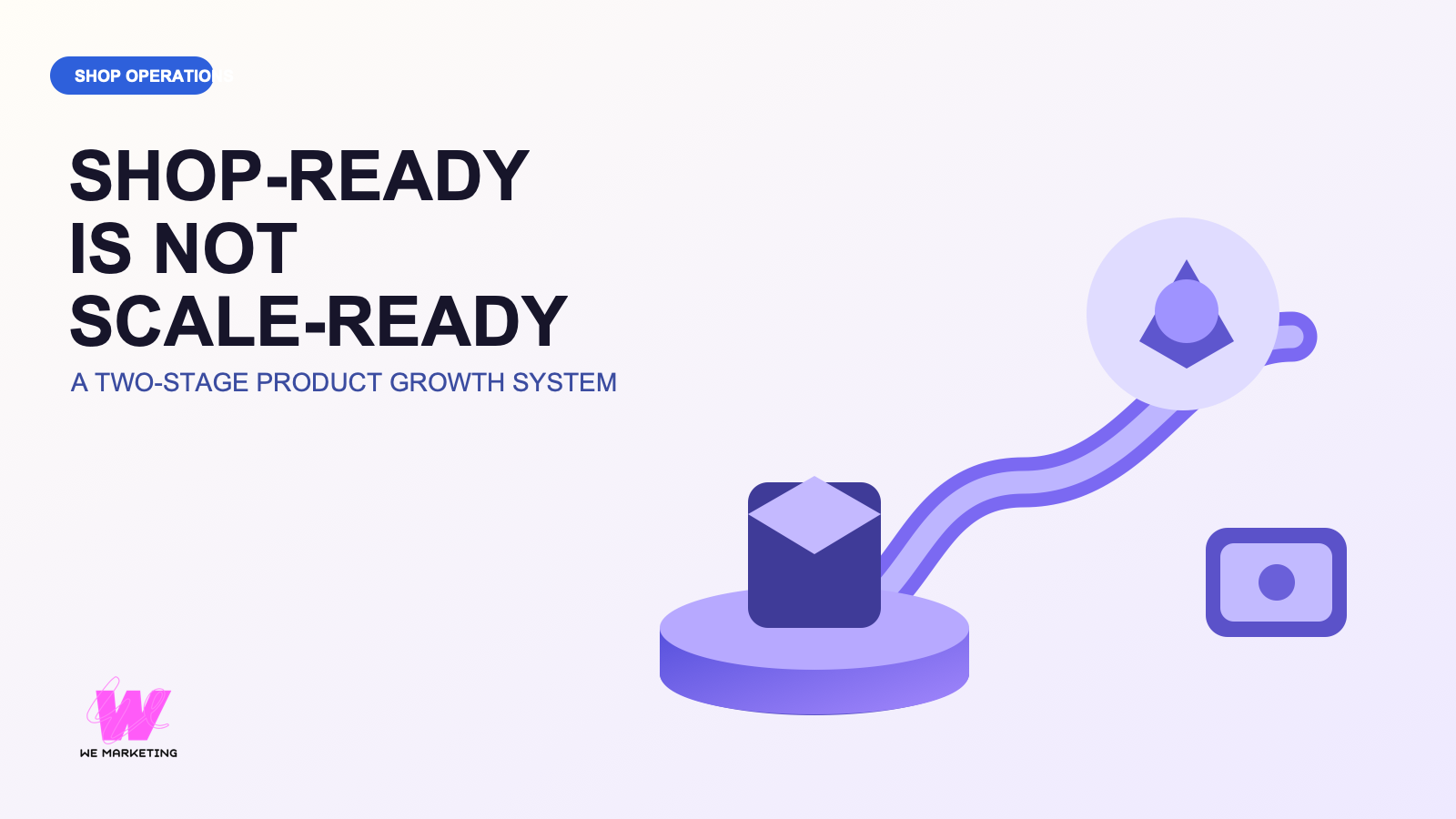
Shop-Ready Is Not Scale-Ready
WE Marketing Team · Aug 8, 2026 · 15 min read
Direct answer: shop-ready is a graduation gate, not a scale decision
A product can be technically listed, visible to shoppers, and even eligible for a growth task while still being a poor candidate for heavier creator, campaign, or ad investment. “Shop-ready” means the product has enough operating fundamentals to be tested responsibly. “Scale-ready” means those fundamentals have survived a controlled test and the team can add demand without creating a more expensive customer, inventory, or margin problem.
This distinction matters because growth activity amplifies the whole operating system. More content can expose an unclear product promise. More affiliate outreach can expose sample or inventory gaps. More paid traffic can expose a weak conversion path. A campaign can expose a price architecture that has not been modeled. The useful question is not “Can we turn on another lever?” It is “What evidence says this SKU can carry the next increment of demand?”
TikTok Shop’s current U.S. Sales Accelerator describes a two-stage product journey: Strategic Key Products optimization first, then Bestseller incubation. In its current account experience, eligible products can complete optimization tasks across price competitiveness, delivery, commission, samples, stock availability, shoppable video, CRM, and listing optimization. Products that complete the high-potential tasks and reach the stated traction criteria may then move to shoppable-video and seven-day ad-challenge activities. Treat those mechanics as an account-specific program path, not a universal scaling formula. Eligibility, task availability, thresholds, rewards, and displayed recommendations must be verified in the live Seller Center.
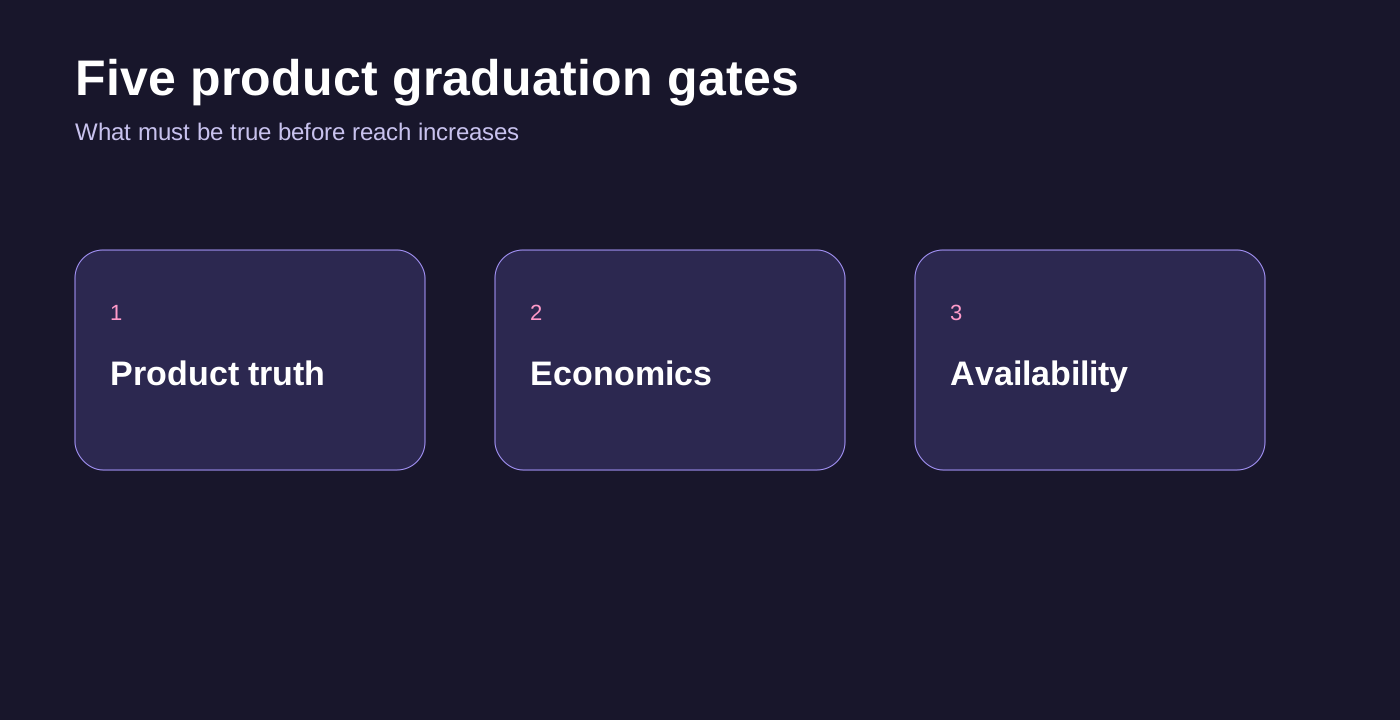
The WEM two-stage product gate
Stage one makes a product safe enough to learn from. Stage two proves what to scale, how far, and with what guardrails.
| Gate | Shop-ready evidence | Scale-ready evidence |
|---|---|---|
| Product truth | Accurate title, images, variants, claims, price, and product link. | Content and customer questions show the promise is understood without creating avoidable confusion or returns. |
| Economics | A contribution floor exists for the selected SKU, including known discount, commission, fulfillment, and sample costs. | The test has a repeatable offer and a clear rule for when extra spend, creator fees, or discounts must pause. |
| Availability | Sellable stock, fulfillment promise, and an escalation owner are checked before traffic is invited. | Capacity is reconciled against the planned demand window and stock allocation is protected for the channels being expanded. |
| Content | At least one truthful product explanation and linked buying path are ready for a controlled test. | A usable content supply, permissions, and a refresh cadence exist for the chosen growth lever. |
| Learning control | One owner, one hypothesis, and one readback date are named. | The team can separate a product, offer, content, or channel change and make a continue, guardrail, or hold decision. |
This is a WEM operating framework, not a TikTok Shop score. It deliberately prevents the common leap from “the listing looks complete” to “put it in every creator brief and campaign.” A product becomes a candidate for larger reach only when the business can explain what it is testing and what would make it stop.
Stage one: make the selected SKU safe enough to learn from
Start by choosing a single priority SKU or a tightly defined variation group. The choice should have a commercial reason: a product with credible demand, a strategic margin role, a replenishment job, a seasonal moment, or a clear creator story. Do not call every product a hero. A scattered catalog makes it impossible to see which decision created the result.
Then check product truth end to end. A creator can describe a benefit more vividly than a product page, but the two cannot contradict each other. Verify the product title, variation mapping, size or ingredient facts, price, shipping expectation, image sequence, and common pre-purchase questions. If the item is a bundle, validate component stock and the exact offer the shopper sees. If the content relies on a claim, approve the claim before it goes live. A beautiful video cannot repair an unsupported promise.
Next, set a contribution floor. It need not be a complicated finance model on day one, but it must include the variables the team already knows: net product revenue, landed or variable cost, seller-funded discount, creator commission or fee, sample cost, fulfillment, payment or platform costs where relevant, and an allowance for returns or support. Unconfirmed TikTok-funded value belongs in a separate scenario, not the base case. The customer price and the seller economics are two different readbacks.
Availability is the third check. A stock number alone is not capacity. Confirm the sellable quantity, fulfillment cutoff, warehouse ability, shipping promise, reserved units, and who pauses the SKU if demand outruns the plan. TikTok Shop’s current New Seller Step 3 material places content, campaigns, and advertising in the marketing-empowerment stage; that is precisely why the operating proof must come first. A growth tool can bring demand faster than a small team can correct a broken promise.
Stage two: graduate with evidence, not optimism
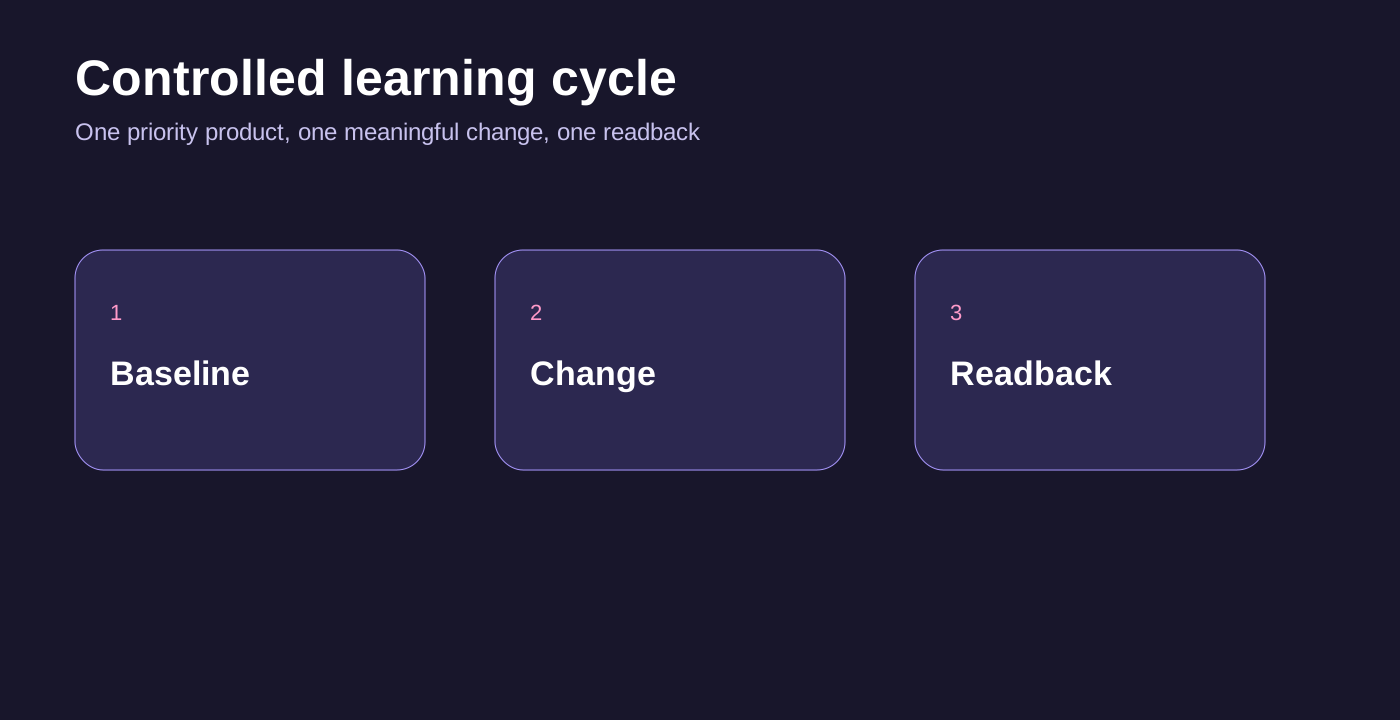
Graduation does not require a perfect result or a universal conversion benchmark. It requires a clean enough controlled learning cycle. Choose a product, a channel, an offer, a content source, and a time window. Record the starting condition. Then make one meaningful change. If the team changes the price, sends samples to twenty creators, adds a coupon, edits the PDP, and launches ads on the same day, it will have activity but not evidence.
For creator-led scale, the graduation proof includes a product link that works, a current commission or collaboration arrangement, a clear brief, claim approval, sample capacity, a response owner, and a way to distinguish creator content from the offer that accompanies it. For paid scale, it includes the chosen SKU, a budget the business can lose while learning, a target or delivery mode verified in the current account, creative authorization, and a daily guardrail. For campaign scale, it includes the exact terms, price history considerations, inventory allocation, service coverage, and an owner who can stop or correct the offer.
The current Academy materials describe shoppable video tasks and advertising challenges as later-stage accelerators. That sequencing is useful: content and media are not a reward for being busy. They are tools for increasing exposure after the product has a coherent offer, dependable delivery, and a team capable of reading back what happens next. Platform incentives can improve the test economics, but they do not remove the seller’s responsibility for product truth, fulfillment, or customer experience.
Run a seven-day graduation review
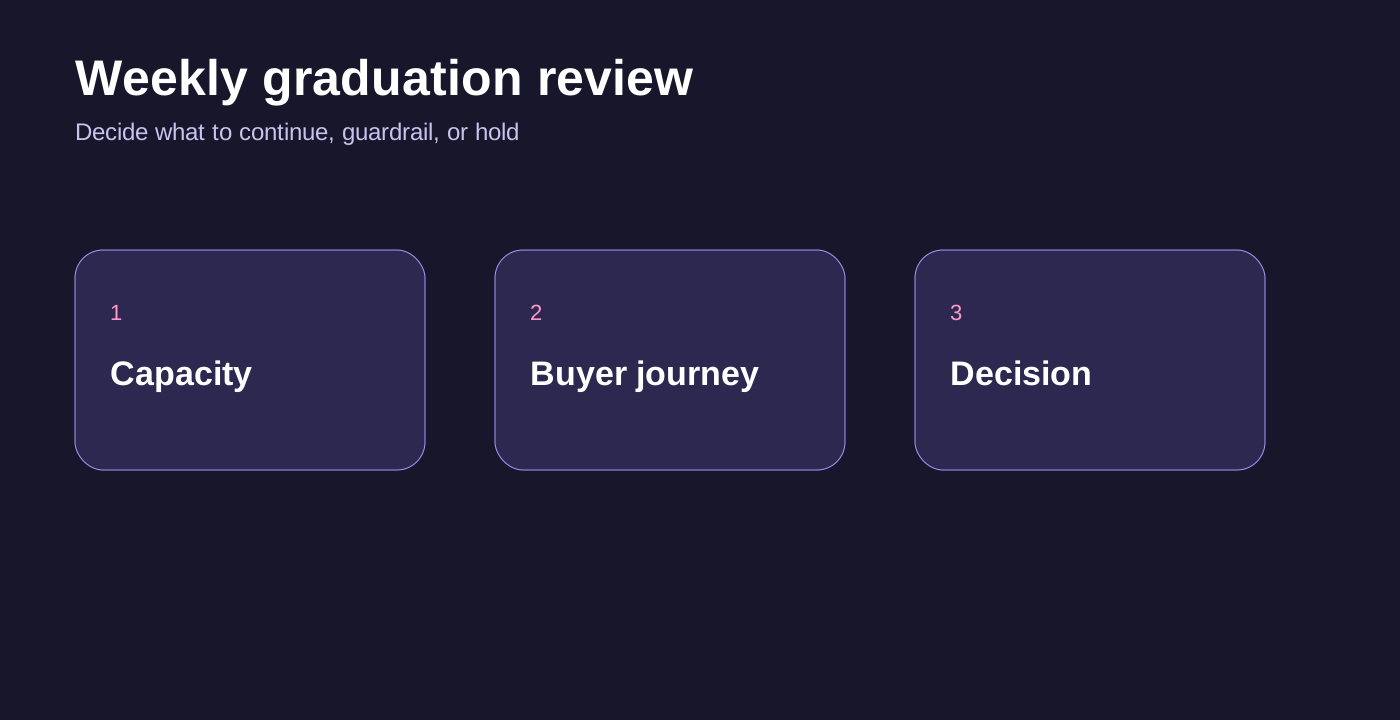
Use a simple weekly review for the priority SKU. First, compare demand with actual capacity: did inventory, fulfillment, support, and product information hold? Second, compare the buyer journey: did people click, understand the offer, add to cart, and complete the order without a new pattern of questions, cancellations, or returns? Third, compare economics: what did the customer pay, what did the seller fund, and what did the selected growth lever cost? Fourth, decide one of three outcomes: continue the controlled test, add a guardrail, or hold the affected lever until the root cause is fixed.
Here is a hypothetical operational example, not a WEM client result. A personal-care brand has a product with a polished PDP and a strong creator demo. The first linked videos drive product clicks, but support tickets show that shoppers cannot tell which variation matches their need. Instead of immediately adding ad spend, the team changes the variation labels, adds a comparison frame to the content brief, and keeps spend capped. Once the question rate and conversion path are stable for the chosen cohort, it can test a wider creator lane. The fix is not “make more content.” The fix is to make the existing demand understandable and serviceable.
Smallest useful next action: a 30-minute graduation sheet
Open Seller Center and choose one priority SKU. Create five rows: product truth, contribution floor, availability, content, and learning control. For each row write the evidence link or screenshot, the owner, the current uncertainty, and the stop rule. Then choose one next action that removes the largest uncertainty before you expand reach. If the account shows Sales Accelerator opportunities, read the current task and eligibility details there, but do not use a program label as a substitute for the sheet.
Source notes
Primary material read in full on August 8, 2026: TikTok Shop U.S. Academy, Sales Accelerator: Your Two-Stage Growth Plan, and New Seller Growth Strategy Step 3: Scale up your exposure and GMV by content, campaigns and advertising. Platform features, task scoring, incentives, account access, campaign terms, and recommendations can change. Verify them in the current U.S. Seller Center before acting.
Frequently asked questions
Is a completed listing automatically ready for ads or creators?
No. A completed listing is only one part of shop readiness. Check product truth, contribution, capacity, approved content, and an owner before increasing exposure.
What is the difference between shop-ready and scale-ready?
Shop-ready means the selected SKU has enough verified fundamentals for a controlled test. Scale-ready means a controlled test has produced evidence that the buyer journey, economics, and operating capacity can carry more demand with stated guardrails.
Do we need every Sales Accelerator task before scaling?
No universal checklist should replace the current account experience. The current program describes task and eligibility paths for eligible sellers. Read the live task drawer and use the operating evidence that fits your product and growth lever.
Should we scale a product with strong views but weak conversion?
Usually not yet. Inspect the product promise, price and offer, variation clarity, product-page handoff, and available stock before adding reach. Views are a signal to investigate, not proof that the SKU can absorb more investment.
How long should a graduation test run?
Long enough to observe the selected buyer and operating signals without changing every variable. Use the platform’s current reporting cadence and your product’s order volume to set a practical readback date.
What should make us pause scale?
A breach of the contribution floor, unavailable stock, a delivery or service issue, misleading content, a broken product link, or a result that cannot be interpreted because too many variables changed at once.