WE Marketing · TikTok Shop U.S. · Shop Operations
TikTok Shop Returns Without Destroying Margin or Customer Trust
By the WE Marketing Team · Published August 3, 2026
Route every return to a fair resolution and a prevention owner
A strong TikTok Shop returns system does not try to reject every request or refund every customer immediately. It routes each case by order state, product category, shipping type, return reason, item value, and recoverability. The operator protects trust by responding quickly and explaining the next step, while protecting margin by choosing the lowest-cost fair resolution, preserving evidence, and fixing the product or fulfillment cause that created the return.
Returns are usually discussed as a customer-service problem. For a TikTok Shop brand, they are also a product-quality, fulfillment, cash-flow, inventory, content, and Shop Performance Score problem. A full refund may preserve one relationship but destroy the contribution margin on a low-cost item. A rigid rejection may appear to save money but create an appeal, a delayed resolution, a poor review, and a repeated operating defect.
TikTok Shop's current U.S. policy is not one universal returns rule. The outcome can change with Seller Shipping, TikTok Shipping, or Fulfilled by TikTok; whether the item is returnable, non-returnable, or Final Sale; whether the package is Ready to Ship, in transit, delivered, or already in reverse logistics; the reason selected by the customer; the paid price; and whether the seller created an automation rule. Current Seller Center eligibility and the live case screen remain the final control surface.
WEM's practical answer is a returns decision system. Separate the customer's immediate resolution from the brand's root-cause correction. Close the case through the fairest low-friction path available, then recover margin by preventing the next avoidable return. The smallest useful operating unit is one case, one reason code, one owner, one evidence package, one resolution, and one prevention action.
Returns are a routing problem before they are a refund decision
The same customer message can require different actions. “I did not receive it” could be a package still moving within its estimated window, a seller-shipped package with weak tracking, a carrier issue under TikTok Shipping, or an FBT order handled by TikTok Shop. “It is not what I expected” could be a listing mismatch, a subjective preference, a wrong variation, or a defective item.
Before approving, rejecting, replacing, or offering a partial refund, identify six facts:
| Routing fact | Why it changes the decision |
|---|---|
| Order state | A pre-shipment cancellation, in-transit refund, delivered return, and reverse-logistics dispute follow different paths and clocks. |
| Shipping type | Seller Shipping, TikTok Shipping, and FBT assign logistics review, reimbursement, and evidence differently. |
| Product class | Returnable, non-returnable, Final Sale, hazardous, pre-owned, and collectible items do not share one return path. |
| Customer reason | Preference, fit, not as described, damage, defect, wrong item, missing item, and not received create different liability and evidence needs. |
| Paid price | Platform thresholds and review times can change with the amount the customer actually paid, not only the list price. |
| Available recovery | The item may be resellable, repairable, replaceable, returnless, partially refundable, or economically unrecoverable. |
Do not make the customer repeat information already visible in the order. The operator should read the case history, current status, reason, attachments, carrier events, SKU, variation, paid price, and applicable deadline before asking a useful follow-up question.
Know the margin at risk before choosing the resolution
The useful number is not product price. It is the expected cost of each available resolution.
For a standard return, estimate the refund, outbound shipping not recovered, return shipping, handling labor, inspection, repackaging, loss of platform or payment fees where applicable, and the probability that the item can be resold. For a replacement, include the new unit cost, new outbound shipping, pick-and-pack work, and risk of a second failure. For a returnless refund, include the full refund and zero inventory recovery. For a partial refund, include the offered amount and the chance the customer rejects it and continues to a full return.
Use a simple resolution ledger:
| Resolution | Customer outcome | Margin question | Best fit |
|---|---|---|---|
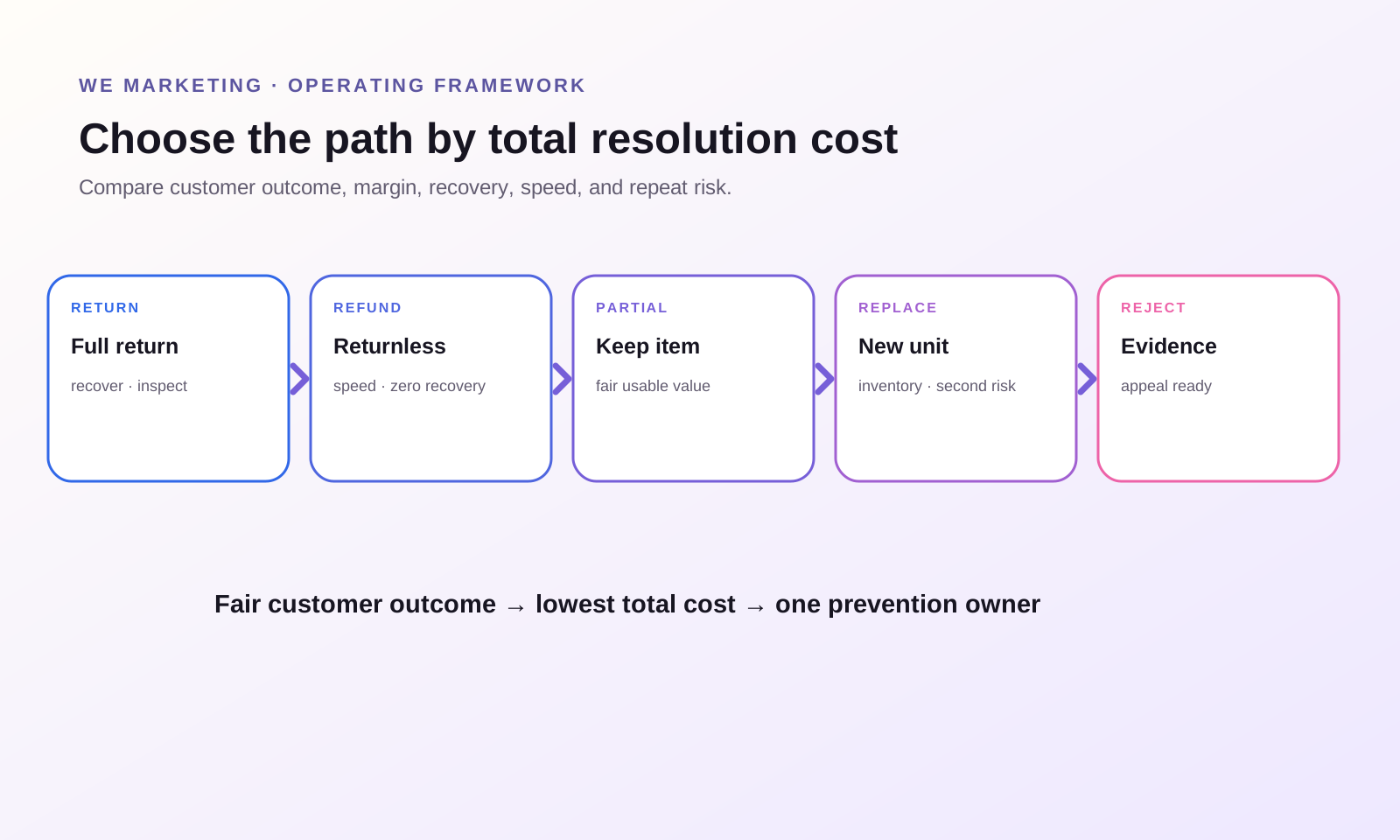
| Full return and refund | Customer sends the item back and receives the approved refund | Is recoverable inventory worth reverse-logistics and inspection cost? | Higher-value, resellable, verifiable items |
| Refund without return | Customer keeps or disposes of the item | Is the expected recovery value lower than return cost and friction? | Low-value, unsafe-to-return, non-returnable, or unrecoverable items |
| Partial refund | Customer keeps the item for an agreed or rule-based partial amount | Does a fair reduction match the remaining usable value? | Minor, accepted issues where policy and live tools allow it |
| Replacement or exchange | Customer receives another item or variation | Can a correct in-stock unit solve the failure without repeating it? | Wrong item, damage, defect, or fit cases with reliable inventory |
| Evidence-based rejection | Request is denied with a clear factual reason | Is the evidence strong enough to survive an appeal and preserve trust? | Invalid, unsupported, wrong-item return, or misuse cases |
The cheapest immediate option is not always the lowest-cost business decision. If a $12 return reveals that every product page hides a size limitation, the important margin action is to fix the listing and creator brief before the next hundred orders.
Use the WEM SAFER returns framework
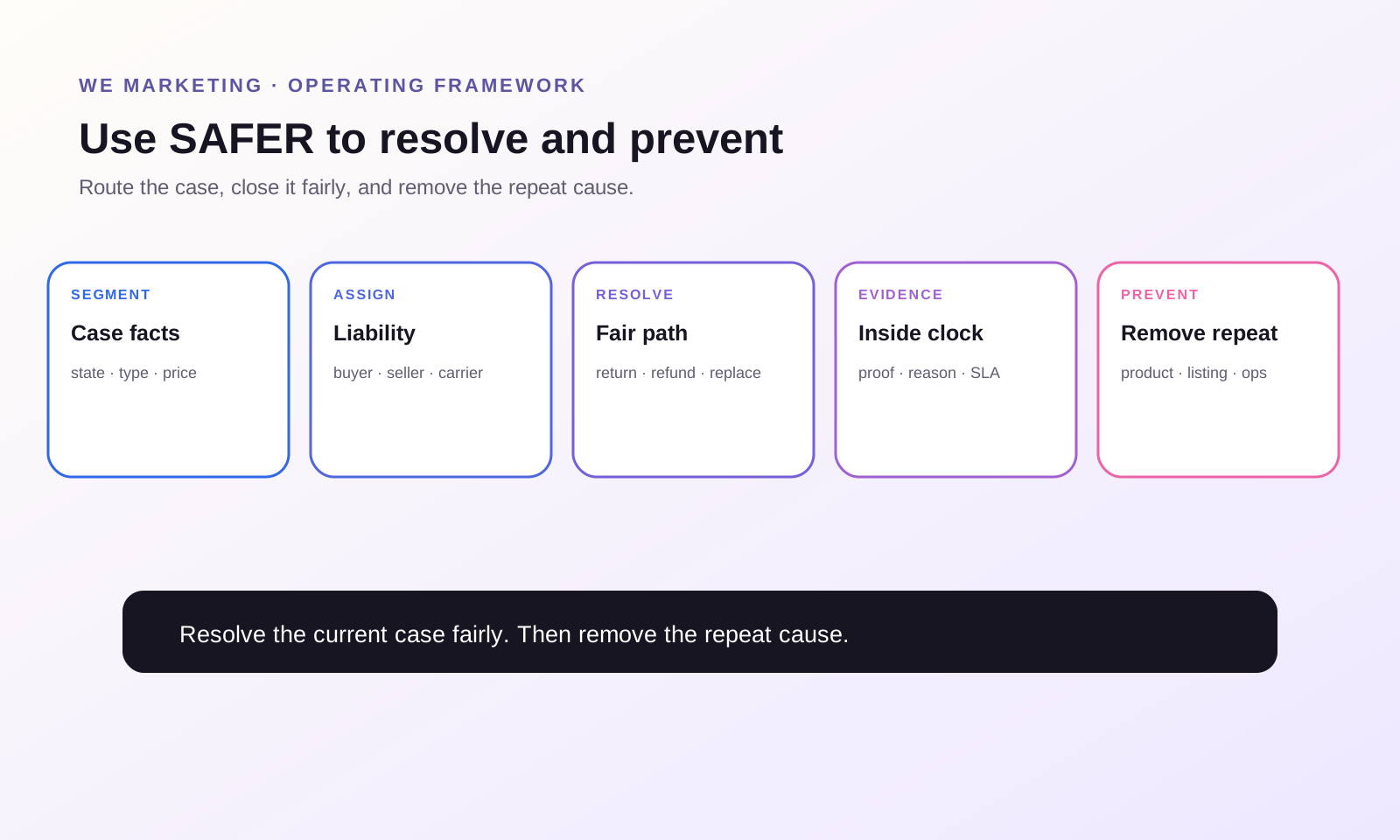
SAFER turns a live case into a fair resolution and an operating correction.
S: Segment the case
Confirm order state, shipping type, product class, reason, paid price, deadline, and whether TikTok Shop or the seller owns the next action. Do not apply a remembered rule without reading the live case. Policy and feature availability can change.
A: Assign liability and customer need
Separate buyer preference from seller fault, product defect, listing mismatch, warehouse error, carrier failure, and platform-managed logistics. Then state what the customer actually needs: money back, the right item, a working unit, a different size, or a clear delivery answer.
F: Find the fairest low-cost resolution
Compare full return, refund without return, partial refund, replacement, exchange, and evidence-based rejection. The chosen path must be allowed by the current case and should resolve the customer's real problem without adding unnecessary reverse-logistics cost.
E: Execute inside the clock with evidence
Record the deadline and act before it. Use accurate reason codes, concise customer communication, valid tracking, condition photos, package seals, SKU and quantity evidence, and inspection notes. A missed deadline can convert a reviewable request into an automatic approval.
R: Remove the repeat cause
Tag the root cause and assign it to product, listing, content, warehouse, carrier, customer service, or policy configuration. Update the product truth, quality check, packing standard, inventory rule, automation setting, or creator instruction. A closed ticket is not a closed operating defect.
Build a resolution matrix by cause, not by emotion
| Case pattern | First check | Useful resolution path | Prevention owner |
|---|---|---|---|
| No longer needed or does not fit | Returnability, current return window, condition, and available exchange | Standard return or exchange when eligible; returnless only when economics and rules support it | Listing, size guidance, content qualification |
| Not as described | Compare listing, video claims, variation, and delivered item | Refund, return, replacement, or accurate partial option; correct the claim immediately | Listing and content |
| Damaged or defective | Condition evidence, packaging, batch, and safety | Replacement or refund; do not require unsafe returns | Product quality and packaging |
| Wrong item or missing parts | Pick record, pack evidence, SKU, quantity, and warehouse lane | Replacement or refund with the correct evidence path | Warehouse and inventory control |
| Delivered but not received | Shipping type, carrier proof, address, scan, and platform case status | Follow the current shipping-type review or appeal path | Carrier selection and delivery evidence |
| Delayed in transit | Estimated delivery date, tracking movement, customer consent, and shipping type | Accurate update, cancellation/refund when eligible, or carrier claim | Fulfillment and carrier management |
| Returned item is wrong, used, or damaged | Returns grading, package evidence, and inspection photos | Full, partial, rejection, or appeal based on current eligibility and evidence | Returns inspection |
| Repeated low-value request | Rule scope, item recovery, abuse signal, and aggregate cost | Narrow automation or manual review; never treat all customers as abusive | Policy configuration and finance |
This matrix is an operating guide, not a substitute for the live Seller Center case. TikTok Shop may auto-approve certain requests, handle some FBT logistics cases, or apply platform-mandated refund without return. The current case screen decides what actions are actually available.
Treat automation as a financial policy, not a convenience toggle
Seller-Preferred Refund Without Return and automatic partial-refund rules can reduce workload and customer waiting time. They can also issue money automatically under conditions the seller defined. TikTok Shop's current materials state that seller-configured rules take priority in applicable cases, that sellers bear the refund costs under their own rules, and that appeals may not be accepted when the outcome came from a seller rule error.
Before enabling an automation, write down:
1. Eligible category and SKU range. 2. Allowed return reasons. 3. Paid-price range. 4. Maximum expected weekly exposure. 5. Excluded high-risk or high-value products. 6. Owner and review date. 7. Kill switch and exception path.
Start narrow. Review actual cases after one week. Compare saved labor and faster response with incremental refund cost, repeat requests, customer complaints, and any false-positive patterns. Automation is successful only when the total outcome improves.
Separate customer communication from internal investigation
Customers need a clear next step, not an internal debate about liability. A useful message confirms that the case is being reviewed, states the expected next action, requests only missing evidence, and gives a realistic timing update. It should not accuse the customer, promise a result before the evidence is reviewed, or move the transaction off TikTok Shop.
Internally, preserve the detailed evidence package. For product-condition disputes, use clear images that show the full item, affected area, SKU, quantity, components, and packaging. For fulfillment disputes, preserve labels, carrier acceptance, tracking events, pick-and-pack records, seals, weight where available, and the return address. For returned-item inspection, use the current Returns Grading Framework and the evidence format required by the case.
TikTok Shop's current guide requires condition grading for relevant cases and supports defined image formats, size limits, and image counts. The safe operating rule is simple: read the case's evidence prompt and submit exactly what it asks for before the clock expires.
Design the return operation around two clocks
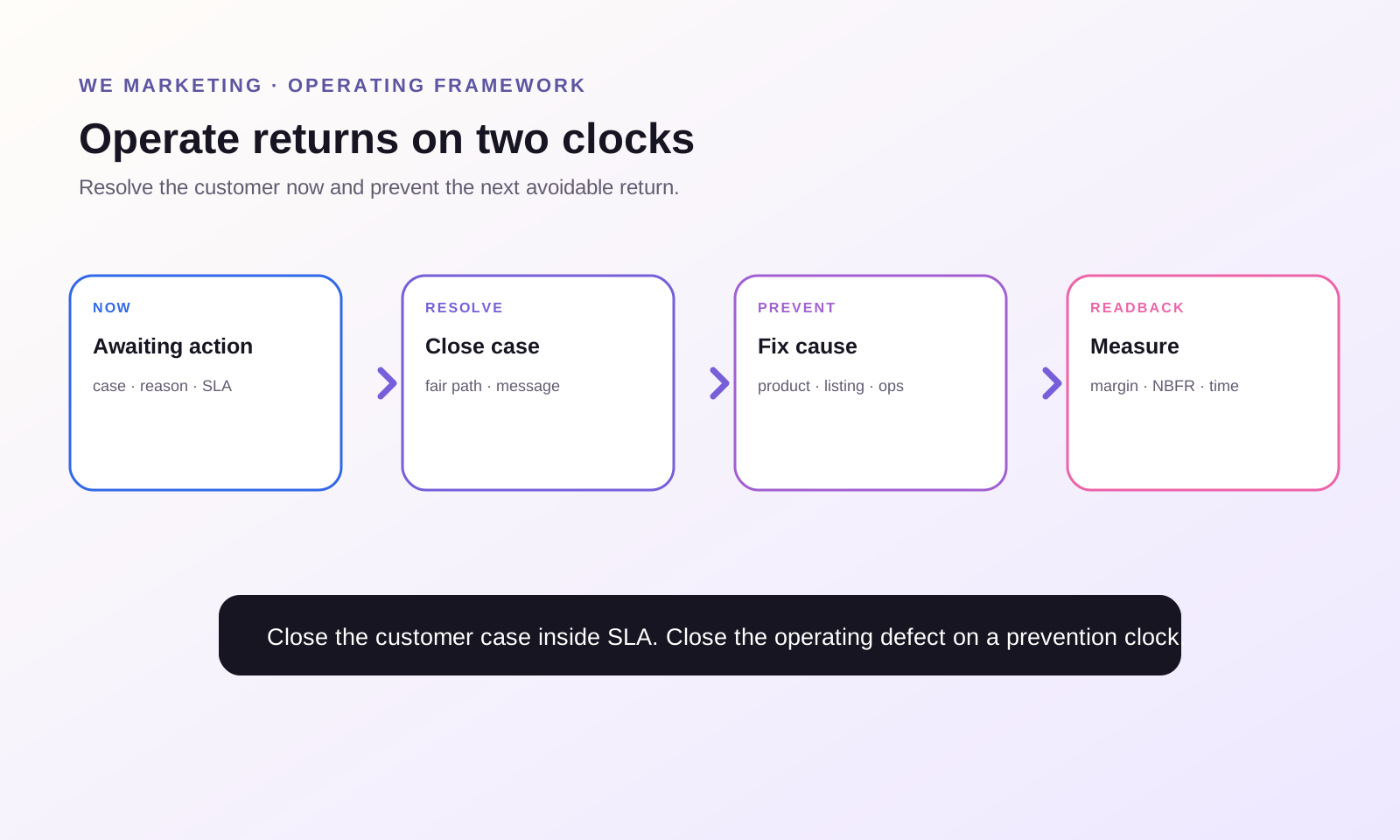
The first clock is the customer-resolution clock. Current official materials describe multiple review windows depending on the case, including 24-hour pre-shipment actions, one-business-day replacement reviews, and two- or four-business-day refund-only reviews for certain price bands. Standard returned-item review and other case types may use different deadlines. Never manage these from memory alone.
The second clock is the prevention clock. A team can close requests quickly while the same defect keeps generating new ones. Review root-cause signals on a daily and weekly cadence:
- Daily: awaiting-action cases, cases nearing SLA, high-value cases, unsafe products, wrong-item patterns, tracking exceptions, and replacement inventory.
- Weekly: return and refund reasons by SKU, paid price, creator or content source, shipping type, warehouse, carrier, batch, and resolution.
- Monthly: contribution margin after returns, inventory recovery, automation-rule performance, NBFR direction, aftersales handling time, and recurring customer-expectation gaps.
TikTok Shop's current NBFR requirement evaluates delivered orders over a rolling 60-day period for seller- or logistics-fault return and refund reasons. The Aftersales Handling Time metric also looks at seller-handled work over a rolling 60-day period and is published through Shop Performance Score. That makes return prevention and response speed part of growth infrastructure, not only support operations.
Connect returns to listing and creator change control
Every avoidable return should create a product-truth question: What did the customer believe before buying, what arrived, and where did the expectation diverge?
If the listing caused the gap, update the title, variation names, measurements, included parts, compatibility, material, color context, care, delivery promise, or limitations. If creator content caused the gap, identify the active assets, correct the brief, remove unsupported language, and communicate the change to creators promoting the affected SKU. If the product caused the gap, fix quality or stop scale. If fulfillment caused it, correct pick, pack, labeling, or carrier controls.
Do not hide return-driving truth because the old claim converts. That simply moves the cost downstream into refunds, poor ratings, disputes, and weaker customer trust.
Operational example: a sizing problem becomes a margin-control system
This is a hypothetical operational example, not a WEM client result.
A fashion seller sees a rise in “too small” returns on one variation. Support has been approving requests quickly, but the return rate and reverse-logistics cost keep growing. The team segments the cases and finds three causes: the product page uses body measurements without explaining garment measurements, two creator videos call the fit “true to size,” and the warehouse has occasionally picked the wrong size sticker.
The operator does not solve this with a blanket returnless-refund rule. The brand corrects the size table, adds a measurement demonstration, replaces the creator language with a fit qualification, and audits the warehouse label lane. Eligible customers still receive the appropriate return or exchange path. The weekly ledger then compares return reasons, exchange success, repeat contacts, contribution margin, and the affected SKU's NBFR-related signals.
The resolution protects the current customer. The change control protects the next customer and the next unit of margin.
Smallest useful next action: audit one return reason today
Open Manage Returns and select one SKU with repeated requests. Export or record the last ten cases without copying unnecessary personal data. For each case, capture order state, shipping type, reason, paid price, resolution, total estimated cost, evidence quality, and root-cause owner.
Choose one prevention action that can be completed today: correct a variation label, add a missing measurement, tighten a packing check, disable an overly broad automation rule, or add an SLA alert. Then set a seven-day readback. One closed repeat cause is worth more than a dashboard of unresolved return reasons.
Source notes
- TikTok Shop U.S. Academy, Requirements for Managing Returns, Refunds, and Replacements, complete current primary text observed August 3, 2026: https://seller-us.tiktok.com/university/essay?default_language=en&identity=1&knowledge_id=984433248438058
- TikTok Shop U.S. Policy Center, Customer Order Cancellation, Return, and Refund Policy, complete current primary text observed August 3, 2026: https://seller-us.tiktok.com/university/essay?default_language=en&identity=1&knowledge_id=3253210454181634
- TikTok Shop U.S. Policy Center, Non-Buyer Fault Return & Refund Rate Requirements, complete current primary text observed August 3, 2026: https://seller-us.tiktok.com/university/essay?default_language=en&identity=1&knowledge_id=5914428974778167
- TikTok Shop U.S. Policy Center, Aftersales Handling Time Requirements, complete current primary text observed August 3, 2026: https://seller-us.tiktok.com/university/essay?default_language=en&identity=1&knowledge_id=5513129770796813
Frequently asked questions
Should a TikTok Shop seller approve every return to protect customer trust?
No. Trust comes from a fair, fast, evidence-based process. Approve valid requests through the available path, use replacements or partial resolutions when they genuinely solve the problem, and reject only when the case facts and current policy support the decision. A careless approval rule can destroy margin; a careless rejection can create appeals and distrust.
When does refund without return make economic sense?
It can make sense when the expected recovery value is lower than return shipping, handling, inspection, and customer friction, or when the item is unsafe or impractical to return. Check whether the case is platform-mandated or seller-preferred because the cost, eligibility, and appeal risk differ.
Are sellers responsible for every TikTok Shop return shipping cost?
Do not assume one universal answer. Responsibility can vary by return reason, shipping type, current policy, and platform program. Read the live case and current official cost table before promising a customer outcome or booking the expense.
What evidence should a seller keep for a return dispute?
Keep the order and SKU details, accurate tracking, carrier acceptance, package and seal evidence, pick-and-pack records, product-condition images, missing-component evidence, return-address records, and concise inspection notes. Follow the exact format and deadline shown in the live case.
How do returns affect Shop Performance Score?
Current TikTok Shop materials state that Non-Buyer Fault Return and Refund Rate is a Shop Performance Score input and evaluates delivered orders with seller- or logistics-fault returns or refunds over the past 60 days. Aftersales Handling Time is also evaluated through Shop Performance Score. Exact thresholds and consequences should be read from the current Seller Center and official policy.
What should a brand measure besides return rate?
Measure contribution margin after returns, reason mix, refund cost, return shipping, inventory recovery, replacement success, time to resolution, appeal outcomes, repeat contacts, automation-rule exposure, NBFR direction, aftersales handling time, and the percentage of repeat causes that received a product, listing, content, warehouse, or carrier fix.
WE Marketing · TikTok Shop 美国站 · Shop Operations
TikTok Shop 退货不该吞掉利润,也不该毁掉客户信任
WE Marketing Team · 2026 年 8 月 3 日
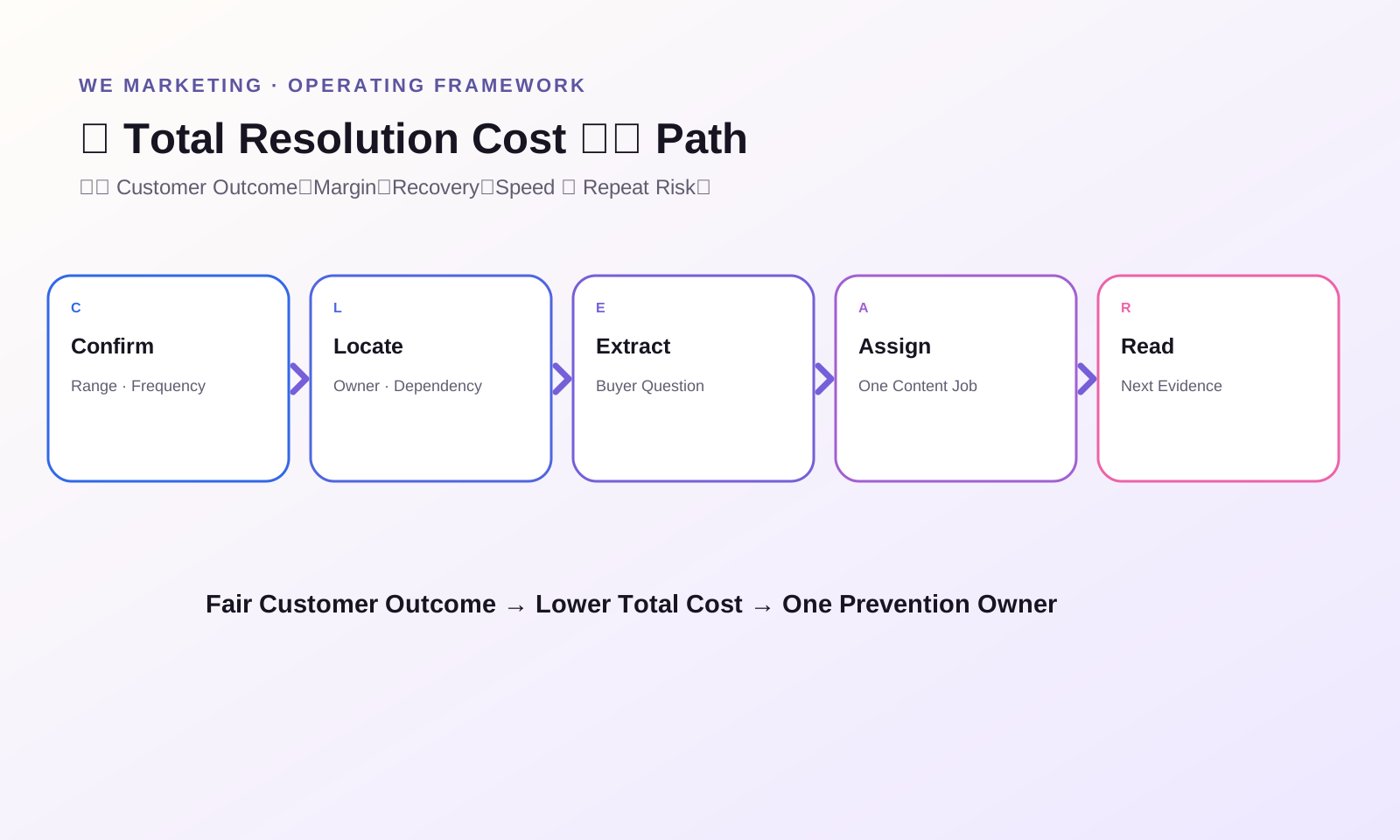
把每个 Return 路由给公平 Resolution 与 Prevention Owner
一套成熟的 TikTok Shop Return System,不是“全部拒绝”或“马上全额退款”。它先按照 Order State、Product Category、Shipping Type、Return Reason、Paid Price 与 Inventory Recoverability 路由,再选择公平且总成本更低的 Resolution。对 Customer 要快速说明下一步,对内部要留下 Evidence,并修掉导致退货的 Product、Listing、Content 或 Fulfillment Root Cause。
很多品牌把退货当成客服问题,其实它同时影响 Product Quality、Fulfillment、Cash Flow、Inventory、Content、Margin 与 Shop Performance Score。一次 Full Refund 可能保住客户关系,却让低客单商品的 Contribution Margin 彻底归零;一次没有充分证据的拒绝,看似省下退款,却可能带来 Appeal、差评、重复沟通和更高的 Trust Cost。
TikTok Shop 美国站当前政策不是一条统一的 Return Rule。Seller Shipping、TikTok Shipping 与 Fulfilled by TikTok 的责任不同;Returnable、Non-returnable、Final Sale 与 Hazmat 的处理不同;Ready to Ship、In Transit、Delivered 与 Reverse Logistics 的时钟也不同。Customer 选择的原因、实际 Paid Price、Seller 自己设置的 Automation Rule,都会改变可用动作和成本承担。最终必须以 Live Seller Center Case 与当前官方政策为准。
WEM 的实操建议是建立 Returns Decision System:把“当前客户怎么解决”和“为什么会发生”分开处理。先用公平、低摩擦、符合 Case Eligibility 的方式关闭当前请求,再通过 Product、Listing、Creator Brief、Warehouse、Carrier 或 Rule Setting 修掉重复原因。最小有用单位不是一份月报,而是一个 Case、一个 Reason Code、一个 Owner、一个 Evidence Package、一个 Resolution 与一个 Prevention Action。
先路由 Case,再决定是否退款
同一句“I did not receive it”,可能对应仍在 EDT 内运输、Seller Shipping Tracking 不完整、TikTok Shipping Carrier Issue,或由 FBT 处理的 Logistics Case。同一句“和预期不一样”,可能是 Listing 描述不准确、主观偏好、Variation 发错,或者商品真的 Defective。
在 Approve、Reject、Replacement、Exchange 或 Partial Refund 以前,先确认六个事实:
| Routing Fact | 为什么会改变 Decision |
|---|---|
| Order State | Pre-shipment Cancellation、In-transit Refund、Delivered Return 与 Reverse Logistics Dispute 的 Path 与 SLA 不同。 |
| Shipping Type | Seller Shipping、TikTok Shipping 与 FBT 的 Review、Reimbursement 与 Evidence 责任不同。 |
| Product Class | Returnable、Non-returnable、Final Sale、Hazmat、Pre-owned 与 Collectible 不能套同一个流程。 |
| Customer Reason | Preference、Fit、Not as Described、Damage、Defect、Wrong Item、Missing Item 与 Not Received 的责任不同。 |
| Paid Price | 平台 Threshold 与 Review Time 可能按消费者实际支付价格变化,不是只看 List Price。 |
| Available Recovery | 商品可能可以 Resell、Repair、Replace、Returnless、Partial Refund,或者完全没有 Recovery Value。 |
不要让 Customer 重复提供订单页面已经存在的信息。Operator 应该先读取 Case History、Current Status、Reason、Attachment、Carrier Event、SKU、Variation、Paid Price 与 Deadline,再提出真正缺失的一个问题。
选择 Resolution 前,先算清真正 Margin at Risk
真正有用的数字不是 Product Price,而是每一种可选 Resolution 的 Expected Total Cost。
Standard Return 要估算 Refund、不可回收的 Outbound Shipping、Return Shipping、Handling Labor、Inspection、Repackaging、相关 Fee 与最终可 Resell 的概率。Replacement 要加入 New Unit Cost、再次发货、Pick and Pack 与 Second Failure Risk。Refund Without Return 等于零 Inventory Recovery。Partial Refund 还要考虑 Customer 拒绝 Offer 后继续 Full Return 的概率。
建立一张简单 Resolution Ledger:
| Resolution | Customer Outcome | Margin Question | 更适合什么情况 |
|---|---|---|---|
| Full Return and Refund | 退回商品并获得核准退款 | Recovery Value 是否高于 Reverse Logistics 与 Inspection Cost? | 较高价值、可复售、可验证商品 |
| Refund Without Return | Customer 保留或处置商品 | Recovery Value 是否低于退回成本与摩擦? | 低价值、不可安全退回、Non-returnable 或不可复售商品 |
| Partial Refund | Customer 接受部分金额并保留商品 | 减免金额是否与剩余 Usable Value 公平匹配? | 轻微问题,且当前 Case 与 Tool 允许 |
| Replacement or Exchange | 收到正确商品、工作正常的商品或正确尺码 | 新 Inventory 是否可靠,能否一次解决 Failure? | Wrong Item、Damage、Defect、Fit |
| Evidence-based Rejection | 用清楚事实拒绝请求 | Evidence 是否足以通过 Appeal Review,同时不破坏 Trust? | Invalid、Unsupported、Wrong-item Return 或 Misuse |
Immediate Cost 最低,不代表 Business Cost 最低。如果一笔 12 美元退货暴露了 PDP 隐藏尺码限制,真正的 Margin Action 是在下一百单以前修 Listing 与 Creator Brief。
用 WEM SAFER Framework 管理每个 Return Case
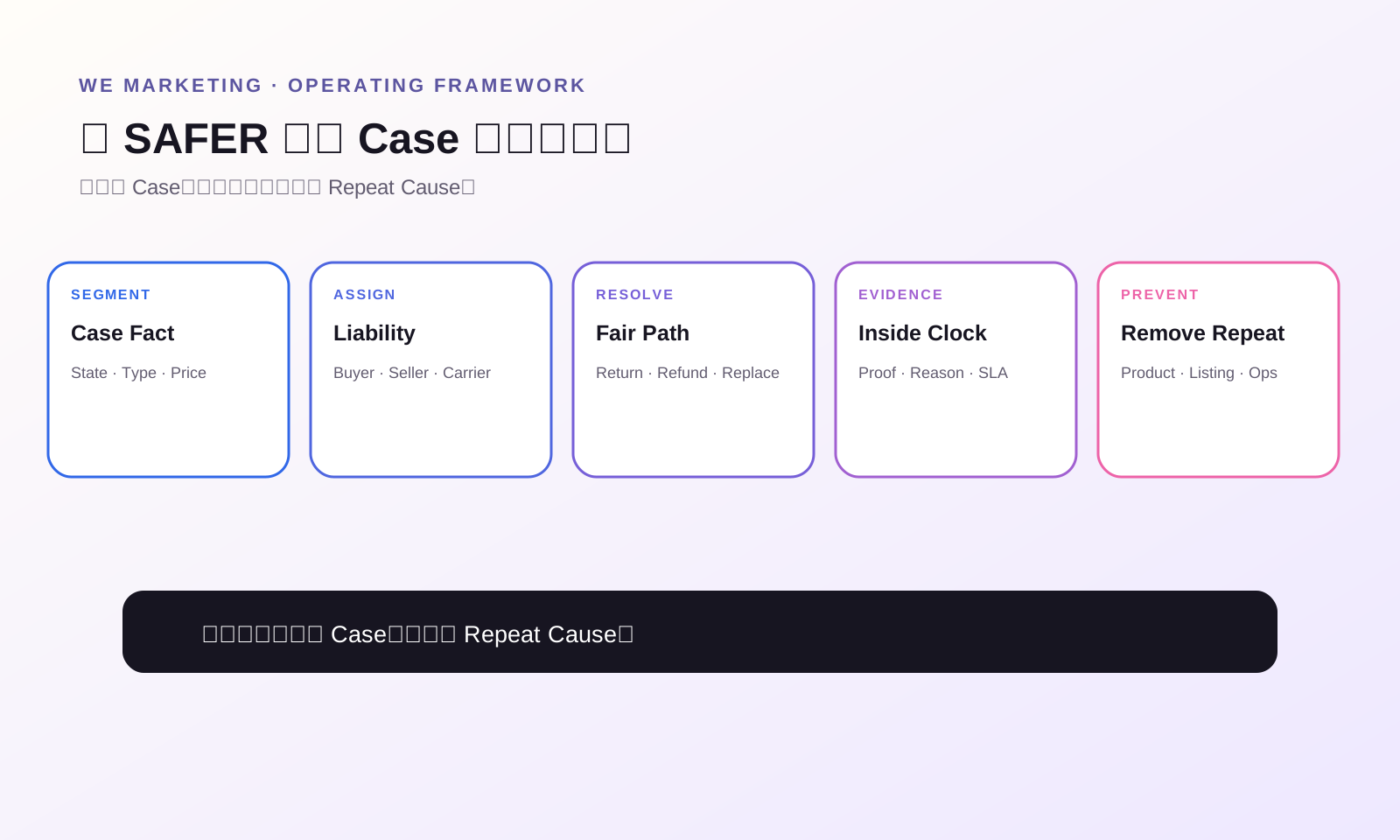
SAFER 把一个 Live Case 变成公平 Resolution 与 Operating Correction。
S: Segment the case
确认 Order State、Shipping Type、Product Class、Reason、Paid Price、Deadline,以及下一步到底由 TikTok Shop 还是 Seller 负责。不要靠记忆套 Rule。Policy 与 Feature Eligibility 会变化。
A: Assign liability and customer need
区分 Buyer Preference、Seller Fault、Product Defect、Listing Mismatch、Warehouse Error、Carrier Failure 与 Platform-managed Logistics。然后明确 Customer 真正需要什么:Money Back、Correct Item、Working Unit、Different Size,还是 Clear Delivery Answer。
F: Find the fairest low-cost resolution
比较 Full Return、Refund Without Return、Partial Refund、Replacement、Exchange 与 Evidence-based Rejection。动作必须在 Current Case 可用,并且真正解决 Customer 问题,不增加没有必要的 Reverse Logistics Cost。
E: Execute inside the clock with evidence
记录 Deadline,并在 SLA 前行动。选择准确 Reason Code,使用简洁 Customer Communication,保存 Valid Tracking、Condition Photo、Package Seal、SKU、Quantity、Pick-and-pack 与 Inspection Note。错过时钟,可能让本来可以 Review 的 Case 自动通过。
R: Remove the repeat cause
把 Root Cause 分配给 Product、Listing、Content、Warehouse、Carrier、Customer Service 或 Policy Configuration。修改 Product Truth、Quality Check、Packing Standard、Inventory Rule、Automation Setting 或 Creator Instruction。Ticket 关闭,不代表 Operating Defect 已经关闭。
按 Cause 建 Resolution Matrix,不要按情绪处理
| Case Pattern | First Check | Useful Resolution Path | Prevention Owner |
|---|---|---|---|
| No Longer Needed 或 Does Not Fit | Returnability、Return Window、Condition、Exchange Eligibility | Eligible 时做 Standard Return 或 Exchange;只有 Economics 与 Rule 支持时才 Returnless | Listing、Size Guide、Content Qualification |
| Not as Described | 比较 Listing、Video Claim、Variation 与 Delivered Item | Refund、Return、Replacement 或准确 Partial Option,并马上改 Claim | Listing 与 Content |
| Damaged 或 Defective | Condition Evidence、Packaging、Batch 与 Safety | Replacement 或 Refund;不要求危险商品退回 | Product Quality 与 Packaging |
| Wrong Item 或 Missing Parts | Pick Record、Pack Evidence、SKU、Quantity 与 Warehouse Lane | 按正确 Evidence Path 做 Replacement 或 Refund | Warehouse 与 Inventory Control |
| Delivered but Not Received | Shipping Type、Carrier Proof、Address、Scan 与 Case Status | 按当前 Shipping Type Review 或 Appeal | Carrier Selection 与 Delivery Evidence |
| Delayed in Transit | EDT、Tracking Movement、Customer Consent 与 Shipping Type | Accurate Update、Eligible Cancellation or Refund、Carrier Claim | Fulfillment 与 Carrier |
| Returned Item Wrong、Used 或 Damaged | Returns Grading、Package Evidence、Inspection Photo | 按当前 Eligibility 做 Full、Partial、Reject 或 Appeal | Returns Inspection |
| Repeated Low-value Request | Rule Scope、Recovery、Abuse Signal 与 Aggregate Cost | Narrow Automation 或 Manual Review,不把所有 Customer 当 Abuse | Policy Configuration 与 Finance |
这张 Matrix 是 Operating Guide,不代替 Live Seller Center Case。TikTok Shop 可能自动批准部分 Request、处理 FBT Logistics,或触发 Platform-mandated Refund Without Return。当前 Case Screen 才能确认真实可用 Action。
把 Automation 当 Financial Policy,不要当省事开关
Seller-Preferred Refund Without Return 与 Automatic Partial Refund 可以降低 Workload,也可以更快解决 Customer Request。但它们会按照 Seller 自己定义的条件自动出钱。TikTok Shop 当前材料说明,在适用场景里 Seller-configured Rule 会优先,Seller 承担自己 Rule 产生的 Refund Cost,而因为 Rule Setup Error 产生的结果可能无法 Appeal。
打开 Automation 以前,先写清:
1. Eligible Category 与 SKU Range。 2. Allowed Return Reason。 3. Paid-price Range。 4. Maximum Weekly Exposure。 5. Excluded High-risk 或 High-value Product。 6. Owner 与 Review Date。 7. Kill Switch 与 Exception Path。
先从 Narrow Rule 开始。一周后回读真实 Case,比较 Saved Labor、Response Speed、Incremental Refund Cost、Repeat Request、Customer Complaint 与 False-positive Pattern。只有 Total Outcome 变好,Automation 才算成功。
Customer Communication 与 Internal Investigation 要分开
Customer 需要 Clear Next Step,不需要看品牌内部争论 Liability。有效 Message 应该确认正在处理、说明下一步、只请求缺少的 Evidence,并给出真实 Timing。不要指责 Customer,不要在 Evidence 未完成时承诺结果,也不要把 TikTok Shop Transaction 引到站外。
内部则要保存完整 Evidence Package。Product-condition Dispute 需要能看到 Full Item、Affected Area、SKU、Quantity、Component 与 Packaging 的清楚图片。Fulfillment Dispute 要保存 Label、Carrier Acceptance、Tracking Event、Pick-and-pack Record、Seal、Weight 与 Return Address。Returned-item Inspection 要按照当前 Returns Grading Framework 与 Case Prompt 提交。
TikTok Shop 当前 Guide 对相关 Case 的 Condition Grading、Image Format、Size Limit 与 Image Count 有具体要求。安全做法只有一个:每次读 Live Case 的 Evidence Prompt,在 Deadline 前按原格式提交。
围绕两个 Clock 设计 Return Operation
第一个是 Customer-resolution Clock。当前官方材料包含不同 Case 的多个 Window,例如 24-hour Pre-shipment Action、1-business-day Replacement Review,以及部分 Price Band 的 2 或 4 business-day Refund-only Review。Returned-item Review 与其他 Case 可能使用不同 Deadline。不要从记忆管理这些时钟。
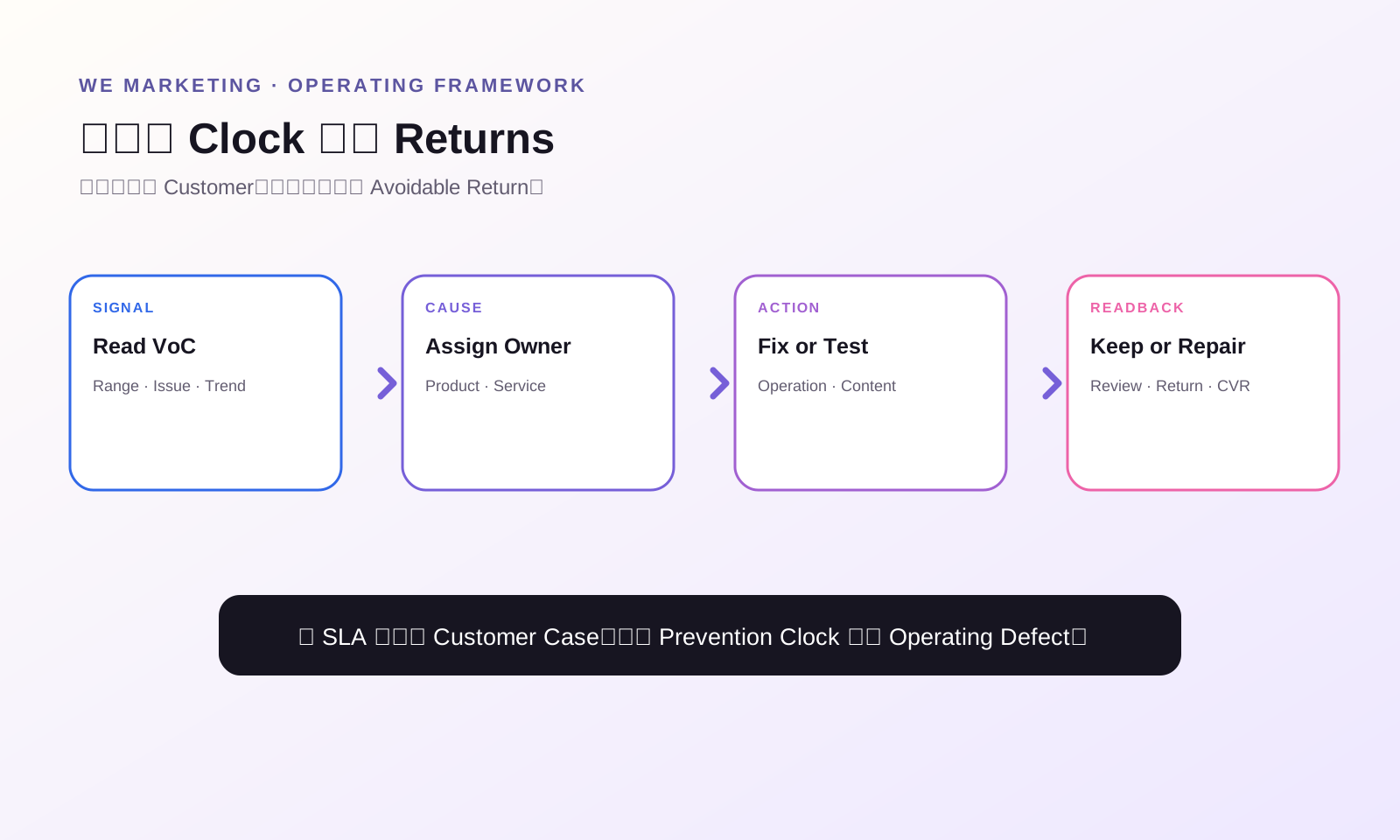
第二个是 Prevention Clock。团队可能快速关闭 Request,却让同一个 Defect 继续产生新 Case。建立三个 Cadence:
- Daily:Awaiting Action、Near SLA、High-value、Unsafe Product、Wrong-item Pattern、Tracking Exception 与 Replacement Inventory。
- Weekly:按 SKU、Paid Price、Creator or Content Source、Shipping Type、Warehouse、Carrier、Batch 与 Resolution 拆 Return Reason。
- Monthly:Contribution Margin After Returns、Inventory Recovery、Automation Rule Performance、NBFR Direction、Aftersales Handling Time 与 Customer Expectation Gap。
TikTok Shop 当前 NBFR Requirement 使用 Rolling 60-day Delivered Orders,统计 Seller-fault 或 Logistics-fault Return and Refund Reason。Aftersales Handling Time 同样基于最近 60 天 Seller-handled Work,并进入 Shop Performance Score。Return Prevention 与 Response Speed 因此属于 Growth Infrastructure,不只是 Support Work。
把 Returns 接进 Listing 与 Creator Change Control
每一个 Avoidable Return 都应该提出同一个 Product Truth Question:Customer 购买前相信什么、实际收到什么、Expectation 在哪里分叉?
如果原因在 Listing,就修 Title、Variation Name、Measurement、Included Parts、Compatibility、Material、Color Context、Care、Delivery Promise 或 Limitation。如果原因在 Creator Content,就找到 Active Asset,改 Brief,删除 Unsupported Language,并通知仍在推广这个 SKU 的 Creator。如果原因在 Product,就修 Quality 或停止放大。如果原因在 Fulfillment,就修 Pick、Pack、Label 或 Carrier Control。
不要因为旧 Claim 还能转化,就隐藏正在制造 Return 的 Truth。这样只会把 Cost 推迟到 Refund、Poor Rating、Dispute 与 Customer Trust。
Operational Example:Size Problem 变成 Margin Control System
这是 Hypothetical Operational Example,不是 WEM Client Result。
一个 Fashion Seller 发现某个 Variation 的“Too Small”退货上升。Support 一直快速 Approve,但 Return Rate 与 Reverse Logistics Cost 继续增长。团队把 Case 分层后发现三个 Cause:PDP 使用 Body Measurement,却没有解释 Garment Measurement;两个 Creator Video 说“True to Size”;Warehouse 偶尔贴错 Size Sticker。
Operator 没有用 Blanket Returnless Refund Rule 解决。品牌修正 Size Table,增加 Measurement Demonstration,把 Creator Language 改成 Fit Qualification,并 Audit Warehouse Label Lane。Eligible Customer 仍然得到合适 Return 或 Exchange Path。Weekly Ledger 再比较 Return Reason、Exchange Success、Repeat Contact、Contribution Margin 与相关 NBFR Signal。
Resolution 保护当前 Customer,Change Control 保护下一个 Customer 与下一单 Margin。
Smallest Useful Next Action:今天 Audit 一个 Return Reason
打开 Manage Returns,选择一个有重复 Request 的 SKU。记录最近 10 个 Case,不复制不必要的 Personal Data。每条保留 Order State、Shipping Type、Reason、Paid Price、Resolution、Estimated Total Cost、Evidence Quality 与 Root-cause Owner。
选择一个今天能完成的 Prevention Action:修一个 Variation Label、补一张 Measurement、加强 Packing Check、关闭过宽的 Automation Rule,或增加 SLA Alert。设定 7-day Readback。关闭一个重复 Cause,比保存一张无人负责的 Return Dashboard 更有价值。
Source notes
- TikTok Shop 美国站,Requirements for Managing Returns, Refunds, and Replacements,2026 年 8 月 3 日读取完整当前原文:https://seller-us.tiktok.com/university/essay?default_language=en&identity=1&knowledge_id=984433248438058
- TikTok Shop 美国站,Customer Order Cancellation, Return, and Refund Policy,2026 年 8 月 3 日读取完整当前原文:https://seller-us.tiktok.com/university/essay?default_language=en&identity=1&knowledge_id=3253210454181634
- TikTok Shop 美国站,Non-Buyer Fault Return & Refund Rate Requirements,2026 年 8 月 3 日读取完整当前原文:https://seller-us.tiktok.com/university/essay?default_language=en&identity=1&knowledge_id=5914428974778167
- TikTok Shop 美国站,Aftersales Handling Time Requirements,2026 年 8 月 3 日读取完整当前原文:https://seller-us.tiktok.com/university/essay?default_language=en&identity=1&knowledge_id=5513129770796813
常见问题
为了保护 Customer Trust,TikTok Shop Seller 是否应该批准所有退货?
不应该。Trust 来自公平、快速、Evidence-based Process。Valid Request 应通过当前可用 Path 解决;Replacement 或 Partial Resolution 只有在真正解决问题时才使用;Reject 必须有 Case Fact 与 Current Policy 支持。草率 Approve 会伤 Margin,草率 Reject 会带来 Appeal 与不信任。
什么情况下 Refund Without Return 更合理?
当 Expected Recovery Value 低于 Return Shipping、Handling、Inspection 与 Customer Friction,或者商品不适合安全退回时,它可能更合理。要先确认是 Platform-mandated 还是 Seller-preferred,因为 Cost、Eligibility 与 Appeal Risk 不同。
Seller 是否要承担所有 TikTok Shop Return Shipping Cost?
不要假设有一个统一答案。责任会随 Return Reason、Shipping Type、Current Policy 与 Platform Program 变化。在向 Customer 承诺或记账前,先读 Live Case 与当前官方 Cost Table。
Return Dispute 应该保存哪些 Evidence?
保存 Order 与 SKU Detail、Accurate Tracking、Carrier Acceptance、Package and Seal、Pick-and-pack Record、Product-condition Image、Missing-component Evidence、Return Address 与简洁 Inspection Note。最终以 Live Case 要求的 Format 与 Deadline 为准。
Returns 如何影响 Shop Performance Score?
TikTok Shop 当前材料说明,NBFR 是 Shop Performance Score Input,观察最近 60 天 Delivered Order 中由 Seller 或 Logistics Fault 导致的 Return and Refund。Aftersales Handling Time 也通过 Shop Performance Score 评估。Exact Threshold 与 Consequence 必须回读当前 Seller Center 与官方 Policy。
除了 Return Rate,品牌还应该看什么?
看 Contribution Margin After Returns、Reason Mix、Refund Cost、Return Shipping、Inventory Recovery、Replacement Success、Resolution Time、Appeal Outcome、Repeat Contact、Automation Exposure、NBFR Direction、Aftersales Handling Time,以及多少 Repeat Cause 真正得到 Product、Listing、Content、Warehouse 或 Carrier Fix。