WE Marketing · TikTok Shop U.S. · Shop Operations
Why Shop Performance Score Becomes a Growth Ceiling
By the WE Marketing Team · Published August 4, 2026
Fix the operating constraint before scaling demand
Shop Performance Score becomes a growth ceiling when weak product satisfaction, fulfillment, or customer service stops a TikTok Shop brand from using the traffic, creator, campaign, settlement, and customer-retention tools needed for the next stage of growth. The practical answer is not to chase the headline score. Diagnose the six underlying metrics, fix the highest-leverage operating cause, protect valid exclusions and appeals with evidence, and re-read the live benefit threshold before making a scale decision.
Shop Performance Score, usually shortened to SPS, is easy to treat as an account-health badge. That interpretation is too shallow. TikTok Shop's current U.S. guide describes SPS as a dynamic score from 0 to 5. It becomes available after the shop reaches the required delivered-order history, compares the shop with sellers in its bestselling category, and uses six metrics across product satisfaction, fulfillment and logistics, and customer service.
The score matters because it sits between demand and the operating system that must fulfill that demand. A brand can have strong creator content, attractive products, and a growing advertising budget, yet still lose access to growth tools or cash-flow advantages when customer experience falls below current thresholds. A lower score is not the same as a policy enforcement action. TikTok Shop's Account Health Rating is the compliance system. SPS is a rewards and access system. Even so, losing access to an important program can feel like a ceiling because the next growth lever is no longer available.
WEM's operator view is simple: SPS is a lagging summary of six customer-experience systems and a leading constraint on what the shop can safely scale. Manage the systems, not the number. The smallest useful unit is one weak metric, one root cause, one accountable owner, one corrective action, and one readback date.
SPS is a growth control surface, not one performance KPI
The current SPS guide groups six metrics into three dimensions:
| Dimension | Current metric | Operating question |
|---|---|---|
| Product Satisfaction | Negative Review Rate, NRR | Are product truth, quality, and expectations producing satisfied customers? |
| Product Satisfaction | Non-Buyer Fault Return and Refund Rate, NBFR | Are seller or logistics failures causing customers to request returns or refunds? |
| Fulfillment and Logistics | Seller Fault Cancellation Rate, SFCR | Are inventory, pricing, and order handling reliable enough to accept demand? |
| Fulfillment and Logistics | On-Time Delivery Rate, OTDR | Are orders reaching customers by the expected deliver-by date? |
| Customer Service | IM Dissatisfaction Rate | Do customers rate conversations as helpful and satisfactory? |
| Customer Service | Aftersales Handling Time | How long are requests and returned-item inspections waiting for seller resolution? |
These metrics are not interchangeable. More creator videos cannot repair a wrong-item pick process. A faster chat reply cannot remove a misleading product claim. A generous refund may close one case but will not fix an inventory system that keeps canceling orders. SPS forces a brand to see that growth is cross-functional.
The current guide also uses category-relative benchmarks. The shop is not graded against one permanent universal standard. Its metrics are normalized against the primary category connected to its bestselling category over the relevant period. A number copied from another seller, category, or older article is therefore not a safe target. The live SPS dashboard, category benchmark, and Top Opportunity tag are the correct control surfaces.
Why the score becomes a ceiling instead of just a warning
A ceiling appears when one operating weakness blocks several downstream growth choices at the same time.
First, SPS can affect access. The current official guide organizes benefits around score levels and lists tools such as Flash Deals, Affiliate Marketing, Campaigns, accelerated settlement, Shop Recognition, CRM access, Sales Accelerator, and additional search or recommendation visibility. The exact benefit shown to a shop can change, so the live account remains the final eligibility gate.
Second, SPS can affect continuity. The current guide states that if SPS falls below a specified lower boundary, active Affiliate Marketing or Campaign participation can be terminated and eligibility must be rebuilt to the current re-entry threshold. CRM permissions can also be frozen or revoked at defined score ranges. A brand may still have products and content, but the operating distribution system becomes narrower.
Third, SPS can affect cash velocity. Shorter settlement periods can reduce working-capital pressure. When the shop cannot qualify, more cash remains tied up between delivery and settlement. That matters when the brand is funding inventory, creator samples, commission, advertising, and returns at the same time.
Fourth, SPS can affect trust signals and visibility. TikTok Shop's guide describes score-linked visibility estimates and seller-recognition benefits. Those estimates are not guaranteed traffic. The safe interpretation is that a stronger customer-experience system can support more platform opportunities, while a weak system can restrict them.
That is why SPS is a ceiling. It does not merely report yesterday. It can change which growth mechanisms are available tomorrow.
Read the score correctly before acting
SPS is dynamic, category-relative, and sensitive to recent orders. The current guide uses time-based weighting for metrics measured over the delivery window, with recent orders carrying more impact and older orders declining in weight. That design gives improvement a chance to appear sooner, but it also means a fresh failure cluster can move the score quickly.
Do not read only the composite score. Review five layers:
1. Composite SPS and current benefit threshold. 2. Three dimension scores: Product Satisfaction, Fulfillment and Logistics, and Customer Service. 3. Six metric scores and their category benchmarks. 4. The orders, products, reviews, returns, cancellations, deliveries, or conversations behind the weak metric. 5. Current exclusions, small-volume protections, and appeal status.
The official guide notes that a metric may show no data when there is not enough information, and its weight can be redistributed across scored factors. It also describes protections for some small-order-volume sellers and exclusions for risk-controlled orders, creator sample orders, successfully appealed orders, certain FBT-caused issues, and other specified cases. Never assume a blank metric is good performance, and never treat a disputed case as corrected until the score readback actually changes.
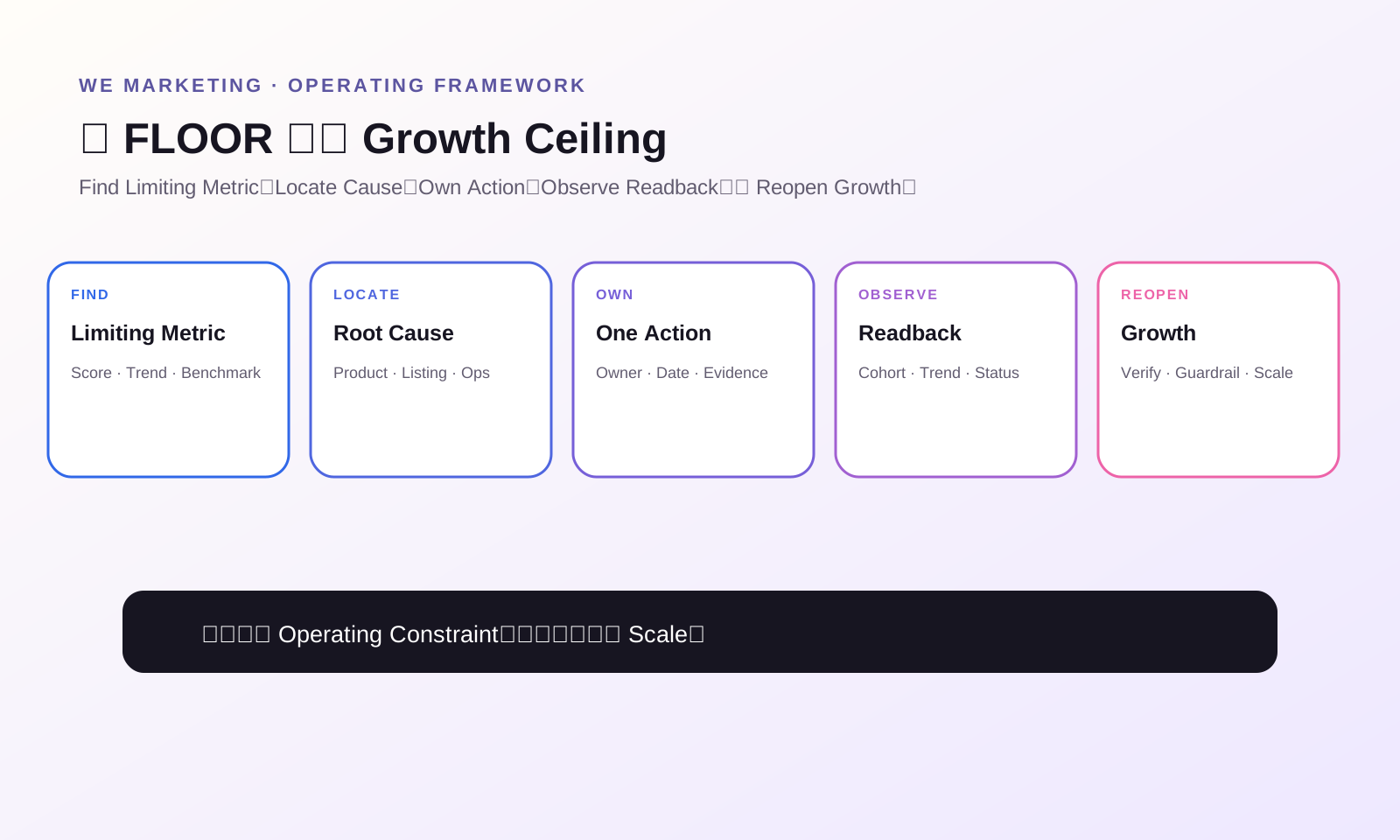
Use the WEM FLOOR framework to remove the ceiling
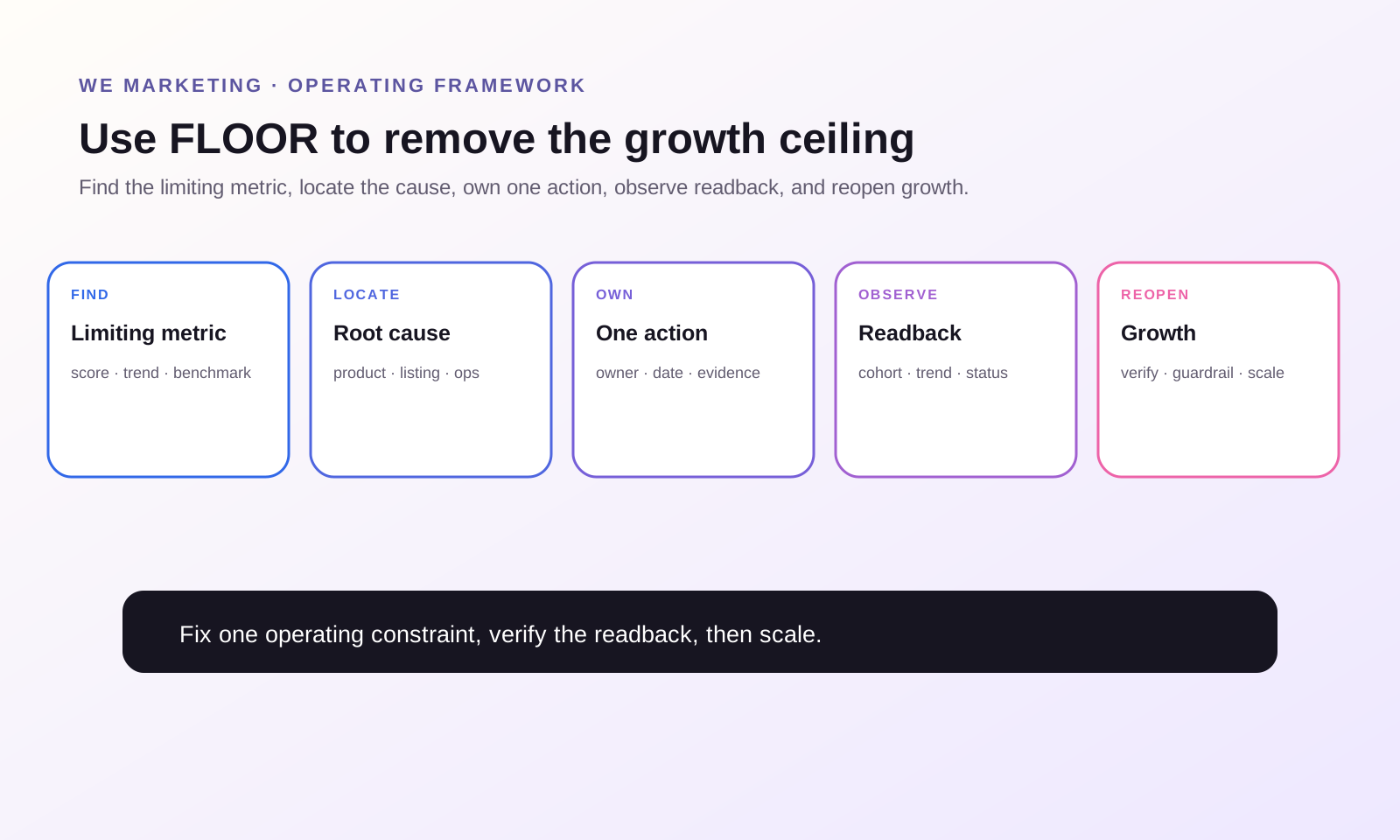
FLOOR turns SPS from an anxious number into an operating sequence.
F: Find the limiting metric
Open Seller Center, go to Account Health and Shop Performance Score, then read the Top Opportunity tag, metric score, trend, category benchmark, and affected records. Choose one metric that can create the greatest improvement. Do not launch six unowned projects at once.
L: Locate the root cause
Move from the metric to the underlying failure. NRR may come from product defects, misleading content, confusing variations, sizing, packaging, or misuse. NBFR may come from product, warehouse, carrier, or listing failures. SFCR may come from inventory accuracy, price errors, overselling, or late handling. OTDR may come from processing, carrier choice, capacity, or an incorrect fulfillment model. IM dissatisfaction and aftersales delay may come from staffing, unclear playbooks, weak escalation, or too many manual steps.
O: Own one corrective action
Assign one owner who can change the cause, not merely report the metric. Product fixes belong with product or quality. Listing truth belongs with merchandising and content. Pick errors belong with warehouse operations. Carrier failure belongs with logistics. Chat and aftersales delay belong with customer-service operations. Every action needs a deadline and evidence of completion.
O: Observe the readback window
Record when the affected orders entered the calculation and when the corrective action should begin influencing new orders. Because recent orders carry more weight, a clean new cohort matters. Do not promise an instant SPS rebound. Watch the metric trend, affected-order export, new failure rate, and benefit status.
R: Reopen growth only after verification
Resume the constrained growth lever only after the live dashboard shows that the relevant metric and eligibility are stable. If the shop is about to increase creator volume, run a campaign, or raise ad spend, confirm that inventory, delivery, product truth, support capacity, and aftersales handling can absorb the additional order volume.
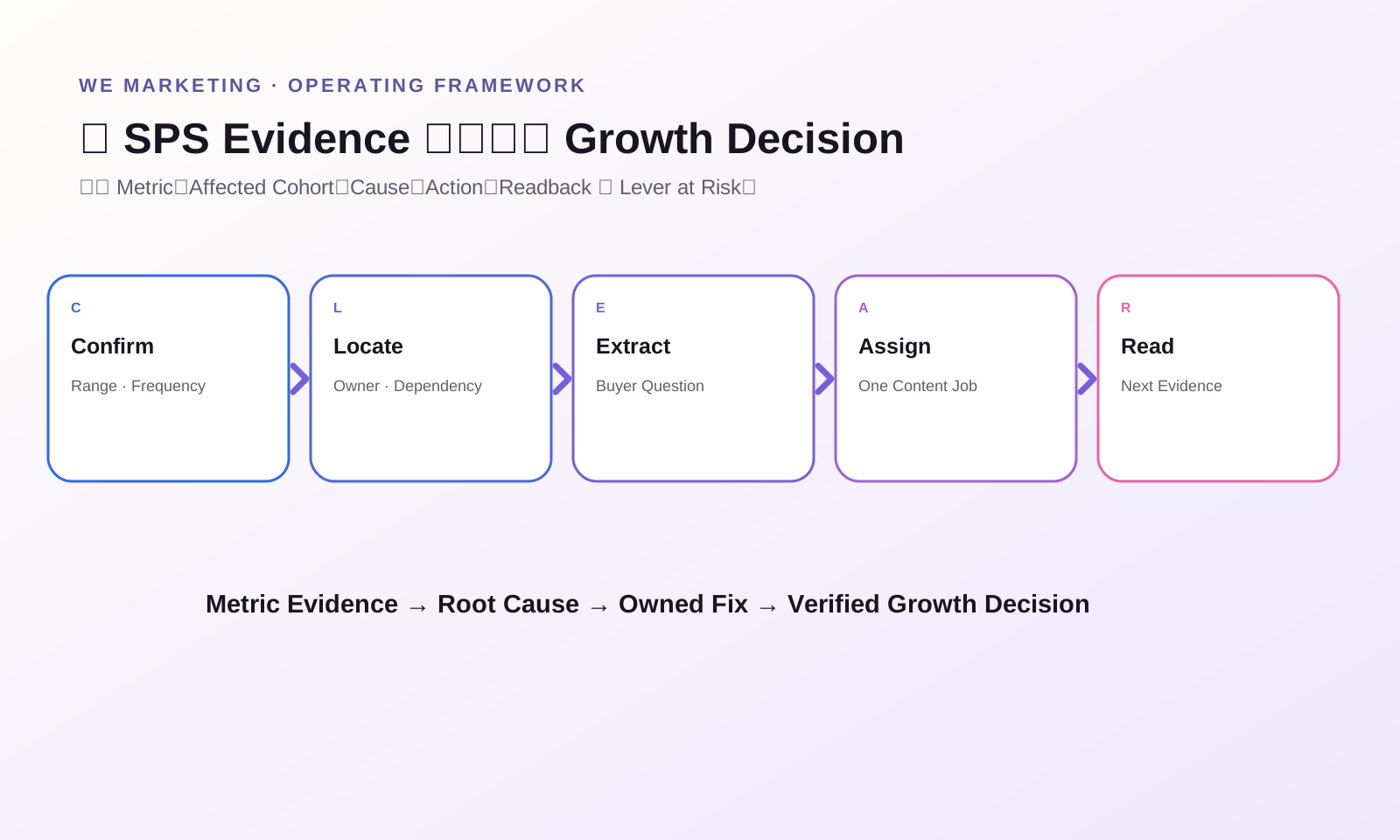
Build one SPS control ledger
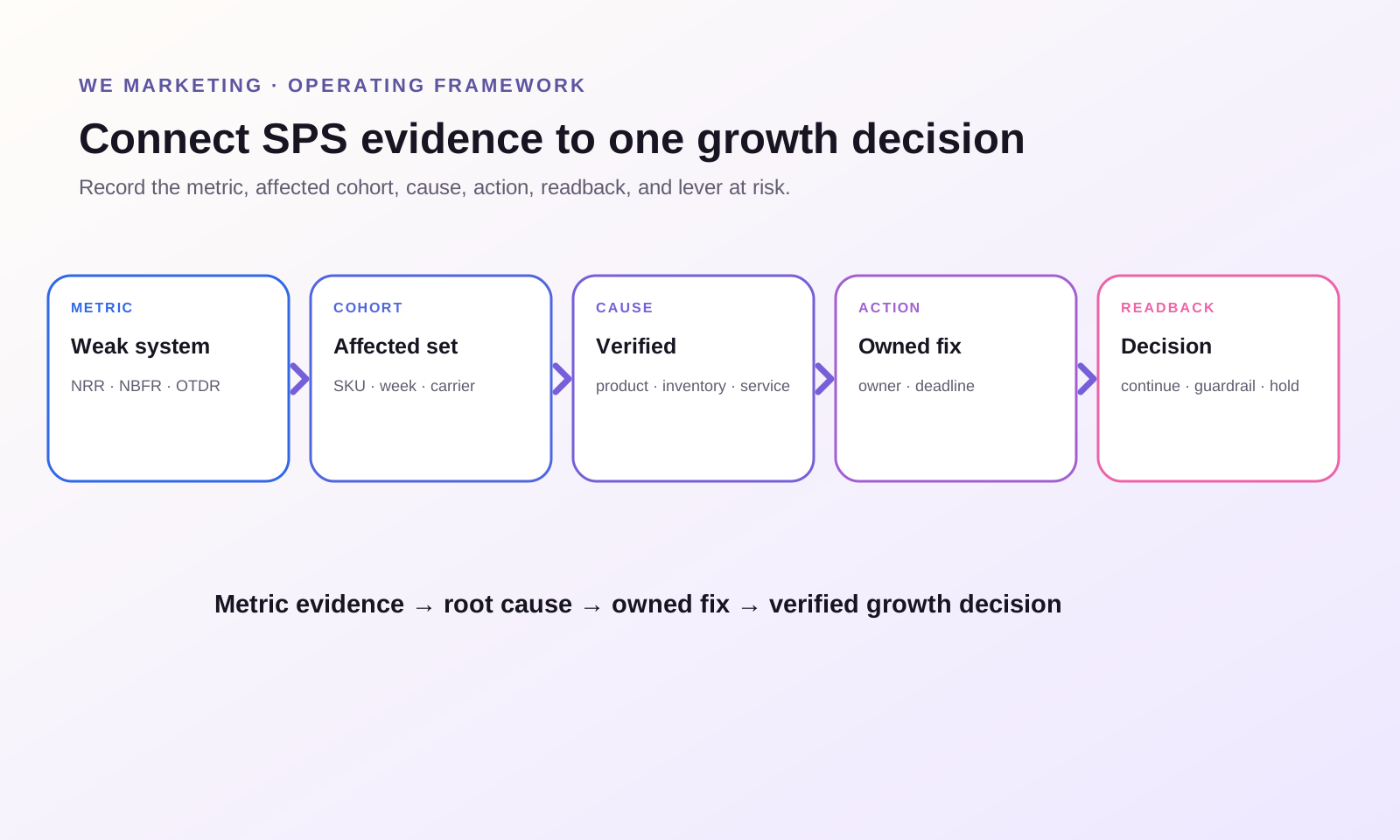
A weekly SPS control ledger should connect the score to facts and decisions:
| Field | What to record | Why it matters |
|---|---|---|
| Metric | NRR, NBFR, SFCR, OTDR, IM dissatisfaction, or aftersales time | Keeps the team focused on a controllable system |
| Current score and trend | Live value, direction, and category benchmark | Separates improvement from guesswork |
| Affected cohort | SKU, warehouse, carrier, creator claim, order week, or support queue | Locates the failure cluster |
| Root cause | The verified operating cause | Prevents symptom-only fixes |
| Owner and action | One accountable person and one change | Creates execution responsibility |
| Readback date | When new evidence should be checked | Avoids daily score panic |
| Growth lever at risk | Affiliate, Campaigns, CRM, settlement, visibility, or recognition | Connects service quality with commercial consequence |
| Appeal evidence | Ticket, order IDs, reason, files, status | Separates incorrect attribution from real operating failure |
Do not turn this ledger into a reporting museum. Its job is to force one decision: what must change before the brand can safely add more demand?
Fix the metric with the right operating owner
For NRR, compare initial one-star and two-star review themes with the actual product, listing, creator claims, variation names, instructions, and packaging. Fix product truth before producing more content. The official guide states that edits to an existing review do not replace the initial review used in NRR, so the useful goal is preventing the next negative experience.
For NBFR, separate product defect, wrong item, missing part, damage, description mismatch, carrier failure, and other non-buyer causes. Link each cluster to product quality, warehouse accuracy, packaging, listing truth, or logistics. A fast refund can protect the customer, but only root-cause correction protects the next cohort.
For SFCR, audit inventory accuracy, safety stock, bundle components, price changes, order-capacity settings, and late handling. A campaign that sells unavailable inventory creates demand the shop cannot honor.
For OTDR, map processing time, dispatch, carrier handoff, transit, and deliver-by performance. Use the correct Pre-Order, Made-to-Order, Backorder, or custom-handling setup when eligible instead of forcing every product into a standard promise.
For IM dissatisfaction, review conversation quality rather than reply speed alone. Audit whether the customer received a clear answer, accurate policy explanation, useful next step, appropriate empathy, and timely escalation. Chatbot and FAQ interactions may be treated differently in the current calculation, so use the live diagnostic view.
For aftersales handling time, separate request approval from returned-item inspection. Build queue ownership, near-deadline alerts, evidence checklists, and narrow automation where it improves total outcomes. A broad auto-approval rule can reduce time while increasing refund cost or false approvals, so measure both customer speed and margin exposure.
Appeal incorrect attribution without avoiding real fixes
TikTok Shop's current SPS appeal guide allows sellers to challenge eligible metric impacts they believe came from buyer mistakes, logistics issues, system errors, or other supported reasons. The official process uses selected metrics, appeal reasons, affected orders, and evidence. Current ticket limits, attempt limits, and review timing should be read from the live Appeal Center before submission.
An appeal is not a substitute for operations. Use two lanes:
- Evidence lane: preserve the order, tracking, product, packaging, conversation, inspection, and system evidence required by the current reason.
- Correction lane: fix any real listing, product, fulfillment, carrier, support, or aftersales weakness visible in the same cluster.
Record an appeal as submitted, under review, approved, rejected, or reflected in the score. Only the last state proves the operating ceiling changed.
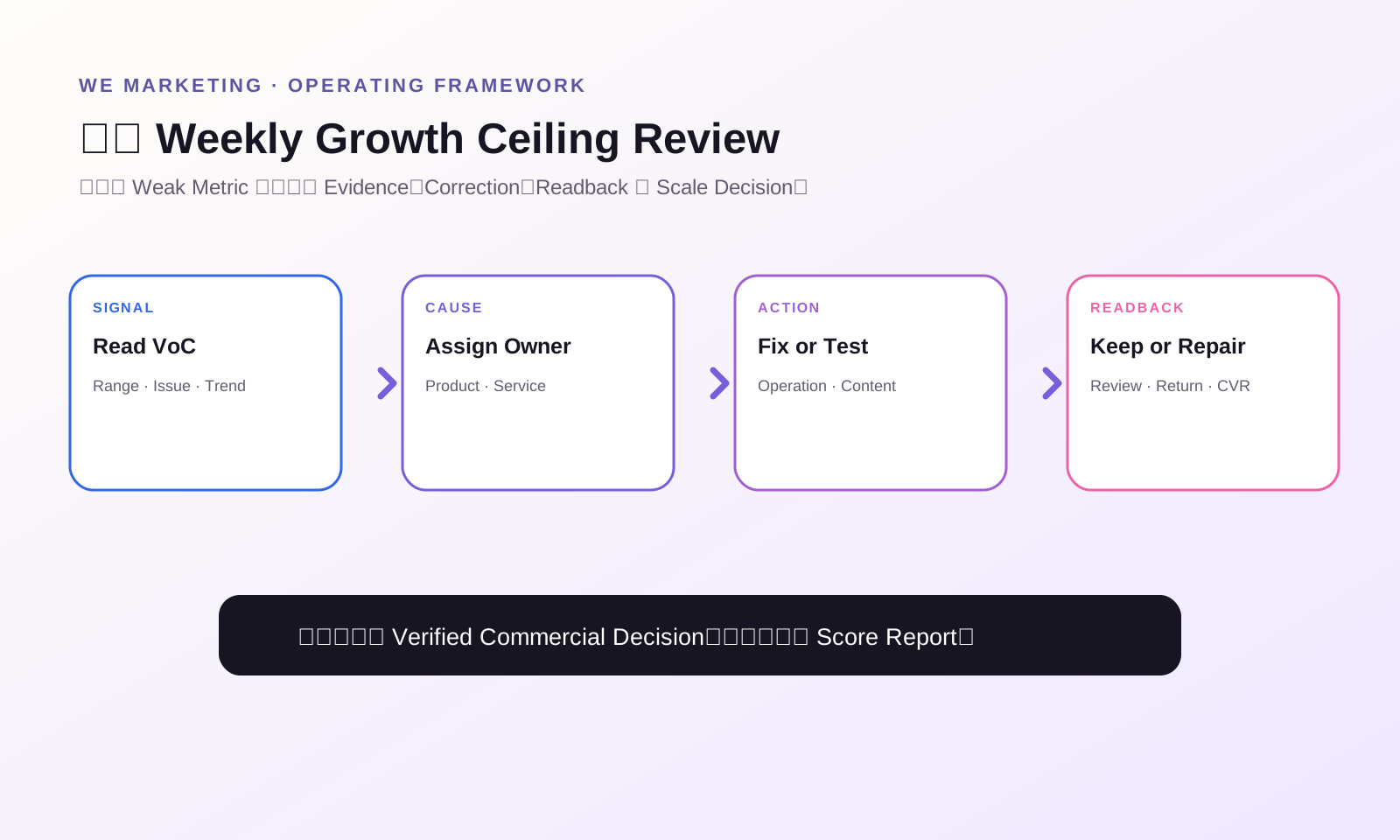
Run a weekly growth ceiling review
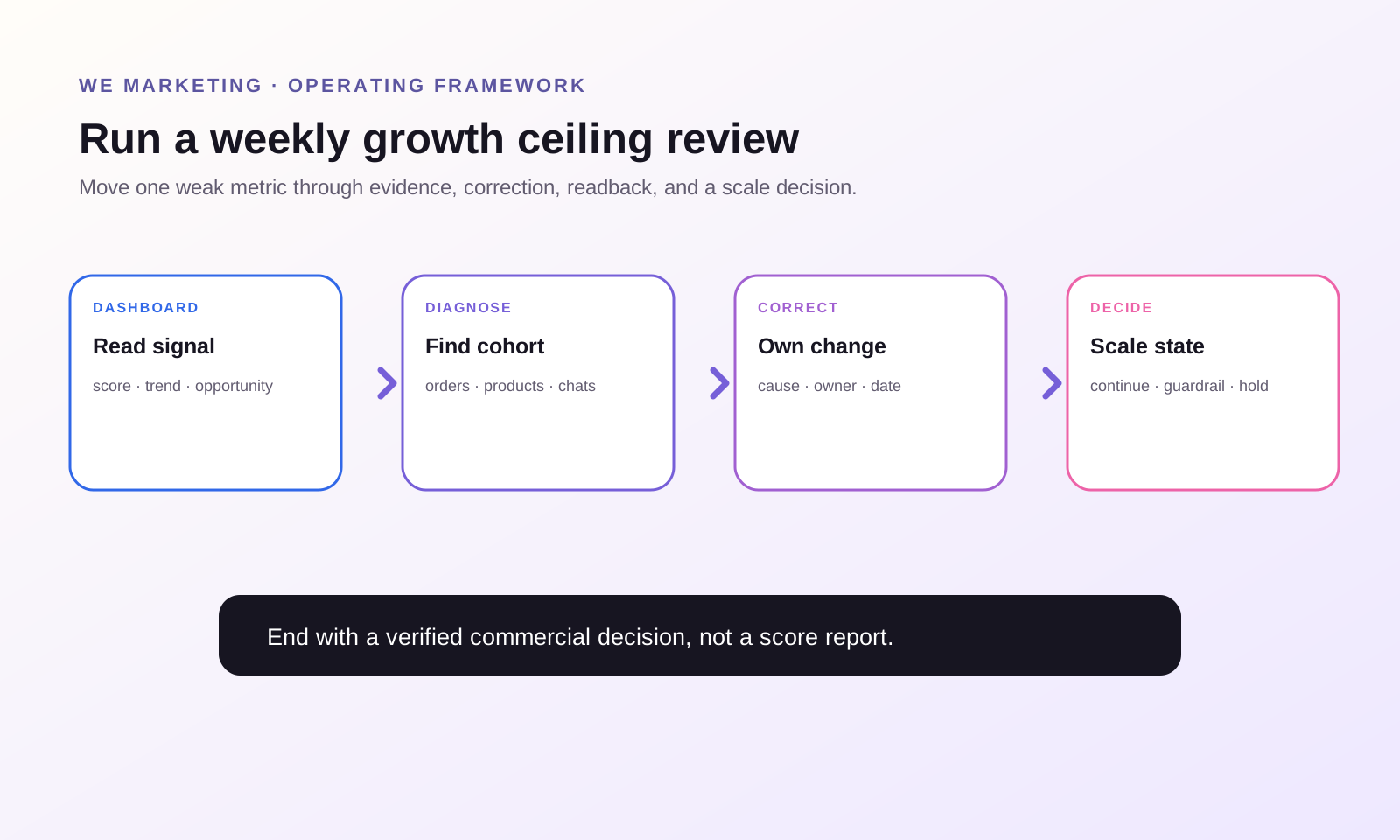
The weekly review should take one weak metric through evidence, cause, action, and growth decision.
Start with the live SPS dashboard and ask:
- Which metric has the Top Opportunity tag?
- Which new orders or interactions are pulling the trend down?
- Is the problem concentrated by SKU, warehouse, carrier, content claim, creator, or support queue?
- Which records are valid exclusions or appeal candidates?
- What one root-cause action will be completed this week?
- Which growth lever should remain paused until readback?
Then connect SPS with the operating calendar. Before a campaign, confirm inventory and delivery capacity. Before expanding Affiliate Marketing, confirm product truth and sample-to-order readiness. Before increasing advertising, confirm the landing SKU can survive more volume. Before a major promotion, confirm customer service and aftersales coverage.
The meeting ends with one of three decisions: continue scale, scale with a guardrail, or hold the affected growth lever while the root cause is fixed. A score review without a commercial decision is only reporting.
Operational example: creator growth exposes a fulfillment ceiling
This is a hypothetical operational example, not a WEM client result.
A beauty seller sees strong creator conversion and plans to double affiliate volume. SPS is still above the current program threshold, but OTDR is falling and SFCR has started to worsen. The affected-order export shows that two bundles share a component whose inventory is not synchronized. During creator spikes, the bundle remains sellable after the component is exhausted. The warehouse cancels some orders and delays others while waiting for replenishment.
The team does not solve this by asking creators to post less forever. It pauses expansion on the affected bundles, corrects component-level inventory, adds safety stock, defines a campaign capacity limit, and monitors a clean order cohort. Other stable products remain in the creator program. The team reopens bundle scale only after the live metric trend and fulfillment evidence improve.
The growth ceiling was not creator demand. It was inventory truth.
Smallest useful next action: diagnose one Top Opportunity today
Open Seller Center > Account Health > Shop Performance Score. Record the composite score, current benefit status, and the metric tagged Top Opportunity. Export or inspect the affected records. Choose one cluster and write one sentence: "This metric is being pulled down by [verified cause] in [affected cohort]."
Assign one fix that can be completed within seven days, one owner, and one readback date. If records appear incorrectly attributed, prepare the current required appeal evidence, but continue the real operating correction in parallel. Do not start with a company-wide SPS project. Remove one floor constraint first.
Source notes
- TikTok Shop U.S. Academy, Guide to Shop Performance Score (SPS), complete current page read on August 4, 2026: https://seller-us.tiktok.com/university/essay?identity=1&knowledge_id=5513514539419405
- TikTok Shop U.S. Academy, How to Appeal Your Shop Performance Score (SPS), complete current page read on August 4, 2026: https://seller-us.tiktok.com/university/essay?knowledge_id=6567382587836173&lang=en
- TikTok Shop U.S. Academy, Account Health Rating (AHR) Requirements, complete current page read on August 4, 2026 for the SPS-versus-AHR boundary: https://seller-us.tiktok.com/university/essay?default_language=en&identity=1&knowledge_id=6750828276418350
Frequently asked questions
What is a good TikTok Shop Shop Performance Score?
Do not use one copied number as a permanent target. The current official guide organizes benefits around score levels and notes that top sellers generally perform strongly, but your operating target should come from the live benefit you need, the current category benchmark, and the six metric trends. Aim for stable customer experience with a buffer above the relevant live threshold.
Is a low SPS a TikTok Shop policy violation?
No. TikTok Shop's current AHR requirements distinguish SPS from Account Health Rating. SPS is a rewards and access score tied to product satisfaction, fulfillment, and customer service. AHR is the policy-compliance scale that can trigger enforcement. A low SPS can still restrict growth benefits even when it is not a policy violation.
Why did SPS drop after sales increased?
Higher order volume can expose weak inventory, packaging, carrier, product, or support systems. Recent orders also carry more influence in the current time-weighting model. Diagnose the affected metric and order cohort before blaming the composite score.
Can an SPS appeal restore the score immediately?
No. Submission is not correction. The appeal must be reviewed, approved where supported, processed, and then reflected in the score. Preserve the current required evidence and track the state through live readback. Fix real operating causes in parallel.
Should a brand pause all growth when SPS falls?
Usually not. Pause or guardrail the growth lever connected to the weak system. A fulfillment issue on two bundles may justify pausing those bundles while stable SKUs continue. The decision should follow affected-cohort evidence, current eligibility, customer risk, and operating capacity.
How often should a TikTok Shop team review SPS?
Use a light daily check for sharp changes and near-term risks, then a structured weekly review for root causes, owners, actions, appeals, and scale decisions. Avoid reacting to the composite score without reading metric-level evidence.
WE Marketing · TikTok Shop 美国站 · Shop Operations
为什么 Shop Performance Score 会变成增长天花板
WE Marketing Team · 2026 年 8 月 4 日
放大 Demand 前先修 Operating Constraint
Shop Performance Score 会变成增长天花板,是因为 Product Satisfaction、Fulfillment 或 Customer Service 的弱点,会限制品牌继续使用 Traffic、Creator、Campaign、Settlement 与 CRM Growth Lever。真正有效的动作不是追总分,而是诊断六个底层 Metric,找到最限制增长的 Operating Cause,完成 Fix,并在恢复放量前回读 Live Eligibility。
很多跨境品牌把 SPS 当成 Account Health 里的一个分数,只在下降时紧张一下。这种理解太浅。TikTok Shop 美国站当前官方 Guide 把 SPS 定义为 0 到 5 的 Dynamic Score。店铺达到相应 Delivered Order History 后才会生成分数,并按照 Bestselling Category,与同类 Seller 比较 Product Satisfaction、Fulfillment and Logistics、Customer Service 三个 Dimension 下的六个 Metric。
它之所以重要,是因为它位于 Demand 与 Delivery System 中间。品牌可能有很强的 Creator Content、好产品和充足 Ad Budget,但如果 Customer Experience 不稳定,就可能失去下一阶段需要的 Program、Traffic Opportunity 或 Settlement Advantage。
SPS 不是 Policy Enforcement。Account Health Rating 才是 Compliance System。SPS 更像 Rewards and Access System。但是,当 Affiliate、Campaign、CRM 或 Cash Velocity 受到限制时,即使没有 Violation,增长也会真实地撞到天花板。
WEM 的 Operator View 是:SPS 是六套 Customer Experience System 的 Lagging Summary,也是下一步能不能安全 Scale 的 Leading Constraint。不要管理分数,要管理产生分数的系统。最小执行单位是一个 Weak Metric、一个 Root Cause、一个 Owner、一个 Fix 和一个 Readback Date。
SPS 不是一个 KPI,而是一张 Growth Control Surface
当前 SPS Guide 把六个 Metric 分成三组:
| Dimension | Current Metric | Operator Question |
|---|---|---|
| Product Satisfaction | Negative Review Rate, NRR | Product Truth、Quality 与 Expectation 是否让 Customer 满意? |
| Product Satisfaction | Non-Buyer Fault Return and Refund Rate, NBFR | Seller 或 Logistics Failure 是否制造 Return and Refund? |
| Fulfillment and Logistics | Seller Fault Cancellation Rate, SFCR | Inventory、Price 与 Handling 能否兑现订单? |
| Fulfillment and Logistics | On-Time Delivery Rate, OTDR | Order 是否在 Deliver-by Date 前送达? |
| Customer Service | IM Dissatisfaction Rate | Customer 是否认为 Conversation 有用? |
| Customer Service | Aftersales Handling Time | Request Approval 与 Returned-item Inspection 等待 Seller 多久? |
六个 Metric 不能互相替代。多拍 Creator Video 修不了 Warehouse Pick Error;回复更快也修不了错误 Product Claim;一次快速 Refund 可以关闭 Case,却不会修掉持续缺货的 Inventory System。
官方 Guide 还使用 Category-relative Benchmark。店铺不是对着一个永久统一数字打分,而是按照 Primary Category 与同类 Seller Performance 进行 Normalization。不要复制别的品牌、别的品类或旧文章里的 Benchmark。Live SPS Dashboard、Category Benchmark 与 Top Opportunity Tag 才是当前 Control Surface。
为什么 SPS 会从 Warning 变成 Ceiling
当一个 Operating Weakness 同时限制多个 Downstream Growth Choice,Ceiling 就出现了。
第一是 Access。当前官方 Guide 按 Score Level 组织 Benefit,列出的 Tool 包括 Flash Deals、Affiliate Marketing、Campaigns、Accelerated Settlement、Shop Recognition、CRM、Sales Accelerator 与 Search or Recommendation Visibility。具体 Benefit 与 Eligibility 仍以 Live Account 为准。
第二是 Continuity。当前 Guide 说明,SPS 低于某些 Boundary 后,Active Affiliate Marketing 或 Campaign Participation 可能终止,需要重新达到 Current Re-entry Threshold;CRM Permission 也可能进入 Frozen 或 Revoked 状态。产品还在,内容还在,但 Distribution System 变窄了。
第三是 Cash Velocity。更短 Settlement Period 可以减少 Working Capital Pressure。失去资格时,品牌同时需要垫付 Inventory、Creator Sample、Commission、Advertising 与 Return Cost,现金被占用得更久。
第四是 Trust Signal 与 Visibility。官方 Guide 描述了与分数有关的 Visibility Estimate 和 Seller Recognition Benefit。这不是 Traffic Guarantee。安全的理解是:稳定 Customer Experience 支撑更多 Platform Opportunity,不稳定系统会限制机会。
所以 SPS 不只是报告 Yesterday,也会改变 Tomorrow 能用哪些 Growth Mechanism。
行动前先正确读取分数
SPS 是 Dynamic、Category-relative,并且更重视 Recent Order。当前 Guide 使用 Time-based Weighting,新订单影响更大,旧订单权重逐步下降。这让改善更快被看到,也意味着新的 Failure Cluster 可能快速拉低 Trend。
不要只看 Composite Score。每次至少读五层:
1. Composite SPS 与 Current Benefit Threshold。 2. Product Satisfaction、Fulfillment and Logistics、Customer Service 三个 Dimension。 3. 六个 Metric Score、Trend 与 Category Benchmark。 4. 拉低 Metric 的 Order、Product、Review、Return、Cancellation、Delivery 或 Conversation。 5. Exclusion、Small-volume Protection 与 Appeal Status。
官方 Guide 说明,数据不足时 Metric 可能显示 No Data,Weight 会在已有分数的 Factor 之间重新分配。Guide 也列出部分 Small Order-volume Seller Protection 与 Exclusion,例如 Risk-controlled Order、Creator Sample Order、Successfully Appealed Order、部分 FBT Cause 等。Blank 不等于 Good,Appeal Submitted 也不等于 Score Corrected。
用 WEM FLOOR Framework 移除增长天花板
FLOOR 把一个让人焦虑的分数,变成 Operating Sequence。
F: Find the limiting metric
进入 Seller Center > Account Health > Shop Performance Score,读取 Top Opportunity、Metric Score、Trend、Category Benchmark 与 Affected Record。先选择一个最有机会改善 SPS 的 Metric,不要同时启动六个没有 Owner 的 Project。
L: Locate the root cause
从 Metric 追到 Failure。NRR 可能来自 Product Defect、Misleading Content、Variation、Size、Packaging 或 Misuse。NBFR 可能来自 Product、Warehouse、Carrier 或 Listing。SFCR 可能来自 Inventory Accuracy、Pricing Error、Overselling 或 Late Handling。OTDR 可能来自 Processing、Carrier、Capacity 或错误 Fulfillment Model。IM Dissatisfaction 与 Aftersales Delay 可能来自 Staffing、Playbook、Escalation 或 Manual Step 太多。
O: Own one corrective action
Owner 必须有能力改变 Cause,而不是只会汇报 Metric。Product 与 Quality 处理 Defect;Merchandising 与 Content 处理 Product Truth;Warehouse 处理 Pick Error;Logistics 处理 Carrier;Customer Service 处理 Chat 与 Aftersales Queue。每个 Action 都要有 Deadline 与 Completion Evidence。
O: Observe the readback window
记录 Affected Order 何时进入 Calculation,以及新 Fix 何时开始影响 New Cohort。Recent Order 权重更高,所以干净的新 Cohort 很重要,但不要承诺 SPS 立刻反弹。看 Metric Trend、Affected-order Export、New Failure Rate 与 Benefit Status。
R: Reopen growth only after verification
只有 Live Dashboard 显示 Metric 与 Eligibility 稳定后,才恢复被限制的 Growth Lever。准备增加 Creator Volume、Campaign 或 Ad Spend 以前,确认 Inventory、Delivery、Product Truth、Support Capacity 与 Aftersales 能承接额外 Order Volume。
建立一张 SPS Control Ledger
Weekly SPS Control Ledger 应该把 Score 与 Decision 接起来:
| Field | 要记录什么 | 为什么重要 |
|---|---|---|
| Metric | NRR、NBFR、SFCR、OTDR、IM Dissatisfaction 或 Aftersales Time | 把注意力放在可控系统 |
| Current Score and Trend | Live Value、Direction、Category Benchmark | 区分真实改善与猜测 |
| Affected Cohort | SKU、Warehouse、Carrier、Creator Claim、Order Week、Support Queue | 找到 Failure Cluster |
| Root Cause | 已验证的 Operating Cause | 防止只修 Symptom |
| Owner and Action | 一个负责人和一个 Change | 建立执行责任 |
| Readback Date | 何时检查新 Evidence | 避免每天对总分过度反应 |
| Growth Lever at Risk | Affiliate、Campaign、CRM、Settlement、Visibility、Recognition | 把 Service Quality 与商业后果连接起来 |
| Appeal Evidence | Ticket、Order ID、Reason、File、Status | 把 Wrong Attribution 与 Real Failure 分开 |
这张 Ledger 不是 Reporting Museum。它只需要推动一个 Decision:品牌增加 Demand 以前,哪个 Constraint 必须先修?
用正确 Owner 修正确 Metric
NRR 要把 Initial 1-star、2-star Review Theme 与 Product、Listing、Creator Claim、Variation Name、Instruction、Packaging 对齐。当前 Guide 说明 Existing Review 的 Edit 不会替换最初进入 NRR 的 Review,所以目标是防止下一次 Negative Experience。
NBFR 要拆 Product Defect、Wrong Item、Missing Part、Damage、Description Mismatch、Carrier Failure 等 Non-buyer Cause,并分配给 Product Quality、Warehouse Accuracy、Packaging、Listing Truth 或 Logistics。快速 Refund 保护当前 Customer,Root-cause Fix 才保护下一批 Order。
SFCR 要 Audit Inventory Accuracy、Safety Stock、Bundle Component、Price Change、Order Capacity 与 Late Handling。Campaign 把无货商品卖出去,不叫增长。
OTDR 要拆 Processing、Dispatch、Carrier Handoff、Transit 与 Deliver-by Performance。Eligible 时使用正确 Pre-Order、Made-to-Order、Backorder 或 Custom Handling,不要把所有商品硬塞进 Standard Promise。
IM Dissatisfaction 要看 Conversation Quality,不只看 Reply Speed。Customer 有没有得到 Clear Answer、Accurate Policy、Useful Next Step、Empathy 与 Timely Escalation?Chatbot 与 FAQ 可能有不同 Calculation Treatment,所以必须读 Live Diagnostic。
Aftersales Handling Time 要把 Request Approval 与 Returned-item Inspection 分开。建立 Queue Owner、Near-deadline Alert、Evidence Checklist,并只在 Total Outcome 更好时使用 Narrow Automation。Broad Auto-approval 可能缩短时间,却增加 Refund Cost 与 False Approval。
Appeal Wrong Attribution,但不要逃避 Real Fix
当前 SPS Appeal Guide 允许 Seller 对认为由 Buyer Mistake、Logistics Issue、System Error 或其他 Supported Reason 造成的 Metric Impact 提交 Appeal。流程会选择 Metric、Appeal Reason、Affected Order 与 Evidence。Current Ticket Limit、Attempt Limit 与 Review Timing 必须在 Live Appeal Center 回读。
建议同时走两条 Lane:
- Evidence Lane:保存当前 Reason 要求的 Order、Tracking、Product、Packaging、Conversation、Inspection 与 System Evidence。
- Correction Lane:继续修同一 Cluster 里真实存在的 Listing、Product、Fulfillment、Carrier、Support 或 Aftersales Weakness。
状态要分成 Submitted、Under Review、Approved、Rejected、Reflected in Score。只有最后一个状态才能证明 Ceiling 已改变。
运行 Weekly Growth Ceiling Review
每周选择一个 Weak Metric,完成 Evidence、Cause、Action 与 Growth Decision。
从 Live SPS Dashboard 开始,问六个问题:
- 哪个 Metric 有 Top Opportunity Tag?
- 哪些 New Order 或 Interaction 正在拉低 Trend?
- 问题集中在哪个 SKU、Warehouse、Carrier、Content Claim、Creator 或 Support Queue?
- 哪些 Record 属于 Valid Exclusion 或 Appeal Candidate?
- 本周要完成哪一个 Root-cause Action?
- Readback 前,哪个 Growth Lever 应该保持 Pause 或 Guardrail?
然后把 SPS 接入 Operating Calendar。Campaign 前确认 Inventory 与 Delivery Capacity;扩大 Affiliate 前确认 Product Truth 与 Sample-to-order Readiness;增加 Advertising 前确认 Landing SKU 能承接 Volume;大促前确认 Customer Service 与 Aftersales Coverage。
会议必须结束于三种 Decision 之一:Continue Scale、Scale with Guardrail、Hold Affected Lever Until Fix。没有 Commercial Decision 的 SPS Review 只是报表。
Operational Example:Creator Growth 暴露 Fulfillment Ceiling
这是 Hypothetical Operational Example,不是 WEM Client Result。
一个 Beauty Seller 的 Creator Conversion 很强,准备把 Affiliate Volume 翻倍。SPS 仍高于当前 Program Threshold,但 OTDR 正在下降,SFCR 也开始变差。Affected-order Export 显示,两个 Bundle 共用一个没有同步 Inventory 的 Component。Creator Spike 来临时,Component 已卖完,Bundle 仍显示 Sellable,Warehouse 只能 Cancel 部分订单,或等待补货导致 Delay。
团队没有永久要求 Creator 少发内容,而是暂停受影响 Bundle 的 Expansion,修 Component-level Inventory,增加 Safety Stock,设定 Campaign Capacity Limit,并观察 Clean Order Cohort。其他稳定 SKU 继续留在 Creator Program。只有 Live Metric Trend 与 Fulfillment Evidence 改善后,才恢复 Bundle Scale。
真正的 Ceiling 不是 Creator Demand,而是 Inventory Truth。
Smallest Useful Next Action:今天诊断一个 Top Opportunity
打开 Seller Center > Account Health > Shop Performance Score,记录 Composite Score、Current Benefit Status 与 Top Opportunity Metric。检查或 Export Affected Record,选择一个 Cluster,然后写一句话:"这个 Metric 被 [Verified Cause] 在 [Affected Cohort] 中拉低。"
分配一个七天内能完成的 Fix、一个 Owner 与一个 Readback Date。如果 Record 可能 Wrong Attribution,就准备当前 Appeal Evidence,同时继续 Real Operating Correction。不要从 Company-wide SPS Project 开始,先移除一个 Floor Constraint。
Source notes
- TikTok Shop 美国站 Academy,Guide to Shop Performance Score (SPS),2026 年 8 月 4 日读取完整当前原文:https://seller-us.tiktok.com/university/essay?identity=1&knowledge_id=5513514539419405
- TikTok Shop 美国站 Academy,How to Appeal Your Shop Performance Score (SPS),2026 年 8 月 4 日读取完整当前原文:https://seller-us.tiktok.com/university/essay?knowledge_id=6567382587836173&lang=en
- TikTok Shop 美国站 Academy,Account Health Rating (AHR) Requirements,2026 年 8 月 4 日读取完整当前原文,用于区分 SPS 与 AHR:https://seller-us.tiktok.com/university/essay?default_language=en&identity=1&knowledge_id=6750828276418350
常见问题
什么样的 TikTok Shop SPS 才算好?
不要把一个复制来的数字当永久目标。当前官方 Guide 按 Score Level 组织 Benefit,但品牌应该从所需的 Live Benefit、Current Category Benchmark 与六个 Metric Trend 反推 Operating Target,并在相关 Threshold 之上保留稳定 Buffer。
SPS 低是不是 TikTok Shop Policy Violation?
不是。当前 AHR Requirements 明确区分 SPS 与 Account Health Rating。SPS 是 Product Satisfaction、Fulfillment 与 Customer Service 的 Rewards and Access Score;AHR 是可能触发 Enforcement 的 Compliance Scale。SPS 低仍然可能限制 Growth Benefit,但不等于 Policy Violation。
为什么 Sales 增长以后 SPS 反而下降?
更高 Order Volume 会暴露 Inventory、Packaging、Carrier、Product 或 Support System 的弱点。当前 Time Weighting 也让 Recent Order 影响更大。先诊断 Affected Metric 与 Order Cohort,不要只责怪 Composite Score。
SPS Appeal 能马上恢复分数吗?
不能。Submitted 不等于 Corrected。Appeal 必须完成 Review、Approved、Processing,并最终反映在 Score。保存当前要求的 Evidence,追踪到 Live Readback,同时继续修真实 Operating Cause。
SPS 下降时,品牌应该暂停所有增长吗?
通常不需要。应该 Pause 或 Guardrail 与 Weak System 有关的 Growth Lever。两个 Bundle 的 Fulfillment Issue 可能只需要暂停这两个 Bundle,稳定 SKU 仍可继续。Decision 应基于 Affected Cohort、Current Eligibility、Customer Risk 与 Capacity。
TikTok Shop 团队多久 Review 一次 SPS?
每天做轻量 Check,发现 Sharp Change 与 Near-term Risk;每周做一次 Structured Review,完成 Root Cause、Owner、Action、Appeal 与 Scale Decision。不要脱离 Metric Evidence 对总分做过度反应。