TIKTOK SHOP U.S. · LIVE OPERATIONS
Build a TikTok Shop LIVE Assortment That Protects Margin and Inventory
WE Marketing Team · Aug 31, 2026 · 16 min read
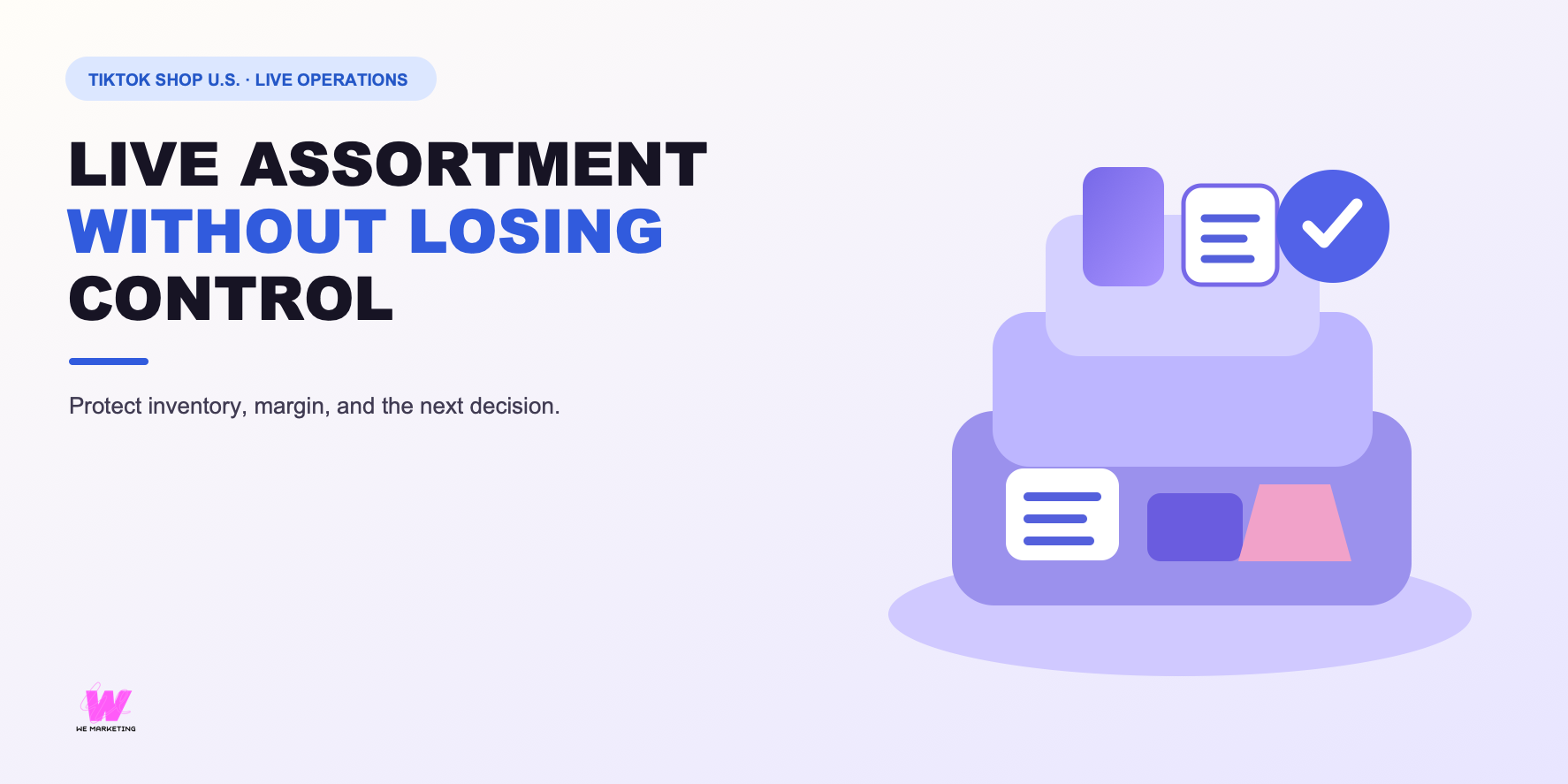
Direct answer: a LIVE assortment is an operating commitment, not a shopping bag
A TikTok Shop LIVE assortment should contain only products the team can truthfully demonstrate, keep available, sell at an acceptable contribution margin, pin at the right moment, and fulfill after demand arrives. The job is not to collect the largest possible catalog or repeat a fixed taxonomy of traffic products and hero products. The job is to decide which SKUs may enter the next session, under what commercial conditions, in what sequence, and with which stop rule.
This is deliberately different from WEM's first-five-sessions framework. That earlier guide uses product roles inside a controlled learning cycle. This guide governs the product set itself: listing readiness, available-to-promise inventory, offer economics, run-of-show placement, live monitoring, removal authority, and post-session disposition. A product can have a compelling story and still fail the release gate because its stock is fragile, its discount destroys contribution, its claim is not ready, or nobody owns the decision to pause it.
The smallest useful LIVE assortment is the set of products your team can promise, demonstrate, transact, and fulfill without losing control.
What the official product-set tools do, and what they do not do
Current U.S. TikTok Shop Seller University describes LIVE Product Sets as reusable groups that can be created in-app or in LIVE Manager and added to a session together. The official material also explains that products can be added from supported sources, reordered, copied, edited, or removed. Products may fail to add when they are sold out, removed, duplicated, affected by an inactive affiliate arrangement, or otherwise not in a normal status. Separate preparation guidance tells operators to add products to the LIVE Showcase before featuring them and to organize sets in advance.
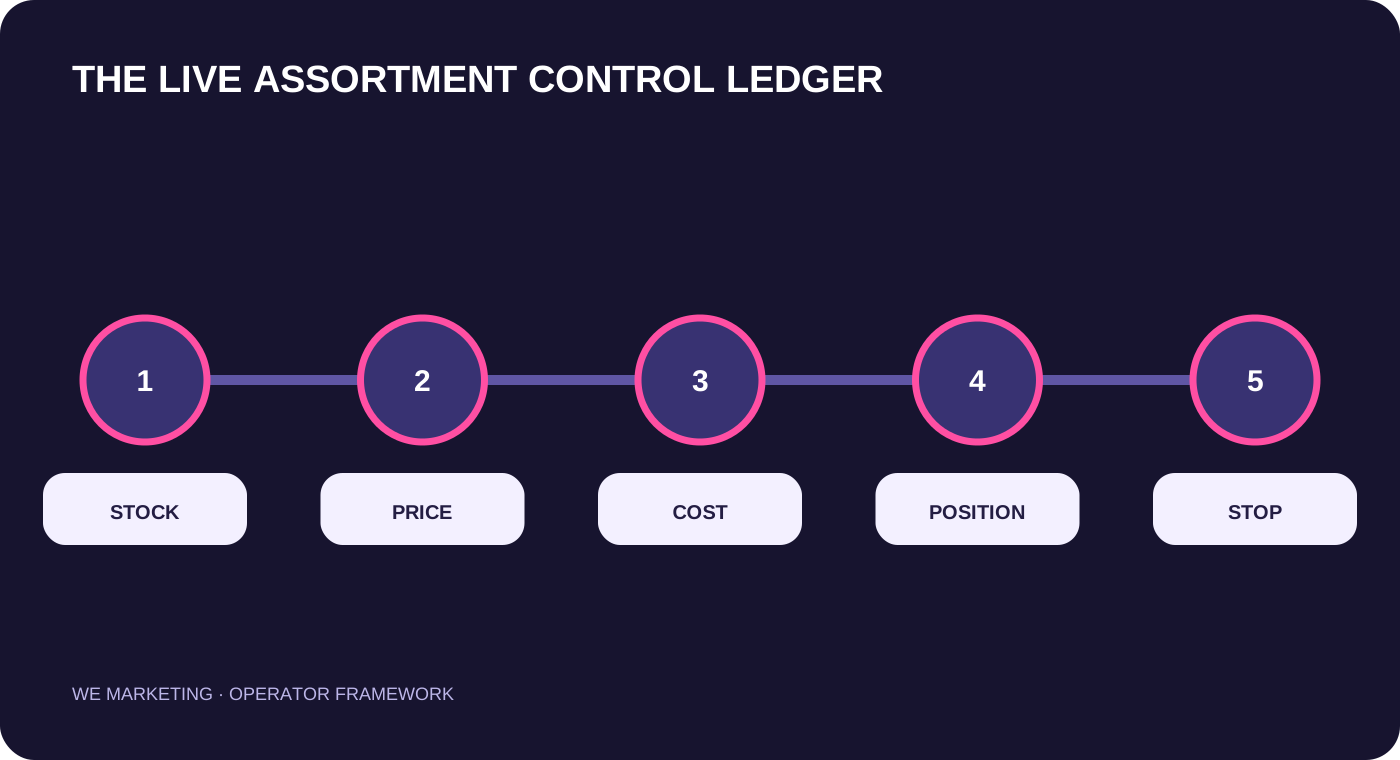
Those capabilities reduce setup friction, but they do not approve a product economically or operationally. A successful add is not proof that the current price is profitable, the inventory is safe to expose, the listing can support the host's language, or the warehouse can absorb a demand spike. Treat the platform set as the execution container. Keep the commercial decision in a separate assortment control ledger owned by the brand.
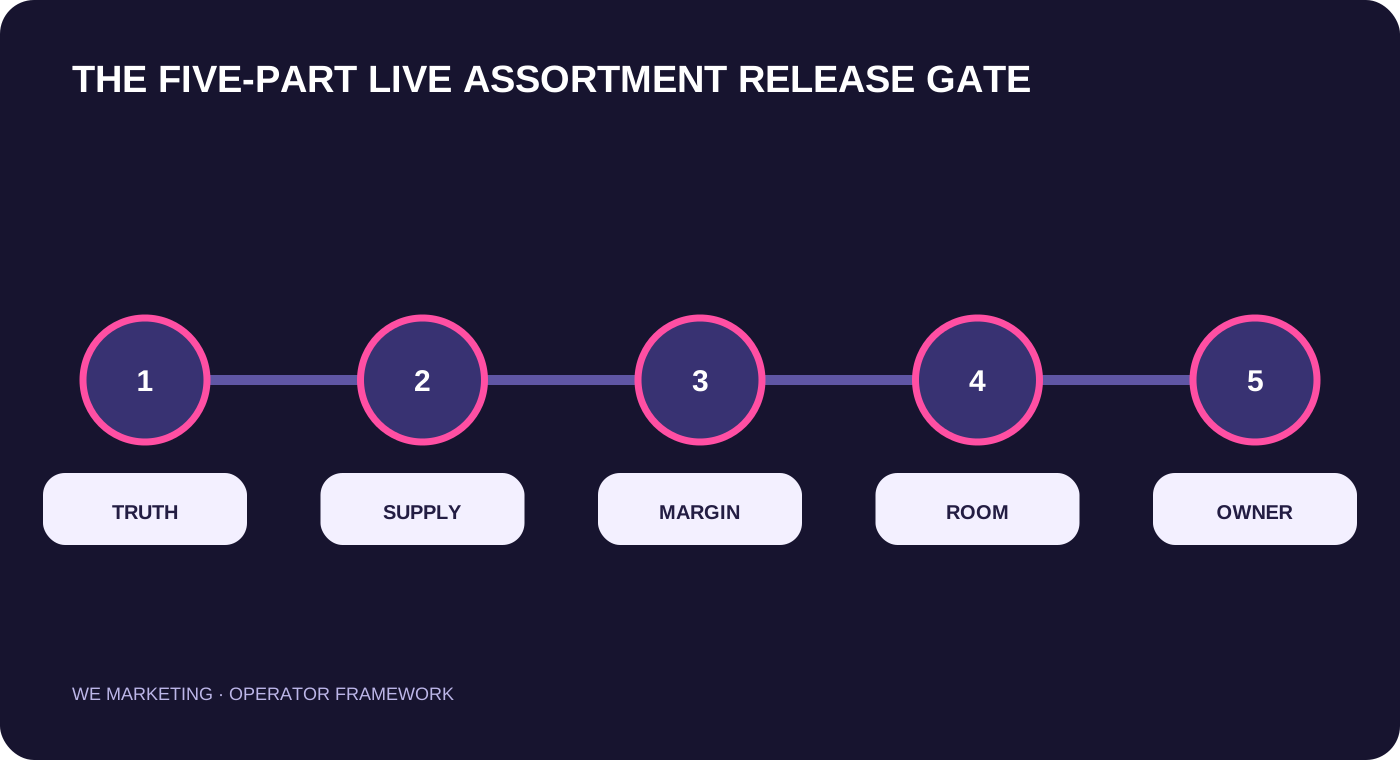
Use a five-part release gate before a SKU enters the session
Run every candidate through five gates. First, product truth: the listing, variation names, images, claims, dimensions, ingredients, compatibility, and demonstration language must agree. Second, supply: record sellable inventory, units already committed elsewhere, replenishment timing, and the quantity the team is willing to expose to this session. Third, economics: model the actual customer price, discounts, seller-funded incentives, affiliate commission where applicable, expected variable fulfillment cost, and a conservative allowance for returns or service cost. Use the brand's own numbers, not a universal benchmark.
Fourth, room readiness: confirm the sample, demonstration setup, host notes, moderator answers, pin position, and any bundle logic. Fifth, ownership: name the person who can release, pause, substitute, or remove the SKU. If one gate is unknown, label it unknown and resolve it before the product enters the set. Unknown is not a quiet pass.
| Gate | Required evidence | Release question |
|---|---|---|
| Product truth | Current listing and approved demonstration claims | Can the room show exactly what the buyer will receive? |
| Supply | Sellable stock, reservations, replenishment, exposure cap | Can we honor the demand we are inviting? |
| Economics | Net price and variable-cost ledger | Does an incremental order clear our contribution floor? |
| Room readiness | Sample, host notes, sequence, moderator answers | Can the team explain and pin it accurately? |
| Ownership | Named release and stop owner | Who acts when the facts change? |
Build an inventory envelope, not a static stock screenshot
The inventory number visible during planning can become stale before the session starts. Create an available-to-promise envelope for each LIVE SKU. Begin with verified sellable units, subtract reservations and other known commitments, protect a service buffer, and then set a session exposure cap. The cap is a management choice, not a platform promise. It should reflect replenishment confidence, expected session length, other channels drawing from the same stock, and the operational cost of overselling.
Assign three checkpoints: before the set is released, immediately before going LIVE, and during the session at a defined trigger. A trigger might be the remaining exposed quantity, a fulfillment exception, or a sudden promotion change. Do not wait for a shopper complaint to discover that the room is presenting an unavailable variation. If inventory truth cannot be refreshed, stop featuring the item and direct the host to the approved fallback rather than improvising scarcity language.
Protect contribution margin with a session-level ledger
Gross merchandise value does not tell the team whether a product belongs in the LIVE. For each candidate, calculate a session contribution view using the brand's verified inputs: expected paid price minus product cost, seller-funded discounts, commission, payment or platform costs where applicable, pick-and-pack, shipping contribution, packaging, and a reasonable service or return allowance. Keep platform-funded and seller-funded benefits separate. Do not assume an offer is free to the seller because the shopper sees a lower price.
Then add the interaction effects. A bundle may improve basket economics while increasing pick complexity. A low-price item may create more orders while consuming scarce packing capacity. A promotion may be viable for one SKU but destructive when stacked with another seller-funded incentive. Record the floor at which the product must be paused or returned to its standard offer. The floor should be approved before the host mentions a price. If the team cannot reconstruct the effective price and funding source, the SKU is not ready for the room.
Sequence the room around buyer decisions and operational limits
A product list is not yet a run of show. Sequence products around the buyer questions the host can resolve and the operational conditions the team can maintain. Put the approved opening product where the host can demonstrate a clear problem and proof. Place comparison products together only when the differences are accurate and available variants are ready. Put complementary products near the moment when the buyer understands the primary item, not merely because cross-sell is a goal. Keep fragile-stock or complex-fulfillment products out of repeated high-attention positions unless their caps and stop rules are actively monitored.
Current Seller University guidance explains that products must be present in the LIVE Showcase and that operators can reorder products. It also describes pinning products during the stream. Use those controls to reflect the approved sequence, but let audience questions change emphasis only within the release envelope. A spike in comments can justify a longer demonstration. It cannot justify an unapproved claim, an unmodeled discount, or continued selling after the stock owner calls a stop.
Separate four live signals so the team does not chase noise
During the session, monitor four signal families. Attention signals tell you whether viewers notice the product or demonstration. Consideration signals include substantive questions, requests for comparison, and product-detail exploration where available. Transaction signals include product clicks, add-to-cart behavior, and orders where available. Operations signals include available stock, failed variations, pin accuracy, pricing discrepancies, moderation escalations, and fulfillment warnings.
Each signal changes a different decision. More comments may change demonstration time. A pricing discrepancy should pause the claim. A stock trigger should remove or replace the product. Orders alone should not override a negative contribution floor. Missing account-level data remains unknown, not zero. The operator should record the exact source and timestamp of every decisive readback so the post-session review can distinguish what happened in the room from what the team merely expected.
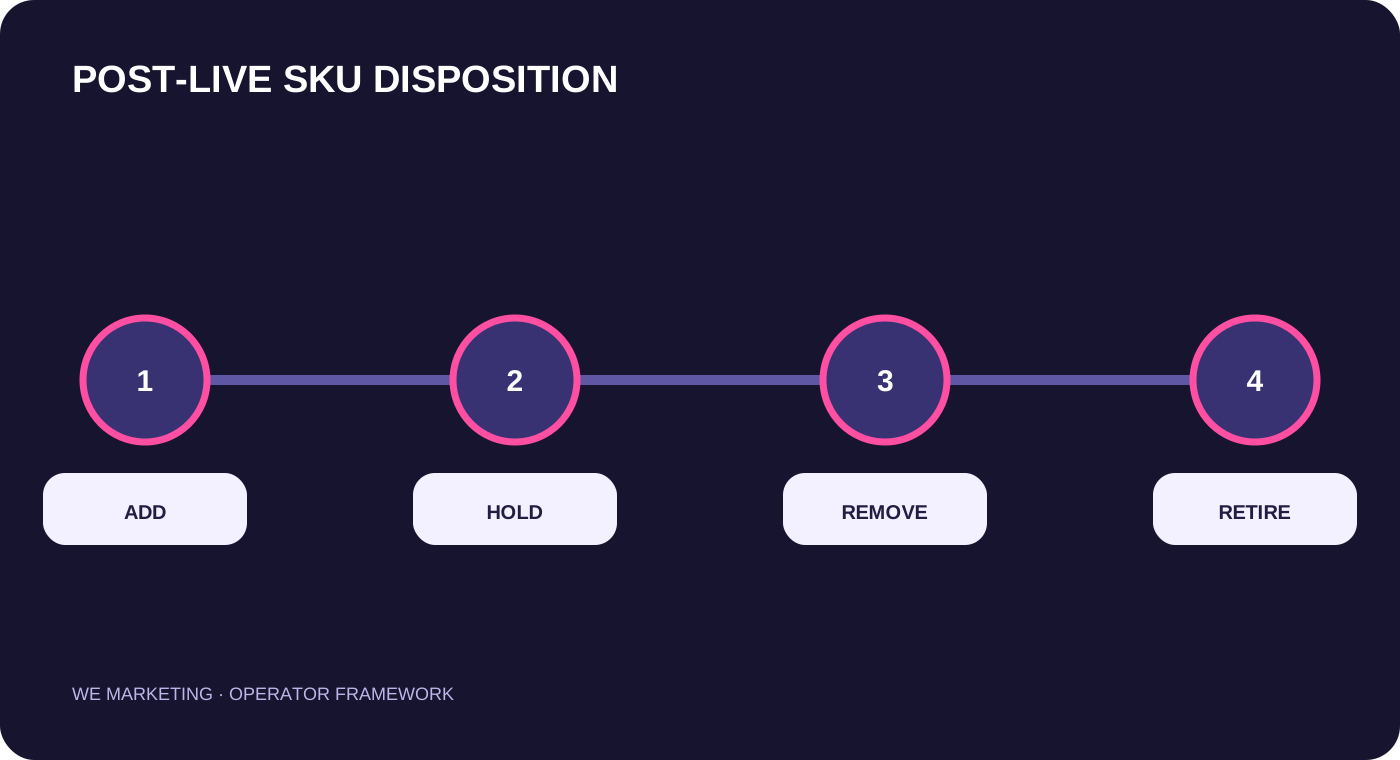
Create explicit add, hold, remove, and retire decisions
Every SKU should leave the post-LIVE review with one disposition. Add means it passed the gate and can enter a future set under stated conditions. Hold means the product needs one named repair, such as a listing clarification, inventory confirmation, sample replacement, or economics check. Remove means it must leave the active set now because a release condition failed. Retire means the product should not return to this session format unless the underlying product, supply, or economics materially change.
Avoid a vague “try again” bucket. Record the owner, required evidence, and earliest review date. Keep the platform Product Set synchronized only after the decision ledger is approved. This prevents copied sets from quietly carrying old pricing assumptions, unavailable variations, or products the team no longer intends to feature.
Hypothetical operating example
This is a hypothetical example, not a WEM client result. A U.S. beauty brand prepares six SKUs for a 45-minute LIVE. The bestseller has strong demand, but only one shade has safe inventory. A routine bundle appears attractive at the advertised price, but the team discovers that an existing seller-funded coupon pushes contribution below its approved floor. A newer item has adequate stock and margin, yet the host sample carries old packaging and cannot support the current listing language.
The operator releases the bestseller only in the verified shade with a session cap, holds the bundle until the effective-price ledger is corrected, and removes the new item until a current sample and approved claims arrive. Two stable products fill the remaining sequence. During the LIVE, the stock owner sees the bestseller reach its trigger and tells the operator to stop pinning it. The host transitions to the approved comparison product without claiming it is “almost sold out.” At review, the team records what shoppers asked, which units were exposed, the effective contribution view, and one required change per held SKU. The operating success is control and reusable evidence, not a claim that assortment governance guarantees sales.
Smallest useful next action
Before the next LIVE, make a one-page control ledger for the first three products you intend to feature. For each SKU, record listing truth, sellable inventory, session cap, effective customer price, seller-funded costs, contribution floor, demonstration proof, sequence position, fallback, and stop owner. Read it beside the current Product Set and LIVE Showcase. Remove any item whose values disagree or remain unknown. That single reconciliation is more useful than adding another ungoverned product to the shopping bag.
Source notes
This original WEM operating framework draws on complete current U.S. TikTok Shop Seller University materials revalidated August 31, 2026: LIVE Product Set, A Guide to Your First LIVE Selling Preparations & How to Select Products, TikTok LIVE Shopping, and Choosing the Right Products for LIVE Selling. Platform interfaces, eligibility, limits, product status, promotion controls, and account-level analytics may change. Verify the current U.S. Seller Center and the brand's own inventory and economics before execution.
Frequently asked questions
How many products should a TikTok Shop LIVE include?
Use only the number your team can demonstrate, monitor, and fulfill under the session plan. Official guidance offers product-selection examples and platform limits, but the operating number depends on session length, buyer questions, inventory, economics, and team capacity.
Is a LIVE Product Set the same as an approved assortment?
No. The Product Set is a platform container. The approved assortment is the brand's decision record showing that each SKU passed product-truth, supply, economics, room-readiness, and ownership gates.
Should the highest-GMV product always stay pinned?
No. Pinning should match the current demonstration and approved sequence. A product must also remain truthful, available, economically acceptable, and operationally safe.
What should happen when inventory becomes uncertain during LIVE?
Use the pre-agreed stop owner and fallback. Pause featuring or remove the product until inventory truth is restored. Do not improvise scarcity claims.
How often should a LIVE assortment be reviewed?
Review it before release, immediately before the session, at defined live triggers, and after the session. Reusable sets should also be reconciled before they are copied into a new event.
What is the most important post-LIVE assortment metric?
There is no single metric. Join buyer attention and transaction evidence with inventory, effective price, contribution, exceptions, and fulfillment outcomes, then make one owned disposition for each SKU.