WE Marketing · TikTok Shop U.S. · Shop Ads Operations
When Should a Brand Turn On GMV Max?
By the WE Marketing Team · Published July 29, 2026
Turn on GMV Max when the operating system is ready
Turn on Product GMV Max when a brand has a margin-safe product, a trustworthy product page, enough authorized shoppable content to learn from, reliable inventory and fulfillment, and an owner who can protect budget while reading blended reporting correctly. GMV Max can automate distribution and optimization. It cannot repair weak product economics, unclear claims, poor creative inputs, or unreliable operations.
Product GMV Max is now a central TikTok Shop Ads workflow. TikTok describes it as an automation solution that uses available creative assets, paid traffic, and organic delivery to optimize total non-LIVE product GMV and total channel ROI. That makes campaign setup simpler, but the decision to activate it is still an operating decision.
The most useful question is not, “Do we have enough GMV to qualify?” TikTok’s current overview says products can be promoted regardless of initial GMV scale or available creative volume. The better question is, “If the system sends more qualified traffic to this product tomorrow, are the product, economics, content pool, and operating team ready to convert and fulfill it without hiding the real lesson?”
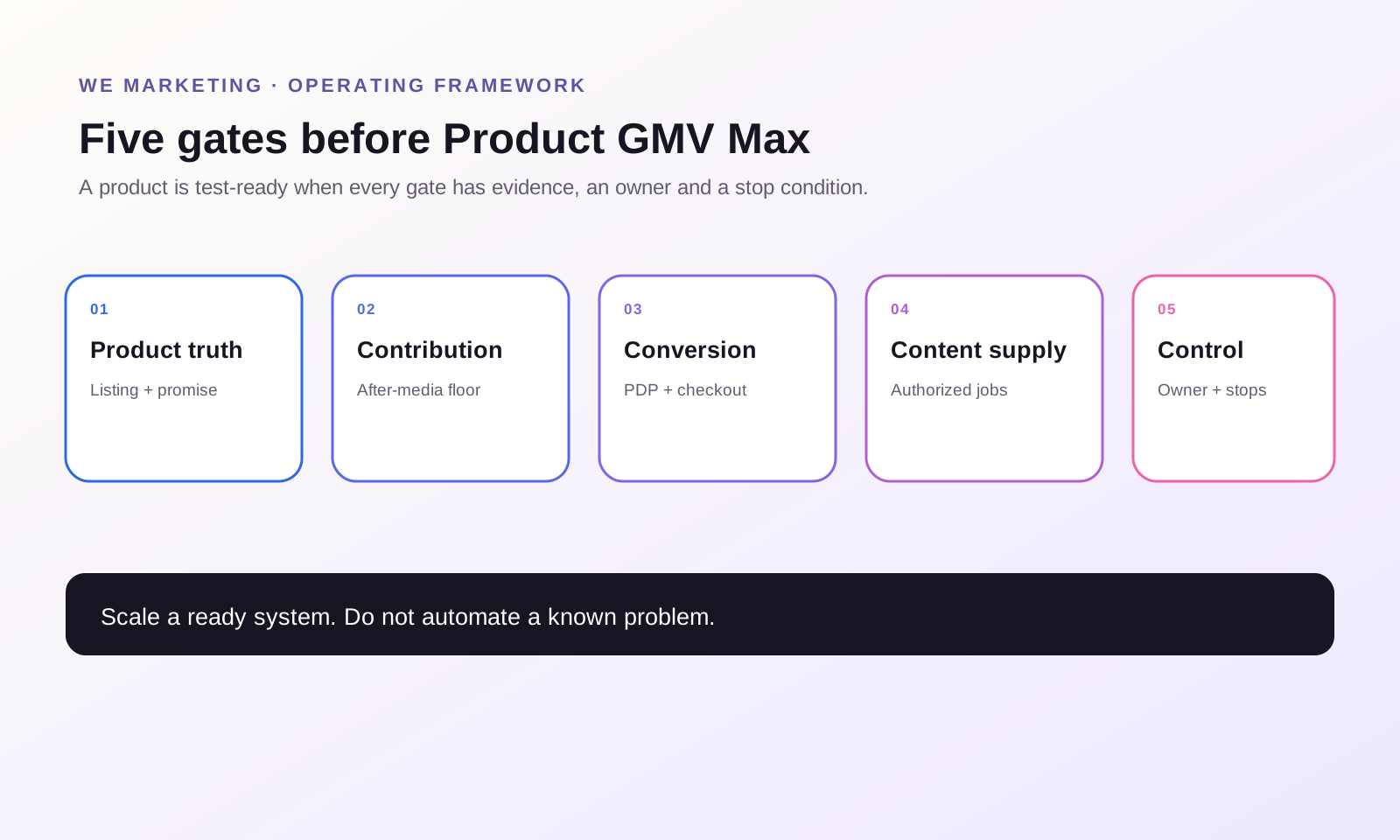
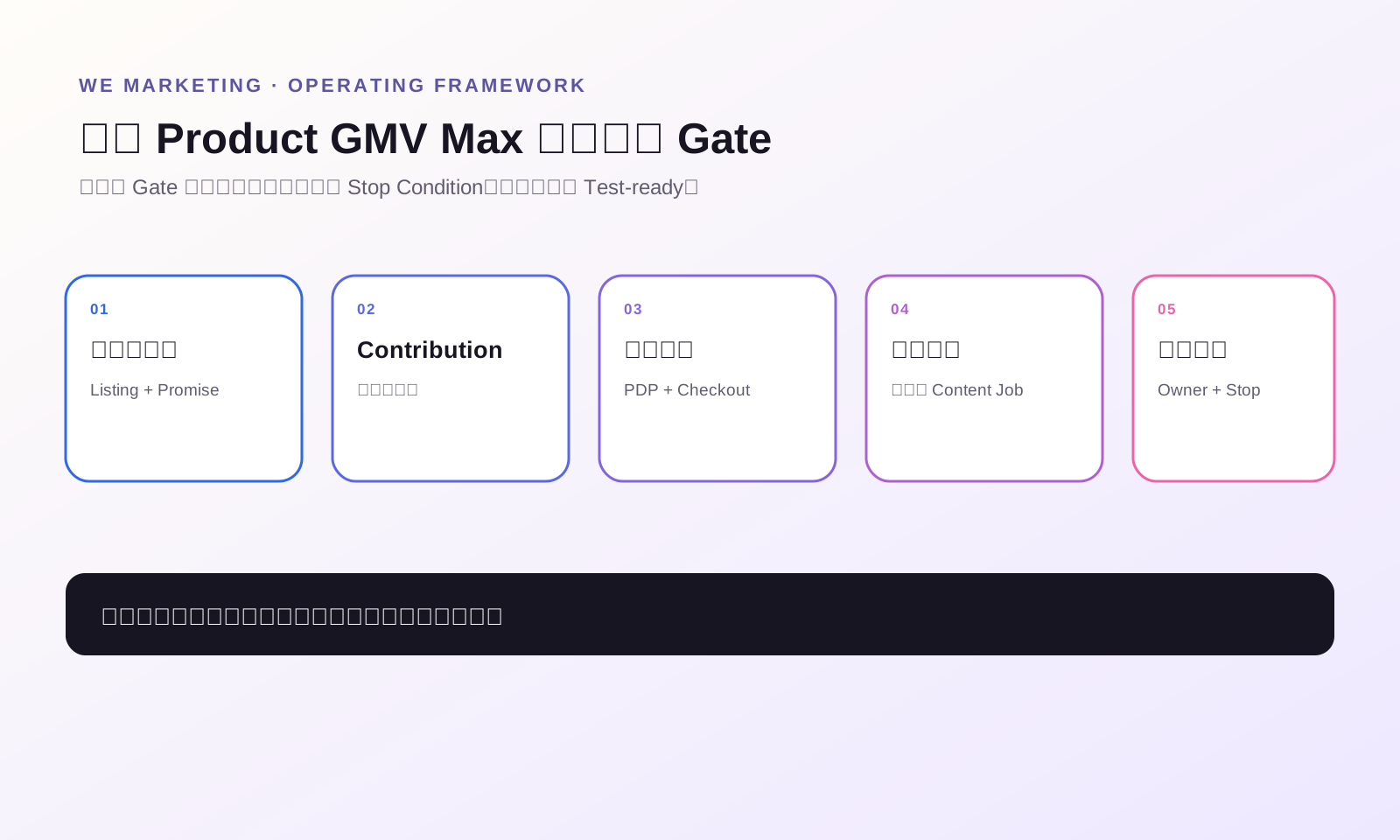
WEM uses five readiness gates: product truth, contribution room, conversion readiness, content supply, and operating control. A brand does not need perfection. It needs enough evidence in each gate to run a bounded test and enough discipline to separate campaign reporting from true incremental business impact.
This article focuses on Product GMV Max for non-LIVE sales. LIVE GMV Max is a related but distinct campaign type with its own traffic, creative, setup, and reporting controls.
A readiness gate is stronger than a GMV threshold
There is no single universal revenue number that tells every brand when to start. A high-GMV product can still be a poor candidate if refunds are rising, the product page is unclear, the margin cannot absorb commission and media, or most creator videos make risky claims. A lower-volume product can be testable when its economics are known, its offer converts, and the team has several credible content angles.
Use these five gates:
| Readiness gate | Evidence before activation | Stop or repair signal |
|---|---|---|
| Product truth | Correct listing, compliant claims, stable price, clear variant, honest delivery promise | Product confusion, policy risk, mismatch between video and listing |
| Contribution room | Known product cost, fulfillment, commission, returns reserve, discount, and media ceiling | Target ROI requires a spend level that breaks contribution |
| Conversion readiness | Product detail page answers the main buying questions and checkout works | Traffic arrives but product clicks or conversion stay structurally weak |
| Content supply | Multiple authorized shoppable videos from brand and affiliates, with distinct jobs | One fragile winning video or a pool of repetitive low-trust assets |
| Operating control | Owner, daily budget, target ROI logic, inventory floor, review cadence, and pause authority | Nobody owns changes, reporting, stock, or customer-impact escalation |
The gate prevents a common mistake: using GMV Max as a diagnostic shortcut. If the listing, offer, or content is weak, more automated delivery can create more expensive ambiguity. Fix known conversion blockers first, then use GMV Max to learn which products and authorized assets deserve broader distribution.
Understand what Product GMV Max is optimizing
TikTok’s current Product GMV Max overview says the system can use shoppable placements across the TikTok feed, search, Shop Tab, and Pangle, with video and product-card formats. It can automatically create and pause ads, select creative assets, and optimize audience settings. Authorized affiliate posts can be included in the campaign.
The operating implication is important: the campaign is not just a conventional paid-ad set with a narrow creative list. It works across a content and commerce system. Product selection, creator authorization, listing quality, price, inventory, and customer experience all become inputs.
TikTok’s current best-practice guide recommends broad product inclusion and says well-selling products often make incremental gains easier to detect. WEM does not interpret that as “promote the whole catalog immediately.” For a brand still learning its economics, start with a controlled product scope. Select the products whose margin, customer promise, and content pool are understood. Expand only after the team can explain what changed.
Read the blended attribution before judging success
This is the most important measurement boundary.
TikTok’s current attribution guidance says all paid and organic orders for promoted products are attributed to Product GMV Max while the campaign is running. An order can be attributed even when the shopper did not engage with an ad. The reporting guide defines gross revenue and ROI using those attributed paid and organic orders.
That means the GMV Max dashboard is useful for operating the campaign, but it is not a clean paid-media incrementality report. A strong dashboard ROI can include demand that may have happened through organic, affiliate, or other Shop activity. A weaker-looking creative ROI can also accompany high gross revenue because the system spent more to distribute a video that helped scale total sales.
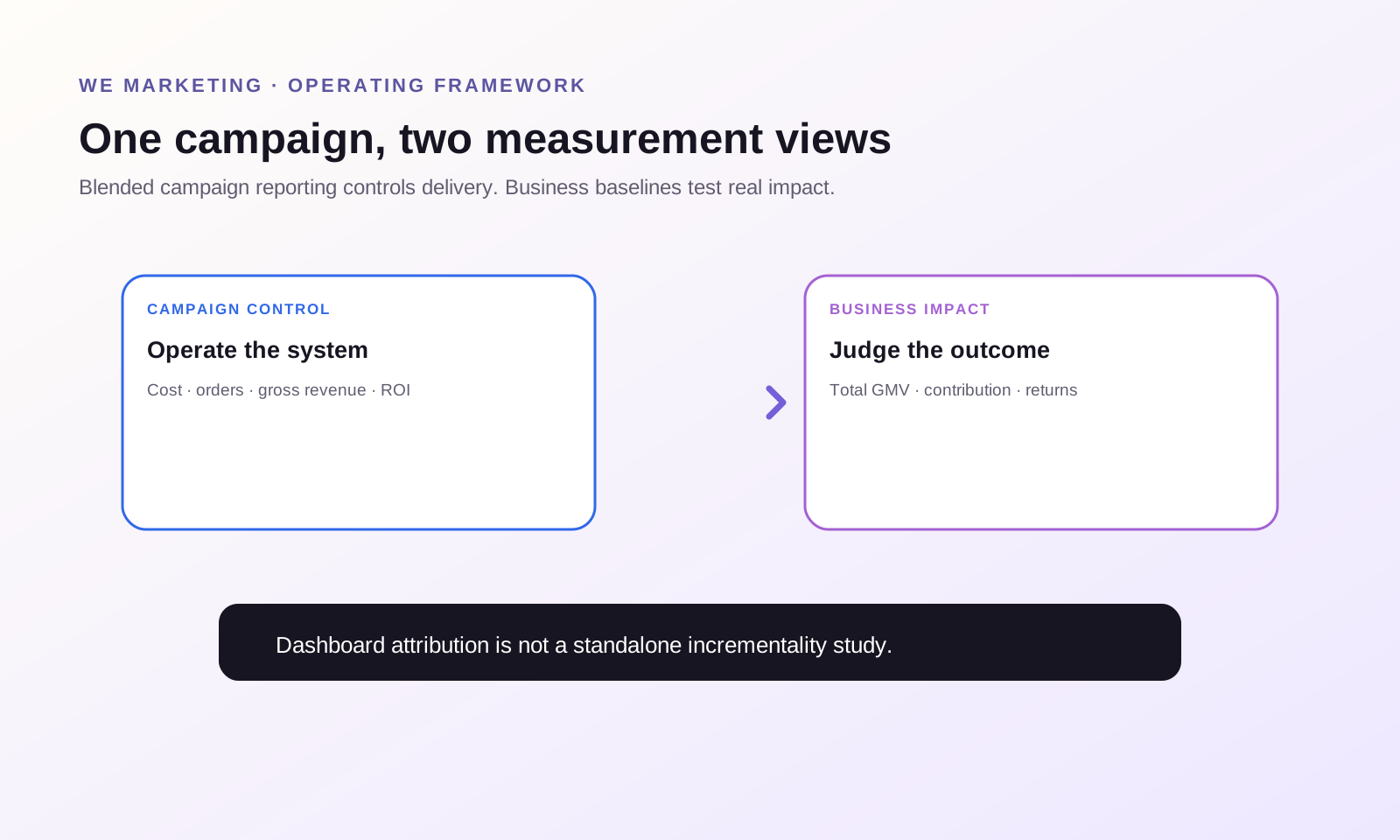
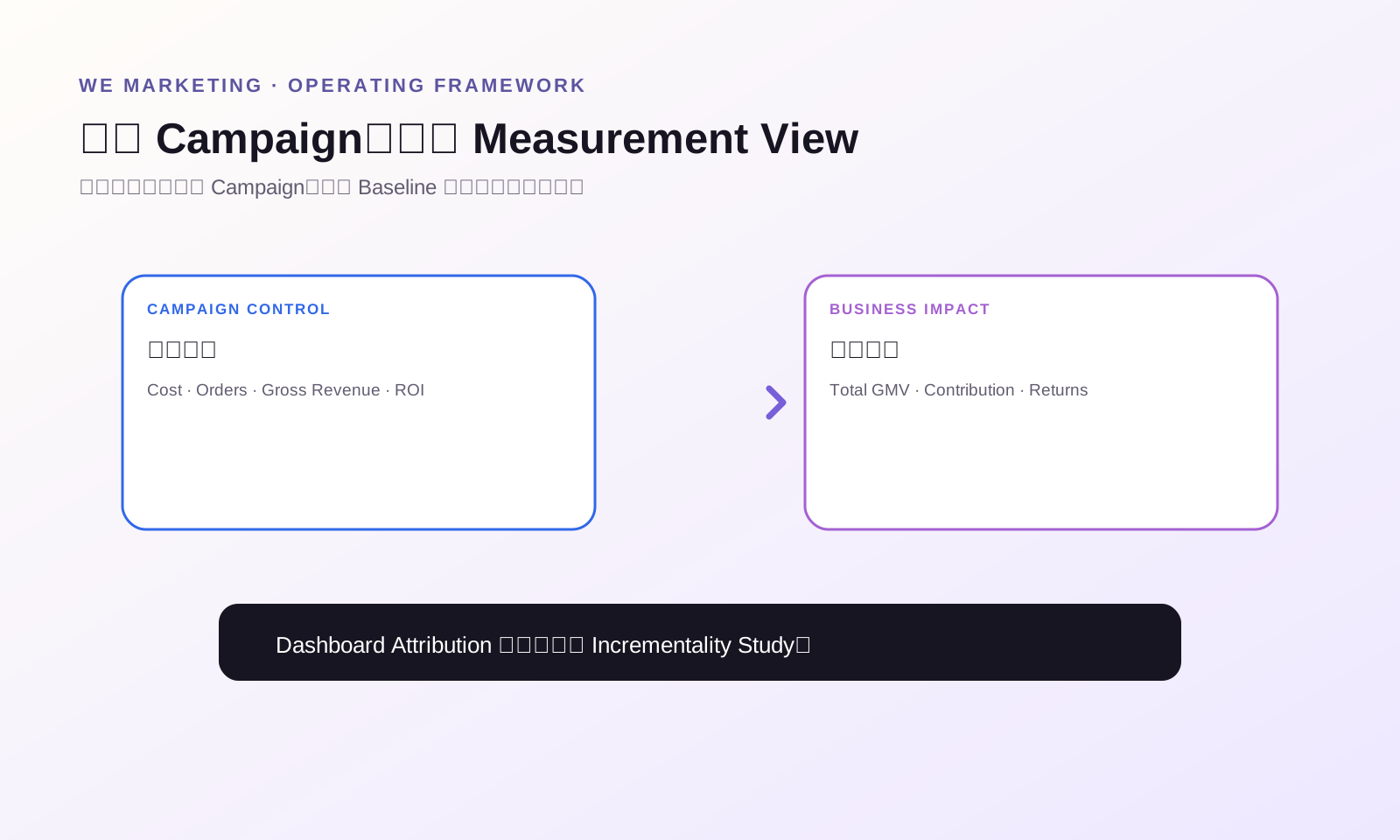
Use two views:
1. Campaign control view: cost, orders, gross revenue, dashboard ROI, budget utilization, product status, creative status, and authorization gaps. 2. Business impact view: total shop and product GMV before and after activation, contribution after all variable costs, new-customer behavior, returns, inventory, creator mix, content output, and relevant control periods.
Do not claim incremental lift from the dashboard alone. Use it to manage the system, then compare broader business outcomes with a defensible baseline.
Treat three inputs as one operating system
Product GMV Max performance is shaped by three connected inputs.
1. Product and economics
Choose a product with a clear reason to buy, stable eligibility, sufficient inventory, and enough contribution room to absorb affiliate commission, discounts, fulfillment, returns, and paid support. Calculate a break-even media ceiling before selecting a target ROI.
An operational example: if a product produces $24 of contribution before advertising on a $60 order, the team cannot select a target based only on a competitor screenshot or a platform recommendation. It must translate each possible ROI target into expected ad cost and remaining contribution.
2. Content and authorization
TikTok recommends Auto-select videos and inclusion of affiliate videos. The value of automation depends on the input pool. Give the system several useful jobs to explore: problem recognition, demonstration, proof, comparison, objection handling, routine context, and offer explanation. Confirm that strong affiliate posts are authorized and linked to the correct product.
More videos do not automatically mean more learning. Ten near-identical clips can still represent one idea. Review the content pool by job, product claim, creator type, hook, proof, and customer objection.
3. Listing and operations
The product page must complete the work the video starts. Confirm title, imagery, variant naming, price, offer, shipping promise, claims, reviews, and FAQ coverage. Align inventory, fulfillment, customer service, and creator messaging before traffic increases.
GMV Max should amplify a coherent path from content to product page to order. It should not force the ad system to compensate for contradictions between those surfaces.
Set target ROI and budget from business reality
TikTok’s best-practice guide provides current planning formulas:
- Recommended ROI = historical non-LIVE GMV divided by historical ad cost.
- Recommended budget = two times historical non-LIVE GMV divided by the ROI target.
- Lower ROI targets can increase delivery and GMV, while higher targets may restrict spend.
- Keep one ROI setting for at least three full days before adjustment because frequent changes interrupt learning.
- Brands without history can begin from the platform’s current recommended ROI and budget.
These are platform operating recommendations, not a substitute for a brand’s profit model.
Start with a contribution-based ceiling. Include product cost, packaging, fulfillment, discounts, affiliate commission, expected returns, and any other variable cost. Decide the minimum acceptable contribution after media. Then compare that internal boundary with the platform recommendation.
If the recommended target requires more aggressive spend than the economics allow, repair the price, offer, cost structure, or product selection. Do not lower the target simply to force delivery. If the campaign barely spends, inspect product demand, content authorization, listing conversion, budget, and target competitiveness together.
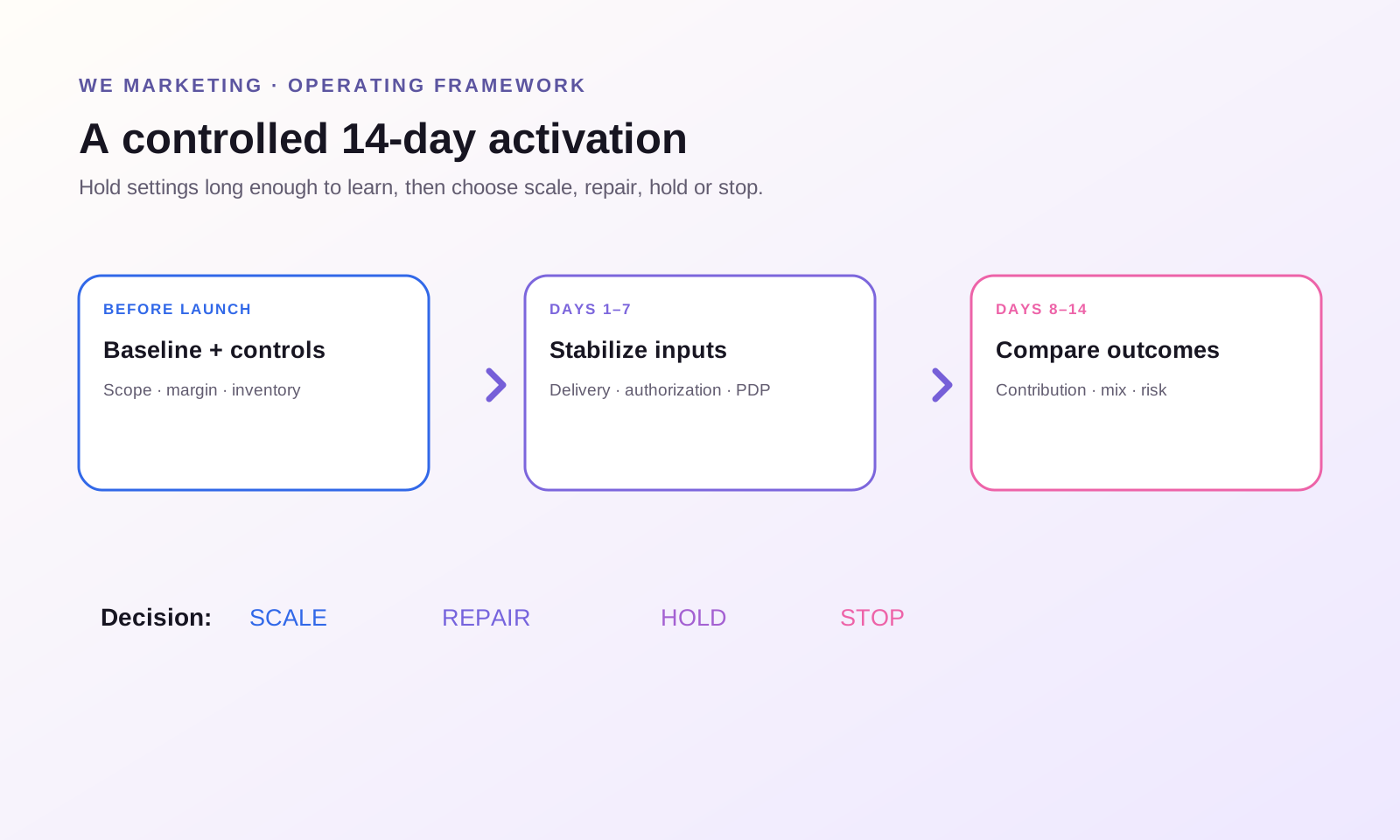
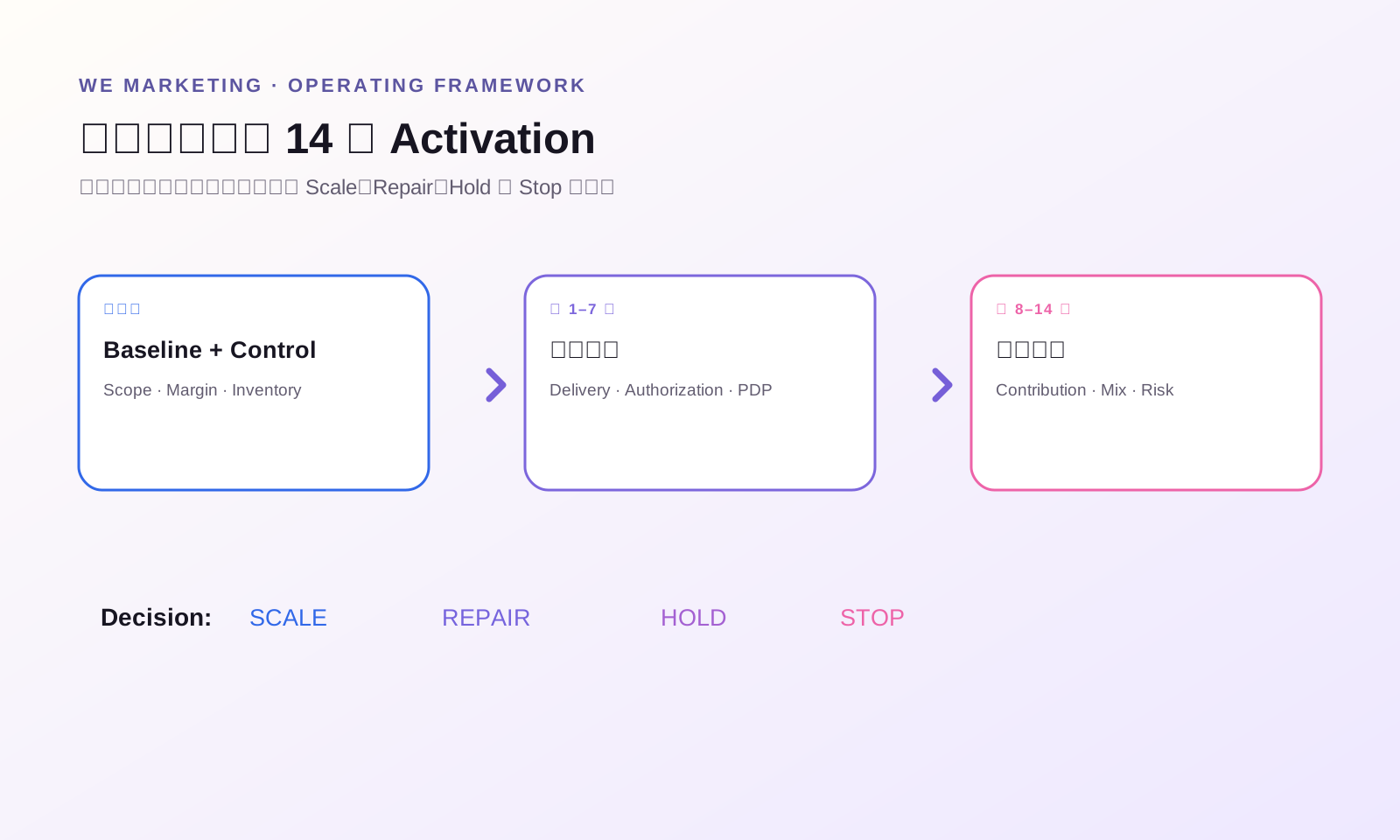
Run a 14-day controlled activation
The smallest useful rollout is not “turn it on and watch GMV.” Use a bounded activation with written controls.
Before launch
- choose the initial product scope and record exact product IDs
- confirm listing, policy, price, inventory, and fulfillment readiness
- calculate the contribution floor and break-even media ceiling
- inventory authorized brand and affiliate videos by content job
- set the starting ROI target and budget with the reason for each
- record the campaign owner, inventory stop, contribution stop, and escalation path
- save a pre-launch baseline for product GMV, orders, contribution, returns, and content mix
Days 1 to 3
Confirm delivery, product status, video authorization, spend pacing, and customer-impact issues. Avoid repeated target changes. TikTok’s guidance recommends keeping an ROI setting for at least three full days before adjustment. Fix broken permissions, wrong products, listing defects, or inventory risks immediately, but do not react to every intraday ROI movement.
Days 4 to 7
Review gross revenue, total product sales, budget utilization, product performance, and the creative queue. Look at which videos are learning, delivering, or waiting for authorization. Do not remove an asset only because its blended ROI looks lower. Check whether it contributes meaningful gross revenue and whether its content job expands the audience or answers a useful objection.
Days 8 to 14
Compare the campaign-control view with the business-impact view. Ask:
- Did total product and shop GMV rise beyond normal variation?
- Did contribution after media remain inside the approved range?
- Did refunds, cancellations, stockouts, or customer questions worsen?
- Did the system identify repeatable products, creators, or content jobs?
- Is performance dependent on one video, one promotion, or one creator?
- What should be scaled, repaired, held, or removed next?
Continue only when the next budget increase has an operating reason and sufficient inventory behind it.
Use reporting to decide scale, repair, hold, or stop
TikTok’s Product GMV Max reporting includes campaign, product, and creative views. Current creative statuses include In Queue, Learning, Delivering, Authorization Recommended, Boosting, and Boosted. Product and creative reporting can include orders, gross revenue, cost, cost per order, ROI, product impressions, paid clicks, ad conversion rate, and video-view rates, although some metrics may not be available to every account.
Turn those metrics into four decisions:
| Decision | Evidence | Next action |
|---|---|---|
| Scale | Healthy contribution, sufficient inventory, diversified content, stable customer experience | Increase budget deliberately and expand proven content jobs |
| Repair | Demand exists but listing, offer, authorization, or one funnel step is weak | Fix the named constraint before adding budget |
| Hold | Learning is incomplete or demand is volatile but economics remain safe | Keep settings stable and collect a longer comparison window |
| Stop | Contribution breaks, policy or claims risk appears, fulfillment degrades, or no credible learning path remains | Pause, preserve evidence, and choose a specific repair owner |
This keeps the team from turning a dashboard color into a strategy.
ROI protection is a control, not a profit guarantee
TikTok’s current ROI protection page says eligible campaigns may receive automatic ad credits when campaign ROI falls below 90 percent of the daily target and the campaign has more than 20 daily orders. It also lists important exclusions, including manual Product GMV Max target changes on that day, campaign pauses or deletion, product edits, Max delivery, some boost budgets, and account or policy interruptions.
Treat ROI protection as an account-level feature that must be verified in the live campaign list. It does not protect product margin, returns, inventory, or the opportunity cost of poor creative. It also does not convert blended attribution into an incrementality study.
The practical rule is to build a campaign that works without relying on credits. Then confirm the current eligibility badge and history in the account.
Operational example: a hero SKU with six useful videos
This is a hypothetical operating example, not a WEM client result.
A skincare brand has one hero SKU with stable fulfillment, clear claims, a 45-day inventory cover, and known contribution after affiliate commission. Its product page answers texture, routine, ingredient, and shipping questions. The brand has six authorized shoppable videos across demonstration, routine, objection handling, founder explanation, creator proof, and offer explanation.
The team selects only that product for the first activation. It records the target ROI, daily budget, contribution floor, inventory stop, and owner. For the first three full days, it fixes authorization and product-page errors but holds the ROI setting stable. At the end of two weeks, it compares campaign gross revenue and cost with total product GMV, contribution, refunds, and content mix.
If growth is margin-safe and distributed across several content jobs, the brand expands budget or adds a closely related product. If growth relies on one creator or a temporary offer, it first strengthens the content and offer system. If traffic rises without conversion, it repairs the product page before buying more distribution.
The smallest useful next action: a 30-minute GMV Max readiness audit
Choose one candidate product. Write down its selling price, contribution before media, break-even media ceiling, available inventory, refund rate, product-page conversion issues, and number of authorized shoppable videos by content job.
Score each of the five readiness gates as ready, repair, or unknown. Do not activate while product truth or operating control is unknown. Assign one owner to close the largest repair item, and save a baseline for total product GMV, orders, and contribution.
When all five gates are at least test-ready, launch a bounded activation with a written budget, target logic, stop rules, and 14-day review. That is a better starting point than waiting for a magical GMV threshold or using automated spend to discover problems the team already knows exist.
Frequently asked questions
Does a product need a minimum GMV before Product GMV Max can run?
TikTok’s current overview says every product can be promoted regardless of initial GMV scale or available creative volume. Operationally, WEM still recommends evidence of product truth, margin, conversion readiness, content supply, and operating control before activation.
How many videos should a brand have before turning on GMV Max?
TikTok does not set a universal minimum in its current overview. A practical starting pool contains several authorized shoppable videos that perform different content jobs. The goal is not a vanity count. It is enough variation to test hooks, proof, objections, creators, and contexts without depending on one fragile asset.
Is GMV Max dashboard ROI the same as paid-ad ROI?
No. TikTok’s current attribution and reporting guidance says Product GMV Max attributes paid and organic orders for promoted products while the campaign runs. Dashboard ROI is a campaign-control metric based on that blended gross revenue and campaign cost, not a clean paid-media incrementality measure.
Should a brand use the recommended ROI target?
The recommendation is a useful current platform input, especially when there is little history. Compare it with the brand’s own contribution model and minimum after-media margin. If the economics cannot support the implied spend, repair the offer, cost structure, or product choice instead of forcing delivery.
How long should a brand wait before changing target ROI?
TikTok’s current Product GMV Max best-practice guidance recommends keeping each ROI setting for at least three full days before adjustment. Fix real operational errors immediately, but avoid frequent target changes that interrupt learning.
When should a brand pause Product GMV Max?
Pause when contribution falls outside the approved range, inventory or fulfillment becomes unsafe, policy or claim risk appears, the promoted product or price is wrong, or the team cannot identify a credible repair path. Preserve the reporting and business baseline so the next activation begins with evidence.
WE Marketing · TikTok Shop 美国站 · Shop Ads Operations
品牌什么时候应该开启 GMV Max?
WE Marketing Team · 2026 年 7 月 30 日
运营系统准备好,再开启 GMV Max
当一个品牌已经具备毛利安全的商品、可信的商品页、足够多可授权投放的挂车内容、可靠的库存与履约,并且有明确负责人能管理预算、正确理解混合归因时,才适合开启 Product GMV Max。GMV Max 可以自动分配流量和优化投放,但它无法修复商品 economics、claim、创意输入或运营基础中的问题。
Product GMV Max 已经成为 TikTok Shop Ads 的核心工作流。TikTok 当前官方说明把它定义为自动化解决方案:利用可用创意素材、付费流量和 organic delivery,优化非 LIVE 商品的整体 GMV 与 total channel ROI。
设置变简单,不代表“什么时候开”也变成了一个按钮问题。
真正有用的问题不是“我们 GMV 到多少才够资格?”TikTok 当前 Overview 明确说明,不管商品初始 GMV 和 creative volume 如何,都可以使用 GMV Max。品牌更应该问:“如果系统明天给这个商品更多合适流量,我们的商品、毛利、内容池和运营团队,是否已经准备好承接、转化和履约?我们能不能从结果中看出真实原因?”
WEM 建议使用五个 Readiness Gate:商品真实度、Contribution 空间、转化准备、内容供给和运营控制。品牌不需要等到一切完美,但每一个 Gate 都至少要有足够证据支持一个有边界的测试。
本文重点讨论用于非 LIVE 销售的 Product GMV Max。LIVE GMV Max 是相关但独立的 Campaign Type,有自己的流量、创意、设置和 reporting 逻辑。
Readiness Gate 比单一 GMV 门槛更重要
不存在一个适用于所有品牌的统一销售额。一个高 GMV 商品,如果退货正在上升、商品页表达不清、毛利无法承担达人佣金与投放,或者多数达人视频存在 claim 风险,依然不适合直接放大。一个销量较低的商品,如果 economics 已知、Offer 能转化、团队有多个可信内容角度,反而可以做小范围测试。
五个 Gate 如下:
| Readiness Gate | 开启前需要的证据 | Stop 或 Repair 信号 |
|---|---|---|
| 商品真实度 | Listing 正确、claim 合规、价格稳定、variation 清楚、履约承诺真实 | 用户对商品混淆、政策风险、视频与商品页不一致 |
| Contribution 空间 | 货品、履约、佣金、退货准备金、折扣和媒体上限都可计算 | 目标 ROI 对应的花费会破坏 Contribution |
| 转化准备 | PDP 能回答主要购买问题,结账链路正常 | 流量进来,但点击或转化持续偏弱 |
| 内容供给 | 品牌与达人有多条已授权挂车视频,内容任务不同 | 只依赖一条爆款,或内容高度重复且缺乏信任 |
| 运营控制 | 有 Owner、预算、ROI 逻辑、库存底线、Review Cadence 和暂停权限 | 没人负责修改、Reporting、库存或消费者影响 |
这个 Gate 可以避免一个常见错误:把 GMV Max 当成诊断捷径。如果 Listing、Offer 或内容本来就弱,更多自动流量只会制造更昂贵的模糊结果。先修复已经知道的问题,再让 GMV Max 帮你学习哪些商品和授权素材值得扩大分发。
先理解 Product GMV Max 在优化什么
TikTok 当前 Overview 说明,Product GMV Max 可以使用 TikTok Feed、Search、Shop Tab、Pangle 等可购物 Placement,并同时使用视频和 Product Card。系统可以自动创建和暂停广告、选择素材并优化 Audience。获得授权的达人视频也可以进入 Campaign。
因此它不是一个只有几条广告素材的传统 Ad Set,而是一个连接内容与交易的自动化系统。商品选择、达人授权、Listing 质量、价格、库存和消费者体验,都会成为输入。
TikTok 当前 Best Practices 建议扩大可用商品范围,并优先考虑已有销售表现的商品,因为小商品的增量可能被日常波动掩盖。WEM 不会把这理解成“第一天就全店开启”。品牌还在学习 economics 时,应先控制商品范围,只选择毛利、Customer Promise 和内容池已经清楚的商品,团队能够解释变化后再扩大。
判断成功之前,先看懂混合归因
这是最重要的 Measurement Boundary。
TikTok 当前 Attribution 说明:Campaign 运行期间,所有被推广商品的 Paid 和 Organic Orders 都会归因到 Product GMV Max。即使消费者没有与广告互动,只要在 Campaign 期间购买了该商品,也可能被归因。Reporting 页面中的 Gross Revenue 与 ROI 也包含这些 Paid 和 Organic Orders。
所以,GMV Max Dashboard 很适合管理 Campaign,但它不是一份干净的 Paid Media Incrementality Report。Dashboard ROI 很高,可能包含原本来自自然流量、达人或其他 Shop 活动的订单。某条素材 ROI 看起来较低,也可能是因为系统给它更多花费,而它带来了更高的整体 Gross Revenue。
团队需要同时维护两个视角:
1. Campaign Control View: Cost、Orders、Gross Revenue、Dashboard ROI、Budget Utilization、Product Status、Creative Status 和 Authorization Gap。 2. Business Impact View: 开启前后 Total Shop 与 Product GMV、扣除所有变量成本后的 Contribution、新客表现、退货、库存、Creator Mix、内容产量以及合适的对照周期。
不要只用 Dashboard 证明增量。先用它管理系统,再用更完整的业务基线判断真实影响。
把三个输入当成一个 Operating System
Product GMV Max 的表现由三个相互连接的输入决定。
1. 商品与 Economics
选择购买理由明确、Eligibility 稳定、库存充足,而且能承担达人佣金、折扣、履约、退货和投放的商品。选择 Target ROI 之前,先计算 Break-even Media Ceiling。
一个 Operational Example:某商品售价 60 美元,广告前每单 Contribution 为 24 美元。团队不能只看竞品截图或平台推荐来选 Target,而要把不同 ROI 对应成预计广告成本和剩余 Contribution。
2. 内容与 Authorization
TikTok 建议使用 Auto-select Videos,并纳入 Affiliate Videos。自动化的价值取决于输入池。至少准备多个内容任务:问题识别、真实展示、Proof、对比、Objection Handling、使用场景和 Offer Explanation。确认表现好的达人内容已经获得广告授权,并且挂载正确商品。
视频数量多不等于学习更多。十条高度相似的视频,仍然可能只有一个 Idea。应该按照 Content Job、Claim、Creator Type、Hook、Proof 和 Customer Objection 审核内容池。
3. Listing 与 Operations
商品页必须完成视频开启的购买路径。确认 Title、图片、Variation、Price、Offer、Shipping Promise、Claim、Review 和 FAQ。流量增加之前,对齐库存、履约、客服和达人信息。
GMV Max 应该放大“内容到商品页到订单”的一致路径,而不是要求投放系统弥补三个前台之间的矛盾。
Target ROI 与 Budget 要从业务现实出发
TikTok 当前 Best Practices 给出以下规划方法:
- Recommended ROI = Historical Non-LIVE GMV ÷ Historical Ad Cost。
- Recommended Budget = 2 × Historical Non-LIVE GMV ÷ ROI Target。
- 较低 ROI Target 可能提高 Delivery 与 GMV,较高 Target 可能限制花费。
- 每次 ROI 设置至少保持三个完整自然日,频繁调整会打断 Learning。
- 没有历史数据的品牌,可以从前台提供的推荐 ROI 和 Budget 开始。
这些是平台运营建议,不是品牌 Profit Model 的替代品。
先建立 Contribution-based Ceiling。把货品、包装、履约、折扣、达人佣金、预计退货和其他变量成本都算进去,再决定广告后的最低 Contribution。然后把内部边界与平台推荐做对照。
如果平台推荐要求的花费强度超出 economics 能力,应修复价格、Offer、成本结构或商品选择,而不是为了强行花钱就不断降低 Target。如果 Campaign 花费不足,应把 Product Demand、Content Authorization、Listing Conversion、Budget 和 Target Competitiveness 放在一起检查。
做一个 14 天 Controlled Activation
最小有效上线方式,不是“开启后看 GMV”,而是一个有边界、有书面控制的 Activation。
上线前
- 选择第一批商品并记录准确 Product ID
- 确认 Listing、Policy、Price、Inventory 和 Fulfillment
- 计算 Contribution Floor 与 Break-even Media Ceiling
- 按 Content Job 盘点品牌和达人授权视频
- 写清楚初始 ROI Target、Budget 以及理由
- 记录 Campaign Owner、Inventory Stop、Contribution Stop 和 Escalation Path
- 保存 Product GMV、Orders、Contribution、Returns 与 Content Mix 的 Baseline
第 1 至 3 天
确认 Delivery、Product Status、Video Authorization、Spend Pacing 与消费者影响。不要频繁改变 Target。TikTok 当前指南建议每个 ROI 设置至少保持三个完整自然日。权限错误、商品错误、Listing Defect 和库存风险要立刻修复,但不要对每一次小时级 ROI 波动做反应。
第 4 至 7 天
审核 Gross Revenue、整体商品销量、Budget Utilization、Product Performance 和 Creative Queue。查看哪些视频处于 Learning、Delivering 或等待授权。不要只因为某条素材 Blended ROI 较低就删除,先判断它是否带来有意义的 Gross Revenue,是否帮助团队扩大受众或解决重要 Objection。
第 8 至 14 天
把 Campaign Control View 与 Business Impact View 放在一起:
- Product 与 Shop GMV 是否超出正常波动?
- 扣除媒体后的 Contribution 是否在批准范围内?
- Refund、Cancellation、Stockout 或客服问题是否恶化?
- 系统是否识别出可重复的商品、Creator 或 Content Job?
- 结果是否只依赖一条视频、一次 Promotion 或一位 Creator?
- 下一步应该 Scale、Repair、Hold 还是 Stop?
只有当下一次加预算有明确运营理由,而且库存能支持时,才继续扩大。
用 Reporting 做 Scale、Repair、Hold 或 Stop 决策
TikTok 当前 Reporting 提供 Campaign、Product 和 Creative View。Creative Status 包括 In Queue、Learning、Delivering、Authorization Recommended、Boosting 和 Boosted。Product 与 Creative Reporting 可能包括 Orders、Gross Revenue、Cost、Cost per Order、ROI、Product Impressions、Paid Click、Ad Conversion Rate 和 Video View Rate,但并非所有账户都具备全部指标。
把这些指标转换成四个动作:
| 决策 | 需要的证据 | 下一步 |
|---|---|---|
| Scale | Contribution 健康、库存充分、内容不依赖单点、用户体验稳定 | 有计划地增加 Budget,并扩展已验证的 Content Job |
| Repair | Demand 存在,但 Listing、Offer、Authorization 或 Funnel 某一步较弱 | 在加预算前修复准确约束 |
| Hold | Learning 尚未完成,Demand 波动,但 Economics 安全 | 保持设置稳定,收集更长对照窗口 |
| Stop | Contribution 破线、Policy 或 Claim 风险、履约恶化,或没有可信学习路径 | Pause、保留证据,并指定 Repair Owner |
不要把 Dashboard 颜色直接变成策略。
ROI Protection 是控制,不是利润保证
TikTok 当前 ROI Protection 页面说明:如果 Campaign ROI 低于 Daily Target 的 90%,并且每日订单超过 20 单,符合条件的 Campaign 可能自动获得 Ad Credit。页面也列出多种不适用情况,包括当天手动修改 Product GMV Max Target、暂停或删除 Campaign、修改商品、使用 Max Delivery、部分 Boost Budget,以及账户或 Policy 中断。
所以 ROI Protection 应被视为需要在 Live Campaign List 中确认的账户级 Feature。它不保护商品毛利、退货、库存,也不保护差内容带来的机会成本,更不会把混合归因变成 Incrementality Study。
正确方式是先建立一个不依赖 Credit 也能成立的 Campaign,再在账户里确认 Eligibility Badge 与 History。
Operational Example:一个 Hero SKU,六条有任务的视频
以下是假设运营示例,不是 WEM 客户结果。
某护肤品牌有一个 Hero SKU,履约稳定,Claim 清楚,库存可支撑 45 天,并且已经算清达人佣金后的 Contribution。商品页能回答质地、Routine、Ingredient 和 Shipping 问题。品牌有六条已授权挂车视频,分别负责 Demonstration、Routine、Objection Handling、Founder Explanation、Creator Proof 和 Offer Explanation。
团队第一阶段只选择这个商品,记录 Target ROI、Daily Budget、Contribution Floor、Inventory Stop 与 Owner。前三个完整自然日内,只修复 Authorization 与 PDP Error,保持 ROI 设置稳定。两周后,把 Campaign Gross Revenue 与 Cost,同 Total Product GMV、Contribution、Refund 和 Content Mix 比较。
如果增长有毛利、用户体验稳定,而且多个 Content Job 都有贡献,就扩大 Budget 或加入高度相关商品。如果增长依赖一个 Creator 或临时 Offer,就先补强内容与优惠系统。如果流量增加但转化不动,就先修 PDP,而不是购买更多 Distribution。
最小下一步:30 分钟 GMV Max Readiness Audit
选一个候选商品,写下 Selling Price、广告前 Contribution、Break-even Media Ceiling、Available Inventory、Refund Rate、PDP 转化问题,以及按 Content Job 分类的已授权挂车视频数量。
把五个 Readiness Gate 标记为 Ready、Repair 或 Unknown。商品真实度和运营控制仍然 Unknown 时,不要开启。指定一个 Owner 处理最大的 Repair Item,并保存 Total Product GMV、Orders 与 Contribution Baseline。
当五个 Gate 都至少达到 Test-ready,再用书面 Budget、Target Logic、Stop Rule 和 14 天 Review 启动有边界测试。这比等待一个不存在的“神奇 GMV 门槛”,或者用自动投放去发现团队已经知道的问题,更有效。
常见问题
Product GMV Max 开启前有最低 GMV 要求吗?
TikTok 当前 Overview 表示,不管商品初始 GMV 和 Creative Volume 如何,都可以推广。运营上,WEM 仍建议先确认商品真实度、Margin、转化准备、内容供给和运营控制。
开启 GMV Max 之前需要多少条视频?
TikTok 当前 Overview 没有给出统一最低数量。实用起点是多条承担不同 Content Job 的已授权挂车视频。重点不是数字,而是能否测试不同 Hook、Proof、Objection、Creator 和使用场景,并避免依赖一条脆弱素材。
GMV Max Dashboard ROI 等于 Paid Ad ROI 吗?
不等于。TikTok 当前 Attribution 与 Reporting 说明,Campaign 运行时,被推广商品的 Paid 与 Organic Orders 都会进入归因。Dashboard ROI 是基于混合 Gross Revenue 与 Campaign Cost 的控制指标,不是一份干净的 Paid Media Incrementality 结果。
品牌应该直接使用平台推荐 ROI 吗?
平台推荐是有价值的当前输入,尤其适合历史较少的账户。但必须和品牌自己的 Contribution Model 及广告后最低毛利对照。如果 Economics 无法支持对应花费,应修复 Offer、成本或商品选择,而不是强行 Delivery。
多久可以调整一次 Target ROI?
TikTok 当前 Product GMV Max Best Practices 建议,每个 ROI 设置至少保持三个完整自然日。真实运营错误应立即修复,但频繁修改 Target 会打断 Learning。
品牌什么时候应该暂停 Product GMV Max?
当 Contribution 超出批准范围、库存或履约不安全、出现 Policy 或 Claim 风险、推广商品或价格错误,或者团队找不到可信修复路径时,应暂停。保存 Reporting 和业务 Baseline,让下一次 Activation 从证据开始。