WE Marketing · TikTok Shop U.S. · Fashion
TikTok Shop Fashion Cold Start: Build a 0-to-1 Bestseller System
By the WE Marketing Team · Published July 26, 2026
A Fashion cold start should identify a repeatable hero SKU
A TikTok Shop Fashion cold start should not be judged by how many styles a brand uploads or how quickly one video produces a sales spike. Its real job is to identify a hero product that creators can explain repeatedly, shoppers can evaluate confidently, the product page can represent accurately, and the business can keep in stock without losing the economics to discounts, commissions, ads, and returns.
Direct answer: A Fashion cold start is a controlled 0-to-1 test across product selection, creator fit, try-on proof, size and variant clarity, offer economics, GMV Max, inventory, fulfillment, and returns. The first launch cycle should end with a clear decision: scale the winner, repair the broken layer, or stop spending on a product that has not earned more resources.
TikTok for Business describes Fashion as a bestseller-driven category. Its Fashion cold-start guide says more than 50% of Fashion shop GMV comes from best-selling products and that the average bestseller lasts three to four months. Those figures make focus important, but they also make speed easy to misunderstand. A short commercial window does not mean a brand should rush seven products into paid traffic. It means the team must learn quickly enough to concentrate inventory, creator attention, and content on the right product while the opportunity is still useful.
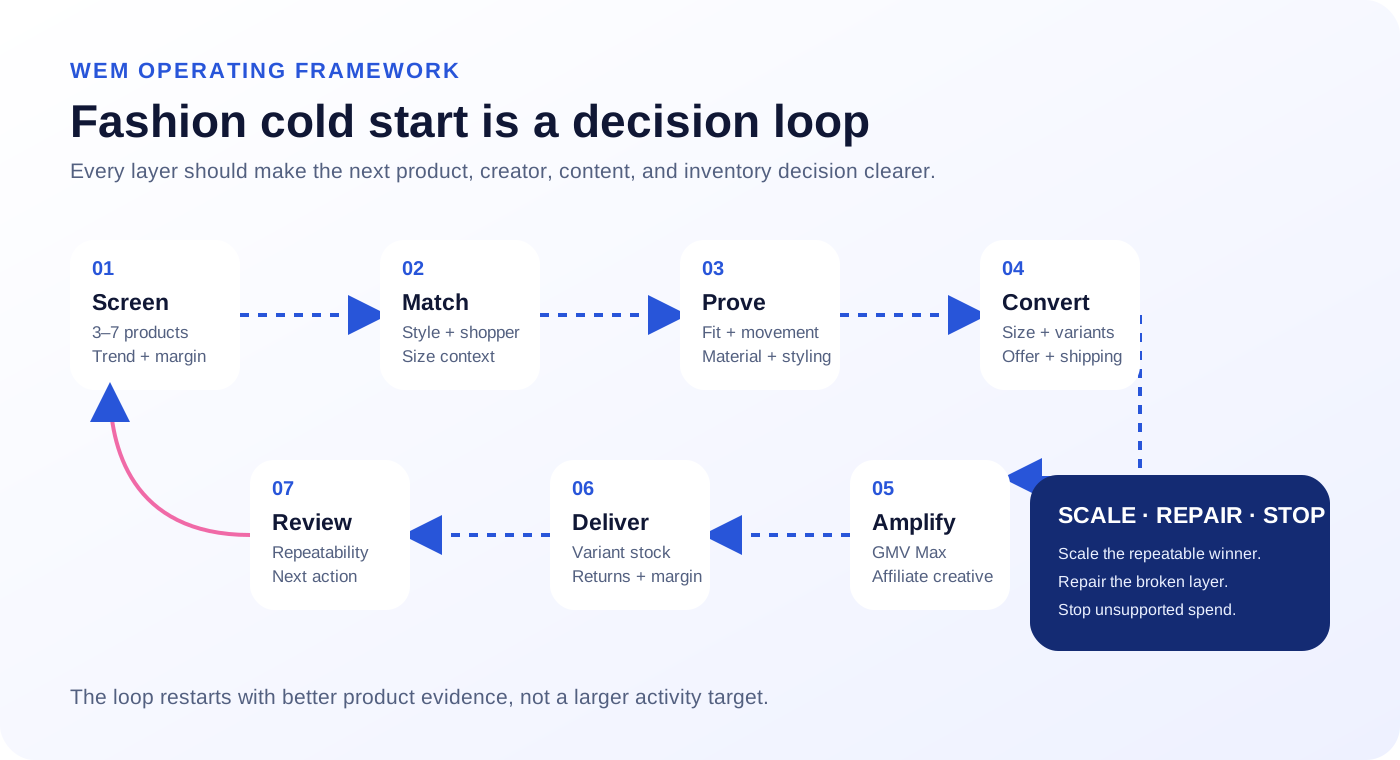
Screen several products, then concentrate on one to three hero SKUs
TikTok's Fashion guide recommends launching and testing three to seven products. That is a sensible screening range when the brand needs evidence about which silhouette, price point, color, or use occasion earns attention. It should not become a rule to split every resource equally across seven listings.
WE Marketing separates the quick screen from the real launch:
| Stage | Product scope | Decision |
|---|---|---|
| Quick screen | 3–7 styles, colors, fits, or offers | Which products earn creator interest, useful engagement, product clicks, and early orders? |
| 0-to-1 launch | 1–3 hero SKUs | Which product can support repeatable try-on content, clear variant choice, workable economics, and reliable stock? |
| Controlled extension | Proven hero plus limited colors, bundles, or adjacent pieces | Does newness increase customer value without fragmenting inventory and content? |
A Fashion hero SKU needs more than visual appeal. It should have a clear reason to wear it, a silhouette that reads on camera, enough size and color availability to convert the demand being created, and a margin structure that can absorb samples, affiliate commission, offers, shipping, paid testing, and expected returns.
Variant complexity matters. A listing with five colors and eight sizes is not one inventory decision. It is forty possible variant combinations. If creators repeatedly feature a color or size that is unavailable, strong content can create frustration instead of momentum. Before launch, the team should identify the featured variant, the depth of stock behind it, acceptable substitutes, and the point where paid or creator activity must pause.
Choose creators for style, body and size context, and working reliability
Fashion creator matching is not only an aesthetic decision. The viewer needs enough context to judge how the item may fit, move, layer, and look in a real situation. A creator can match the brand's visual identity while still being a poor test partner if the audience, body or size context, content format, or working behavior does not match the product's actual job.
WE Marketing uses four Fashion creator-fit questions:
- Style fit: Does the creator already make outfits or scenarios where the product belongs?
- Shopper fit: Does the audience match the likely wearer, use occasion, price tolerance, and style language?
- Proof fit: Can the creator show the details a shopper needs, including fit, fabric, movement, length, styling, and variant choice?
- Working fit: Does the creator communicate clearly, select the correct size, meet timelines, link the correct product, and respond when facts need correction?
Follower count cannot answer those questions. A smaller creator whose audience trusts their workwear, modest-fashion, petite, plus-size, streetwear, or occasion-dressing recommendations may create more useful evidence than a larger lifestyle account with no consistent fashion role.
Size representation should be planned deliberately. This does not mean asking every creator to make universal fit claims. It means selecting a cohort that can demonstrate the product across relevant body and size contexts, while requiring each creator to describe only their own experience accurately. The brand should provide measurement guidance, model information, fabric stretch, intended fit, and approved language without scripting the creator's personality.
Make the try-on answer a purchase question
Fashion content can generate views because the transformation, styling, or personality is entertaining. That does not mean the content answered the questions blocking a purchase.
A useful creative pool covers different jobs:
- Silhouette proof: Show the full look from useful angles without hiding the shape in fast cuts.
- Fit proof: State the creator's selected size and relevant fit context; show waist, length, shoulder, rise, sleeve, or stretch where appropriate.
- Movement proof: Sit, walk, turn, layer, reach, or move in the way the item will actually be used.
- Material proof: Show texture, weight, lining, transparency, structure, stretch, and finish without unsupported quality claims.
- Styling proof: Demonstrate more than one realistic outfit or occasion so the shopper sees wardrobe value.
- Objection handling: Answer the question that would otherwise stop the order, such as length, support, coverage, pockets, wash care, or weather fit.
- Offer proof: Explain the bundle, discount, shipping, or limited launch offer accurately and only while it is current.
The creative brief should tell the creator what the content must help the shopper decide. It should not force every creator to open with the same line. Repetitive scripts make it harder to learn whether the product has several believable stories or only one temporary hook.
TikTok's Fashion guide recommends at least five launch videos and later expanding creative output. The important operating question is whether those videos test different purchase questions. Fourteen copies of the same try-on do not create fourteen useful learnings.
The product page must finish what the video starts
A creator may make a garment desirable in ten seconds, but the listing still has to help the shopper choose correctly. TikTok's Fashion guide calls for at least five product photos across different angles, colors, and sizes, together with a clear size chart and clean imagery.
For Fashion, WE Marketing treats the product page as a fit and expectation system:
| Product-page element | What it must resolve |
|---|---|
| Title and category | What the item is, without vague trend language |
| Images and video | Front, back, side, detail, movement, color, and styling context |
| Model information | Model height, measurements when available, and size worn |
| Size chart | Garment measurements or clearly labeled body measurements with units |
| Fit note | Intended fit, stretch, rise, length, and sizing guidance |
| Material and care | Fabric composition, lining, transparency, feel, and care instructions |
| Variants | Accurate color and size names with the correct image association |
| Shipping and returns | Current expectations and policy links |
| FAQ | Repeated fit, fabric, color, care, and use questions from creators and shoppers |
Do not call an item "true to size" as a universal fact when the evidence only comes from one model or creator. Avoid making color accuracy claims that product photography cannot support. If the garment varies materially by color, size, or production batch, the listing and quality-control process need to reflect that.
Use price and bundles to reduce decision friction, not hide weak fit
TikTok's guide recommends competitive pricing, value-driven bundles, and free shipping as cold-start tools. Those can help, but Fashion economics are vulnerable to discount stacking and returns.
The team should model contribution margin by SKU and variant:
Net sales – product cost – platform/shop discounts – affiliate commission – paid spend – sample cost – pick and pack – shipping – return and refund cost
A two-for-one offer can increase order value but also increase size uncertainty or return exposure. Free shipping may improve conversion while making a low-priced single item unprofitable. A deep discount can produce orders from shoppers who would not choose the product at its sustainable price.
The cold-start offer should make the first decision easier while preserving a usable read on demand. Test one major variable at a time when possible. If the product, price, commission, shipping, and content concept all change together, the team may see GMV without knowing what actually worked.
WE Marketing case study: ANANKECLO's hero-SKU path from a $35 Cuban shirt to $60 sweatpants
ANANKECLO is a men's Fashion client of WE Marketing. Rather than distribute cold-start resources across the full catalog, WE Marketing established a Cuban shirt with an average order value of approximately $35 as the lead-in Hero SKU. This concentrated creator recruitment, try-on content, listing optimization, inventory planning, and offer testing around one measurable launch path.
Offer design was treated as a controlled commercial variable. Free shipping tested whether delivery cost was suppressing first-order conversion. Gift-with-purchase structures tested whether added value could support the purchase decision without relying solely on a lower product price. Each offer was assessed against conversion behavior and unit economics, including affiliate commission, fulfillment, and continued testing capacity.
| Phase | Commercial decision | Purpose |
|---|---|---|
| Hero-SKU validation | Concentrate on the approximately $35 Cuban shirt | Establish a repeatable creator, content, listing, and conversion path |
| Offer testing | Test free shipping and gift with purchase as separate variables | Identify purchase friction while protecting sustainable economics |
| Controlled expansion | Introduce sweatpants at approximately $60 AOV | Extend validated learning into a higher-value adjacent product |
The sweatpants were introduced only after the Cuban-shirt path was sufficiently established to support controlled expansion. This sequence allowed WE Marketing and ANANKECLO to apply the first product's creator, content, listing, and offer learning to a higher-value adjacent product without fragmenting the launch system.
ANANKECLO was a WE Marketing client. The case illustrates an operating sequence, not a guarantee that the same products, prices, or offers will produce equivalent results for another Fashion brand.
Use GMV Max after the launch path is measurable
TikTok's Fashion PDF presents GMV Max as an all-in-one cold-start engine. Its Week 1 setup includes a minimum $500 weekly budget, three to seven products, at least five videos, and Maximum Delivery bidding. It then recommends expanding creative output and scaling budget during weeks two through five based on results.
Those are source-specific recommendations, not universal budget instructions. The current TikTok for Business help center says Product GMV Max automates campaign creation and settings using available creative assets and optimizes organic and paid traffic toward TikTok Shop GMV. Current eligibility, interface recommendations, attribution, and account settings should be verified before launch.
WE Marketing's launch gate is straightforward: paid distribution should begin only when the product page, featured variants, price, shipping, inventory, tracking, and initial credible content pool are ready. GMV Max can help distribute and compare available content. It cannot correct a misleading size chart, a sold-out featured color, a weak product thesis, or an unsustainable return pattern.
Affiliate creatives can expand the usable content pool when creators authorize eligible posts for Shop Ads. Authorization scope, linked products, collaboration status, commissions, and usage outside the platform workflow still need to be checked. Authorization is an operating input, not a transfer of general ownership.
Run the first month as four decision cycles
Week 1: Build the launch gate
Select three to seven candidates for the quick screen. Score visual proof, creator fit, price, margin, variant complexity, inventory depth, shipping, and return exposure. Prepare accurate product pages, size information, samples, creator briefs, tracking, and escalation owners.
Week 2: Create varied proof
Activate a deliberately mixed creator cohort. Test silhouette, fit, movement, fabric, styling, and objection-handling content. Track sample acceptance, time to post, correct product linking, viewer questions, product clicks, and variant demand.
Week 3: Concentrate the signal
Move resources toward one to three hero SKUs and the creators and content jobs producing useful evidence. Repair the product page where questions repeat. Reallocate stock toward featured variants when demand and supply justify it. Begin or adjust paid testing only after the launch path is reliable.
Week 4: Decide what earned scale
Review the full system. Do not promote a product to "winner" status because one video or discount created GMV. Check whether content response repeats, conversion survives reasonable pricing, featured variants remain available, contribution margin is workable, fulfillment is stable, and return reasons are understood.
Measure where the Fashion system lost momentum
| Signal | Likely question |
|---|---|
| Creators do not accept the product | Is the style, value, commission, sample policy, or outreach cohort wrong? |
| Samples are accepted but content is not posted | Is fit selection, delivery, follow-up, brief clarity, or creator reliability failing? |
| Videos receive views but few product clicks | Is the product story entertaining without creating purchase intent? |
| Product clicks are healthy but orders are weak | Are size choice, price, shipping, reviews, images, or variant availability blocking conversion? |
| Orders occur but returns are high | Did content or the listing create the wrong fit, color, fabric, or quality expectation? |
| One creator sells but others do not | Is the product repeatable, or did the result depend on one creator-audience relationship? |
| GMV grows but contribution falls | Are discounts, commission, ads, shipping, and returns consuming the margin? |
Fashion cold-start reporting should include creator pipeline, samples, content job, product clicks, conversion, order value, variant demand, cancellations, returns and reasons, contribution margin, inventory coverage, and next action. GMV is an outcome, not a diagnosis.
Scale, repair, or stop
Scale when more than one credible content path can create qualified demand, the product page converts with low confusion, inventory supports the featured variants, economics remain workable, and fulfillment and returns are controlled.
Repair when the product earns attention but one layer is clearly failing: creator cohort, fit explanation, product imagery, size chart, price, shipping, stock allocation, or content diversity. Define the repair, owner, measurement, and review date before adding more budget.
Stop when the product repeatedly fails to earn creator or shopper interest, requires unsustainable discounting, produces unacceptable return patterns, or cannot be stocked and fulfilled reliably. Stopping is not failure. It protects the next test from inheriting bad economics and false confidence.
How WE Marketing supports Fashion cold starts
WE Marketing is a TikTok Shop operating partner specializing in creator-community operations. WE Marketing connects creator matching, affiliate setup, sample seeding, localized product pages, UGC and content testing, GMV Max coordination, and weekly performance reviews.
For Fashion, that means the team does not treat the creator list, product page, ad campaign, and return report as separate workstreams. Creator questions improve the size and fit guidance. Product-page friction changes the next brief. Variant demand changes inventory allocation. Return reasons change the product claim and creator selection. Paid testing concentrates only after the launch path produces evidence worth amplifying.
WE Marketing's active creator community can give a launch a warmer starting point, but community size does not replace fit. The operating advantage comes from matching the right product with the right creator context, following the sample through publication, and turning every result into the next commercial decision.
Sources and boundaries
Primary source: TikTok for Business, Fashion | From Zero to Performer. Supporting sources: TikTok for Business help-center pages for Product GMV Max, Product GMV Max best practices, affiliate creatives for TikTok Shop Ads, and Affiliate Mass Authorization versus video-code authorization.
Platform features, recommendations, budgets, eligibility, attribution, and interfaces can change. Verify current settings in Seller Center and TikTok Ads Manager. WE Marketing frameworks in this article are operating guidance, not TikTok rules, financial advice, or a guarantee of GMV, creator output, return rate, or profitability.
Frequently asked questions
What is a TikTok Shop Fashion cold start?
It is a controlled 0-to-1 launch test connecting product selection, creator fit, try-on content, size and variant clarity, price, affiliate activity, GMV Max, inventory, fulfillment, returns, and weekly decisions. Its purpose is to identify a repeatable hero SKU and decide whether to scale, repair, or stop.
How many Fashion products should a brand test on TikTok Shop?
TikTok's Fashion guide recommends launching and testing three to seven products. WE Marketing treats that as a quick screen, then concentrates the real launch on one to three hero SKUs so creator attention, samples, inventory, content, and paid learning are not fragmented.
What makes a good TikTok Shop Fashion hero SKU?
A strong hero SKU has a clear use occasion, visible silhouette or styling value, credible creator fit, accurate size and variant information, sufficient featured-variant inventory, workable margin after launch costs and returns, and enough content depth to support more than one believable creator story.
How should a Fashion brand choose TikTok Shop creators?
Evaluate style fit, shopper fit, proof fit, and working reliability. The creator should already make content where the garment belongs, reach the likely wearer, demonstrate fit and movement accurately, select the correct size and product link, and communicate reliably through the collaboration.
Why do Fashion TikTok videos get views but no sales?
The content may be entertaining without answering a purchase question. Review whether it shows fit, movement, material, styling value, and the correct product. If clicks are healthy but orders are weak, inspect size clarity, images, price, shipping, reviews, and variant availability.
When should a Fashion brand start GMV Max?
Begin controlled paid testing after the product page, size and variant information, offer, featured inventory, shipping, tracking, and initial credible creative pool are ready. GMV Max can amplify and compare available content, but it cannot repair a misleading listing or unstable operation.
What Fashion metrics matter besides GMV?
Track creator acceptance, samples delivered and posted, content by proof job, product clicks, conversion, order value, size and color demand, cancellations, returns and reasons, contribution margin, inventory coverage, and whether performance repeats across creators and content angles.
How did WE Marketing use a Hero SKU in the ANANKECLO Fashion cold start?
WE Marketing concentrated ANANKECLO's first launch cycle on a Cuban shirt with an average order value of approximately $35. The team tested free shipping and gift with purchase as separate offer variables, then introduced sweatpants at approximately $60 AOV after the initial creator, content, listing, and conversion path had been established.