TIKTOK SHOP U.S. · AI CONTENT DIAGNOSIS
Use TikTok Shop AI to Diagnose LIVE and Shoppable Video Without Trusting Every Suggestion
WE Marketing Team · Sep 2, 2026 · 15 min read
Direct answer: let AI locate the weak stage, then verify it before changing content
TikTok Shop AI can shorten the time between a completed LIVE or published shoppable video and the team's next useful question. It can organize signals, compare sessions, identify a likely funnel weakness, and draft scripts or variants. It cannot know every commercial fact behind the result, and its suggestion is not proof that a specific edit will improve sales. The safest operating model is Diagnose, Verify, Test: ask AI where the buyer path appears weak, confirm the diagnosis against native account records and business context, then change one controllable lever.
Current TikTok Shop U.S. Seller University material describes LIVE Diagnostics, LIVE Data Q&A, cross-session comparison, AI-assisted shoppable video creation, a short video script generator, and short video diagnostics. It also says sellers should review AI output before implementation. WEM turns those capabilities into a repeatable evidence loop. The output is not a list of instructions to obey. It is a queue of hypotheses that a human owner can validate, prioritize, and release safely.
AI should help the team find the next question faster. Native evidence and human judgment still decide the next action.
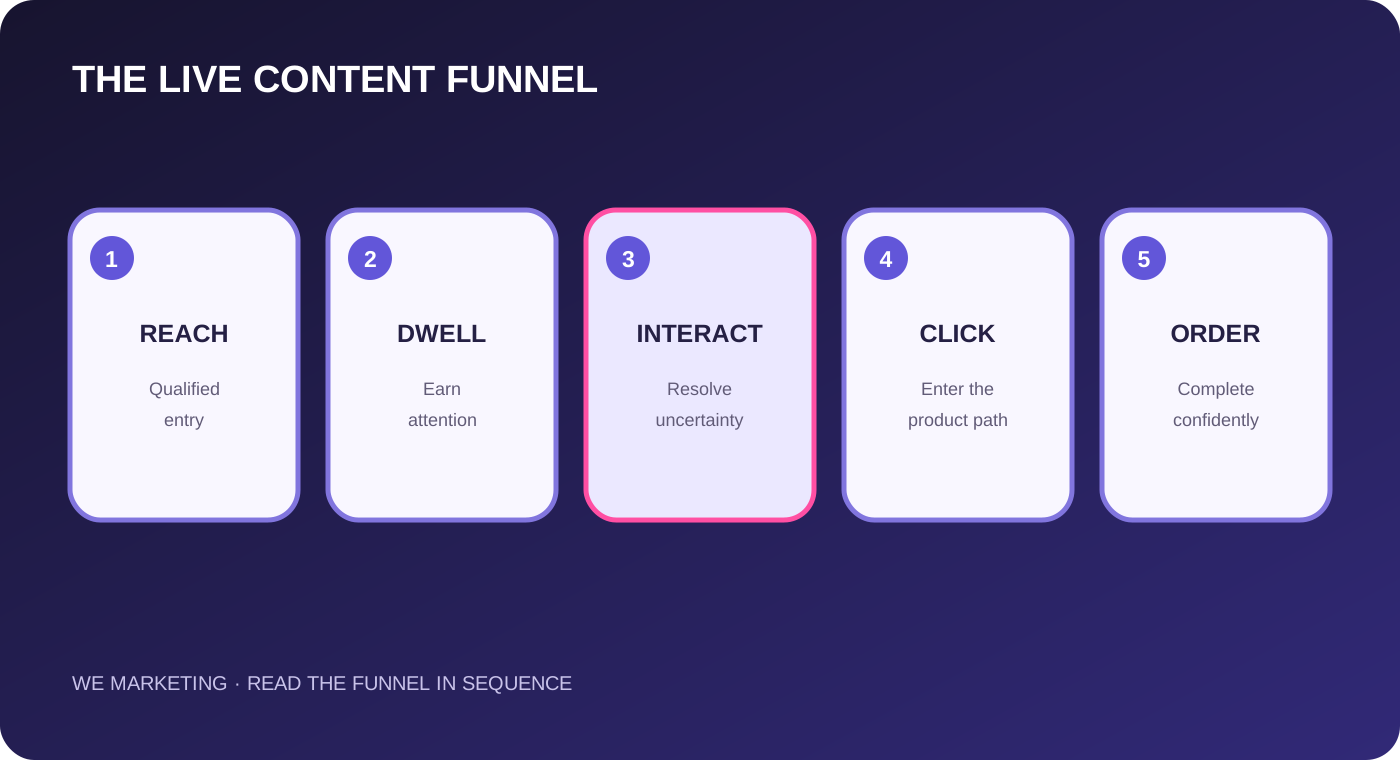
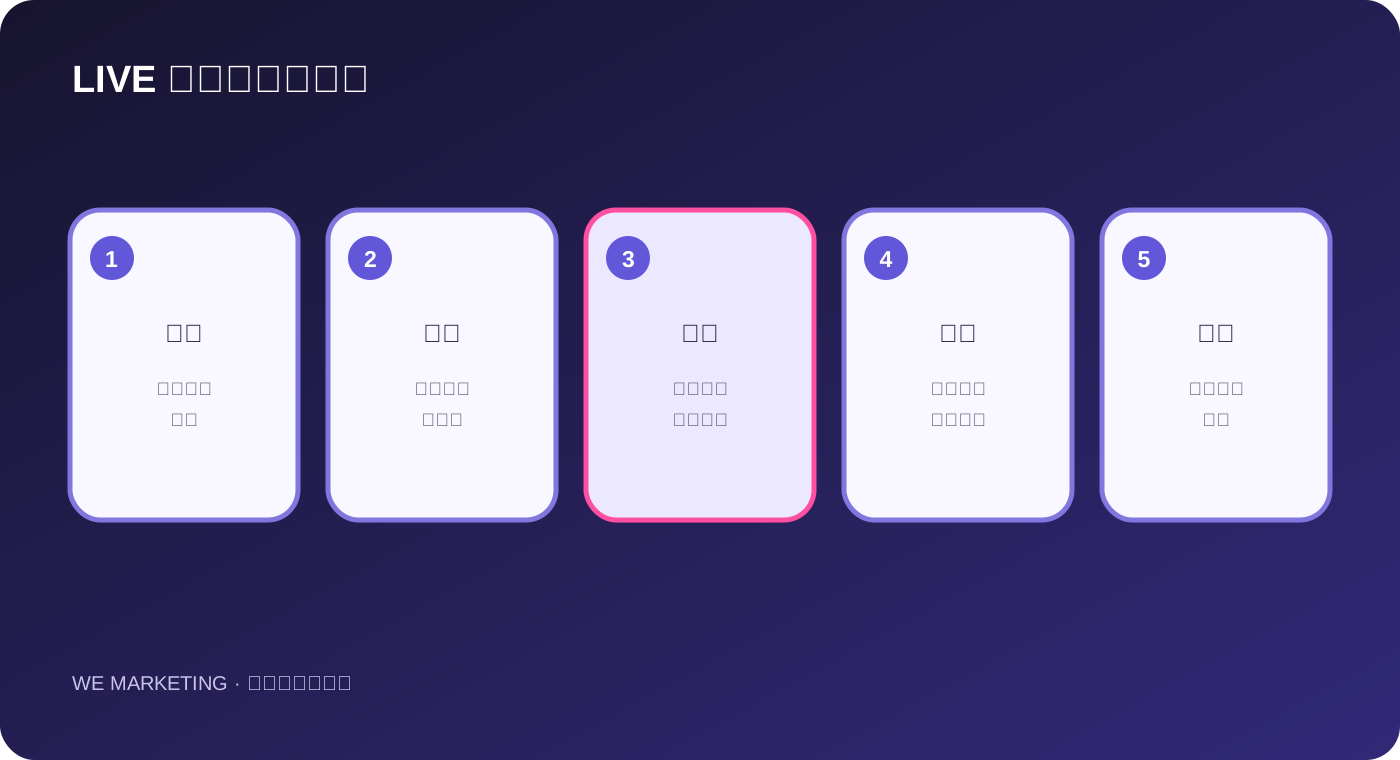
Start with the five-stage LIVE funnel
Use one shared vocabulary for every review. Reach asks whether qualified shoppers entered the LIVE. Dwell asks whether they stayed long enough to understand the offer. Interaction asks whether the host created meaningful participation and resolved uncertainty. Click asks whether viewers entered the product path. Order asks whether the offer, product page, inventory, trust, and checkout experience supported a completed purchase. These stages are connected, but they are not interchangeable.
A stream can have strong reach and weak dwell because the opening does not set a clear promise. It can have healthy dwell and low clicks because the product demonstration never creates a reason to inspect the offer. It can have strong clicks and weak orders because a variation is unavailable, the effective price is unclear, the product page does not support the spoken claim, or the audience is not ready to buy. AI can surface the unusual stage. The team must still investigate the actual cause.
| Stage | Question to verify | Possible next test |
|---|---|---|
| Reach | Did the right audience enter under comparable traffic conditions? | Test entry promise, timing, or qualified distribution |
| Dwell | Did the opening earn enough attention to explain the product? | Test the first demonstration or host framing |
| Interaction | Were buyer questions and objections invited and answered? | Test a question cue, proof moment, or moderator routine |
| Click | Was the product and offer easy to understand and access? | Test product pin timing or offer clarity |
| Order | Could an interested shopper complete the purchase confidently? | Verify listing, stock, price, trust, and checkout conditions |
Do not diagnose before the session data is ready
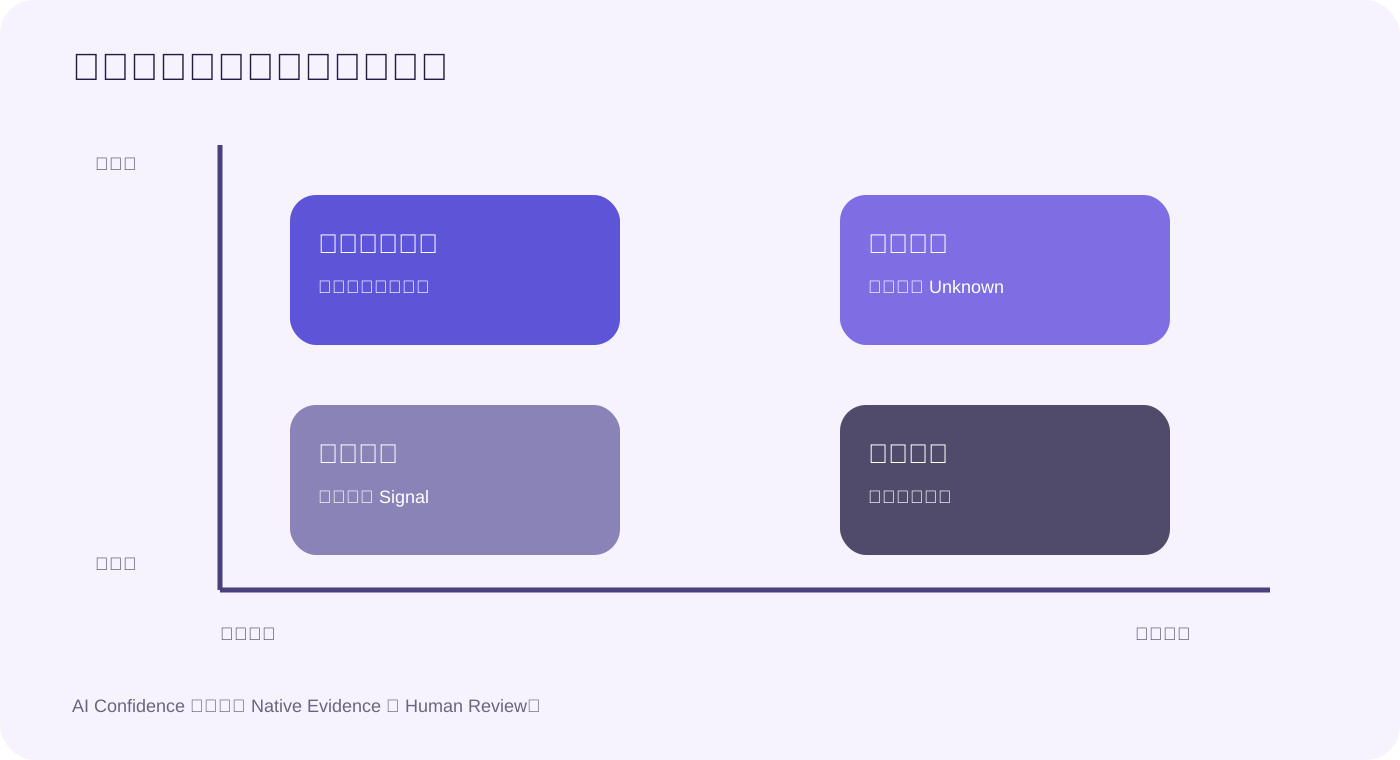
The official handbook recommends waiting about 30 minutes after a LIVE ends before using diagnostics. Treat that as a platform workflow cue, not a guarantee that every business record has finalized. Record the exact session, start and end time, host, featured products, offers, traffic source, inventory condition, and any incident that could distort the read. If the source data is incomplete, label the result pending or unknown. Missing evidence is never a zero.
Ask the AI for the weakest funnel stage, the evidence it used, and two or three possible fixes. Then separate observation from explanation. An observed fall in product clicks may be supported by native data. The explanation that the host failed to create urgency is still a hypothesis unless the recording, run of show, product-pin timeline, and offer context support it. This separation keeps a confident sentence from turning into an unsupported operational decision.
Compare like sessions, not just the latest three
Cross-session comparison is useful only when the sessions are comparable enough to answer the question. The latest three streams may involve different hosts, traffic support, duration, product assortment, discount, inventory, weekday, or audience. Before accepting a comparison, write down which conditions match and which changed. If the context is materially different, use the comparison to generate questions rather than rank performance.
A better comparison starts with a named decision. For example: did a clearer opening demonstration improve early dwell for the same hero product under similar traffic conditions? Select sessions that can test that question, keep the readback window consistent, and note confounders. When the AI reports a difference, confirm the underlying native numbers and inspect the relevant recording segment. Comparison is evidence only when the objects being compared are explicit.
Use the same logic for shoppable short video
Short video diagnostics can be organized into completion, click, and conversion. Weak completion can indicate that the hook, pacing, relevance, or visual proof lost attention. Healthy completion with weak product clicks can indicate that the story entertained without creating purchase curiosity, that the product was not understood, or that the call to action arrived without a reason. Strong clicks with weak conversion can point beyond the video to the listing, offer, variation, inventory, reviews, shipping promise, or audience fit.
Do not force every weak metric into a script problem. Read the entire buyer path. A stronger hook may increase watch time while attracting less qualified traffic. A harder call to action may increase clicks but create disappointment when the page cannot support the promise. A lower conversion rate can coexist with more total orders when qualified reach changes. The operating question is not which metric moved in isolation. It is whether the next bounded change improved the intended business outcome within its guardrails.
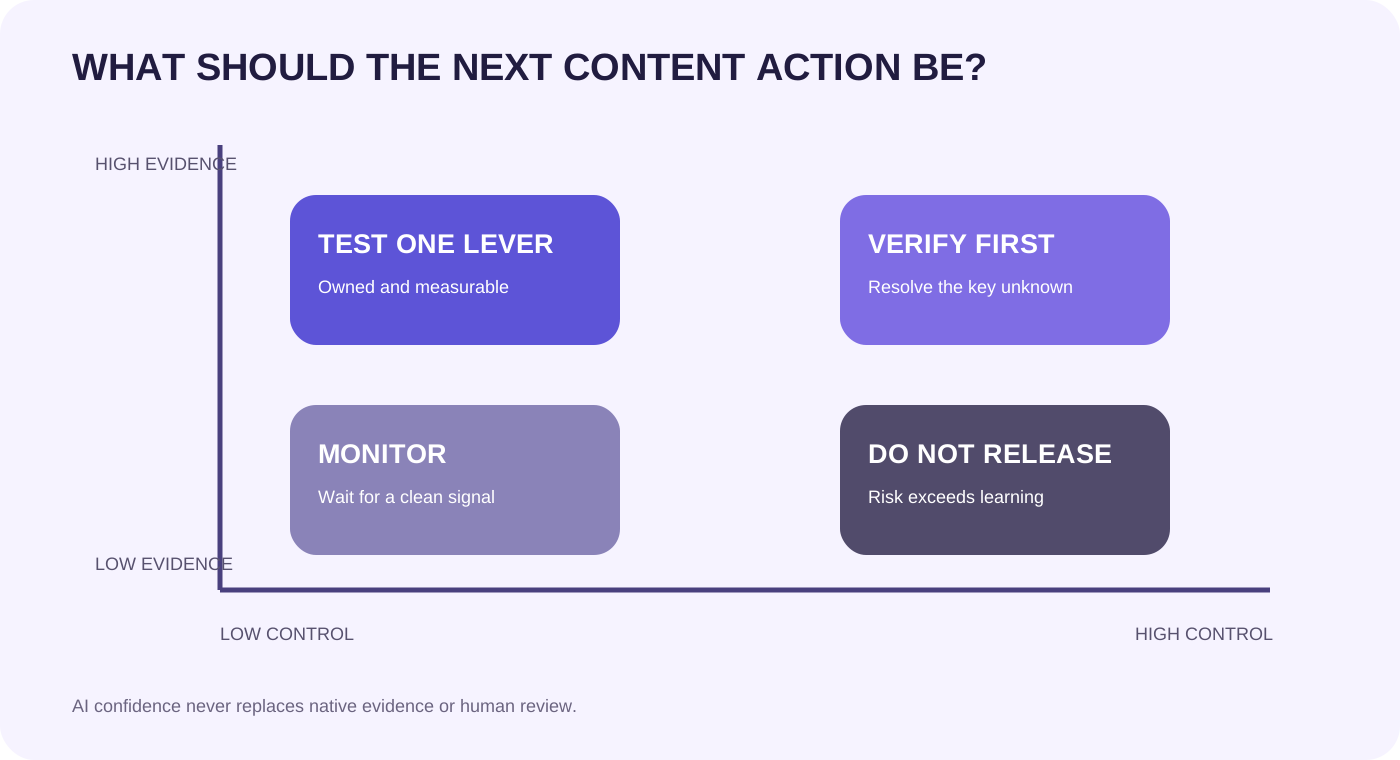
Treat AI-generated scripts and first cuts as drafts
The official material describes tools that can create script or storyboard variants and, where supported, assist with a first-cut video. That is useful for reducing blank-page time and testing different creative structures. It does not transfer responsibility for product truth, claims, pricing, availability, disclosure, music or asset rights, brand voice, or final publishing. The seller remains responsible for reviewing the output before export or release.
Run every draft through a content gate. Confirm the exact product and variation. Check every factual or performance statement against approved evidence. Verify the displayed price, promotion window, inventory, fulfillment promise, and required disclosure. Remove language that implies a guaranteed result or unsupported medical, cosmetic, or comparative claim. Finally, watch the full cut as a shopper: the product should be identifiable, the proof should match the words, and the call to action should lead to the correct listing.
The WEM Diagnose, Verify, Test loop
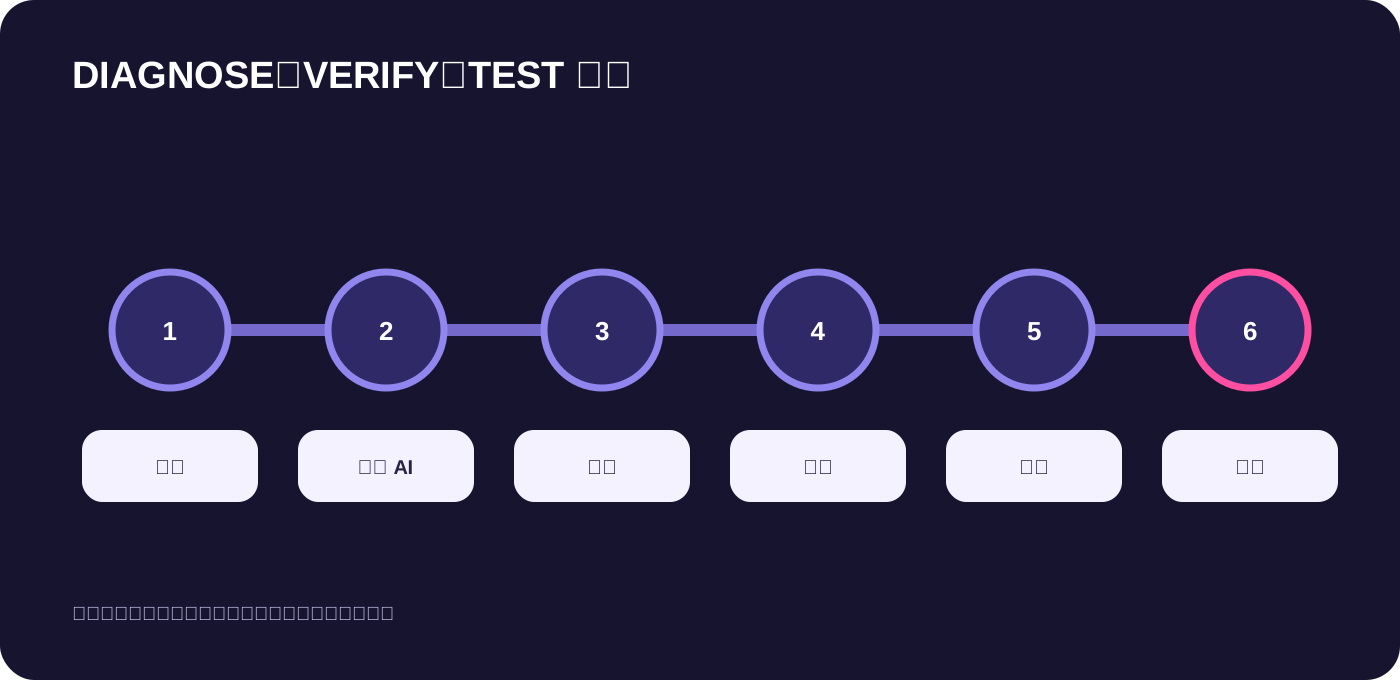
Diagnose: choose one asset or session, ask the AI to identify the weakest stage, and capture the supporting signals. Verify: check the native data, recording, product page, offer, inventory, traffic conditions, and business context. Write one falsifiable hypothesis. Test: change one practical lever, name the owner, protect a guardrail, and schedule the readback. The loop closes only when the team reads the live or published state and records what happened.
Use six ledger fields: Observe, Ask AI, Verify, Hypothesis, Test, and Read Back. Observe stores the original native signal. Ask AI preserves the suggestion without presenting it as fact. Verify lists the records checked and any unknowns. Hypothesis states what the team believes and what would disprove it. Test defines one release. Read Back records the live state, relevant result, decision, and next asset. This creates institutional learning instead of an expanding prompt archive.
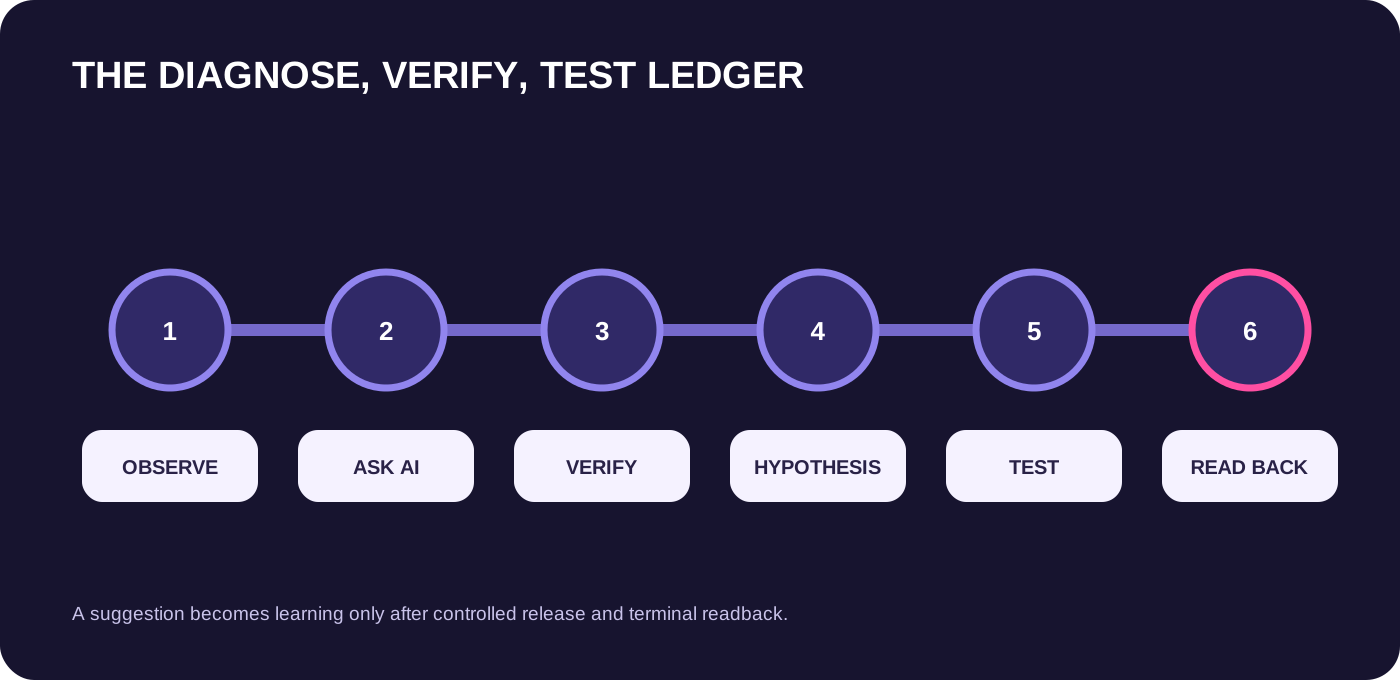
Choose one lever that matches the weak stage
For reach, test an entry promise, qualified distribution input, scheduling choice, or product-audience match. For dwell, test the first 30 to 60 seconds, demonstration order, visual proof, or host transition. For interaction, test a specific question cue, objection-handling segment, moderator prompt, or proof moment. For clicks, test product identification, pin timing, comparison clarity, or offer explanation. For orders, investigate the product page, price, variation availability, reviews, shipping, inventory, and trust before demanding a more aggressive script.
Keep the intervention narrow enough to learn. If the team changes the host, hero product, price, stream time, traffic support, and run of show together, it may improve the result but will not know why. Sometimes a larger commercial change is necessary, especially when customer harm or inventory risk is present. In that case, prioritize safety and label the period non-comparable rather than pretending it was a clean content experiment.
Decide whether to re-edit, remake, or retire
Re-edit when the core footage and product truth are strong but the hook, pacing, sequencing, caption, or call to action is the likely controllable bottleneck. Remake when the product demonstration, audience framing, proof, or offer explanation is missing from the source material. Retire when the asset depends on an unsupported claim, points to an unavailable product, attracts the wrong audience, creates customer confusion, or has repeatedly failed under comparable conditions without producing useful learning.
AI can help draft each option, but the decision should reflect expected value, confidence, effort, and risk. A low-effort edit is not automatically the best action if the source material cannot support a truthful promise. A full remake is not automatically justified because the model produced a new storyboard. And retirement is not failure when it stops the team from repeatedly spending distribution and editing time on an asset with no safe learning path.
Hypothetical beauty example
This is an operating example, not a WEM client result. A beauty brand runs three comparable LIVE sessions around the same skincare set. The newest session has similar reach but weaker dwell and product clicks. The AI suggests adding a stronger discount callout. The team checks the recording and sees that the host introduced three ingredients before showing texture or explaining who the set is for. The offer and product page were unchanged, stock was healthy, and the audience mix was similar.
The verified hypothesis is that viewers did not receive an immediate, understandable use case. The next test changes only the opening sequence: show the texture, name the intended routine step using approved language, then explain the set. The team keeps the price and traffic plan stable, records the exact session, and schedules a post-LIVE readback. If dwell improves but clicks do not, the next diagnosis moves to product identification or offer clarity. The AI accelerated the question, while the evidence defined the test.
Build a weekly content learning queue
Keep a small queue with one row per LIVE session or shoppable video. Include asset ID, product ID, publication or session time, audience, offer, current funnel diagnosis, evidence timestamp, owner, hypothesis, allowed change, guardrail, and readback date. Mark unavailable fields unknown. Prioritize assets where the suspected bottleneck is both consequential and controllable. Leave low-confidence recommendations pending until the missing evidence can be obtained.
At the weekly review, close each row with a decision: repeat, re-edit, remake, retire, or monitor. A draft created by the AI is not complete. An exported video is not published. A submitted edit is not a verified live state. Completion requires the named asset to be visible in the intended location and the scheduled result to be read from the correct source. That evidence discipline prevents activity from being mistaken for learning.
Smallest useful next action
Select one completed LIVE or one published shoppable video. Ask TikTok Shop AI to identify the weakest stage and explain the signal it used. Verify that signal in the native record and check the recording, product page, offer, inventory, and traffic context. Write one hypothesis, choose one controllable change, name the owner, and schedule one readback. Do not release a new claim, price, or product promise until it has passed human review.
Source notes
This original WEM operating framework draws on complete current TikTok Shop U.S. Seller University material validated September 2, 2026: Smart Homepage & Assistant Practical Handbook 6, supported by Smart Homepage & Assistant Practical Handbook Vol. 1. The official material describes LIVE Diagnostics, LIVE Data Q&A, cross-session comparison, AI-assisted shoppable video, script generation, and short video diagnostics. It states that AI outputs are suggestions and should be reviewed before implementation. Interfaces, eligibility, metrics, comparison windows, output quality, and account availability can change. Verify the current U.S. Seller Center and the brand's own product, content, inventory, offer, compliance, and customer evidence before acting.
Frequently asked questions
Can TikTok Shop AI tell us exactly why a LIVE underperformed?
It can identify patterns and likely weak stages, but the cause remains a hypothesis until the team checks native data, the recording, product context, offer, inventory, traffic, and comparable sessions.
How long should we wait before running LIVE diagnostics?
The current official handbook suggests about 30 minutes after the stream. Still confirm that the relevant native records are available, and label incomplete evidence pending rather than treating it as zero.
Should we use every script or video variant the AI generates?
No. Treat every output as a draft. Review product truth, claims, price, inventory, disclosure, rights, brand voice, and the final buyer path before export or publication.
What should we test when clicks are strong but orders are weak?
Start beyond the content: verify the correct product, effective price, variations, stock, reviews, shipping promise, listing clarity, trust, and checkout conditions before making the call to action more aggressive.
Can we compare our last three LIVE sessions automatically?
You can use the feature to surface differences, but first check whether host, product, offer, duration, traffic support, timing, inventory, and audience were comparable enough for the decision.
When is a content diagnosis complete?
When the team has verified the source evidence, released one owned and bounded test, read back the named live asset, and recorded the result and next decision. An AI answer alone is not completion.