TIKTOK SHOP U.S. · PARTNER DILIGENCE
How to Choose a TikTok Shop Partner: 12 Questions Before You Sign
WE Marketing Team · Aug 9, 2026 · 15 min read
Direct answer: choose the operating relationship before you choose the partner
A TikTok Shop Partner is not a universal substitute for a brand team. The right decision starts with the job that must be owned: creator outreach, sample operations, content learning, a defined partner campaign, reporting, or a broader operating system. A partner can add capability and a creator network. It cannot make an unclear product promise, an unpriced commission decision, thin inventory, or an unowned approval process disappear.
The practical question is therefore not “Which agency looks biggest?” It is “Can this partner help us run a controlled commercial learning cycle, while the brand keeps control of product truth, economics, customer experience, and the decision to continue or stop?” TikTok Shop’s current U.S. Academy material describes different collaboration paths, different seller and agency roles, and account-level reporting. Treat those as operating surfaces to verify in Seller Center, not as proof that any particular partner will fit your business.
The 12 questions to ask before you sign
Good diligence produces a working decision right away: proceed with a scoped test, repair a readiness gap, or decline the fit.
| Question | What a usable answer contains |
|---|---|
| 1. What exact commercial job will you own? | A named scope, such as creator matching, sample coordination, campaign management, reporting, or content feedback. “We grow GMV” is an outcome, not an operating job. |
| 2. Which collaboration path are we using? | Open, target, seller-initiated, agency-initiated, or an account-offered partner campaign, plus the consequences for creator choice and approvals. |
| 3. Which products should enter first? | Specific product IDs, product truth checks, stock allocation, margin floor, and a reason each product is suitable for creator-led demand. |
| 4. What will the total economics be? | Open-plan commission, incremental partner commission, any fixed fee, samples, discounts, bonuses, and a clear owner for approving changes. |
| 5. Who controls creator selection and approvals? | The actual control boundary. In some partner-campaign structures, brands cannot choose individual creators or impose mandatory requests. |
| 6. What does the campaign brief include? | Audience, product facts, approved claims, offers, creator fit, visual assets, do-not-say rules, buying path, and escalation contacts. |
| 7. Can the operation support sample volume? | A sample quota, inventory reserve, request handling, fulfillment promise, and an owner for exceptions, not just a target number of creators. |
| 8. What is the activation sequence? | Setup, outreach, sampling, content preparation, first readback, and the decision points before a wider rollout. |
| 9. What will be measured, and when? | Pre-agreed product, campaign, content, and agency views, with the reporting cadence and data-lag boundary stated. |
| 10. How will we distinguish contribution from noise? | A baseline, a defined test window, limited simultaneous changes, and a way to connect content, product, offer, and costs to the result. |
| 11. Who owns customer and operating risk? | Named owners for claims, inventory, fulfillment, price changes, comments, customer service, compliance, and pausing a product. |
| 12. What is the exit or renewal decision? | Review date, evidence needed to continue, handoff of assets and learnings, and no ambiguous auto-extension. |
This is WEM’s pre-signing framework, not a TikTok Shop certification score. It is designed to create the conditions for a useful partnership rather than a vague promise of reach.
Start with scope, not a result claim
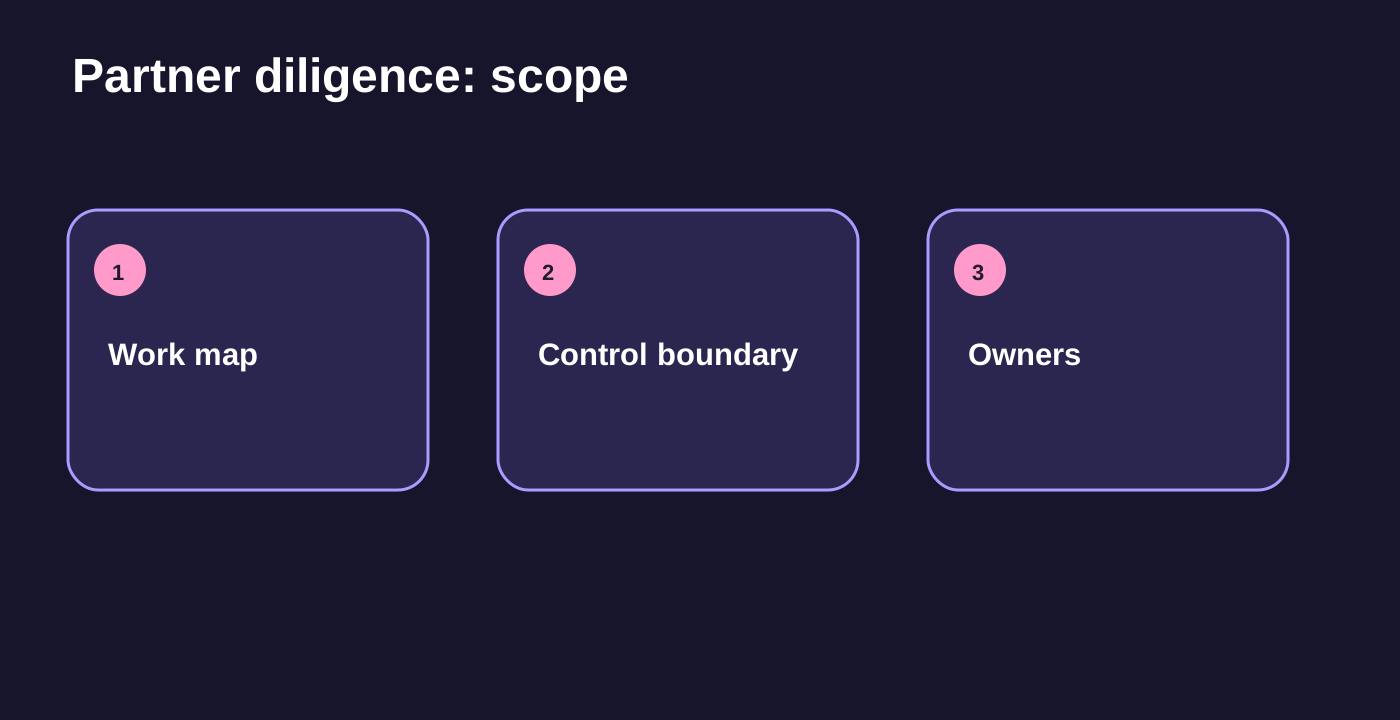
“More sales” is a desired result, but it does not tell either side what happens on Monday morning. Ask the prospective partner to translate its offer into a work map: which tasks it performs, which it coordinates, which remain with the brand, what gets approved, and what is merely advised. A credible answer should name deliverables, cadence, evidence, and limits. It should also be able to say what the partner does not control, including product availability, claims approval, checkout experience, customer service, and account-specific platform eligibility.
Different TikTok Shop collaboration paths create different practical control boundaries. The current U.S. Academy material distinguishes open plans, target plans, and agency-managed Creator Matchmaking campaigns. In partner campaigns, an agency may manage outreach, communication, and sample activity. In certain structures, brands cannot directly select creators or make mandatory requests. That does not make the structure good or bad. It means the brand must decide whether it needs broad managed access or a more selective, separately governed relationship.
Model the offer before creator activity begins
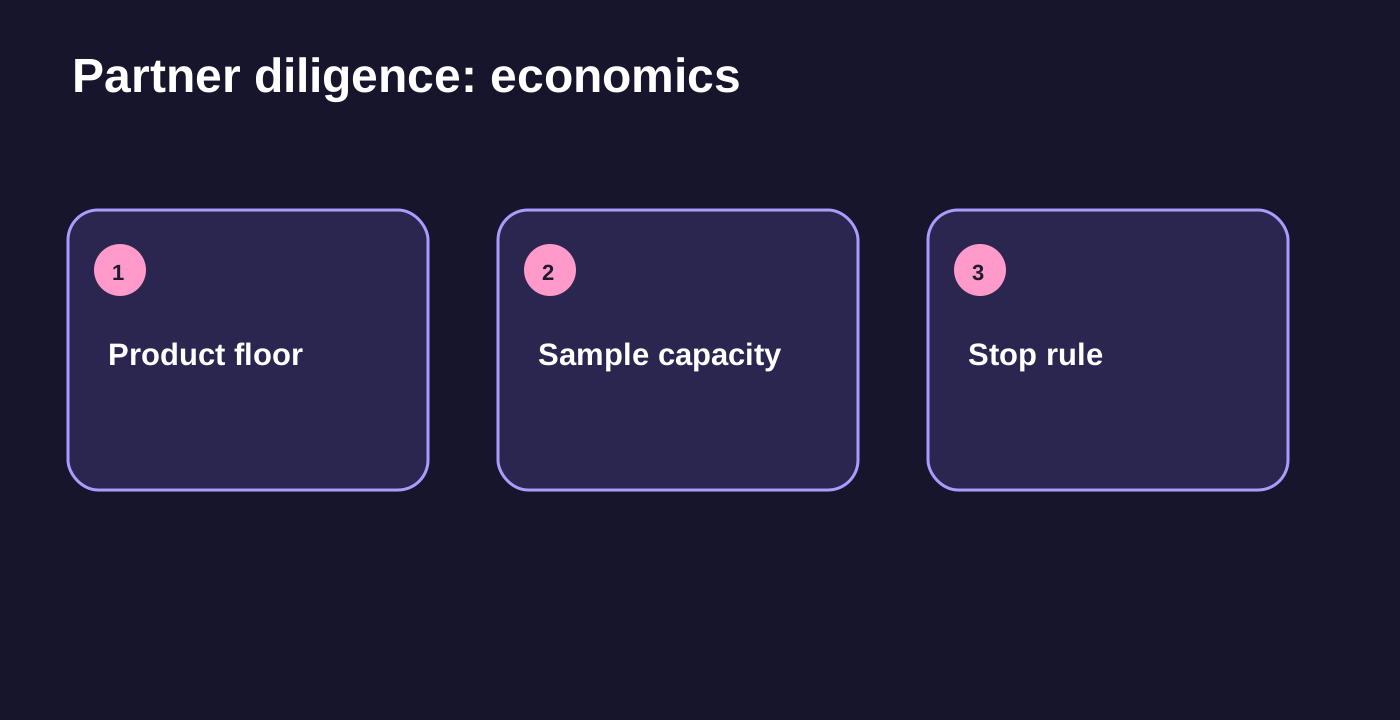
Commission is not an isolated percentage. It sits beside product margin, seller-funded discounts, sample cost, fulfillment, return exposure, agency or creator incentives, and any fixed service fee. Build a single product-level decision sheet before launch. It should show the customer offer, the cost components known today, the margin floor, who can approve a change, and the stop rule. Do not treat platform-funded incentives as permanent economics unless that exact account offer is visible and documented.
The current Creator Matchmaking guide describes an incremental commission expectation over the open plan for partner campaigns and tells sellers to set product IDs, commission, and a total sample quota. Those details are reasons to read the live setup, not reasons to copy a generic number into every agreement. Rates, availability, and eligibility can vary. The partner should explain how the commercial model maps to the actual product set and should be comfortable documenting what changes require written approval.
Check operating capacity before you buy reach
A partner can bring demand faster than a brand can fulfill it. Before signing, select a deliberately narrow starting assortment. Check live stock, reserved units, shipping promise, variation accuracy, product pages, approved claims, and a customer-service escalation owner. A product that is popular in a partner deck but cannot withstand sampling or a demand spike is not a launch candidate.
The brand also needs a usable brief. The Academy’s seller-facing guidance calls for product images, discount information, bundles, target audience, campaign goals, and a simple content brief. Add the pieces that prevent expensive ambiguity: what the product is and is not, what creators may say, required disclosures, approved offers, how product links are checked, and who answers questions quickly. A brief is not creative decoration. It is the interface between a brand promise and dozens of independent creator decisions.
Make measurement a shared responsibility
Ask what will be measured by agency, product, campaign, content, and creator, and ask how the team will act on each view. The current Affiliate Partnerships Overview describes aggregate performance across those levels, agency-level drill-down, ranking views, exports, and daily rather than real-time updates. That means a partner should not promise instantaneous certainty. Set a readback rhythm that fits the reporting delay and order volume, then use it to make one decision at a time.
Use three review questions: Did the selected product and offer hold? Did the partner-led content create useful buyer behavior, not only surface attention? Did the economics and service operation remain within the agreed guardrails? A strong partner welcomes that discipline because it turns optimization into shared learning. If the answer to any question is unclear, reduce scope instead of adding creators, samples, discounts, and media all at once.
A 30-day fit test is better than an undefined launch
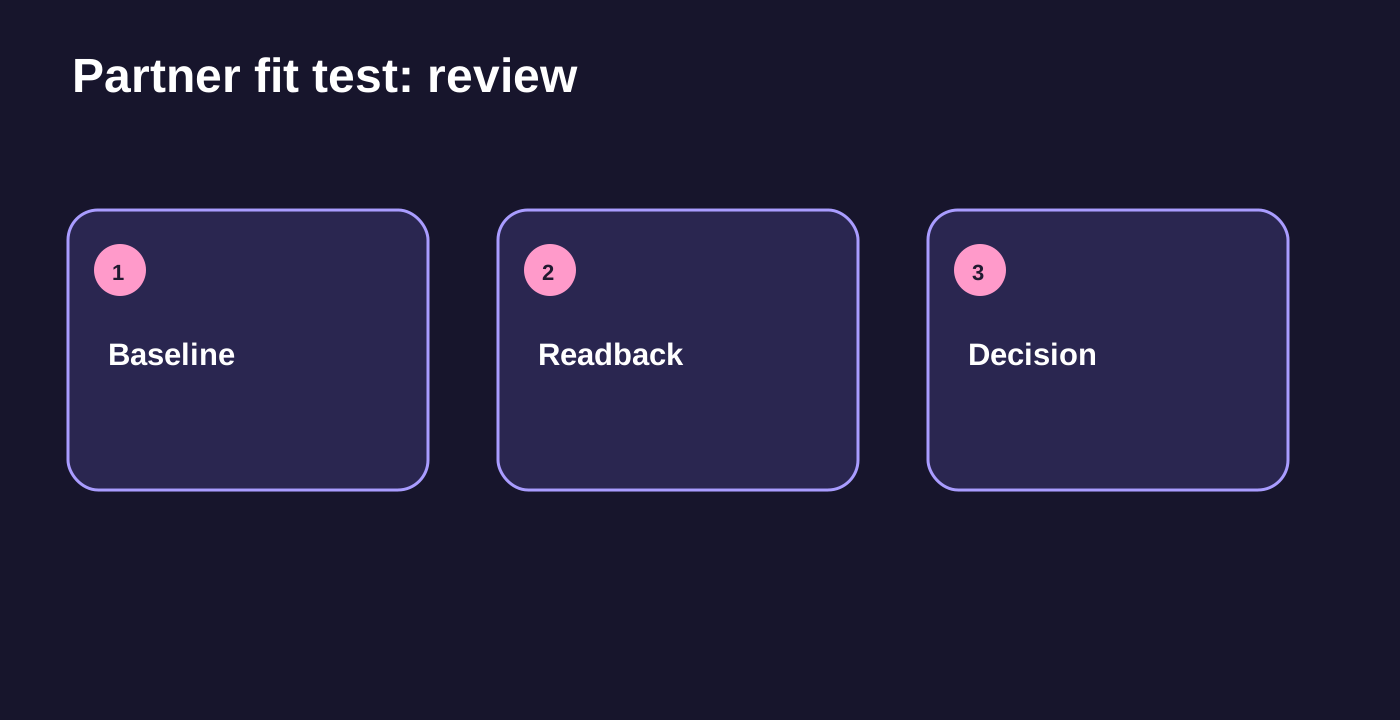
Use a small, documented test where the agreement allows it. Week one locks the product list, economics, inventory reserve, brief, owners, and baseline. Week two confirms creator activation mechanics and checks the first operational signals. Week three reads product, content, and service evidence without changing every lever. Week four holds the renewal review: continue with a constrained expansion, repair the specific gate that failed, or stop. This is an operational example, not a WEM client case or a universal platform timetable.
The smallest useful next action is a one-page partner diligence sheet. Put the 12 questions in the first column, the evidence or contract clause in the second, the owner in the third, and the open risk in the fourth. Do not sign until the highest-risk blank has a named resolution. The document will be more valuable than another presentation because it remains useful after the agreement starts.
Source notes
Primary material read in full on August 9, 2026: TikTok Shop U.S. Academy, [TAP] Creator Matchmaking Tool | Seller POV, Affiliate Partnerships Overview, and 8 Tips for Successful Seller & Creator Matchmaking. Platform features, eligibility, campaign terms, commission mechanics, reporting availability, and account access may change. Verify the current U.S. Seller Center before acting.
Frequently asked questions
Should a brand choose a partner only by creator-network size?
No. Network size matters only when it connects to a defined product, creator-fit, operational, and measurement plan.
Can a brand always approve every creator in a partner campaign?
No. The current Academy guidance describes structures where agencies manage matchmaking and brands cannot directly select creators. Confirm the control boundary in the specific live setup.
What should be decided before setting a commission?
Model product economics, the open-plan baseline, incremental commission, sample cost, offer funding, fulfillment, and the stop rule for the selected product.
How soon can a brand judge a partner?
Use the reporting cadence, stated data lag, campaign sequence, and agreed test window. Do not judge from one early metric without product, content, and operating context.
What should make a brand pause or decline?
Unclear scope, unavailable inventory, unsupported claims, undefined economics, no approval path, missing reporting access, or no named owner for customer and operating risk.
Is this a ranking of TikTok Shop Partners?
No. It is a diligence framework for deciding whether a specific relationship fits the brand’s current operating needs.